Collar Fine But Hem Twisted? Check This Rib Fabric Trick
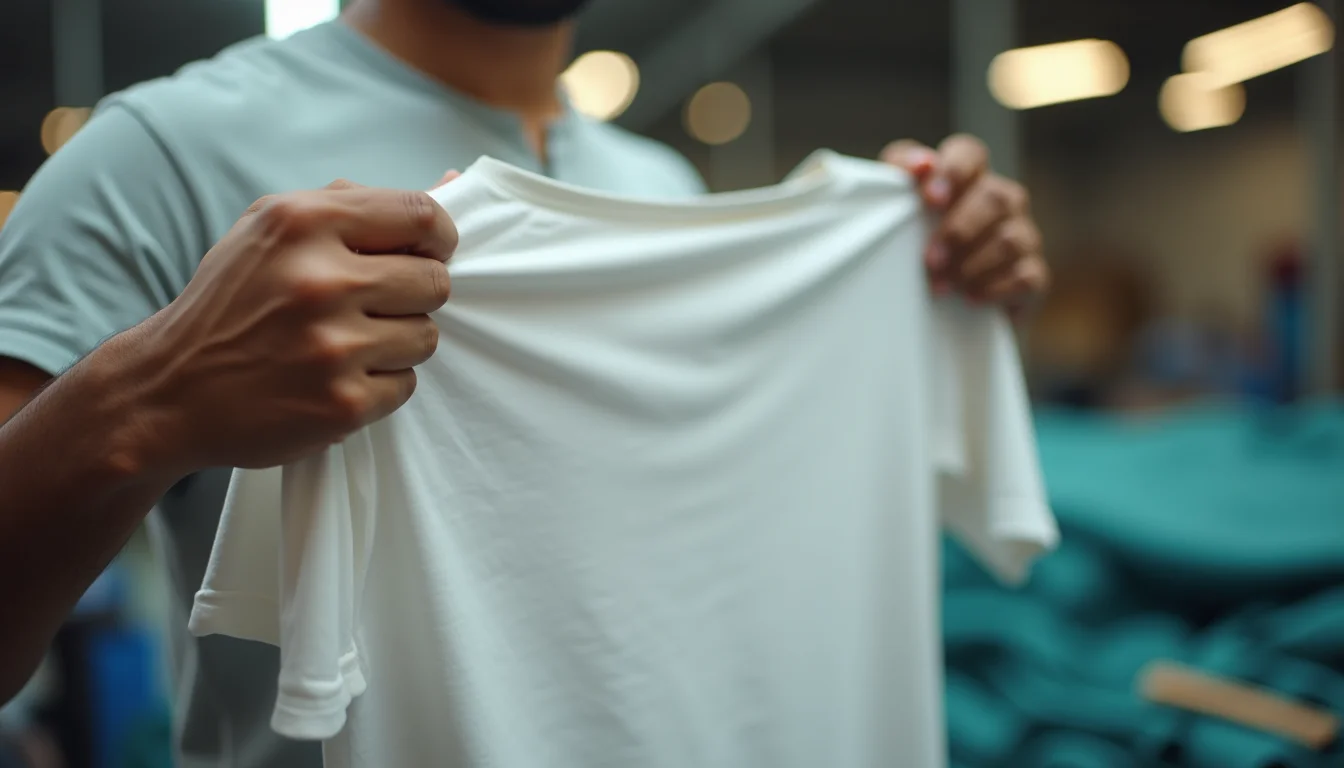
In the world of bulk plain t-shirt manufacturing and custom printing businesses, one of the most common yet often overlooked issues is fabric quality at critical stress points. Recently, a printing business owner approached us with a frustrating problem: his t-shirt collars were holding up perfectly fine after multiple washes, but the hems were twisting and distorting after just 3-4 wash cycles. When we asked if he had checked the hem rib during sampling, he admitted he had only inspected the collar rib quality.
This scenario is surprisingly common across India's custom printing industry. Many wholesalers, printing businesses, and even experienced retailers focus heavily on collar quality while overlooking the equally important hem and cuff construction. The truth is, rib fabric plays a crucial role in three distinct areas of every t-shirt, and each area requires a different type of rib construction to function properly.
Understanding Rib Fabric: More Than Just the Collar
When most people think of rib fabric in t-shirts, they immediately think of the collar. This is natural because the collar is the most visible part where rib fabric is used. However, rib fabric serves critical functions in three key areas of t-shirt construction:
- Collar (Gala): The neckband that frames the face and takes repeated stretching
- Cuff (Aastee ka kinara): The sleeve endings visible in full-sleeve and layered garments
- Hem (Neecha kinara): The bottom edge that maintains the t-shirt's shape and drape
Each of these areas has different functional requirements, which is why using the same rib fabric type across all three areas can lead to quality problems. At Sale91.com, where we manufacture over 1,25,232 pieces monthly at our Tiruppur facility, we've seen firsthand how proper rib selection affects the longevity and customer satisfaction of finished garments.
The Collar: Where 1x1 Rib Reigns Supreme
Why Collars Need High Elasticity
The collar of a t-shirt undergoes constant stress. Every time someone pulls the t-shirt over their head, the collar stretches significantly. Throughout the day, the collar may be adjusted, pulled, or otherwise manipulated dozens of times. After washing, the collar needs to return to its original shape without becoming loose or stretched out.
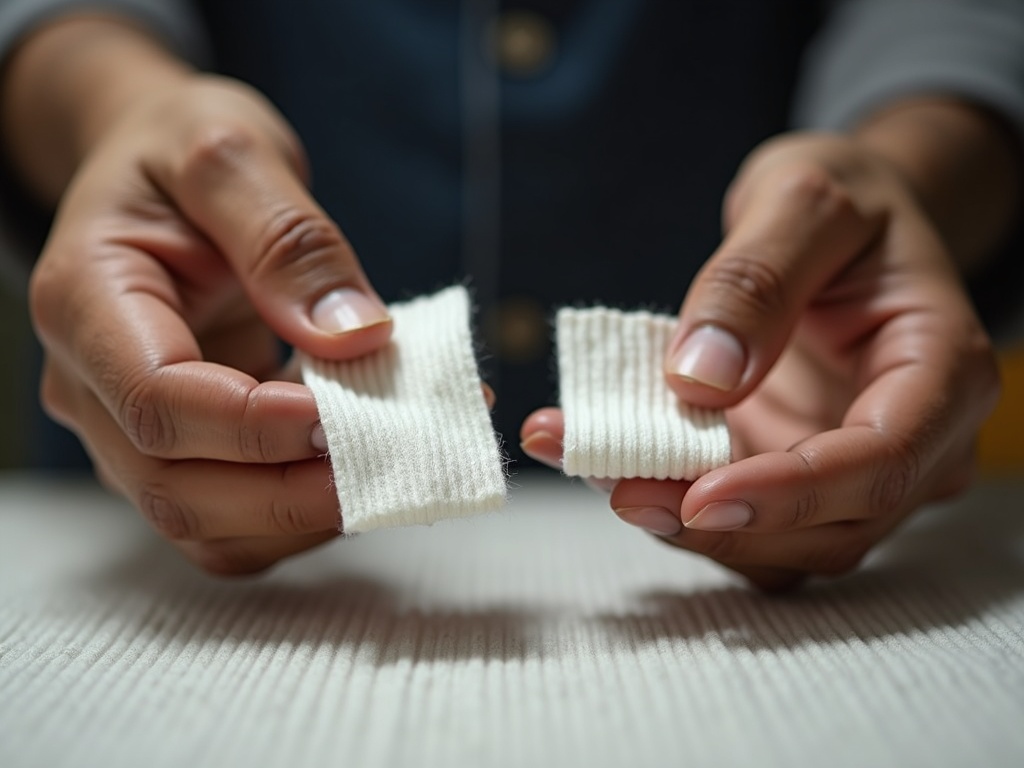
This is where 1x1 rib fabric excels. The 1x1 rib construction means the fabric alternates one knit stitch with one purl stitch, creating a highly elastic, durable structure that can stretch and recover repeatedly. This elasticity is not just about comfort during wearing—it's about maintaining shape integrity over the entire lifespan of the garment.
Characteristics of Quality Collar Rib
When inspecting collar rib fabric for your plain t-shirt orders, look for these qualities:
- Recovery Rate: After stretching, the rib should snap back quickly to its original width
- Consistent Thickness: The rib band should have uniform thickness throughout
- Smooth Texture: Quality 1x1 rib will feel smooth without rough edges or loose threads
- Color Consistency: The rib should match the body fabric color precisely after dyeing
- Stitch Definition: You should be able to clearly see the alternating rib pattern
For custom printing businesses, the collar quality directly impacts customer retention. A collar that loses shape after a few washes will lead to complaints and returns, regardless of how beautiful the printed design is. This is why at Sale91.com, we use premium combed cotton yarn for all our rib fabric, ensuring consistent elasticity across our entire range from 180 GSM to 220 GSM t-shirts.
The Cuff: The Often-Forgotten Middle Child
Where Cuffs Matter Most
While round neck half-sleeve t-shirts don't have visible cuffs, they become critically important in full-sleeve t-shirts, hoodies, and sweatshirts. The cuff serves a similar function to the collar—it needs to stretch for hand insertion and then grip comfortably without being too tight.
Like collars, cuffs also typically use 1x1 rib construction. However, the cuff rib may be slightly different in weight or tension compared to collar rib, depending on the garment style. For example, in our 320 GSM and 430 GSM hoodies, we use slightly heavier rib for cuffs compared to our standard round neck t-shirts because the overall fabric weight demands it.
Testing Cuff Quality
When sampling full-sleeve garments or hoodies, perform this simple test:
- Insert your fist through the cuff and stretch it outward
- Hold for 5 seconds, then release
- The cuff should return to its original diameter within 2-3 seconds
- After 10 repetitions, there should be no visible loosening
A quality cuff will pass this test easily. Poor quality rib fabric will show stretching, lose its circular shape, or develop waviness along the edge.
The Hem: Where Many Manufacturers Get It Wrong
Understanding Hem Function vs. Collar Function
Here's where the confusion happens: many people assume that since collars use 1x1 rib, the hem should also use the same material. This seems logical on the surface—use consistent materials throughout the garment for uniformity. However, this approach ignores the fundamental difference in function between collar and hem.
Key Principle: The collar's job is to provide grip and elastic recovery. The hem's job is to maintain shape and provide a clean fold. These are fundamentally different requirements.
The hem of a t-shirt doesn't undergo the same stretching stress as the collar. You're not pulling it over your head, and it's not being constantly adjusted throughout the day. Instead, the hem needs to:
- Maintain a flat, smooth appearance
- Hold the fold without rolling or twisting
- Hang properly to create a good drape
- Resist curling after washing
Flat Knit and Light Rib for Hems
For these functions, flat knit or light rib constructions work better than the highly elastic 1x1 rib used in collars. Flat knit provides just enough body to hold the hem fold in place without adding excessive elasticity that could cause gathering or bunching.
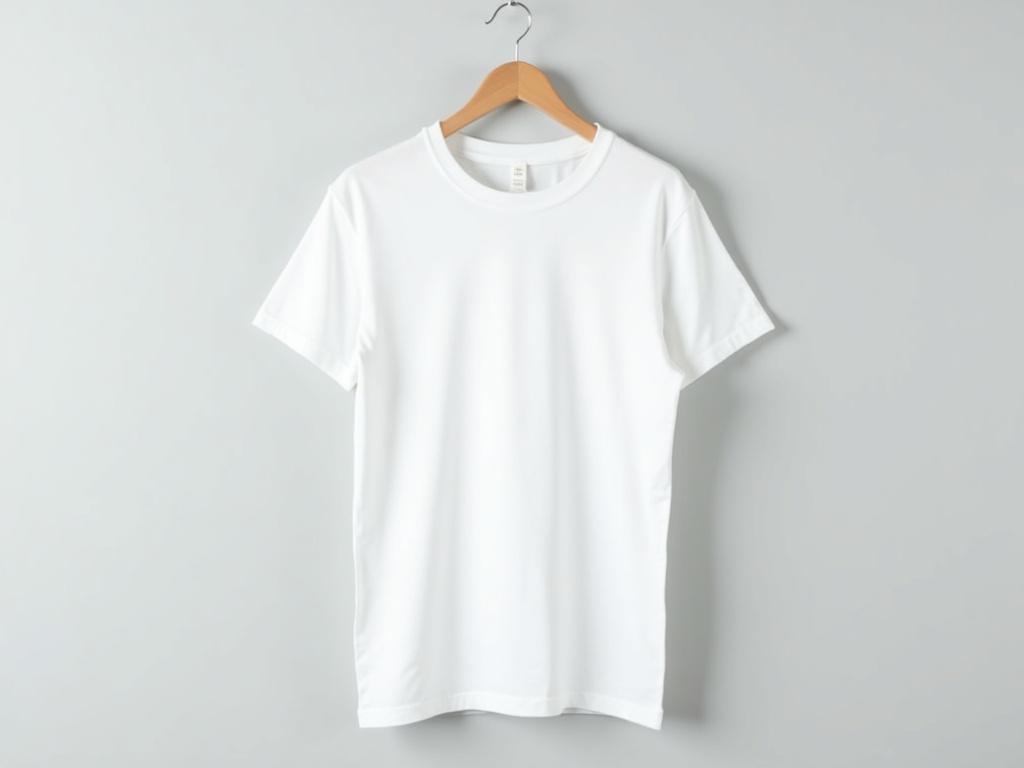
Think about what happens if you use highly elastic 1x1 rib at the hem: the elasticity will cause the bottom edge to gather slightly, creating an uneven hemline. This gathering becomes more pronounced after washing, leading to that twisted appearance the printing business owner complained about. The hem essentially "shrinks" more than the body fabric because of the excess elasticity, causing distortion.
Conversely, if you were to use flat knit fabric for the collar, it would lack the necessary elasticity. After a few wears, the collar would stretch out and lose its shape, becoming loose and unsightly.
The Science Behind Rib Fabric Construction
What Makes 1x1 Rib Elastic?
To truly understand why different ribs are used in different places, it helps to understand the basic construction. In 1x1 rib knitting, the fabric alternates between knit and purl stitches. This creates vertical ridges (ribs) in the fabric. When stretched, these ridges flatten out, allowing significant expansion. When released, the natural curl of the purl stitches pulls the fabric back to its original dimension.
This construction creates excellent widthwise elasticity—perfect for collars and cuffs that need to expand to fit over heads and hands. However, this same elasticity is counterproductive in hems where stability is more important than stretch.
Flat Knit and Jersey Construction
Flat knit or jersey knit fabric uses all knit stitches in one direction. This creates a smoother surface with less elasticity compared to rib knits. The fabric still has some natural stretch (especially if it contains elastane or if the yarn tension is slightly loose), but it's much more dimensionally stable than 1x1 rib.
For t-shirt hems, this stability is exactly what you need. The hem maintains its shape, hangs straight, and doesn't gather or twist during washing. At our Tiruppur manufacturing facility, we carefully match the hem fabric weight to the body fabric to ensure uniform washing behavior.
Practical Quality Control for Printing Businesses
The Three-Point Inspection Method
When you're ordering bulk plain t-shirts from any supplier (including Sale91.com), always perform this three-point inspection on your sample pieces:
- Collar Check: Stretch the collar outward to double its relaxed diameter. Release and ensure it snaps back within 2 seconds. Repeat 10 times. Check for any permanent stretching or loss of shape.
- Cuff Check (if applicable): For full-sleeve garments, perform the same stretch test on cuffs. The cuff should maintain consistent tension around the wrist without being too tight.
- Hem Check: Hold the t-shirt by the shoulders and let it hang naturally. The hem should be perfectly horizontal without any waviness, gathering, or twisting. Gently pull the hem downward and release—it should settle back into a straight line without bunching.
Wash Testing Before Bulk Orders
Here's a professional tip from our quality control team at Sale91.com: Before placing a large order, take 2-3 sample pieces and put them through an accelerated wash test:
- Wash the samples 5 times consecutively (this simulates about 20-25 normal washes)
- Use normal washing machine settings with regular detergent
- Dry naturally or in a dryer, depending on how your end customers will use them
- After the final wash, inspect all three areas: collar, cuff, and hem
This wash test will reveal any quality issues that might not be apparent in new, unwashed samples. If the collar has stretched, the hem has twisted, or the cuffs have lost their shape, you'll know before committing to a bulk purchase.
Common Mistakes in Rib Fabric Selection
Mistake #1: Assuming All Ribs Are the Same
Many buyers, especially those new to the printing business, assume that rib fabric is just "rib fabric" without understanding the different constructions (1x1, 2x2, flat knit, etc.). This leads to accepting samples where inappropriate rib types are used for hems or collars.
Mistake #2: Focusing Only on Body Fabric GSM
While GSM (grams per square meter) is crucial for the main body fabric—we offer 180, 200, 210, and 220 GSM options—buyers often neglect to check the rib fabric weight and quality. A 220 GSM premium t-shirt with poor quality collar rib is ultimately a poor quality product.
Mistake #3: Not Testing Color Consistency
Rib fabric and body fabric can behave differently during dyeing. Always check that the collar, cuff, and hem colors match the body fabric precisely. Color variation is a common complaint we hear about competitors' products, which is why we do multiple quality checks during our dyeing process.
Mistake #4: Ignoring Stitching Quality
Even with perfect rib fabric, poor stitching can cause problems. Check that collar attachment stitching is uniform, that there are no skipped stitches, and that the hem folding is consistent all around the t-shirt.
Why Tiruppur Manufacturing Makes a Difference
Tiruppur, located in Tamil Nadu, is known as India's textile capital for good reason. The concentration of knitting mills, dyeing units, and garment manufacturers creates an ecosystem of expertise that's hard to replicate elsewhere. When you order from a Tiruppur-based manufacturer like Sale91.com, you benefit from:
- In-house fabric knitting: We knit our own fabric rather than buying from traders, giving us complete quality control
- Specialized knowledge: Decades of collective industry experience in rib fabric selection and application
- Quality raw materials: Direct access to premium combed cotton and ring-spun yarn suppliers
- Advanced bio-washing: Enzyme treatment facilities for softer, pre-shrunk fabric
- Consistent dyeing: State-of-the-art dyeing units ensuring color consistency across body and rib fabric
This integrated approach means we control every step from yarn selection to finished t-shirt, ensuring that collar rib, body fabric, and hem construction all meet premium standards.
Choosing the Right T-Shirts for Your Printing Business
Match Fabric Quality to Your Customer Base
Not every printing business needs 220 GSM premium t-shirts with the highest quality rib fabric. Understanding your customer base helps you choose appropriately:
- 180 GSM: Ideal for everyday promotional t-shirts, event merchandise, and budget-conscious customers. Still requires proper rib construction, but can use slightly lighter rib fabric.
- 200 GSM: The sweet spot for most custom printing businesses—premium feel without premium pricing. Requires good quality 1x1 rib for collar to justify the "premium" positioning.
- 210-220 GSM: Heavy premium category for high-end streetwear brands, boutique printing businesses, and customers who demand maximum quality. Needs the best rib fabric to match the premium body fabric.
Special Considerations for Different Products
Our catalog includes various styles, each with specific rib fabric requirements:
- Oversized T-shirts: Require properly weighted hem fabric to maintain the intended drape and silhouette
- Polo T-shirts: Need especially high-quality collar rib since the collar is a prominent design feature
- Hoodies (240, 320, 430 GSM): Require heavier rib for both cuffs and waist hem to match the fabric weight
- Acid Wash T-shirts: The washing process can affect rib elasticity, so higher quality rib is essential
Watch the Video
Watch our detailed explanation of where and why different rib fabrics are used in t-shirt construction: