Interlock vs Rib Collar on Polo T-Shirts: What Every Bulk Buyer Must Know Before Placing an Order
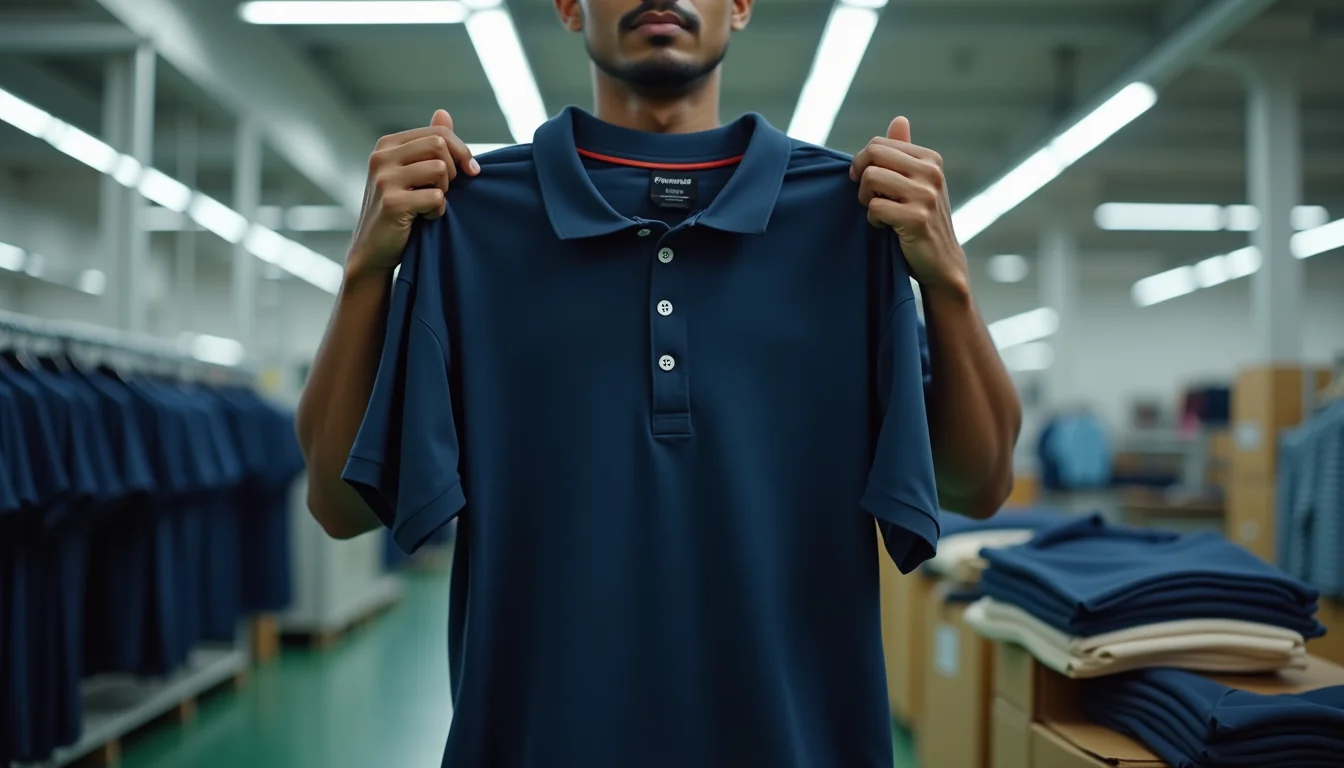
When you buy plain polo t-shirts in bulk for custom printing — whether screen print, DTG, DTF or heat transfer — the collar is the single most inspected component by your end customer. A polo's price can be right, the fabric GSM can be right, and the colour can be on-point, but if the collar waves, flares or loses its stand after a handful of washes, the entire order loses its perceived value. And yet, most bulk buyers have never been told exactly why one polo collar holds its shape and another does not.
The answer almost always comes down to two words: interlock or rib. These are not just brand jargon — they are fundamentally different knit constructions, and understanding them helps you evaluate a sample correctly before committing to hundreds or thousands of pieces. This guide breaks down exactly how each is knitted, what collar GSM means, what "tipping" and "self-collar" refer to, why collars lose shape after repeated washing, and — most practically — the exact physical checks you should perform on any polo sample before approving a bulk order.
If you are new to fabric terminology like GSM, bio-washing or pre-shrunk treatment, a quick FAQ reference is available here — this article focuses specifically on collar construction and what it means for your bulk buying decision.
How Polo Collars Are Knitted: The Structural Foundation
A polo t-shirt collar is not cut from the same fabric as the body. It is a separately knitted component — a narrow strip of fabric that is folded over itself and stitched to the neckline. The key question is: what knit structure was used to make that strip?
Rib Knit — The Classic but Volatile Structure
Rib knit (also called 1×1 rib or 2×2 rib depending on the repeat) is produced on a circular or flat knitting machine where alternate needles knit in opposite directions — one needle pulls the loop to the front, the next pulls it to the back. This creates the characteristic vertical "column" texture you can see and feel on most polo collars: raised wales running vertically with recessed channels between them.
The reason rib is so widely used for collars is its outstanding horizontal elasticity. A 1×1 rib fabric can stretch to nearly double its relaxed width and snap back — which makes it easy to pull over the head and comfortable at the neckline. However, this same property is also its structural weakness in a collar context: rib is inherently low-density. The loops interlock only in one plane, leaving air gaps between the wales. When that collar is folded, stitched, and subjected to repeated washing agitation, those gaps allow the fabric to torque — the technical term for a twisting distortion in the grain — and the collar edge begins to wave or flare outward instead of lying flat.
A related concern: because rib has more stretch, collar bands made from thin or low-GSM rib can permanently elongate over time. Once the yarn creep exceeds the elastic recovery limit, the collar stands too loosely at the neck and cannot be ironed back to shape.
Interlock Knit — Denser, Stiffer, More Stable
Interlock is essentially two rib fabrics knitted simultaneously on a double-needle bed, with the loops of each layer locked into the loops of the other. The result is a double-faced fabric — both surfaces look identical and smooth, unlike single-jersey which has a technical face and a technical back. Because the two layers are mechanically bound together at every course, interlock fabric is significantly denser and has far less horizontal stretch than rib.
When interlock is used for a polo collar, the reduced stretch and higher density mean several things for shape retention: the collar resists torquing during washing, the fold edge stays crisp and flat, and the collar band maintains its height. The trade-off is that an interlock collar offers less "give" when the garment is pulled over the head, which is why interlock collars are almost always accompanied by a reinforced placket with at least a two-button closure — you open the buttons, put on the polo, button up. The collar is not meant to stretch open like a crew neck.
What Collar GSM Actually Means — and Why It Is Not the Same as Body GSM
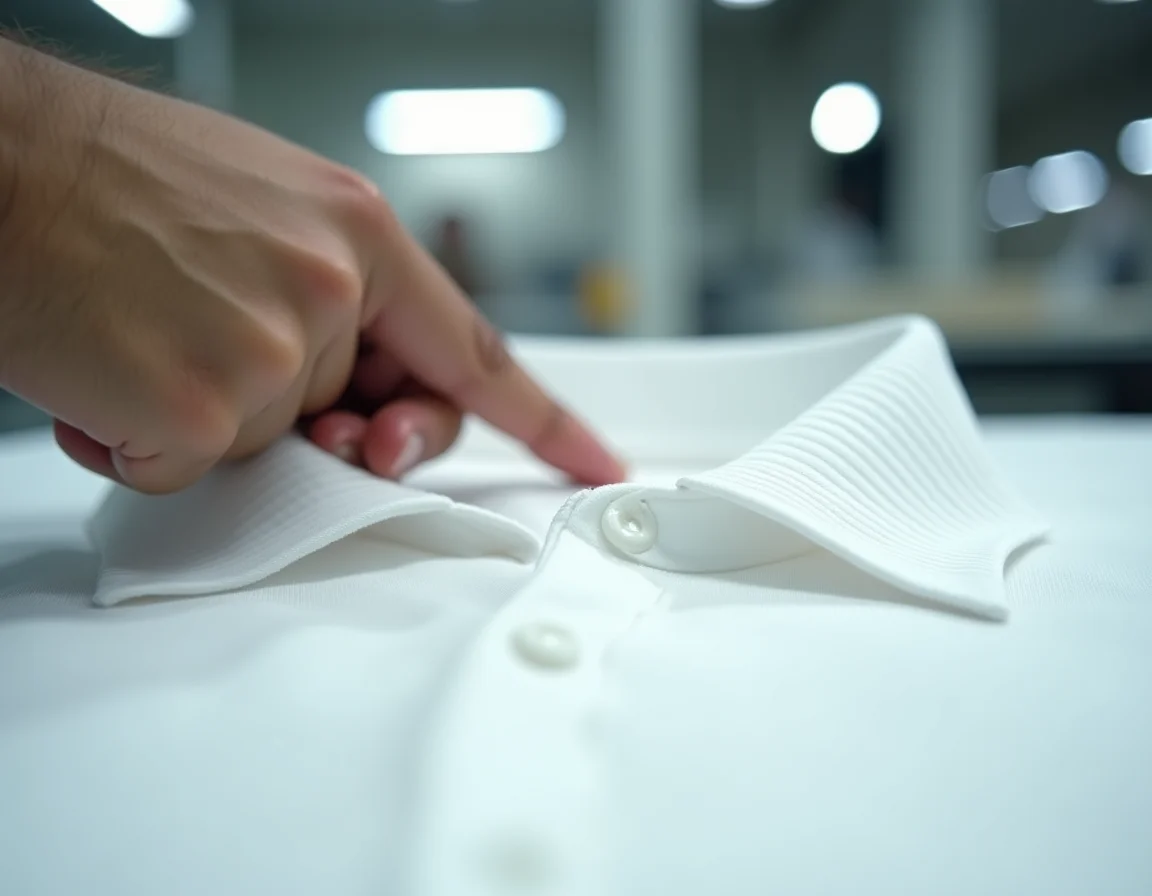
GSM stands for grams per square metre and measures fabric weight per unit area. You are probably familiar with body fabric GSM — 180 GSM for everyday wear, 200 GSM for premium, 220 GSM for heavy premium — but collar GSM is a separate measurement that many buyers never ask about, and suppliers rarely volunteer.
Because the collar is a separately knitted component, it can have a completely different GSM from the body. A polo body knitted at 220 GSM can be paired with a collar strip knitted at 160 GSM — and that mismatch is often where the shape-retention problem begins. A light collar on a heavy body creates a visual imbalance and washes out faster. Conversely, a collar that is heavier than the body can pull the neckline down and cause puckering at the collar-to-body seam.
For a well-made polo, the collar GSM should be proportionate to the body GSM — not necessarily identical, because interlock construction already adds density, but within a range that balances stretch and structure. As a practical rule of thumb: for a 200–220 GSM polo body, a collar knitted at 180–200 GSM interlock is typically well-matched. A rib collar for the same body should be knitted slightly heavier — closer to 200 GSM — to compensate for rib's inherently looser structure.
The easiest field check: fold the collar strip between your fingers. It should feel uniformly firm all the way along, with no thin spots. Hold it up to a window — an interlock collar should be nearly opaque. A translucent or semi-transparent collar strip is almost certainly under-weight for the application.
Tipping and Self-Collar — Two Terms You Will See on Spec Sheets
Self-Collar
A self-collar (also written as self-fabric collar) means the collar strip is knitted from the exact same yarn, in the same colour, as the polo body. There is no contrasting stripe, no extra yarn type introduced. Self-collars are the standard choice for plain blank polo t-shirts — particularly for the custom printing market — because they present a clean, uniform canvas. When you are printing a corporate logo or a brand emblem on the left chest, you want the collar to carry the same base colour without any visual interruption.
Tipping
Tipping refers to a contrasting stripe or stripe pattern knitted into the collar (and sometimes the cuff). The most classic example is a white polo with navy and red tipped collar — a two- or three-stripe accent along the collar edge. Tipping is primarily a fashion/lifestyle detail; it is not a structural feature. However, tipping does affect printability. If your client's end-customer is ordering a custom-branded polo, tipping can conflict with brand colour guidelines, which is why the plain/blank polo segment overwhelmingly uses self-collar construction.
From a quality-checking standpoint, tipped collars introduce an additional inspection point: stripe alignment. When a tipped collar is stitched to the body, the stripe must run parallel to the collar edge with consistent width all the way around. Any deviation is immediately visible and is grounds for rejection at the client level.
Why Polo Collars Lose Shape After Repeated Washing
This is the question buyers ask most often — and the answer requires understanding what actually happens to a knitted fabric inside a washing machine. During a wash cycle, hot water + agitation relaxes the yarn tension that was set during knitting and finishing. If the collar construction does not have sufficient dimensional stability, the loops shift, the grain torques, and the collar emerges from the dryer in a slightly different shape than it went in. Repeat this 15–20 times and the distortion accumulates into a visibly wavy or flared collar.
Three factors govern how well a collar resists this:
- Knit construction density — Interlock's double-layer locking means there are far fewer free loop ends that can shift. Rib's open structure gives loops more freedom to migrate under wash agitation.
- Yarn quality — Ring-spun combed cotton yarn has longer, more parallel fibres that interlock tightly and resist fibre migration. Carded or open-end spun yarn has shorter, more randomly oriented fibres that shed and shift more readily.
- Pre-shrink and bio-wash treatment — A collar strip that has been properly pre-shrunk before assembly will not undergo dimensional change during consumer washing. Bio-washing (enzyme treatment) smooths fibre ends and reduces friction, which paradoxically helps the collar maintain its set shape by reducing surface abrasion between fibres.
There is a fourth factor that is almost never mentioned in sales literature but is critical in practice: collar fusing. Some manufacturers fuse an interlining between the two layers of the collar fold to give it artificial stiffness. This makes the collar look excellent on a hanger and in a sample room, but fusing can delaminate after washing — causing the collar to go limp or bubble. To understand how fusing interacts with collar shape retention in more detail, the article on polo collar fusing vs non-fusing covers this specific failure mode in depth.
The Bulk Buyer's Sample Inspection Checklist for Polo Collars
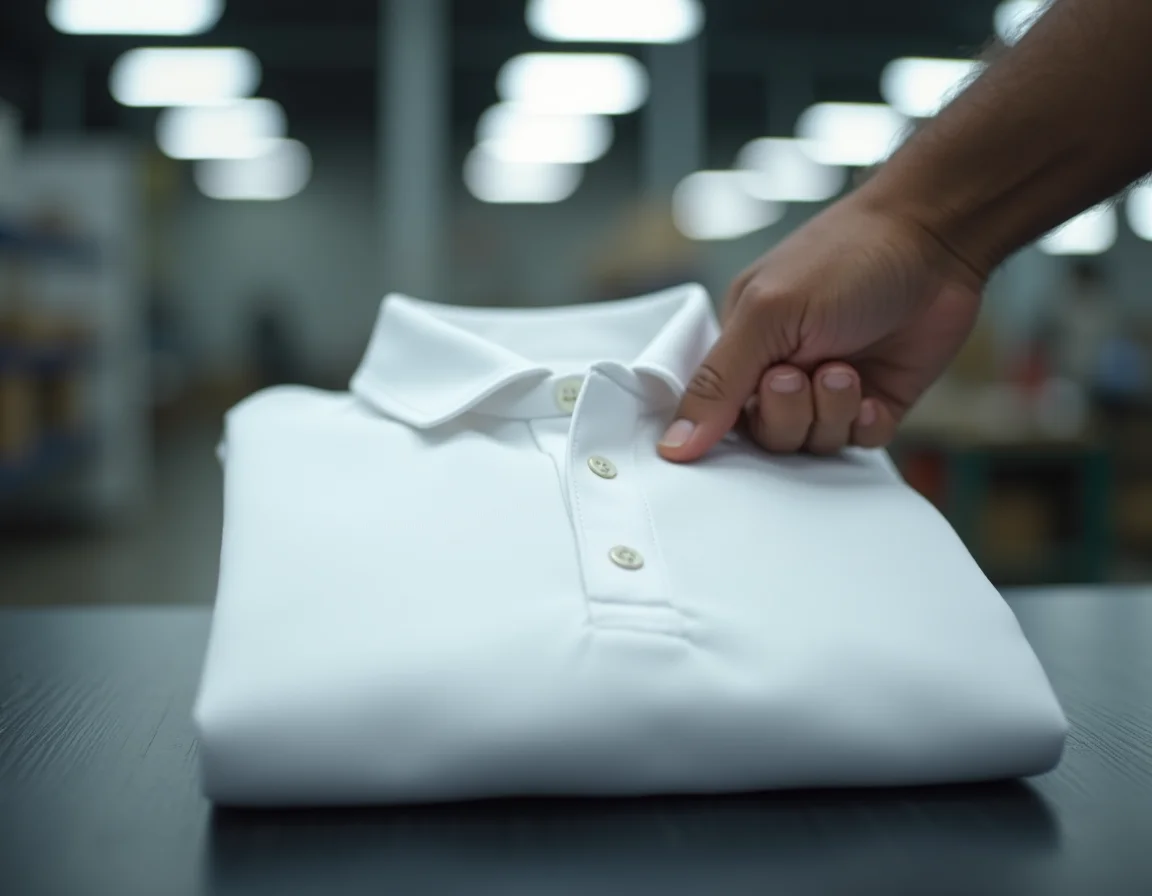
Before you approve a polo sample for a bulk order — whether you are buying 50 pieces or 5,000 — the following checks should be performed physically on the sample in your hands. These are not theoretical; they are the same checks that experienced garment sourcing professionals use on the floor, and you can do all of them in under ten minutes without any special equipment.
Check 1 — Stretch and Recover the Collar
Lay the polo flat on a table. Hold the collar at both ends and stretch it firmly — not aggressively, but to about 130–140% of its relaxed length. Hold for five seconds, then release. Watch what happens in the next ten seconds:
- A well-constructed interlock collar will recover to within 2–3 mm of its original length with no distortion at the fold edge.
- A quality rib collar will also recover, but you may see a momentary slight ripple along the edge that settles within five seconds — this is acceptable.
- A collar that remains elongated, shows a permanent wave along the fold edge, or develops a slight twist in the grain after a single stretch has insufficient elastic recovery for bulk printing use — it will fail much faster under wash cycling.
Repeat this check twice more. By the third stretch-and-release, any structural weakness in the collar becomes apparent. A collar that degrades progressively across three stretch cycles (elongating further each time) indicates yarn that is too low in twist count or a knit that is too open.
Check 2 — Examine the Collar Band Stitching
The collar band is the narrow strip of fabric that closes the collar to the neckline, running from one edge of the placket to the other. This band is under continuous tension whenever the garment is worn, and its stitching quality is a direct indicator of how the polo will hold up in daily use.
- Turn the polo inside out. The collar-band-to-body seam should show a consistent, tight stitch — ideally a 4-thread overlock or a flat-seam construction. Gaps, skipped stitches or thread loops indicate a machine tension problem that will cause seam failure after washing.
- The collar band top-stitch (visible from the front, running along the bottom edge of the collar on the outside) should be straight and parallel to the collar edge. Even a 2 mm deviation across the full width of the collar is visible once the shirt is on a hanger and will be noticed by end-customers.
- Press the collar band flat against the body and look at the seam from the front. There should be no puckering or gathering at the seam — this indicates the collar band fabric was cut or knitted to the correct length relative to the neckline circumference. A collar band that is too short will pucker; one that is too long will create a floppy, detached look at the neck.
Check 3 — Assess Placket Construction and Button Alignment
The placket is the reinforced strip of fabric at the front of the polo through which the buttons pass. It is a structural component — not just aesthetic — and its quality directly affects how the collar sits when the buttons are done up.
- Lay the polo face-up on a flat surface and button all buttons. The placket should lie completely flat with no curl, twist or diagonal pull. If the placket curls outward, the interlining (if any) is misapplied, or the placket fabric cut was off-grain.
- Check button alignment with a ruler or by eye. Buttons should be positioned on the vertical centre line of the placket, equally spaced. A button that is off-centre by more than 3 mm will cause the placket to skew to one side when buttoned, pulling the collar out of alignment with the shoulder seam.
- Test each buttonhole: the button should pass through with moderate resistance — not too loose (will pop open during wear) and not so tight that the fabric around the buttonhole distorts when buttoning. The bar-tack stitching at each end of the buttonhole should be dense and secure.
- With all buttons done up, check whether the collar lies symmetrically — equal height on both the left and right sides of the placket. An asymmetric collar stand almost always indicates that the collar-to-placket attachment was misaligned during assembly.
Interlock vs Rib Collar — Side-by-Side Comparison for Bulk Buyers
Use this table as a quick reference when evaluating polo samples or comparing supplier specifications:
| Parameter | Interlock Collar | Rib Collar |
|---|---|---|
| Knit structure | Double-faced, two rib layers locked together | Single alternating needle structure, one layer |
| Surface texture | Smooth on both faces, no visible wales | Visible vertical ribbing (wales and channels) |
| Horizontal stretch | Low to moderate (15–25%) | High (40–80% depending on construction) |
| Density / opacity | Dense, nearly opaque | More open, semi-transparent at light rib weights |
| Shape retention after washing | Excellent — minimal distortion over repeated cycles | Moderate — prone to wavy edge if GSM is low |
| Risk of collar torque/twist | Low | Moderate to high (especially below 180 GSM rib) |
| Typical use case | Corporate polo, premium branded polo, institutional wear | Casual polo, fashion polo, budget segment |
| Printing suitability | Excellent — flat surface, no texture interference | Good — ribbed texture can affect fine-detail prints near collar |
| Placket requirement | 2-button minimum (collar does not stretch open easily) | 2-button standard (but stretch allows 1-button in casual styles) |
| Cost position | Higher (more yarn per cm², additional knitting passes) | Lower to mid-range |
How Collar Construction Relates to the Body Fabric — A Unified View
A polo t-shirt is only as good as the coherence between its collar and body. Mismatches — whether in GSM, yarn type, shrinkage rate or wash treatment — show up as visible defects after the first few washes: the collar sits proud of the body seam, or the body shrinks and the collar doesn't (or vice versa), creating a gathered neckline.
At Sale91.com, polo t-shirts are manufactured in-house in Tiruppur — the collar fabric and the body fabric are knitted from the same ring-spun combed cotton yarn on controlled machines, which means the shrinkage rate, dye uptake and bio-wash response are consistent across both components. This matters specifically for custom printing customers: when you print on a polo and the customer washes it, you want the collar and body to behave as a single unit, not as two separately-sourced components with different dimensional behaviours.
For buyers who are also working with hem and cuff fabric alongside collar construction, it is worth noting that the rib fabric used for polo cuffs can introduce a separate twist-and-torque issue unrelated to the collar — the article on hem twist in rib fabric covers that specific problem and how to check for it in a sample.
What to Ask Your Supplier About Collar Specification
Most polo suppliers in the plain/blank segment do not proactively share collar specifications in their product listings. You need to ask. Here are the exact questions that will give you useful answers:
- "Is the collar interlock or rib knit?" — A supplier who cannot answer this immediately either does not know their own product or sources collars externally from a different mill.
- "What is the collar GSM?" — Acceptable answer: a specific number. Unacceptable answer: "same as the body" (because collar fabric is knitted separately and measured separately).
- "Is the collar self-fabric or tipped?" — Critical for plain/blank printing use cases.
- "Is there any fusing or interlining in the collar?" — If yes, ask what the fusing is (woven, non-woven, or fusible webbing) and whether it has been wash-tested.
- "What stitch construction is used at the collar band seam?" — 4-thread overlock or flat-seam are the correct answers for a quality polo.
- "Has this collar been pre-shrunk as part of the bio-wash process?" — Pre-shrunk collar strips that are pre-shrunk before assembly (not just after) give better dimensional stability.
Own Knitted Blank Wears — Polo Range at Sale91.com
Sale91.com (also known as BulkPlainTshirt.com) stocks both Cotton Polo and Premium Polo options, manufactured at its own Tiruppur facility using 100% ring-spun combed cotton. Because the fabric is own-knitted — not sourced from an external mill or traded — the collar fabric and body fabric come from the same production batch, with consistent GSM, consistent colour, and consistent pre-shrink treatment.
For current pricing on polo t-shirts, visit the product catalog at BulkPlainTshirt.com — live published rates are maintained there, and rates are not reproduced here to avoid confusion with outdated figures. What can be stated is that Sale91.com offers an Rs 3/piece online purchase discount for any quantity, and an additional Rs 2/piece discount applies on orders of 500 pieces or more. New buyers can avail 50% COD on their first order (with a 3% COD charge); from the second order onwards, the payment is prepaid.
MOQ for polo t-shirts from ready stock is as low as 10 pieces — which means you can order a genuine production-run sample at scale before committing to a larger quantity. This is the correct way to verify collar construction and wash behaviour: order a small set from the actual ready stock, wash them five times in a standard cycle, and then evaluate against the checklist in this article.
Suppose you are deciding between two polo options and want to verify collar construction before ordering 500 pieces. The right process is: order 10–20 pieces from ready stock via Sale91.com, run five standard machine wash cycles, then apply the stretch-recover, stitch-check, and placket-alignment checks documented in this article. What you observe on 10 pieces after five washes is what 500 pieces will look like after five washes for your end customer.
Watch: Polo Collar Quality — What to Look For
Frequently Asked Questions
More Articles



Ready to Inspect and Order Plain Polo T-Shirts?
Browse the full polo range — Cotton Polo and Premium Polo — with live pricing, colour options, and GSM specs. MOQ from 10 pieces on ready stock. Own-knitted from Tiruppur, warehoused in Delhi (Khanpur). 50% COD available for new buyers.
View Polo T-Shirts on Sale91.com →