₹85 Plain T-Shirt Quality Check — 5 Things That Make Cheap Tees Look Brand Level for DTF Print
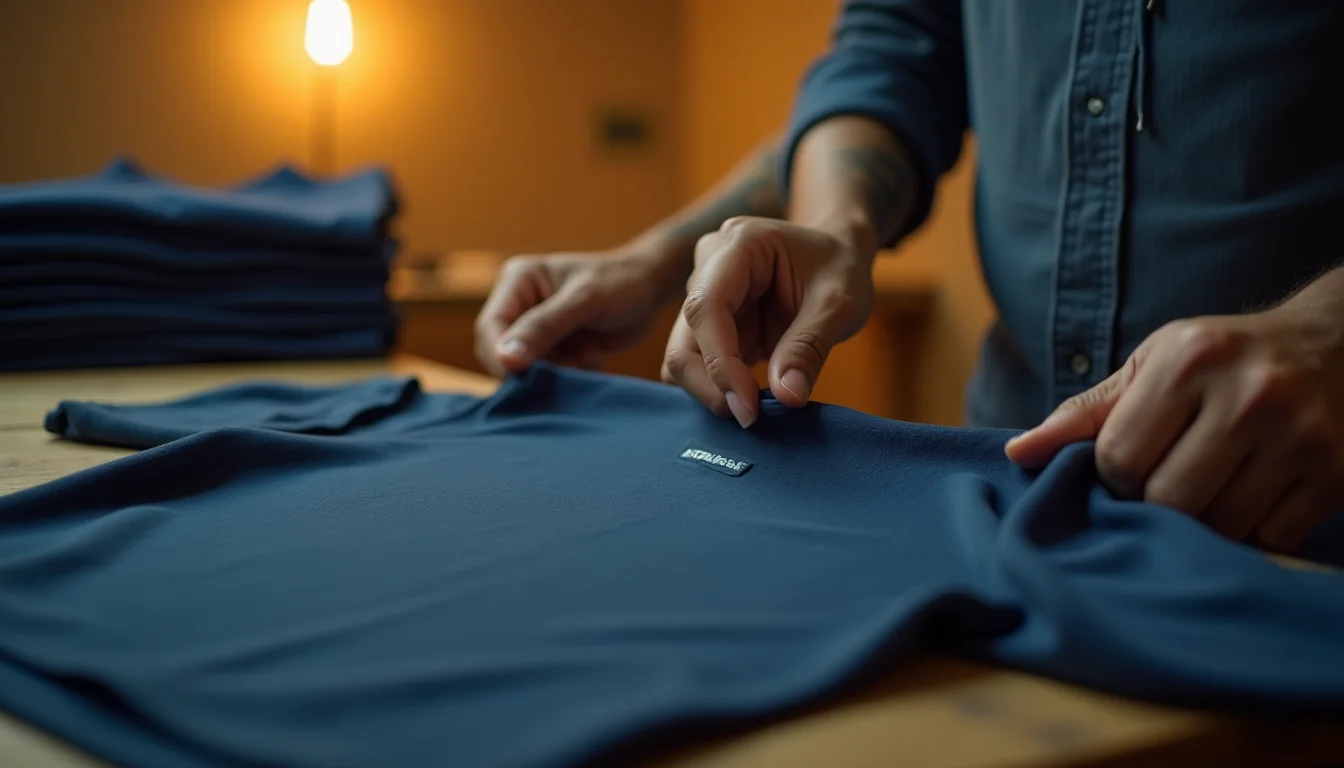
At ₹85 per piece, a plain t-shirt should not feel cheap. Yet printing businesses across India — running DTF, screen print, and heat transfer operations — regularly face quality complaints from clients who say the finished garment "doesn't feel brand-level." The frustrating part? The print itself is perfect. The t-shirt blank is the problem.
This guide breaks down the exact five checkpoints that determine whether a ₹85 blank tee will deliver a premium, brand-consistent result or a local-market feel — and explains what to look for, spec by spec, before you place a bulk order. If you've ever wondered why two t-shirts at the same price point feel completely different in your hands, the answer is always in these five details.
Quick note: Terms like GSM, bio-wash, and pre-shrunk are industry fundamentals — see our FAQ for a full glossary — so we'll go straight into the quality specs below without re-explaining the basics.
Why ₹85 Is Not the Problem — The Spec Sheet Is
The price of a blank t-shirt is determined by yarn type, fabric weight, finishing process, and construction quality — not by the brand name printed on the tag. A t-shirt made from ring-spun combed cotton at 200 GSM, properly bio-washed and cut with straight side seams, will look and feel premium regardless of whether it costs ₹85 or ₹185. The issue arises when a supplier cuts costs at the yarn, finishing, or stitching stage while keeping the price point identical to a genuinely premium blank.
For printing businesses — especially those running DTF or screen print — the blank tee is your canvas. A poor canvas produces poor art, no matter how high-end your RIP software or ink set is. Understanding these five specifications means you can make informed sourcing decisions rather than discovering the problem after 300 pieces are printed and delivered.
It's also worth understanding that the same GSM can hide very different yarn quality — which is one of the core reasons two identically-priced t-shirts can feel worlds apart in the hand.
The 5-Point Quality Checklist for ₹85 Plain T-Shirts
Your Pre-Bulk-Order Checklist
- Collar rib: 1×1 ribbed knit — not flat knit
- Fabric weight: minimum 200 GSM for print bases
- Bio-wash finish: smooth hand-feel, no chemical odour
- Side seam alignment: straight from armhole to hem
- Yarn type: ring-spun combed cotton — not carded open-end
Checkpoint 1 — Collar Rib: 1×1 vs Flat Knit
The collar is the first thing a person sees and touches when picking up a t-shirt. A 1×1 ribbed collar — where one knit stitch alternates with one purl stitch — has natural elasticity. It stretches when you pull the shirt over your head and bounces back to its original shape. After 20 washes, it still looks neat. A flat-knit collar has no memory. It stretches out, curls unevenly, and within a few washes begins to look worn out. Budget suppliers often use flat-knit collars because it saves ₹2–4 per piece in production — a cost that becomes your quality problem.
For DTF and screen print work specifically, a curled or misshapen collar creates perception issues even when the print itself is flawless. The end consumer judges the entire garment as "cheap," and that feedback comes back to the printer — not to the t-shirt supplier. Check the collar rib by stretching it gently and releasing. A 1×1 rib returns to shape immediately. A flat-knit collar stays stretched or curls.
Checkpoint 2 — Fabric Weight: Minimum 200 GSM for Printing
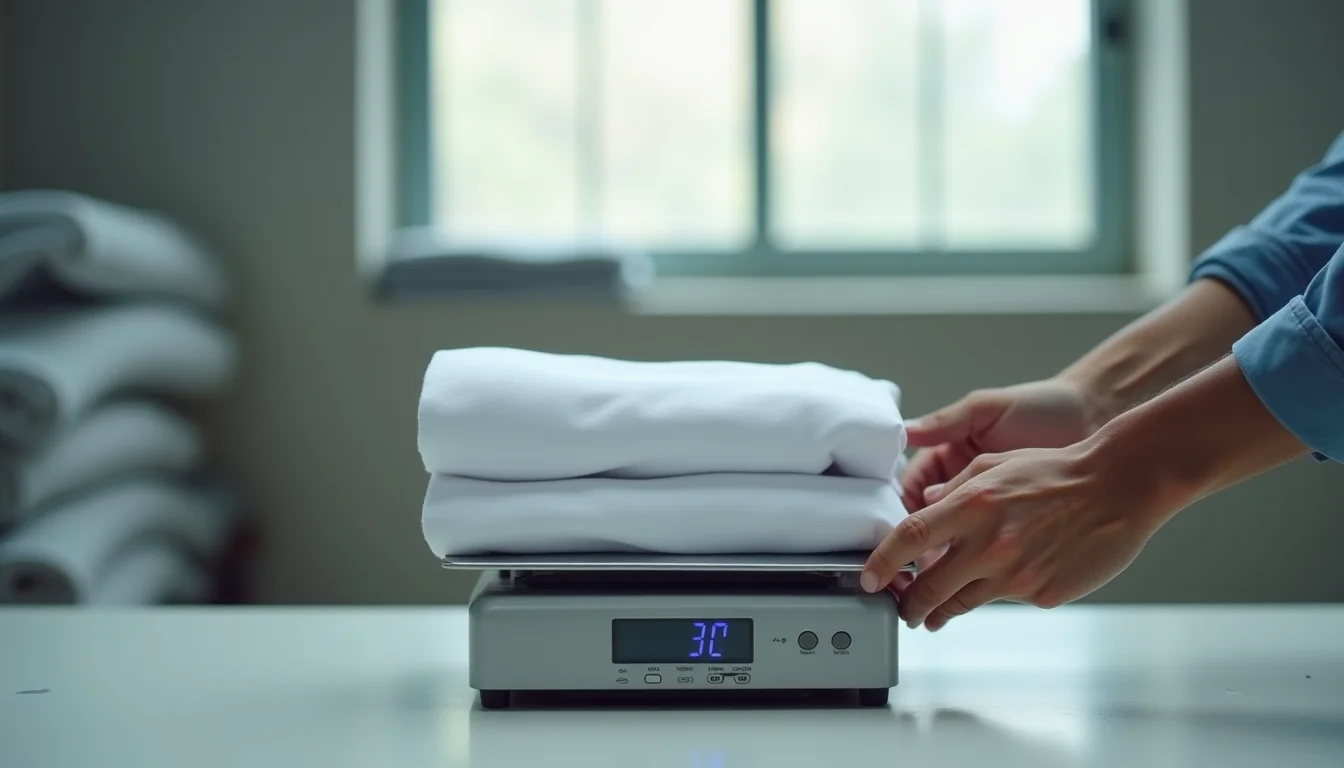
GSM (grams per square metre) is the single most measurable quality indicator for a plain t-shirt. For printing applications — DTF, screen print, heat transfer, or DTG — a minimum of 200 GSM is the practical floor. Here's why: lighter fabrics (such as 150–180 GSM) have a looser weave structure. During heat press or curing, the thinner substrate absorbs ink differently, and the print surface can feel stiffer relative to the fabric around it. At 200 GSM and above, the tighter, denser weave provides a more consistent ink absorption surface and better print opacity on dark colours.
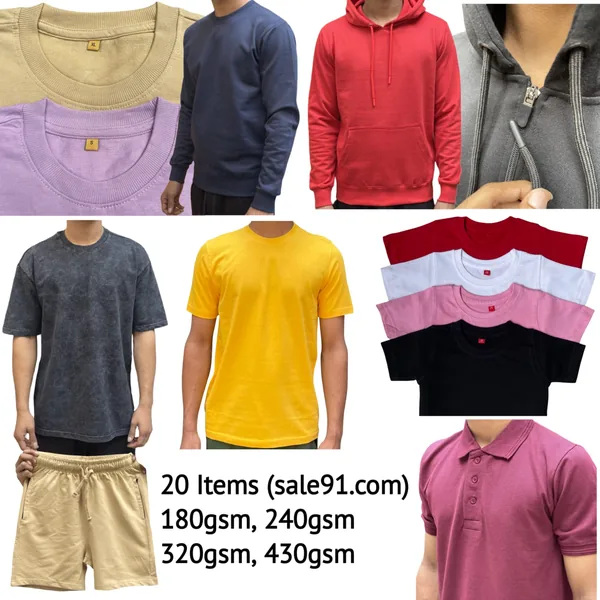
At Sale91.com, the standard range starts at 180 GSM for everyday casual use and 200 GSM for the premium print-base category — with 210 and 220 GSM options for heavier premium applications. For most DTF printing businesses, 200 GSM is the sweet spot: enough weight to feel substantial in the hand, not so heavy that it becomes a formal-wear piece.
Print-Use Decision Table: Which GSM for Which Print Method?
This table is built from Sale91.com's actual product range and is designed to help printing businesses choose the right blank for their specific workflow:
| GSM | Best For | Print Methods | Hand-Feel | Verdict |
|---|---|---|---|---|
| 180 GSM | Everyday casual, summer wear | DTF (light colours), Heat Transfer | Light, breathable | Acceptable; not recommended for dark-base DTF |
| 200 GSM | Premium print base, corporate gifting | DTF, Screen Print, Heat Transfer, DTG | Substantial, smooth | Recommended minimum for print work |
| 210 GSM | Brand merchandise, retail-feel | All print methods | Dense, premium | Excellent print surface |
| 220 GSM | Heavy premium, oversized fits | Screen Print, DTF | Heavy, structured | Best for oversized/streetwear print |
| Below 180 GSM | Promotions, throwaways | Simple 1-colour screen print only | Thin, flimsy | Avoid for DTF or multi-colour work |
Source: Sale91.com product range. GSM verified at yarn-knitting stage in Tiruppur manufacturing unit.
Checkpoint 3 — Bio-Wash: The Difference Between "Smooth" and "Scratchy"
Bio-washing is an enzyme treatment applied after dyeing that removes protruding fibres from the fabric surface, giving the t-shirt a noticeably softer, smoother feel. For printing, a bio-washed surface is more consistent — fewer loose fibre ends means the ink or film sits more evenly across the fabric. An un-bio-washed t-shirt will feel slightly coarser, and after the first wash cycle, the surface can pill or feel uneven around the print edges.
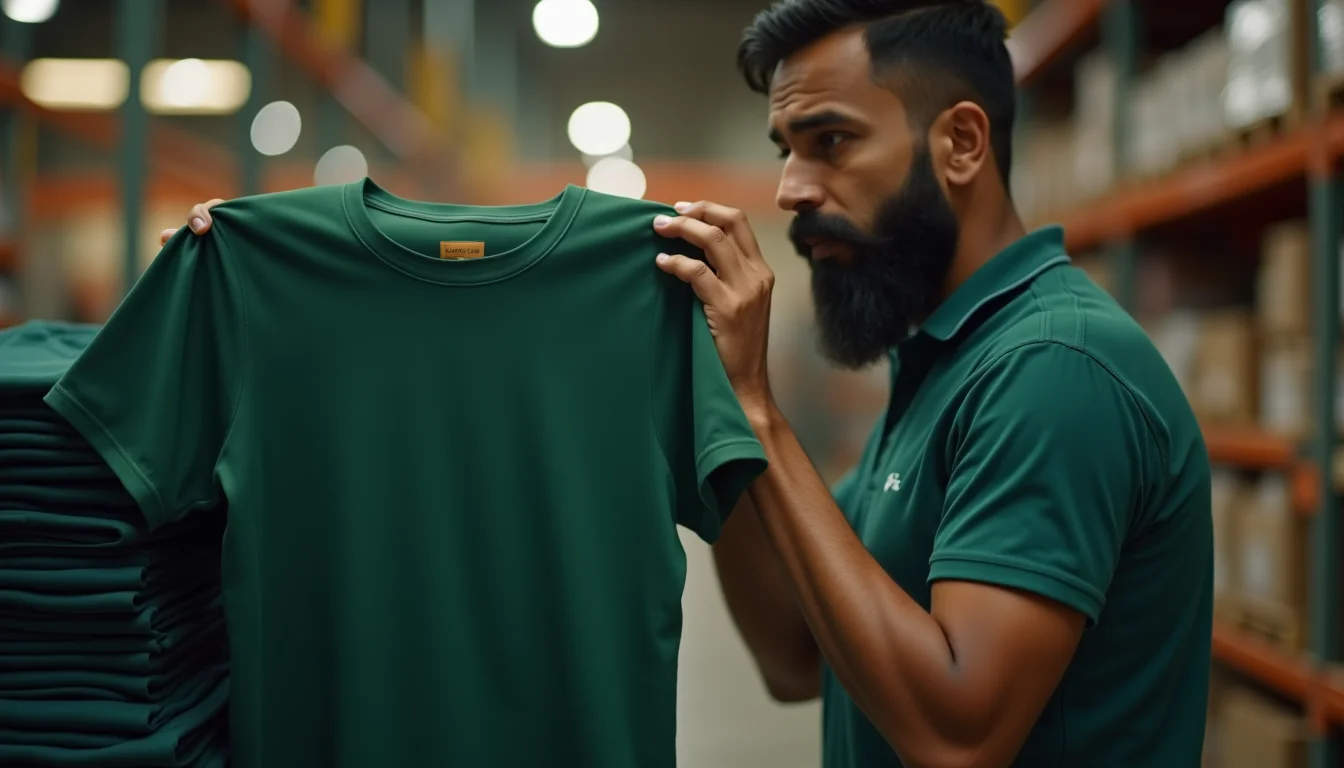
Testing for bio-wash is straightforward: rub the fabric between your thumb and fingers. A bio-washed shirt feels immediately smooth, almost silky. A non-bio-washed shirt feels rougher. Also check for chemical odour — a properly finished bio-washed shirt should have no strong chemical smell. If you detect a sharp chemical scent, the washing process was either incomplete or skipped. All t-shirts manufactured and dispatched from Sale91.com's Tiruppur facility are bio-washed as a standard process — it is not an optional upgrade.
Checkpoint 4 — Side Seam: Straight, Not Twisted
A twisted side seam is one of the most common — and most visible — quality failures in lower-grade t-shirts. It happens when the fabric is not properly pre-shrunk before cutting and stitching. The residual tension in the yarn causes the fabric to rotate slightly after washing, pulling the side seam toward the front or back of the garment. On a printed tee, a twisted seam means the print also appears to rotate, making the garment look misaligned even when the print registration was perfect.
To check: lay the t-shirt flat on a table after washing once. The side seams should run perfectly straight from the armhole down to the hem. If the seam has rotated even slightly toward the front, that garment is not pre-shrunk correctly. This is a structural issue, not a washing issue — it cannot be corrected after the fact. Insist on pre-shrunk fabric as a non-negotiable specification, and always wash your sample before approving a bulk order. This is precisely why the risk of cutting corners on stitching quality in bulk orders goes far beyond just thread — it includes seam construction and fabric preparation.
Checkpoint 5 — Ring-Spun Combed Cotton: The Print Surface Difference
Yarn type is the most technical of the five checkpoints, but it has the most visible impact on print quality. There are two primary yarn types used in t-shirt manufacturing: carded open-end (OE) yarn and ring-spun combed yarn. Carded OE yarn is cheaper and faster to produce — it retains short, irregular fibres that create a slightly rough, uneven surface. Ring-spun combed yarn goes through an additional combing process that removes shorter fibres, leaving only the longer, more uniform fibres. The result is a denser, smoother, more consistent yarn — and therefore a smoother fabric surface.
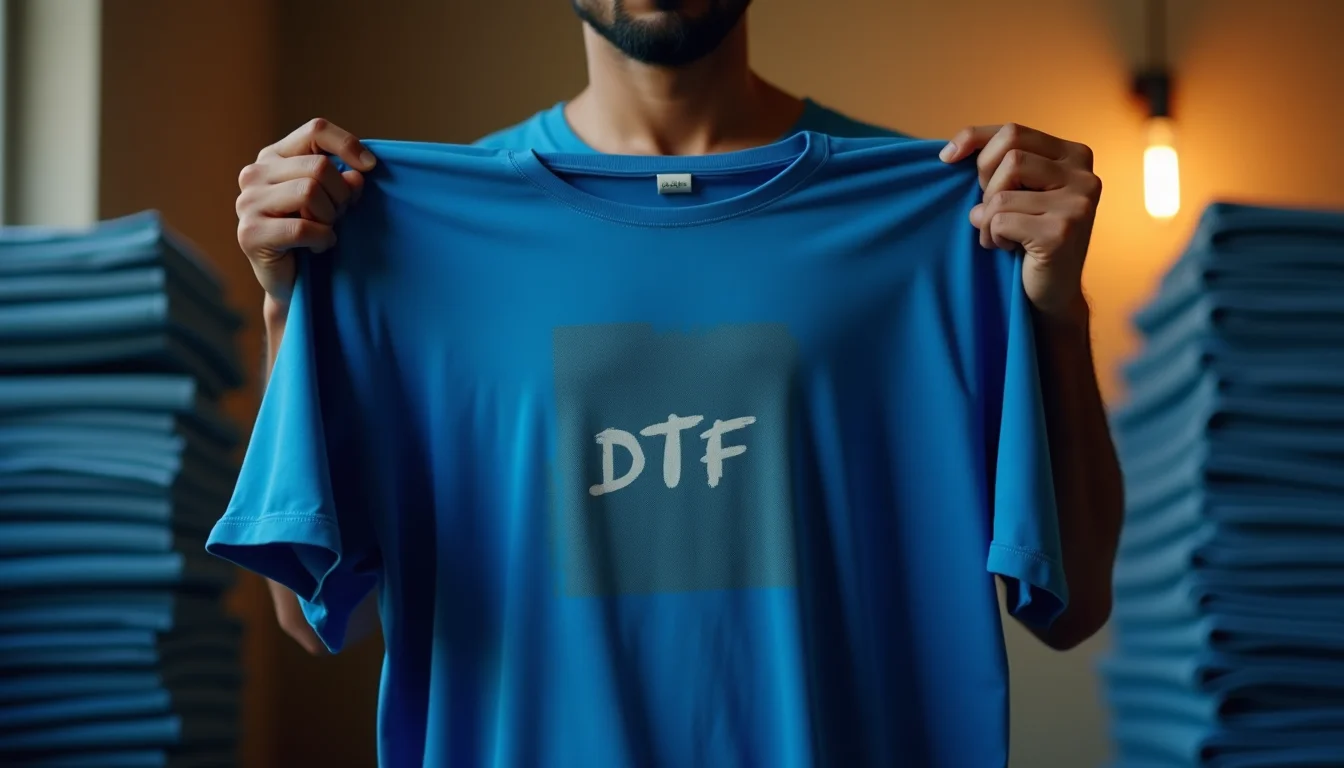
For DTF printing specifically, the print film bonds to the fabric surface. On a ring-spun combed cotton tee, the bond is more even and the colours appear more vibrant and consistent because the surface itself is more uniform. On a carded OE shirt, the uneven surface creates micro-gaps in the bond, which can lead to slightly faded-looking prints or uneven colour saturation — especially noticeable in gradients or photographic prints. If you want to understand why cheap fabric at ₹40 vs ₹85 ruins print quality, the yarn type difference is the primary technical explanation.
How to Actually Verify These 5 Points Before Placing a Bulk Order
Reading specifications on a product page is a starting point, but the only reliable verification is a physical sample test. Here is a practical step-by-step process that printing businesses should follow before committing to any bulk quantity:
- Order 1–5 sample pieces from the supplier. Sale91.com has an MOQ of just 10 pieces on ready-stock items, so you can test a small quantity before scaling.
- Wash the sample once with your standard laundry process before printing anything.
- Lay flat and check the side seam — it must be straight after washing.
- Check the collar rib — stretch it gently and observe the recovery speed and uniformity.
- Feel the surface — it should be smooth and consistent, not rough or pilling.
- Print one piece using your actual process (DTF, screen, heat transfer) and wash again.
- Evaluate the print result — colour saturation, bond consistency, and overall hand-feel of the printed area.
Only after this seven-step process should you place a larger bulk order. Suppose you order 500 pieces without this verification — a single spec failure at the yarn or bio-wash stage means 500 pieces of printed stock that your end clients will feel is below their expectation. The cost of samples is always lower than the cost of reprints.
What Sale91.com's Manufacturing Process Guarantees on These 5 Points
Sale91.com (also known as BulkPlainTshirt.com) is not a trader or reseller. The fabric is knitted in-house at their Tiruppur manufacturing facility — India's largest textile production hub. This vertical integration means quality control happens at the yarn stage, not just at the finished-garment stage. Here is how the five checkpoints map to Sale91.com's production process:
- Collar rib: 1×1 ribbed collar is standard across all plain round-neck tees in the catalog. No flat-knit collars.
- Fabric weight: Products range from 180 to 220 GSM for t-shirts, with 200 GSM being the default for the premium print-base line. GSM is verified at knitting — not estimated at the finished garment stage.
- Bio-wash: All garments are enzyme bio-washed as a standard production step in Tiruppur before dispatch to the Delhi warehouse (Khanpur, South Delhi).
- Side seam: All fabrics are pre-shrunk. Side seam alignment is checked as part of the finishing QC at the warehouse.
- Yarn: Ring-spun combed cotton is used across all standard product lines. No carded OE yarn in the print-optimised range.
With 1 lakh+ pieces in ready stock at any given time, and 1,25,232+ pieces dispatched in the last 30 days alone, the consistency you see in the specifications is maintained at production scale — not just for small sample quantities. Browse the full product catalog at BulkPlainTshirt.com to see available GSMs, colors (15+ shades), and styles.
Pricing Reality: What You Actually Get at ₹85 With the Right Supplier
₹85 per piece, when sourced from a manufacturer that owns its knitting process, can genuinely deliver all five quality checkpoints. The economics work because a direct manufacturer eliminates the trader margin — you are paying factory price, not a reseller markup. When the same ₹85 goes to a trader who is sourcing from multiple factories with inconsistent specifications, the quality variance is unpredictable.
For bulk orders at Sale91.com, the pricing structure includes an additional ₹2 per piece discount for orders of 500 pieces or more, and a ₹3 per piece online purchase discount for any quantity ordered through the website. For new buyers, 50% COD is available on the first order (with a 3% COD charge), with prepaid terms from the second order onward. This means you can verify the product quality on the first COD order before committing to larger prepaid quantities.
4 Common Mistakes Printing Businesses Make When Sourcing Blank Tees
1. Selecting by Price Alone Without Checking GSM
Two suppliers quoting ₹85 may be offering 180 GSM and 200 GSM respectively. Without asking specifically for the GSM and verifying it on a sample, you are sourcing blind. Always ask for the GSM in writing before ordering.
2. Not Washing the Sample Before Printing
Side seam twist and fabric shrinkage show up after the first wash — not before. Printing on an unwashed sample and approving the quality based on a freshly opened tee is a process gap that leads to post-wash complaints from clients.
3. Confusing "Combed" With "Ring-Spun Combed"
A fabric can be combed without being ring-spun. Ring-spinning and combing are two separate processes. A truly premium print-base fabric is both ring-spun AND combed — ask your supplier to confirm both specifications, not just one.
4. Ordering Large Quantities Without a Sample Run
Suppose you order 1,000 pieces to get a better price per unit. If the collar rib or bio-wash specification is off, all 1,000 pieces become a problem. A sample run of 10–20 pieces costs a fraction of a bulk order and eliminates the risk entirely. Sale91.com's 10-piece MOQ on ready-stock items exists precisely to support this verification process.
Watch the Video
This YouTube Short covers all five quality checkpoints in under 60 seconds — useful to share with your team or sourcing partner:
Frequently Asked Questions
Ready to Order Brand-Level Blank Tees?
All five checkpoints — 1×1 rib collar, 200 GSM, bio-wash, straight side seam, ring-spun combed cotton — are standard specifications at Sale91.com. Start with a 10-piece sample, print it, wash it, and see the difference before going bulk.
1 lakh+ pieces ready in stock. PAN India delivery. Export available.
Order at Sale91.com →