Royal Blue T-Shirt Color Fade After Printing — 240 GSM Wash Test & Reactive Dye Fix for Bulk Orders
It is one of the most frustrating calls a printing business owner can receive. A customer complains that their royal blue t-shirts have faded after just a few washes — but the print itself looks perfectly fine. The ink survived, but the fabric colour did not. If you have ever experienced this, or if you are planning to start printing on dark-coloured blank t-shirts, this guide is written specifically for you.
We ran a real, no-sugarcoating wash test on a 240 GSM oversized royal blue t-shirt to understand exactly what causes this problem, how to identify it before it ruins your bulk order, and what you must demand from your blank t-shirt supplier. Let us walk through everything step by step.
What Actually Happened — The Customer's Story
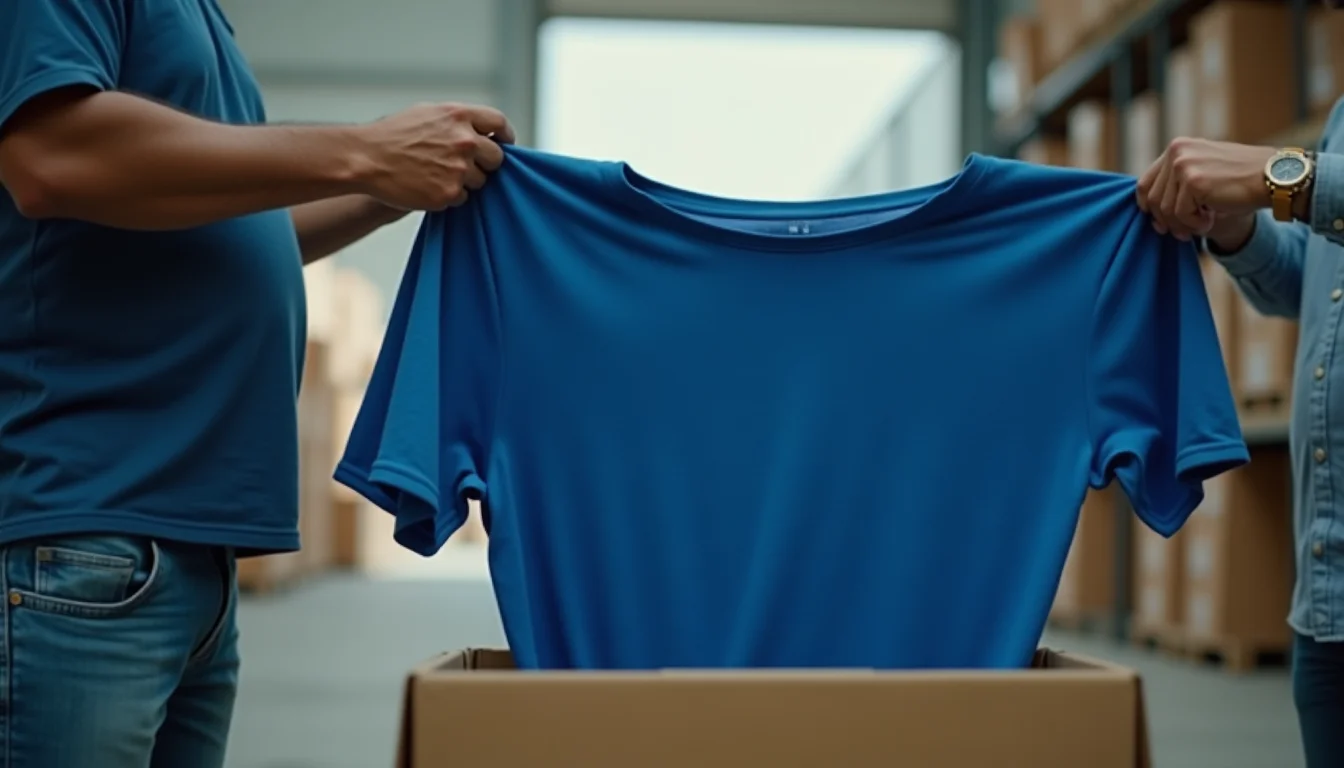
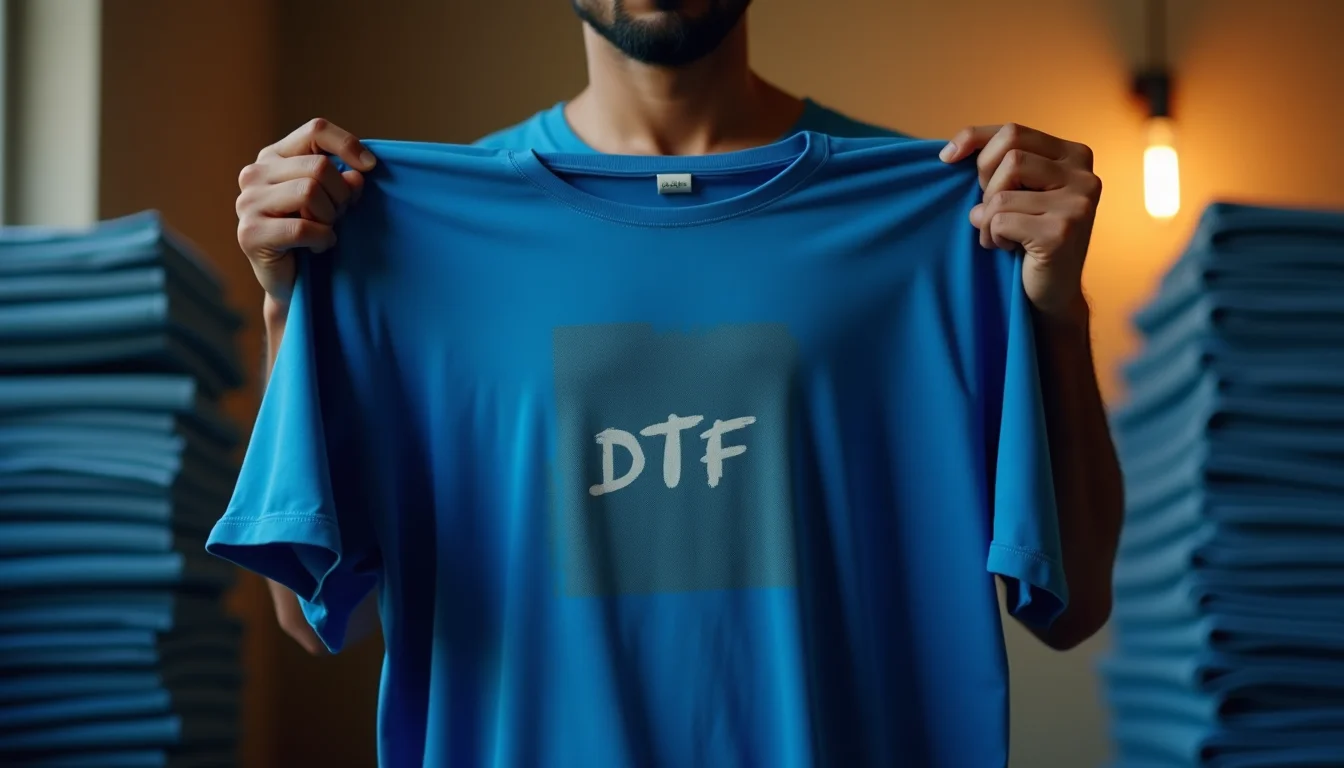
A printing business owner reached out after noticing that a batch of royal blue oversized t-shirts had turned noticeably lighter after customers washed them 4–5 times. He had used DTF (Direct-to-Film) printing, and the transfers were holding up perfectly. But the fabric around the print area had faded unevenly, making the entire t-shirt look like a washed-out, two-toned product.
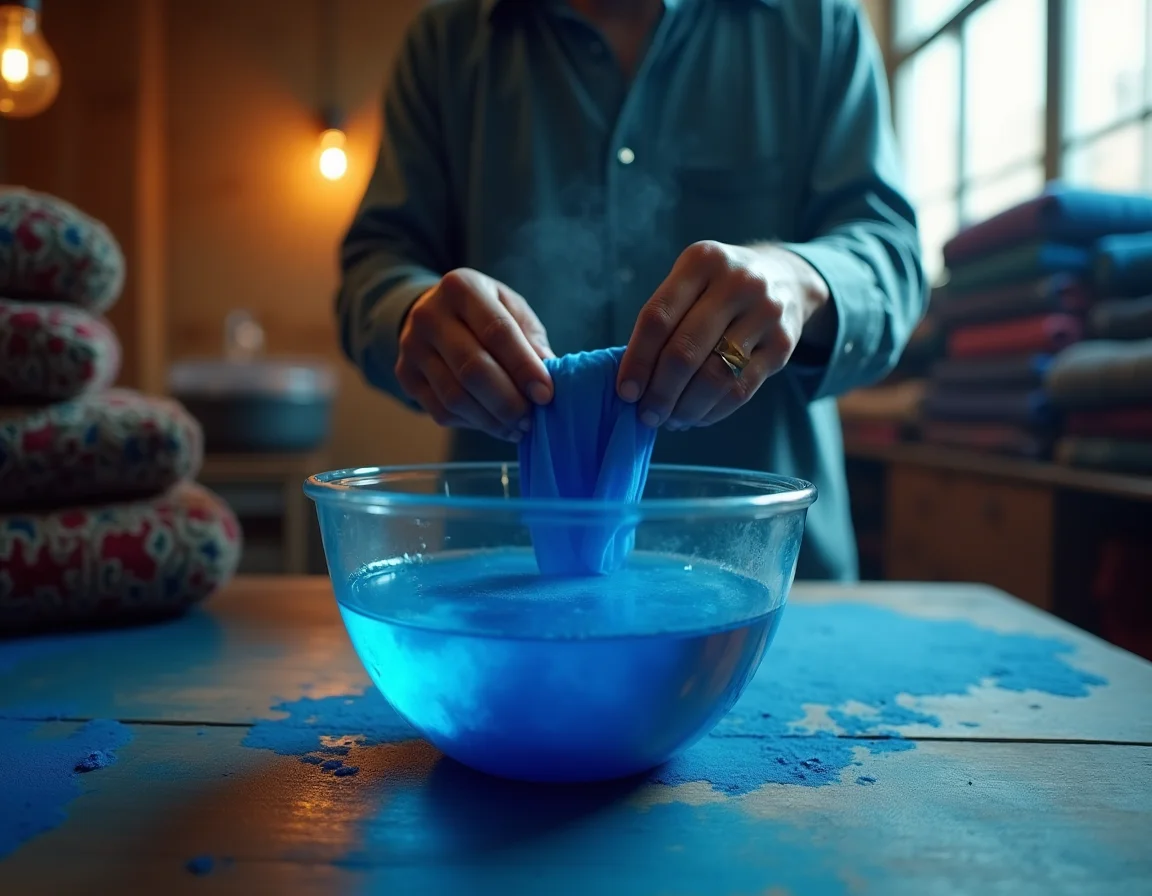
When we asked him about the first wash after printing, he confirmed that the wash water had turned deeply blue. That single detail told us everything we needed to know. If the first wash bleeds significant colour, it means the dye was not properly fixed to the fibre during the dyeing process. Excess unfixed dye washes out gradually over multiple cycles, leaving the fabric faded and uneven.
This is a particularly common issue with deep, saturated colours like royal blue, navy blue, red, and forest green — colours that require a high concentration of dye to achieve that rich, vibrant look. The more dye used, the more critical it is that the fixation process (known as soaping and washing-off) is carried out correctly at the mill.
Understanding Reactive Dye vs Pigment Dye — Why It Matters for Printing
Before we get into the wash test results, it is important to understand the two main types of dyes used on cotton t-shirts, because this distinction is at the heart of the fading problem.
Reactive Dyes (The Right Choice for Dark Colours)
Reactive dyes chemically bond with the cotton fibre at a molecular level. When applied and fixed correctly — using the right alkali, temperature, and washing-off process — the dye becomes part of the fibre itself. The result is outstanding colour fastness, even after 20–30 washes. High-quality fabric manufacturers use reactive dyes for all deep shades including royal blue.
Pigment Dyes (Surface Coating, Not Bonding)
Pigment dyes do not bond with the cotton fibre. Instead, they sit on the surface of the fabric, held in place by a binder. They are cheaper and easier to apply, but they fade faster, especially when exposed to repeated washing, sunlight, and heat. For printing businesses, pigment-dyed fabric creates a double problem: the surface binder can interfere with DTG ink adhesion, and the underlying fabric colour fades unevenly, making even a good print look bad over time.
If you are regularly ordering blank t-shirts for your printing business, understanding reactive vs pigment dye mistakes can save you from expensive, reputation-damaging batches — especially during monsoon when humidity accelerates bleeding further.
The 240 GSM Wash Test — What We Did & What Happened
We tested a 240 GSM oversized royal blue t-shirt through a structured, multi-wash colour fastness test. Here is the exact protocol we followed:
Test Protocol
- Step 1 — Hot Soak Test: Cut a small swatch from the t-shirt. Soak it in hot water (approximately 60°C) for 15 minutes. Observe the water colour.
- Step 2 — First Machine Wash: Wash the full t-shirt at 40°C with a standard detergent. Observe water colour and fabric appearance after drying.
- Step 3 — Repeat Wash (5 Cycles): Wash 5 more times under the same conditions. Compare fabric shade after each wash.
- Step 4 — Print Durability Check: After all washes, apply a DTF transfer to a fresh piece from the same batch and re-wash. Observe both print adhesion and fabric colour change.
Results After Testing
| Wash Cycle | Water Colour | Fabric Shade Change | Print Condition |
|---|---|---|---|
| Hot Soak (15 min) | Moderate blue | Slight dulling | N/A |
| Wash 1 | Light blue tint | Minimal | Excellent adhesion |
| Wash 2–3 | Very faint | Slight fade visible | Print intact |
| Wash 4–5 | Clear | Noticeable fading | Print still intact |
| Wash 6+ | Clear | Stabilised | Print intact |
Why 240 GSM Oversized T-Shirts Are Especially Prone to This Problem
Heavy GSM fabrics like 240 GSM require more dye to achieve uniform colour saturation all the way through the thicker yarn structure. This means that if a mill cuts corners on the fixation and washing-off stage, there is significantly more unfixed, "floating" dye in the fabric. This excess dye bleeds out during early washes, causing that visible fading effect.
Oversized t-shirts also use a more open, relaxed weave structure which holds more dye in the interstices between fibres — dye that has not chemically bonded and is waiting to wash out. This is why the hot soak test is such a reliable quick check: it aggressively pulls out any unfixed surface dye and gives you a clear warning signal before you commit to printing a large batch.
It is also worth noting that 240 GSM is a popular weight for printed merchandise, custom brand drops, and streetwear collections — categories where colour consistency across a batch is non-negotiable. Customers who pay a premium for a branded oversized tee will immediately notice if the colour fades after three washes. Your reputation, not just your margins, is at stake.
Many printing entrepreneurs have learned this the hard way. If you have ever been tempted to order 500 pieces without testing a sample, the story of what can go wrong with GSM and dyeing quality should be reason enough to always run a small test batch first — no matter how urgent the order is.

How to Test Colour Fastness Before Printing a Bulk Order
This is the most actionable part of this guide. Before you print on any new batch of dark-coloured blank t-shirts — especially royal blue, navy, deep red, or forest green — run these three simple tests:
Test 1 — The Hot Soak Test (5 Minutes)
Cut a 10×10 cm swatch from a t-shirt in the batch. Drop it in a cup of very hot water (as hot as your tap goes, or briefly microwaved). Wait 15 minutes. If the water turns significantly coloured, the dye is not properly fixed. Reject the batch or demand a replacement from your supplier.
Test 2 — The White Fabric Rub Test
Take a clean white cotton cloth. Dampen it slightly. Rub it firmly against the dark fabric for 10–15 seconds. If significant colour transfers to the white cloth, you have a colour bleeding problem. A mild, faint transfer on the very first rub is acceptable; heavy staining is not.
Test 3 — The Multi-Wash Before Printing Test
For any first-time purchase from a new supplier, wash 2–3 sample pieces three times before printing. Compare the shade after the third wash to the original. If the colour has shifted noticeably, you now know before investing in printing 500+ pieces. This 20-minute test can save you from a ₹50,000+ loss.
What to Look for in a Blank T-Shirt Supplier — Non-Negotiables for Printing Businesses
The quality of your finished printed product is only as good as the blank t-shirt underneath it. Here is what you must verify before committing to a bulk blank t-shirt supplier:
1. Reactive Dyes — Confirmed in Writing
Any serious manufacturer will confirm in writing that they use reactive dyes for all dark shades. Ask specifically. If your supplier cannot confirm this, walk away.
3. Bio-Washed Fabric
Bio-washing (enzyme treatment) softens the fabric and, critically, removes excess surface fibres and unfixed dye from the fabric surface. A properly bio-washed t-shirt will bleed significantly less in early washes. It also gives the surface a smoother texture that improves DTG ink adhesion and DTF transfer bonding.
3. Pre-Shrunk & Colour-Fixed
Pre-shrinking ensures dimensional stability after washing. But equally important is the washing-off process after dyeing — this is where manufacturers remove all unfixed, hydrolysed reactive dye from the fabric. Skipping or shortcutting this step is the number one reason for fading in dark colours.
4. Ring-Spun Combed Cotton
Ring-spun, combed yarn has fewer loose fibres and a more uniform surface than carded cotton. This means more even dye penetration, more consistent colour across a batch, and a smoother surface for print adhesion. For 240 GSM oversized blanks used in premium printing, this is a must.
When it comes to understanding real 240 GSM quality — fabric construction, dye quality, and pre-treatment — many buyers discover that the GSM number alone tells you very little. What matters is what goes into that GSM: yarn quality, knit structure, and finishing processes.
Royal Blue Specifically — Why This Shade Is a High-Risk Colour
Royal blue is a jewel-toned, mid-depth colour that sits in a tricky zone for dyers. It is deeper than sky blue or light blue (which use less dye and fade less aggressively) but not as dark as navy, which tends to be over-dyed and more consistently fixed. Royal blue requires a precise dye recipe and an even more precise fixing process.
The chemistry involves a specific combination of blue reactive dyes — often a mix of turquoise and red-spectrum reactive dyes to achieve that rich, vibrant royal tone. If the ratio is slightly off, or if the fixation bath temperature fluctuates, you get uneven bonding. Some dye molecules bond well; others remain loose in the fibre. These loose molecules wash out first, shifting the shade from vibrant royal blue towards a greyed-out, dull slate blue.
The lesson is simple: for royal blue specifically, always run the hot soak test. Do not assume that because the colour looks vivid in the packet, it has been properly fixed. A poorly fixed royal blue can look gorgeous on the shelf and look washed-out after five washes — by which time your customer has already posted a complaint on Instagram.
Why Sale91.com's 240 GSM Oversized Blanks Are Print-Ready
At Sale91.com, we manufacture our own fabric in-house at our Tiruppur facility. This means we control the entire process — from knitting the greige fabric to dyeing, bio-washing, pre-shrinking, and final quality checks. We do not source from traders or resellers; we own every step of the process.
Our 240 GSM oversized t-shirts are dyed exclusively with reactive dyes, properly washed off, enzyme bio-washed, and pre-shrunk before they leave our facility. We specifically designed these blanks for the Indian printing industry — DTG, DTF, screen print, and heat transfer — which means colour fastness and print adhesion are built into the product from the start, not an afterthought.
Our warehouse in Khanpur, South Delhi maintains 1 lakh+ pieces in ready stock at any time across all GSMs and colours, including royal blue. You can start with as few as 10 pieces to test quality before scaling to bulk. We also offer 50% COD on first orders for new buyers (with a 3% COD charge), so you can receive and verify quality before paying the balance.
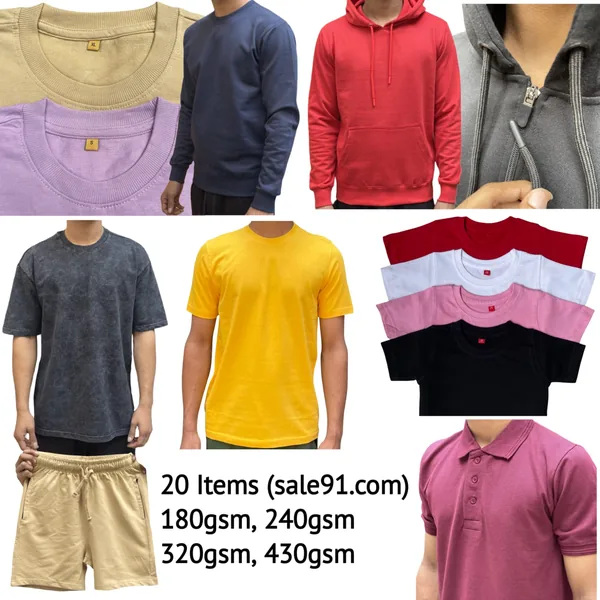
For printing businesses looking to build a consistent, reliable supply chain for blank apparel, you can browse our full range at the BulkPlainTshirt.com product catalog — from 180 GSM everyday blanks to 240 GSM oversized and 320/430 GSM hoodies and sweatshirts.
Quick Reference: GSM Guide for Printing Businesses
| GSM | Best For | Print Method Compatibility | Colour Risk Level |
|---|---|---|---|
| 180 GSM | Everyday wear, light uniforms | Screen print, DTF, Heat Transfer | Low (lighter shades) |
| 200 GSM | Premium retail, brand merchandise | DTG, DTF, Screen print | Low-Medium |
| 210–220 GSM | Heavy premium, structured tees | All methods | Medium |
| 240 GSM | Oversized, streetwear, premium drops | All methods — test first for dark shades | Medium-High for deep colours |
Understanding these GSM differences is critical for any printing entrepreneur. Committing lakhs of rupees to a bulk order without understanding how GSM, fabric construction, and dye quality interact with your print process is how businesses end up with thousands of unsellable, faded t-shirts.
Summary — Key Takeaways for Every Printing Business Owner
- The print surviving while the fabric fades is a dye quality problem, not a printing problem.
- Royal blue is high-risk because of its complex dye chemistry — always test before printing in bulk.
- The hot soak test (15 minutes in hot water) is your fastest quality check — always do it with a new supplier or batch.
- Reactive dyes properly washed off will stabilise after the first wash; pigment or poorly fixed reactive dyes will keep bleeding.
- Bio-washing removes surface dye residue and improves both colour fastness and print adhesion.
- 240 GSM oversized blanks need extra scrutiny on dye quality because their heavier structure can hold more unfixed dye.
- Always order a test batch before committing to large quantities, regardless of how urgent the order is.
Watch the Video
We documented the entire wash test on camera — including the first wash water colour and the fabric shade comparison across multiple cycles. Watch the full short below:
Frequently Asked Questions
Order Print-Ready Blank T-Shirts in Bulk
Reactive-dyed, bio-washed, pre-shrunk — manufactured in Tiruppur, stocked in Delhi. 240 GSM oversized royal blue and 15+ other colours ready for same-week dispatch. MOQ just 10 pieces. 50% COD on first order.
Order Now at Sale91.com →