Boxy Fit T-Shirt Always Out of Stock — The Real Manufacturing Reason Why 500 Pieces Need 15–20 Days in India
If you have ever called a t-shirt manufacturer and asked for boxy fit tees in bulk, you have almost certainly heard the same answer: "Ready stock nahi hai, 15–20 din lagenge." And if you have been in the custom printing or wholesale business for any length of time, this response probably frustrates you to no end — especially when your client is waiting and a deadline is looming.
So what is really going on? Is it laziness on the manufacturer's part? Bad inventory planning? Or is there a deeper, structural reason rooted in the actual science of garment manufacturing that makes boxy fit t-shirts inherently harder to stock?
The answer, as we see it from the manufacturing floor at Tiruppur, is unambiguous: it is a fabric cutting and economics problem — and once you understand it, you will never be caught off-guard by a boxy fit delay again.
In this article, we break down the full picture — from the mechanics of fabric cutting to why every brand demands different measurements, why costs are higher, and how you, as a printing business owner or bulk buyer, can plan smarter to never miss a deadline because of this issue.
What Exactly Is a Boxy Fit T-Shirt?
Before we get into manufacturing mechanics, let us make sure we are aligned on terminology. A boxy fit t-shirt (also called a square fit, relaxed fit, or drop-shoulder t-shirt in different markets) is a style where:
- The chest and body width is significantly wider than a standard regular or slim fit
- The shoulder seam drops lower — typically 2–4 cm beyond the natural shoulder point
- The body length is often shorter to maintain a square, blocky silhouette
- The sleeves are wider at the bottom, giving a relaxed, streetwear-inspired look
This silhouette has become enormously popular in the Indian streetwear, athleisure, and custom printing markets over the last 3–4 years. DTG printing businesses, screen printers, and merchandise brands all love boxy fits because the wider chest gives more printable real estate and the overall look is highly on-trend with younger buyers.
But here is the problem: that extra width, that dropped shoulder, and that square proportion — they are not just style choices. They have direct, measurable consequences on the factory floor.
The Core Problem: Fabric Cutting Wastage
To understand why boxy fits are always made-to-order, you need to understand how a t-shirt is actually cut from a roll of fabric. This is the part nobody in the sales chain ever explains to the buyer, and it is the single biggest reason behind every "15–20 din lagega" you have ever heard.
How Fabric Is Cut in a T-Shirt Factory
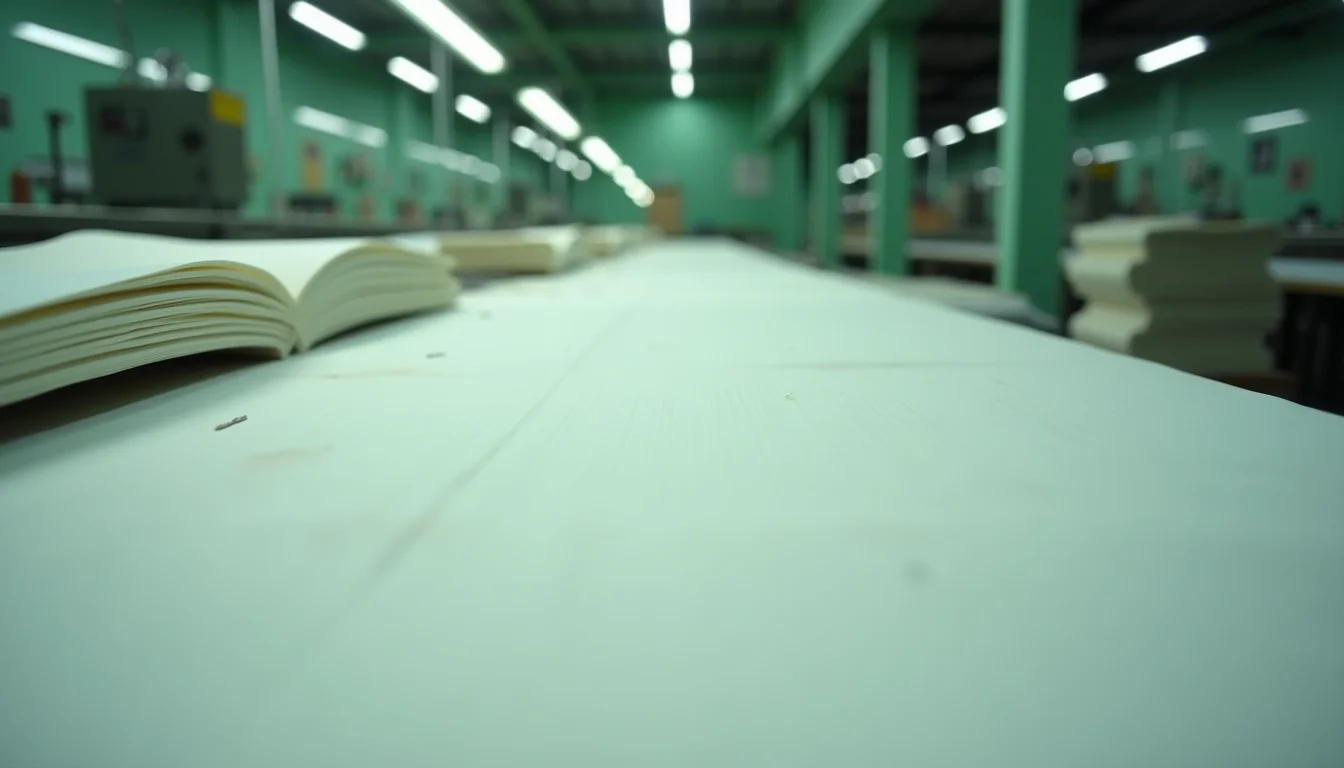
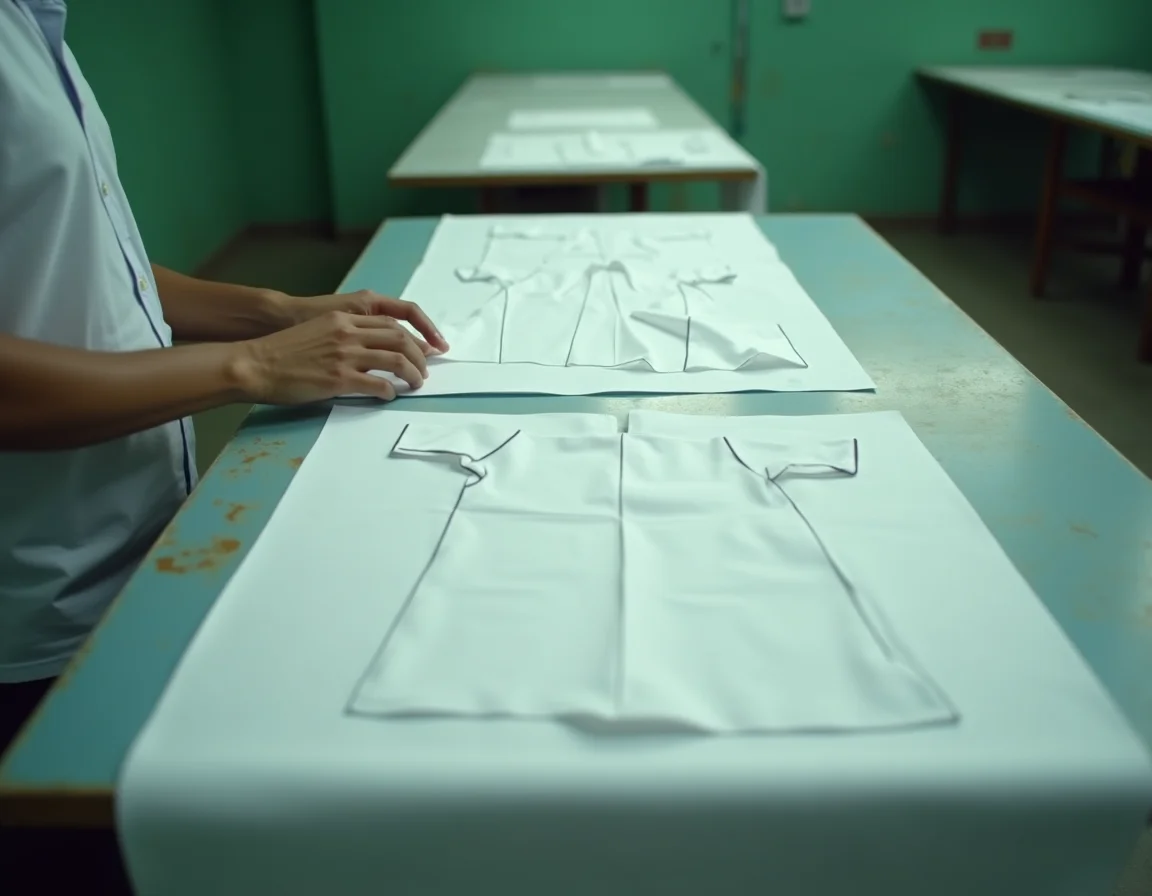
In a typical t-shirt manufacturing setup, rolls of knitted fabric (tubular or open-width) are laid out in long stacks on a cutting table. A marker — which is a digital or physical template of all the pattern pieces needed for one garment — is placed on top, and a cutting machine traces through all the layers at once. This is called a lay plan or fabric utilisation plan.
The goal of a good lay plan is to minimise the gaps between pattern pieces — because every scrap of fabric that falls between two cut pieces is wasted fabric that you have already paid for. Industrial engineers and fabric technologists spend significant time optimising these lay plans to squeeze maximum garments out of every meter of fabric.
Regular Fit: Efficient by Design
A regular fit t-shirt has a tapered body. The chest is wider, the body narrows slightly toward the hem, and the sleeves are shaped with a gentle curve. When you nest multiple pattern pieces together on a lay plan, the narrow parts of one piece fit neatly alongside the narrow parts of another. The curves interlock. The result is a tight, efficient layout.
In a well-optimised regular fit lay plan, fabric wastage (the unusable scraps) runs at approximately 8–10% of total fabric consumed. So if you are cutting 100 kg of fabric, roughly 8–10 kg becomes waste. This is considered industry-standard and is already baked into the costing of most regular fit t-shirts.
Boxy Fit: Where the Math Goes Wrong
Now consider the boxy fit. The pattern pieces are essentially rectangles — wide, square-ish shapes with almost no taper. There is very little curve to nest or interlock. When you lay out boxy fit pattern pieces on the same fabric width, the gaps between pieces are significantly larger. There is simply no way to fill those spaces efficiently with square shapes.
The result? Boxy fit fabric wastage runs at 18–20% of total fabric consumed — roughly double the wastage of a regular fit.
Real numbers that change everything:
From the same roll of fabric, at the same GSM, with the same cutting table setup:
✅ Regular Fit: 100 pieces cut — 8–10% wastage
❌ Boxy Fit: Only 80 pieces cut — 18–20% wastage
That is 20 fewer garments per fabric lot — a 20% reduction in output from identical raw material.
And because you are getting fewer pieces from the same fabric, the fabric cost per piece goes up. Add the slightly higher labour time (larger pieces take longer to sew), and the cost difference per piece for boxy fit versus regular fit can easily be ₹15 to ₹20 per piece more — even when the fabric itself is identical.
The "No Standard Measurement" Problem
If the fabric wastage issue were the only challenge, manufacturers might still consider stocking boxy fits in limited quantities. But there is a second, equally serious problem that makes ready stock almost impossible: there is no industry-standard sizing for boxy fit t-shirts.
Regular Fit Has a Standard — Boxy Fit Does Not
For regular fit t-shirts, there is broad industry consensus across Indian manufacturers on what an S, M, L, XL, and XXL looks like. The chest measurements, body lengths, and sleeve lengths fall within accepted ranges, and a buyer from Mumbai buying from a manufacturer in Tiruppur has a reasonable expectation of what they are getting.
Boxy fit has no such standardisation. Every brand, every designer, and every printing business has their own interpretation of what "boxy" means. Some clients want a chest width of 24 inches in a size M. Others want 26 inches. Some want a cropped body with a 26-inch length. Others want a longer 28-inch body. The drop shoulder measurement alone varies by 1–4 cm between different buyers.
This creates an impossible inventory situation for a manufacturer. If we stock 5,000 boxy fit t-shirts in our warehouse — which measurements do we use? Even if we pick one spec, there is a very high probability that the next buyer who calls will want slightly different measurements, rendering our existing stock unsellable to them.
"Every brand wants different boxy measurements. No standard exists. So boxy fit is mostly made-to-order only."
— This is the manufacturing reality that your supplier should be telling you upfront.
Compare this to something like a plain round neck t-shirt in 220 GSM from our catalog at BulkPlainTshirt.com — where standard S through 3XL sizing is universally accepted, stocking makes perfect economic sense, and we can maintain 1 lakh+ pieces ready stock at any given time. Boxy fit simply cannot benefit from this economies-of-scale stocking model.
Why Manufacturers Avoid Boxy Fit Ready Stock — The Economics Breakdown
Let us put the full picture together in a simple comparison table so you can see exactly why the economics of boxy fit stocking are so challenging for any manufacturer:
| Factor | Regular Fit T-Shirt | Boxy Fit T-Shirt |
|---|---|---|
| Fabric Wastage | 8–10% | 18–20% |
| Pieces per 100 kg fabric | ~100 pieces | ~80 pieces |
| Cost premium per piece | Base cost | +₹15 to ₹20/pc |
| Industry size standard | Yes (S/M/L/XL/XXL) | No (varies per brand) |
| Ready stock feasibility | High | Very Low |
| Production model | Stock-and-sell | Made-to-order only |
| Lead time for 500 pcs | 1–3 days (from stock) | 15–20 days |
When you factor in that a manufacturer would be tying up capital in inventory that may not match what the next buyer needs, and that each piece already costs more to produce, the decision to avoid ready stock becomes completely rational. It is not laziness — it is sound business logic.
This kind of planning problem is why bulk buyers sometimes make expensive mistakes with non-standard garments. Just like the situation we detailed in our piece on ordering 500 pieces without a sample — a small spec oversight at the ordering stage can result in a very costly outcome when the goods arrive.
The 15–20 Day Production Window Explained
So when a manufacturer tells you "15–20 din lagenge" for 500 boxy fit pieces, what is actually happening during those days? Here is the typical production flow for a made-to-order boxy fit run in Tiruppur:
Days 1–3: Spec Confirmation and Fabric Planning
The buyer's exact measurements are confirmed — chest width, body length, sleeve length, drop shoulder measurement, and neck rib type. A tech pack or approval sample may need to be made. The fabric consumption is calculated based on the boxy fit's higher wastage rate, and the required fabric yardage is sourced or allocated from the knitting mill.
Days 4–7: Fabric Knitting and Finishing
If the required GSM and colour are not in stock at the knitting stage, fabric is knitted fresh. At Sale91.com / BulkPlainTshirt.com, we knit our own fabric in-house in Tiruppur — which gives us faster turnaround than manufacturers who source fabric from third parties. The knitted fabric then goes through bio-washing (enzyme treatment for smoothness) and pre-shrinking processes.
Days 8–13: Cutting and Stitching
The fabric is laid out with the boxy fit lay plan, cut, and the pieces go to the stitching line. Because boxy fit pieces are larger and the seam structures (especially for drop shoulders) are more involved, stitching takes slightly longer per piece than a regular fit. Quality checks happen at each stage.
Days 14–17: Finishing, Quality Control, and Dispatch
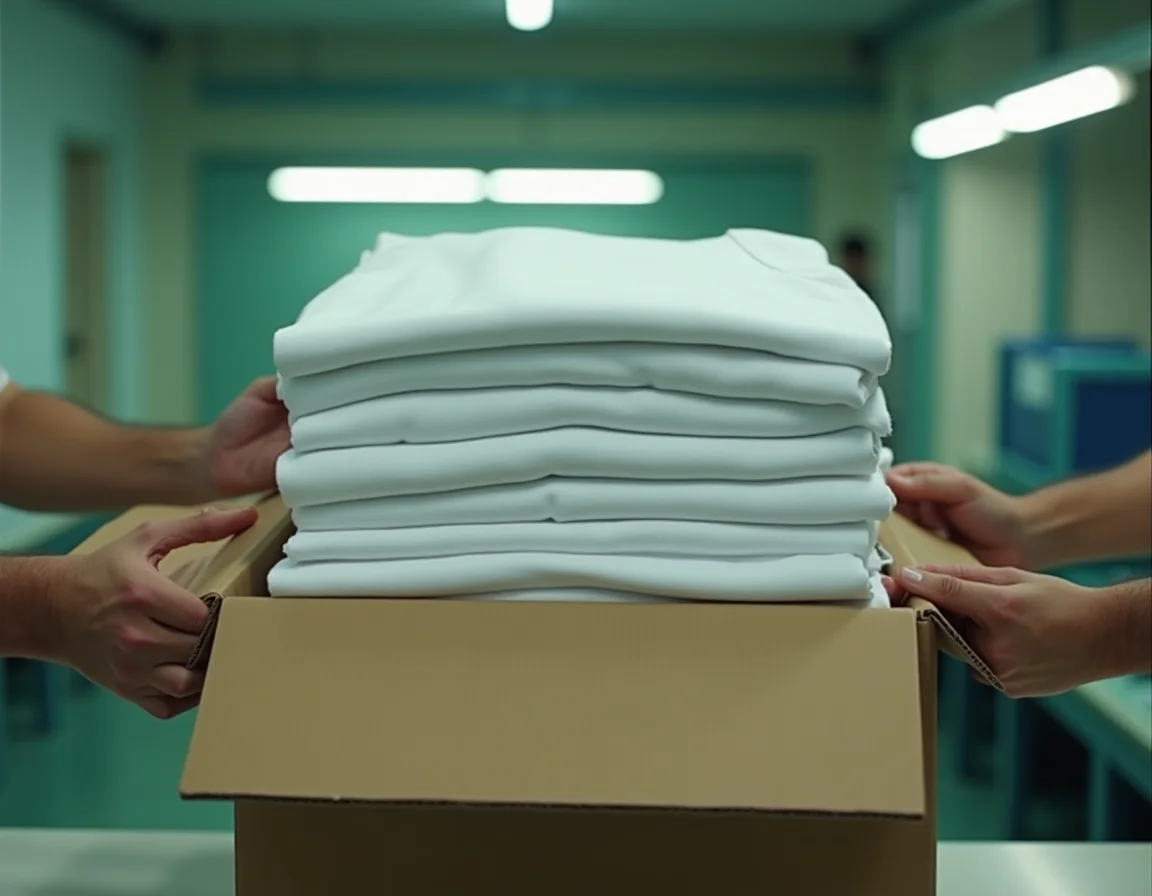
Finished garments are checked for measurements, stitching quality, and any fabric defects. They are then folded, packed, and dispatched — either to our Delhi warehouse (Khanpur, South Delhi) for PAN India delivery or directly to the buyer's location.
So 15–20 days is not padding or an excuse — it is a genuine, step-by-step production reality. And understanding this timeline is what separates professional bulk buyers from those who end up in stock-out situations at critical moments.
What This Means for Your Printing or Merchandise Business
If you run a DTG printing business, a DTF setup, a screen printing operation, or a merchandise brand that uses boxy fit blanks, here is the practical intelligence you need to build into your workflow:
1. Plan Boxy Orders 2–3 Weeks Ahead — Always
This is non-negotiable. If you have a client order for boxy fit custom tees due in 10 days, and you have not already placed the blank t-shirt order, you are already behind. Build a standard operating procedure where boxy fit orders are placed a minimum of 3 weeks before your client delivery date. Build in buffer for any QC or logistics delays.
2. Share Your Exact Measurement Spec Upfront
Do not call and say "boxy fit chahiye." Come prepared with your chest width, body length, sleeve length, and drop shoulder measurement for each size. The faster you confirm specs, the faster production can begin. Ambiguous specs cause delays at the approval stage that eat into your 15–20 days.
3. Consider Ordering Oversized T-Shirts as a Boxy Alternative
Here is a practical tip that many printing businesses do not know: a well-sized oversized t-shirt can often serve as a very effective boxy fit alternative — especially for streetwear and casual merchandise. Oversized t-shirts have more standardised sizing than true boxy fits, which means manufacturers can hold some ready stock. At Sale91.com, our oversized t-shirts in 220 GSM combed cotton are popular precisely for this reason. Check the full range at our product catalog.
4. Request a Sample First for New Specs
Before you place a 500-piece boxy fit order, always request a pre-production sample or an approval sample to confirm the measurements. A small investment of time (2–3 extra days) at the sample stage will save you from receiving 500 pieces with the wrong drop shoulder or incorrect body width. We have seen situations similar to what we described in our analysis of stitching mistakes that led to mass returns — getting a sample approved upfront is always the smarter path.
5. Understand the Cost Premium and Price Your Client Accordingly
Because boxy fit blanks cost ₹15–20 more per piece at the manufacturing level, your blank cost is higher. Factor this into your quotes to clients. Do not price a boxy fit custom tee the same as a regular fit custom tee — the margins will be squeezed on the blank side before you even add your printing and service charges.
How Sale91.com / BulkPlainTshirt.com Handles Boxy Fit Orders
At Sale91.com (BulkPlainTshirt.com), we are not a trader or a reseller — we are an own-fabric manufacturer. We knit our fabric in-house in Tiruppur, which means when a boxy fit order comes in, we are not waiting on a third-party knitting mill or a fabric supplier to respond. This gives us a genuine advantage in managing the 15–20 day window as tightly as possible.
Here is how we approach boxy fit and made-to-order requests:
- In-house knitting: We control the fabric production timeline, meaning we can prioritise your fabric lot and reduce waiting time at the knitting stage
- Bio-washed and pre-shrunk: All our garments — including boxy fits — go through enzyme bio-washing for softness and pre-shrinking to prevent post-wash size changes
- Ring-spun combed cotton: We use premium ring-spun combed yarn for superior softness and printability — important for DTG and DTF printing businesses
- GSM options: We manufacture boxy fits in 180 GSM (everyday), 200 GSM (premium), and 220 GSM (heavy premium) — you choose what suits your market
- 15+ colour options available for made-to-order runs
- Export capability: We ship PAN India and export via courier or sea freight for international buyers
For regular fit and standard styles, we maintain 1 lakh+ pieces in ready stock at all times, with dispatch from our Delhi warehouse (Khanpur, South Delhi) for fast PAN India delivery. Boxy fit, by its nature, remains a made-to-order category — and we are transparent about that timeline from the first call.
Key Takeaways: What Every Bulk Buyer Should Know About Boxy Fit
- 🔲 Boxy fit fabric wastage is 18–20% vs 8–10% for regular fit — that is double the material loss
- 🔲 Same fabric makes 100 regular fit pieces but only 80 boxy fit pieces
- 🔲 Cost is ₹15–20/piece higher for boxy fit due to wastage and production complexity
- 🔲 No industry-standard sizing for boxy fit means ready stocking is economically unviable
- 🔲 15–20 days for 500 pieces is a genuine manufacturing timeline, not an excuse
- 🔲 Always plan boxy fit orders 2–3 weeks before your client delivery deadline
- 🔲 Always confirm your exact measurements upfront and request a pre-production sample
- 🔲 Consider oversized t-shirts as a ready-stock alternative for many boxy-style use cases
Watch the Video
We covered the core manufacturing reasons behind boxy fit stock issues in this quick YouTube Short. Watch it for a fast visual summary of everything explained in this article:
Frequently Asked Questions
More Articles
 T-shirt Smells After Dyeing? This Washing Mistake Ruins It
 Royal Blue T-Shirt Color Fade After Printing — 240 GSM Wash Test & Reactive Dye Fix
 500 Pieces Without Sample? This GSM Mistake Cost Him Lakhs
 5000 T-Shirts Returned: One Stitching Mistake Cost Us Lakhs 😤
 5000 T-Shirts Ordered Without Checking GSM — ₹1.2 Lakh Lost 😱
 Navy Blue vs Black T-Shirt: This Color Mistake Cost 800 Pieces
 T-Shirt Seam Ripped After 1 Wash? Check This Before You Buy
Ready to Order Plain T-Shirts in Bulk?
Whether you need regular fit, oversized, or a made-to-order boxy fit — we manufacture every piece in-house in Tiruppur with 100% combed ring-spun cotton, bio-washed and pre-shrunk. 1 lakh+ pieces ready in stock. Dispatch from Delhi. PAN India delivery. Export available.
Get ₹3/pc discount on online orders. 50% COD available for first-time buyers.
Order Now at Sale91.com →