T-Shirt Stitching Quality Check for Bulk Orders — How ₹12 Thread Ruined 500 Pieces
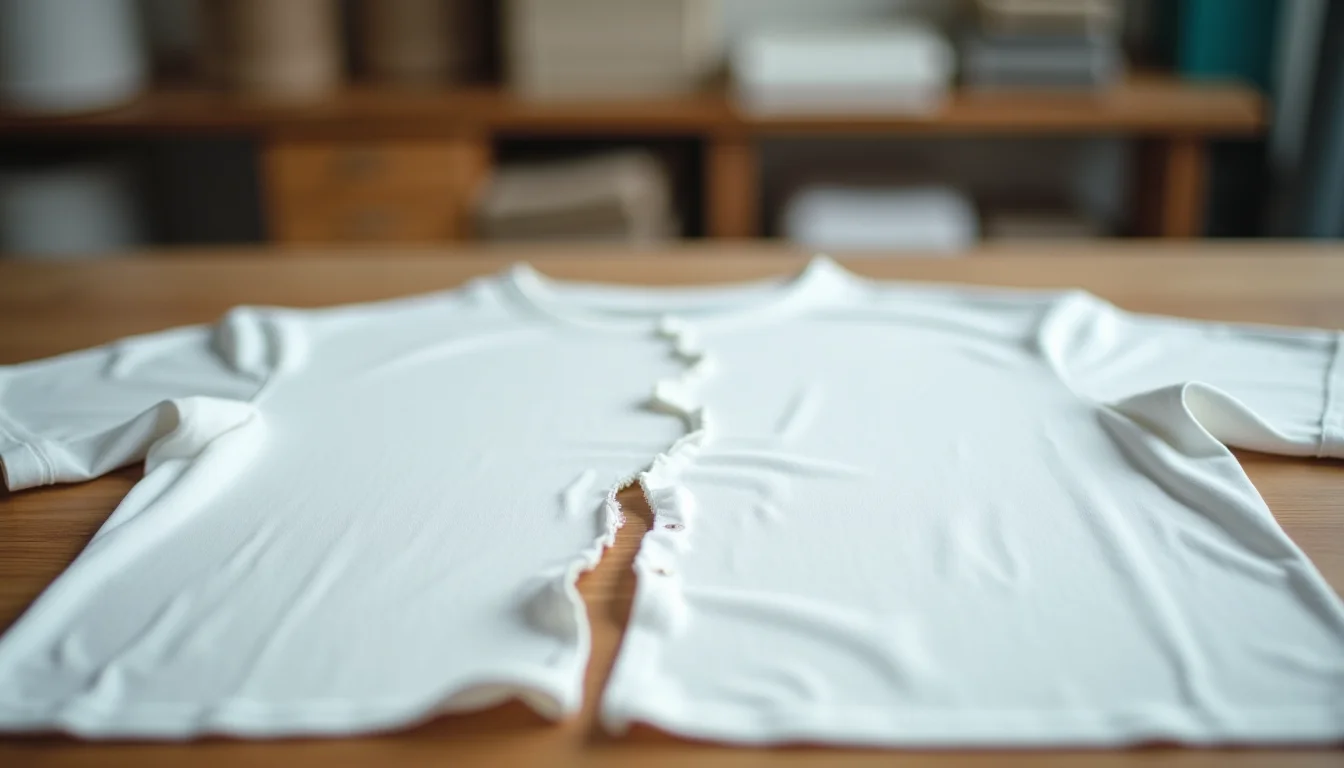
It started with a phone call. A customer — a printing business owner from Rajasthan — called to say that 70 of his t-shirts had completely ripped apart after just one machine wash. Not a small tear. Not a loose thread. The seams had separated entirely, leaving the shirts unwearable. He had 500 pieces in the batch. All 500 were now garbage.
When I asked whether he had checked the stitching quality before placing the order, there was a long pause. "Maine toh fabric touch karke dekha tha — soft tha, GSM theek tha," he said. He had felt the fabric, approved the weight, and placed the order. Stitching quality? Never checked.
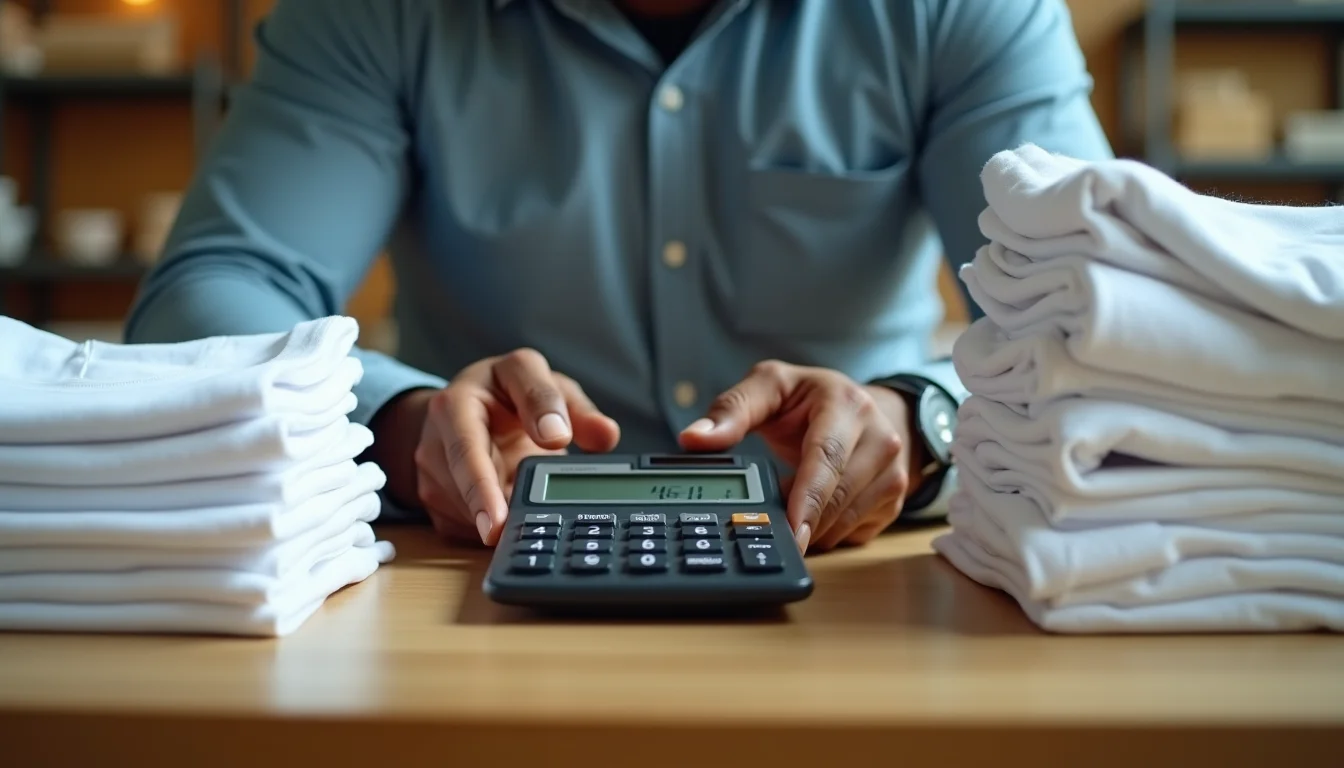
This single oversight — skipping the stitching quality check — had cost him thousands of rupees in blank t-shirts, plus the printing costs, plus the customer relationship. The culprit? A cheap ₹12 polyester thread spool used in the stitching seams.
This is not a rare story in India's bulk t-shirt trade. It happens every month to printing businesses, resellers, and event merchandise companies who focus only on fabric feel and GSM, completely ignoring the stitching underneath. In this guide, we break down everything you need to know about t-shirt stitching quality — what to check, why it matters, and how to protect your bulk orders from a catastrophe like this.
Why Stitching Quality Is the Most Ignored Factor in Bulk T-Shirt Buying
Walk into any wholesale t-shirt market — whether it's Surat, Delhi's Gandhi Nagar, or Tiruppur's local wholesale shops — and watch how buyers evaluate t-shirts. They pinch the fabric between their fingers to feel the GSM. They hold it up to the light to check for transparency. They might check the collar rib width. But almost no one pulls the side seam apart with both hands to test stitch strength.
This is completely understandable. Fabric quality is visible and tactile. Stitching is invisible until it fails. And by the time it fails — after your customer has worn the printed shirt once, washed it once — it's too late. The damage is done, and it's coming back to you.
The bigger problem is that cheap thread looks identical to quality thread when you're simply examining a finished t-shirt. A ₹12 polyester spool and a ₹45 cotton-wrapped core spool produce stitches that look nearly the same on the surface. You cannot see the difference. You can only test for it — or buy from a manufacturer who uses quality thread as a standard, not an afterthought.
The ₹12 Thread Problem — What Actually Happens Inside the Seam
Let's get technical for a moment, because understanding the physics of what goes wrong will make the quality check steps obvious.
Polyester Thread vs. Cotton-Wrapped Core Thread
Most cheap t-shirts are stitched with 100% spun polyester thread, which costs manufacturers roughly ₹10–15 per spool at the wholesale level in Tiruppur. It is strong in a dry, static state. The problem emerges when the garment is washed — especially in a machine wash cycle.
Cotton fabric shrinks slightly with heat and water — even pre-shrunk, bio-washed fabric has a natural micro-contraction response. Polyester thread, however, has a completely different shrinkage coefficient. It behaves differently under heat and moisture stress. When the cotton fabric in the shirt body contracts slightly during washing, and the polyester seam thread tries to hold its original shape, you get differential tension across the seam. Over multiple washes, or even in one aggressive hot wash, this tension builds until the seam snaps — sometimes catastrophically, as our customer in Rajasthan discovered.
This is exactly the issue our customer faced — and it mirrors the kind of problem we've documented in our article on seams ripping after one wash, which goes deeper into the post-wash seam failure mechanics.
Cotton-Wrapped Core Thread: The Right Standard
Quality manufacturers use what is called cotton-wrapped polyester core thread, or simply "core spun" thread. This thread has a polyester filament at its center (for tensile strength) wrapped with cotton fiber on the outside (for washability compatibility and heat behavior). This thread costs ₹40–50 per spool — roughly 3–4x the cost of cheap polyester thread. On a batch of 500 t-shirts with multiple seams each, the thread cost difference might be ₹200–400 total. But the difference in outcome is the difference between a perfect batch and a complete disaster.
Stitches Per Inch (SPI) — The Other Factor Nobody Checks
Thread quality is only half the story. The other major stitching variable is Stitches Per Inch, commonly written as SPI in the garment industry. SPI determines the density of the stitch — how many individual needle penetrations are made per linear inch of seam.
What SPI Range Is Acceptable?
For a standard plain cotton t-shirt, the acceptable SPI range is 8–12 stitches per inch. Premium quality t-shirts typically run at 10–12 SPI. Budget manufacturers trying to save production time often run at 6–7 SPI or lower, which produces a seam that looks fine visually but has dramatically reduced tear resistance.
| SPI Range | Quality Level | Seam Strength | Suitable For |
|---|---|---|---|
| 4–6 SPI | Poor | Weak — seam tears easily | Should not be used for retail/printing |
| 7–8 SPI | Acceptable | Moderate — borderline | Basic everyday wear only |
| 9–10 SPI | Good | Strong — standard premium | Bulk printing, retail, uniforms |
| 11–12 SPI | Excellent | Very strong — export standard | Export, premium brands, sportswear |
You can check SPI yourself with a simple ruler. Lay the seam flat, place the ruler along it, and count the number of stitch points visible within a 1-inch segment. Do this at three different points along the seam — beginning, middle, and end — to detect any inconsistency in machine operation.
The 5-Point Stitching Quality Check — Do This Before Every Bulk Order
Here is the exact physical quality check protocol we recommend to all printing businesses and bulk buyers before committing to a large order. You can do this on a sample piece in under 5 minutes.
1. The Pull Test
Hold the t-shirt at the side seam with both hands — one hand gripping the front panel, the other gripping the back panel — and pull firmly in opposite directions. Apply real force, not a gentle tug. A quality seam will resist this pull completely. A substandard seam will show visible gaping, thread distortion, or — if the thread is already weak — actual tearing. Do this at the underarm seam junction, the side seam midpoint, and the shoulder seam.
2. The Stitch Count Check
As described above, use a ruler to count SPI at three points along the longest seam (typically the side seam). Minimum acceptable: 8 SPI. Reject any batch where you find segments below 7 SPI.
3. The Thread Identification Check
At the hem or armhole, where threads are sometimes slightly exposed, try to identify the thread type. Cheap polyester thread typically has a slight sheen or shine to it. Quality cotton-wrapped core thread looks matte and slightly textured. If you can pull a small thread end out, test it with a lighter flame briefly — polyester thread melts and forms a hard bead; cotton-wrapped thread chars and crumbles. (Do this safely and on a loose thread only.)
4. The Wash Test on Samples
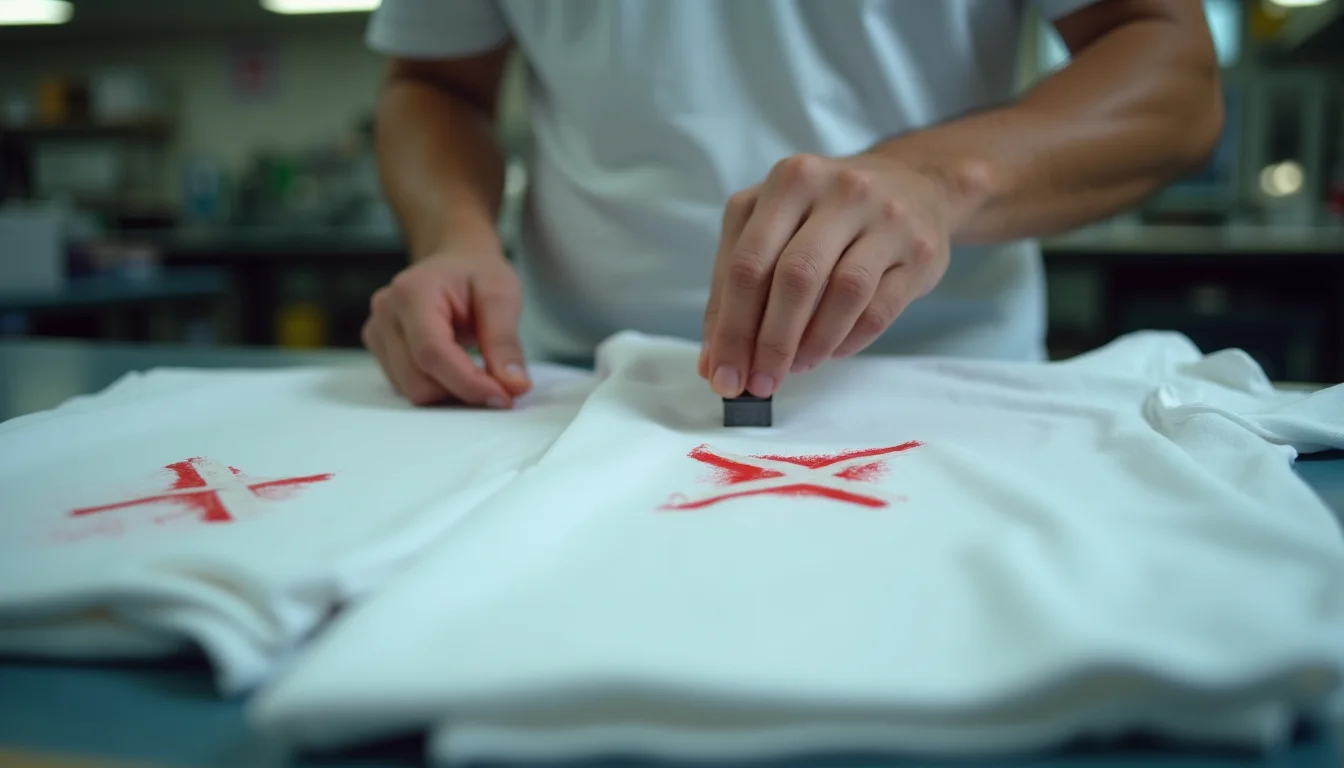
Before placing a 500-piece bulk order, order 3–5 sample pieces first. Wash them at 40°C in a normal machine wash cycle. Inspect all seams immediately after washing and again after drying. If seams pucker, gap, or show distortion after a single wash, the thread quality is unacceptable for retail or printing purposes.
5. The Seam Allowance Check
Turn the t-shirt inside out and check the seam allowance — the width of fabric folded under and stitched at the seam. A proper seam allowance should be at least 10–12mm. Many budget manufacturers use 6–7mm seam allowances to save fabric, which reduces seam strength regardless of thread quality. Too-narrow seam allowances are a red flag for overall quality shortcuts.
Why This Matters Especially for Printing Businesses (DTG, DTF, Screen Print)
If you run a custom printing operation — whether DTG, DTF, screen printing, or heat transfer — you're not just buying a blank t-shirt. You're buying a canvas that carries your brand, your customer's design, and your reputation. A seam failure post-print is doubly damaging.
First, the obvious: the printed shirt is now worthless. Your printing cost (ink, time, machine wear) is completely lost on top of the blank cost. Second — and this is more painful — the customer doesn't separate "the t-shirt manufacturer failed" from "the printing business failed." To your customer, you sold them a shirt that ripped after one wash. You're the one losing the relationship, the review, and potentially the reorder.
This is a reality we've seen repeatedly from buyers who moved to cheaper blank suppliers to save ₹5–8 per piece, only to face returns and chargebacks that cost them many times more. The economics of cutting corners on blank quality — especially on something as invisible as thread — simply do not work out. As we've explored in our piece on how small per-piece savings can destroy a print business, the math always punishes the shortcut.
Additionally, heat transfer printing and screen printing both involve applying heat and pressure directly to the shirt. This process stresses the fabric and seams. A seam that might have survived five washes without printing might fail in two washes after going through a heat press at 160–180°C. Quality thread is even more critical for printed blanks than for plain retail shirts.
What Good Stitching Looks Like at the Manufacturing Level
At Sale91.com (BulkPlainTshirt.com), all our t-shirts are manufactured in Tiruppur, India's global textile hub, using standardized quality protocols. Since we knit our own fabric in-house rather than sourcing from traders, we have direct control over the entire production chain — from yarn to finished garment.
Here is what our stitching standard includes:
- Cotton-wrapped polyester core thread (₹40–50 per spool grade) on all structural seams
- Minimum 10 SPI (stitches per inch) on side seams and shoulder seams
- Double-needle stitching on hems for clean finish and added seam strength
- Flatlock stitching on shoulder seams for reinforced joint at the highest stress point
- Cover stitch on neckline and sleeves for stretch-compatible seam finishing
- Consistent 10–12mm seam allowance throughout
- Quality check at the production floor level — not just final inspection
All these factors contribute to a t-shirt that not only feels premium (thanks to our 100% ring-spun combed cotton, bio-wash treatment, and pre-shrinking process) but also survives repeated washing in the hands of end customers. This is non-negotiable for printing businesses whose reputation rides on the product quality of their blanks.
The Role of Bio-Washing and Pre-Shrinking in Seam Stability
One thing that's often not discussed: pre-shrinking and bio-washing the fabric before stitching actually helps seam stability. When fabric is pre-shrunk properly (sanforized), the differential shrinkage between the fabric and the thread is minimized. This means even if the thread has some shrinkage mismatch with the fabric, it's far less dramatic than it would be in an unshrunk garment. All our blanks are pre-shrunk and bio-washed (enzyme-treated for smoothness), which is part of why our seam performance is consistent across wash cycles.
Thread Quality in Context: The Full Picture of a Quality Blank T-Shirt
Thread quality doesn't exist in isolation. It's one critical component in a system of quality factors that together determine whether a blank t-shirt is suitable for professional printing and retail. Here's how stitching fits into the larger quality picture:
GSM and Fabric Construction
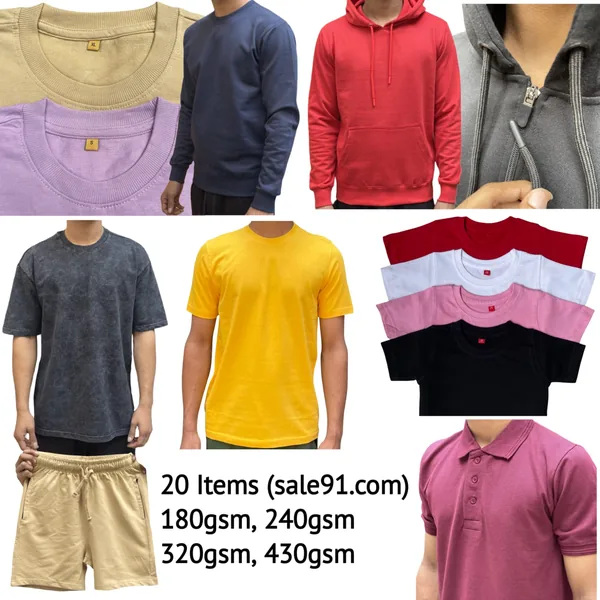
Our plain t-shirts are available in 180 GSM (everyday wear), 200 GSM (premium), 210 GSM, and 220 GSM (heavy premium). The GSM determines the fabric weight and body. A 220 GSM t-shirt made with poor thread will still rip at the seams. GSM is a necessary but not sufficient quality indicator. If you're trying to decide between weights, our in-depth guide on 240 GSM vs 200 GSM plain t-shirts explains why yarn quality matters more than raw weight alone.
Ring-Spun Combed Cotton Yarn
The yarn used to knit the fabric itself matters enormously. Ring-spun combed cotton produces finer, stronger, more consistent yarn than open-end spun yarn. Our fabrics use ring-spun combed cotton, which means the fabric is softer, more uniform, and has better tensile strength — which in turn means the seams are under less stress during normal wear and washing.
Collar Construction
A t-shirt's collar is the second most common failure point after side seams. Collar rib should be stitched with the same quality thread as the body seams. A collar rib that stretches out, unravels at the seam, or detaches after washing is a dead giveaway of cheap thread and low-quality stitching throughout the garment — even if the body seams initially appear intact.
How to Avoid the ₹12 Thread Disaster in Your Next Bulk Order
The single most effective protection against the stitching quality disaster described in this article is this: always order samples before placing bulk orders. This cannot be overstated. Whether you're buying 200 pieces or 5,000 pieces, a sample order of 3–10 pieces that you physically test (pull test, wash test, SPI count) will tell you everything you need to know about a supplier's stitching quality.
The second most important step: buy from manufacturers, not traders. Traders have no control over production quality — they buy finished goods from multiple manufacturers and resell. When you buy from a manufacturer like BulkPlainTshirt.com who knits their own fabric and controls the full production process in Tiruppur, stitching quality standards are consistent and accountable. There is no chain of middlemen where quality shortcuts can be introduced.
We at Sale91.com keep 1 lakh+ pieces in ready stock at all times, with consistent stitching standards across every batch. Our MOQ starts from just 10 pieces on ready stock items — so you can test a small batch before committing to larger volumes. For orders of 500+ pieces, we offer an additional ₹2 per piece discount, and for online purchases, there's an additional ₹3 per piece discount regardless of quantity.
Watch the Video
See the complete breakdown of this stitching quality check in our YouTube Short — including the pull test demonstration and how to spot cheap thread before it destroys your batch: