Cheap Plain T-Shirt Wholesale Trap — ₹15 Savings on 1000 Pcs Cost ₹1.5 Lakh After Wash
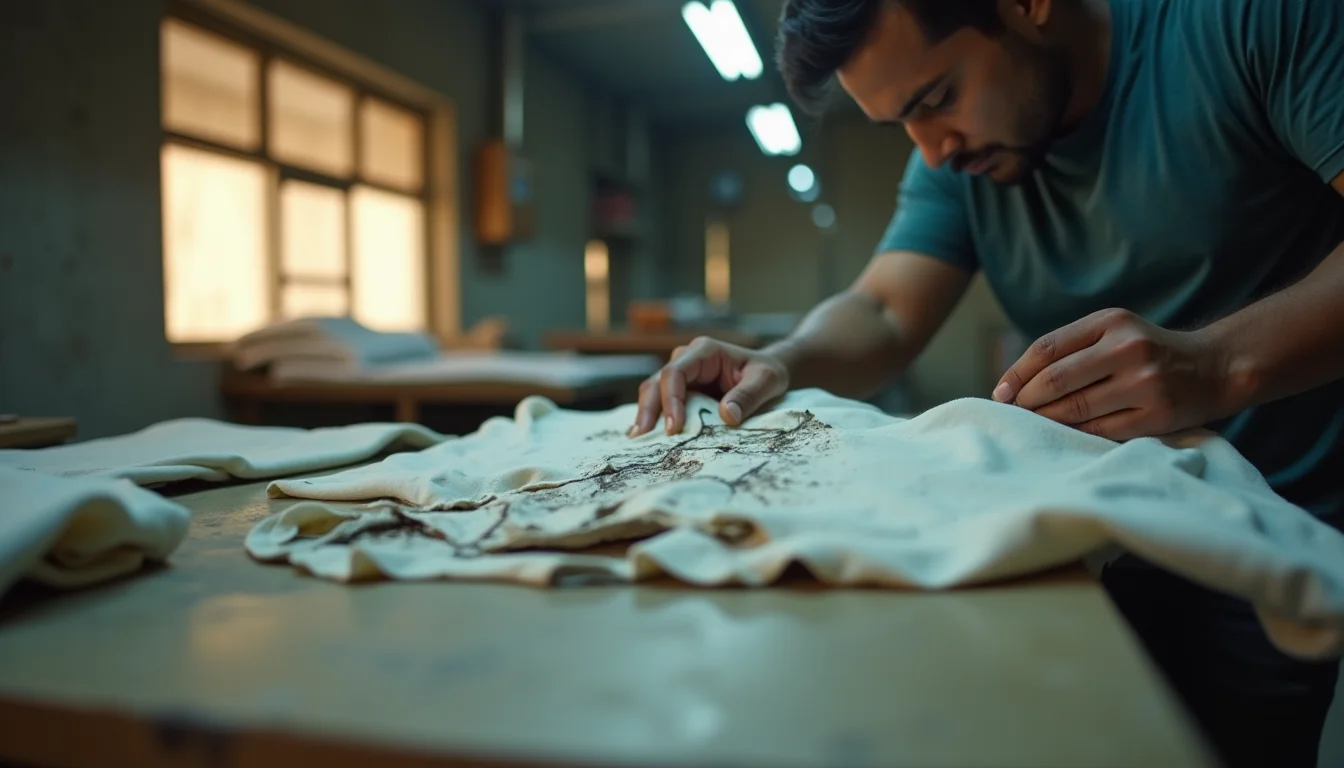
In the Indian custom printing business — whether you run a DTF shop, a screen printing unit, or a DTG studio — margin pressure is real. When a supplier quotes you ₹70 per blank t-shirt against another supplier's ₹85, the ₹15 difference looks like a no-brainer, especially on a 1,000-piece order. You're effectively "saving" ₹15,000 in one transaction. Smart business, right?
Not quite. That ₹15 saving is almost always a deferred cost — and the invoice for it arrives after wash, after print, and sometimes after delivery to your end client. This article breaks down exactly how that trap works, what the real landed cost of a blank t-shirt looks like, and how to build a decision framework that protects your margins instead of destroying them.
The fabric quality variables discussed here — GSM, bio-wash, pre-shrink, ring-spun combed cotton — are covered in detail in our FAQ page. Here, we'll focus on the business risk side of these specs, not the definitions.
The ₹15 Trap: How the Math Actually Works
Let's build the scenario step by step using transparent numbers — not invented anecdotes, but a clear hypothetical that any printing business can model against their own operations.
Scenario: Ordering 1,000 Blank T-Shirts
Suppose you receive two quotes for a 1,000-piece plain round-neck t-shirt order intended for custom screen printing:
| Parameter | Supplier A (Cheap) | Supplier B (Quality) |
|---|---|---|
| Price per piece | ₹70 | ₹85 |
| Total fabric cost (1,000 pcs) | ₹70,000 | ₹85,000 |
| Cotton type | Carded / open-end | Ring-spun Combed |
| Bio-wash (enzyme finish) | No | Yes |
| Pre-shrunk treatment | No | Yes |
| GSM range | Unspecified / inconsistent | 180–220 GSM (declared) |
| Print surface smoothness | Rough, uneven | Smooth, consistent |
| Apparent saving | ₹15,000 | — |
The ₹15,000 saving looks attractive. But the cost structure of a printing job doesn't end at the blank t-shirt price. Let's look at the full landed cost per piece once you add stitching and printing:
| Cost Component | Cheap Blank (₹70) | Quality Blank (₹85) |
|---|---|---|
| Blank t-shirt | ₹70 | ₹85 |
| Stitching / finishing | ₹18 | ₹18 |
| Print (screen/DTF/DTG) | ₹22 | ₹22 |
| Landed cost per piece | ₹110 | ₹125 |
| Total for 1,000 pcs | ₹1,10,000 | ₹1,25,000 |
| Apparent saving on fabric | ₹15,000 | |
The ₹15/piece saving seems locked in — ₹15,000 stays in your pocket. Until the shirts go through 2–3 wash cycles.
What Happens After Wash: The Real Cost Cascade
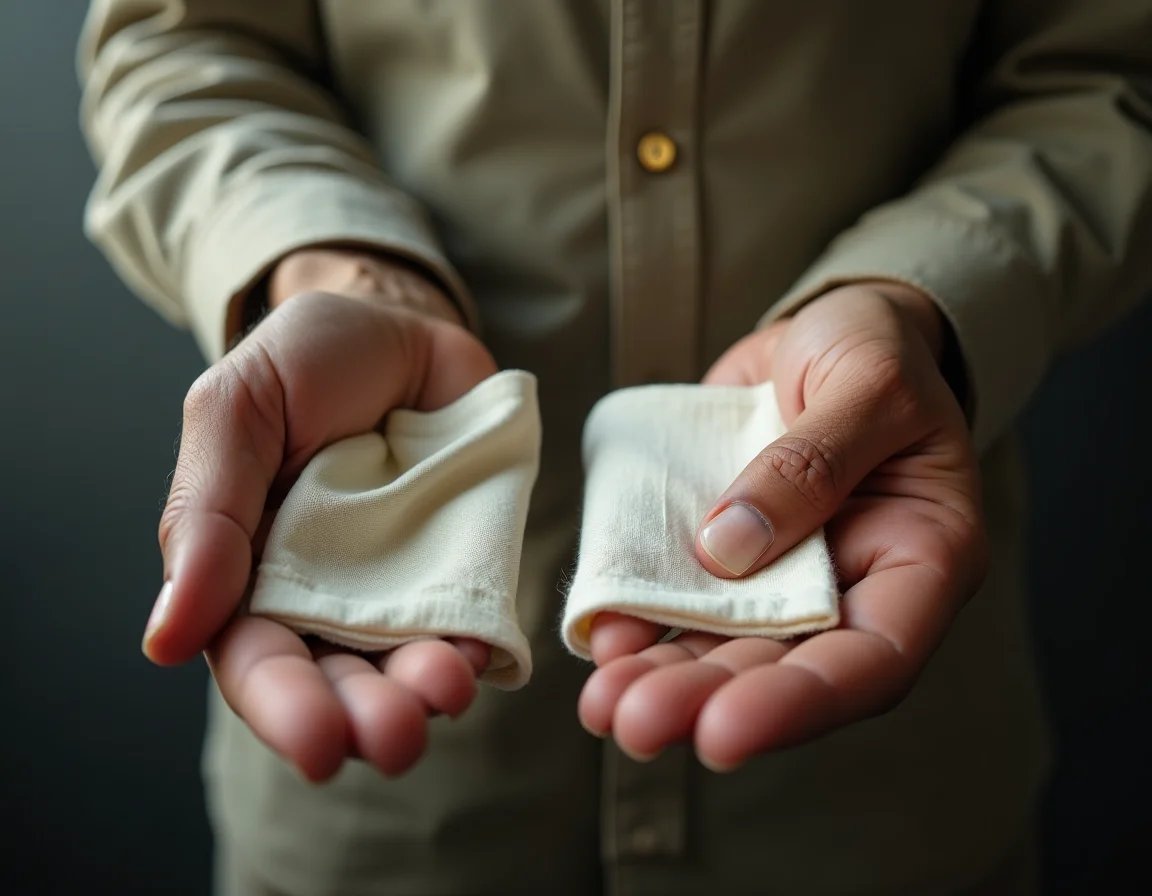
A blank t-shirt that hasn't been bio-washed or pre-shrunk has residual shrink built into its fabric structure. When your end client washes the printed shirt, that residual shrink releases — and the fabric contracts. On a non-pre-shrunk fabric, this can mean 3–8% shrinkage in length and width across 2–3 washes, which is enough to change a size L into a size M in fit perception.
For printed garments, this shrinkage does something even more damaging: the print layer — whether it's DTF film, screen-print plastisol, or DTG ink — does not shrink at the same rate as the fabric. The result is print cracking, peeling, and delamination. For a detailed look at how fabric quality affects print durability specifically in colour-rich designs, our article on royal blue t-shirt colour fade after printing and wash testing covers the reactive dye interaction in detail.
The Real Cost Cascade (Hypothetical 1,000-Piece Order)
Suppose the client receives all 1,000 pieces and after their first institutional wash cycle (common in uniform, corporate, or event merchandise orders), a significant portion shows shrinkage and cracked prints. Here's what the reprint and return cascade looks like in cost terms:
- Return logistics: Courier or transport of 1,000 pieces back to you — easily ₹3,000–₹8,000 depending on location and weight
- New blank t-shirts at quality price: 1,000 × ₹85 = ₹85,000
- Reprint cost: 1,000 × ₹22 = ₹22,000
- Stitching/finishing again: 1,000 × ₹18 = ₹18,000
- Original print + fabric cost already sunk: ₹1,10,000
- Total exposure: ₹1,10,000 + ₹85,000 + ₹22,000 + ₹18,000 + ₹8,000 = ₹2,43,000 to fulfil an order originally budgeted at ₹1,25,000
The ₹15,000 you saved on fabric has now cost you over ₹1,18,000 in additional expenditure — before you even account for the business relationship damage, lost repeat orders, and time lost on the reprint cycle.
This is why the comparison of ₹40 vs ₹85 plain t-shirt wholesale pricing and why cheap fabric ruins print quality matters so fundamentally for B2B buyers — the price difference on the invoice is never the real price difference on the outcome.
Why Cheap Blanks Fail: The Spec-by-Spec Breakdown
It's worth being precise about which specifications are being cut when a supplier sells at ₹70 versus ₹85. This isn't about brand names — it's about manufacturing process steps that have real cost implications.
1. No Ring-Spun Combed Cotton
Cheap blanks use carded or open-end spun yarn. This yarn has more short fibres, more surface fuzz, and less tensile consistency. For printing surfaces, this means ink absorption is uneven — dark areas may look patchy, and fine-line designs lose resolution. Ring-spun combed cotton removes short fibres and aligns the long ones, creating a denser, smoother surface that holds ink or DTF film uniformly.
2. No Bio-Wash (Enzyme Finish)
Bio-washing is an enzyme treatment applied post-knitting that softens the fabric surface, removes surface fuzz, and creates a consistent texture. When this step is skipped, the fabric surface is rougher and less uniform — which matters enormously for DTF heat transfer adhesion. A rough surface creates micro-air-pockets under the film, leading to edge lifting and cracking within 5–10 washes.
3. No Pre-Shrink Treatment
Pre-shrinking (compacting) physically relaxes the fabric before garment construction so that post-wash shrinkage is minimal. Skipping this step means the fabric holds latent tension that releases on first wash — causing the 3–8% shrinkage that distorts both the garment's fit and the print geometry.
4. Inconsistent or Undeclared GSM
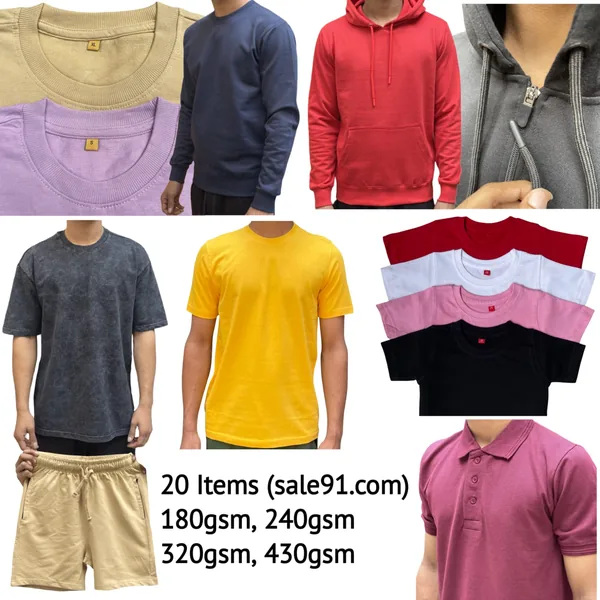
A legitimate manufacturer declares GSM clearly — our range runs from 180 GSM (everyday wear) to 200 GSM (premium) to 220 GSM (heavy premium) for t-shirts, and up to 430 GSM for hoodies. Cheap blanks often have undeclared or inconsistent GSM — pieces within the same batch can vary by 15–25 GSM, which causes visible thickness inconsistency in the finished product.
The True Minimum Landed Cost of a Printed T-Shirt
One of the most important numbers in the printing business is the true minimum viable landed cost per finished printed piece. Let's build this from first principles using transparent, verifiable cost components:
| Cost Component | Cost Per Piece | Notes |
|---|---|---|
| Blank t-shirt (ring-spun, bio-washed, pre-shrunk, 180–200 GSM) | ₹85 | Minimum quality threshold for printable blank |
| Stitching / finishing / labels | ₹18 | Cut & sew, neck label, side label |
| Print (DTF, screen, or DTG — single colour/design) | ₹22 | Varies by technique; this is a conservative floor |
| Transport / last-mile delivery | ₹4–₹8 | Tiruppur → Delhi supply chain adds ~₹25/kg; amortized per piece |
| Wastage / rejection buffer (2–3%) | ₹3–₹4 | Industry standard allowance for defective pieces |
| Minimum total landed cost | ₹125–₹135 per piece | |
Anything priced below ₹110–₹115 landed for a printed t-shirt should trigger an immediate question: which of these cost components is being removed, and what is the downstream risk of that removal?
For a deeper understanding of how the Tiruppur-to-Delhi supply chain affects per-piece costs, our breakdown of Tiruppur to Delhi t-shirt transport costs and supply chain economics is essential reading for any buyer doing landed cost modelling.
The Quality Verification Checklist: What to Demand Before Ordering
Here is an original pre-order verification checklist built specifically from our manufacturing process at Sale91.com. This is the internal quality benchmark we apply at our Tiruppur factory before any batch leaves for our Delhi warehouse in Khanpur, South Delhi — and it's the same standard you should demand from any supplier.
- Declared GSM with tolerance: Ask for the exact GSM (e.g., 200 ± 5 GSM) and a GSM test certificate or lab report for the batch
- Ring-spun combed cotton confirmation: Ask whether the yarn is ring-spun or open-end spun. Request yarn count (typically 24s or 30s for premium tees)
- Bio-wash process confirmation: Ask what enzyme treatment is used and at what temperature/duration — a genuine process has specific parameters
- Pre-shrink (compacting) confirmation: Ask the residual shrinkage percentage after compacting — should be under 3% for a properly treated fabric
- Colour fastness rating: Ask for wash fastness and rubbing fastness ratings — minimum Grade 4 on the AATCC scale for printing fabrics
- Fabric origin and knitting location: Tiruppur-knitted fabric has significantly different quality control standards than fabric sourced from grey market traders
- Stitch density / seam strength: Check that the seams can withstand repeated wash cycles without unraveling — relevant for printed pieces that undergo institutional washing
- In-house knitting vs. trading: A manufacturer who knits their own fabric (as we do at Sale91.com) controls quality at every stage. A trader buying grey fabric from the open market does not
Why "In-House Knitting" Is the Non-Negotiable Differentiator
The single biggest risk factor in cheap blank t-shirt sourcing isn't the price — it's the supply chain opacity. When a supplier is a trader rather than a manufacturer, they buy grey fabric from multiple sources depending on availability and spot pricing. This means:
- Batch-to-batch GSM variation can be significant (15–25 GSM swings are common)
- Bio-wash and pre-shrink may be applied inconsistently or skipped entirely
- Colour consistency across repeat orders is unreliable
- No one party is accountable for the full fabric specification
At Sale91.com, we knit our own fabric at our Tiruppur facility — this is what "Own Knitted Blank Wears" means in practice. Every roll of fabric that goes into our t-shirts comes off our own knitting machines, processed through our own bio-wash and pre-shrink lines. With over 1,25,232 pieces sold in the last 30 days and a standing stock of over 1 lakh pieces at any time, the consistency demand alone forces us to maintain tight quality control across every batch. You can browse our full product catalog at BulkPlainTshirt.com/catalog.
"The cheapest t-shirt is the one that doesn't come back. A ₹15 saving that generates a return order costs you not ₹15 but the entire job margin — plus the client relationship."
The Low Margin Trap: How It Compounds Over Multiple Orders
The ₹15 trap isn't just a one-order problem. For printing businesses that run repeat bulk orders — event merchandise, corporate uniforms, retail private labels — the compounding effect of using cheap blanks is devastating.
How the Trap Compounds
Consider a printing business that runs 4 bulk orders per month of 500–1,000 pieces each:
- If even 1 in 4 orders triggers a significant return or reprint due to quality failure, the cost of that one failure typically exceeds the "savings" accumulated across all 4 orders
- Clients who receive substandard printed merchandise rarely give second chances — in B2B printing, a lost client means lost recurring revenue, not just one order value
- Reprints also occupy machine time and floor capacity — the opportunity cost of running a reprint batch instead of a new paid order is real but invisible on a spreadsheet
This is the same trap mechanism that causes significant losses in DTG printing jobs — for a parallel analysis, see our breakdown of how a single DTG printing mistake ruined a 500-tee batch and wiped out the entire job margin.
How to Break the Trap: A Decision Framework for Bulk Buyers
Rather than asking "what is the cheapest blank I can use?", the right question is: "What is the cheapest blank that will not generate returns or reprints?" This reframe shifts your decision from a cost minimisation problem to a risk minimisation problem — which is a far more profitable lens.
The Minimum Spec Floor for Printable Blanks
Based on our manufacturing experience and the feedback loop from 1,25,000+ pieces shipped monthly, here is the minimum non-negotiable spec for a blank t-shirt that will reliably hold print across 15–20 wash cycles:
| Specification | Minimum Threshold | Why It Matters for Printing |
|---|---|---|
| GSM | 180 GSM minimum | Below 160 GSM, fabric distorts under heat press or print curing |
| Yarn type | Ring-spun combed | Smooth surface = even ink/film adhesion |
| Bio-wash | Mandatory | Removes surface fuzz that causes DTF edge lifting |
| Pre-shrunk | Mandatory | Prevents post-print dimensional distortion |
| Colour fastness | Grade 4+ (AATCC) | Prevents bleed-through that ruins light-coloured prints |
| Knitting origin | Tiruppur/certified mill | Consistent batch-to-batch GSM and construction |
Pricing Your Print Jobs Correctly
If you're pricing custom printed t-shirts for corporate clients or event organisers, the minimum floor of ₹125 landed per piece means your selling price floor (before margin) should be ₹160–₹180 for a single-colour print and higher for multi-colour or speciality finishes. Any pricing below this range either compresses your margin dangerously or forces you toward substandard blanks — both are losing strategies.
Sale91.com: Built for Printing Businesses That Can't Afford Returns
At Sale91.com, our entire product line is engineered for printing businesses. Every blank we manufacture — from 180 GSM everyday round-necks to 430 GSM heavyweight hoodies — is bio-washed, pre-shrunk, and made from ring-spun combed cotton. We don't trade fabric; we knit it ourselves in Tiruppur, and we stock it in our Delhi (Khanpur, South Delhi) warehouse for fast PAN India dispatch.
Key commercial terms worth knowing:
- MOQ as low as 10 pieces for ready-stock items — no forced over-ordering
- ₹3/piece discount for online purchase orders at any quantity via Sale91.com
- ₹2/piece additional discount for 500+ quantity orders
- 50% COD available on first order for new buyers (+ 3% COD charge) — from second order, prepaid
- 15+ colours available in our standard round-neck range
- Export capability via courier or sea transport for international buyers
When you're running a printing business that depends on zero-return outcomes, the per-piece premium on quality fabric isn't a cost — it's insurance.
Watch the Video
This short video breaks down the ₹15 saving trap in under 60 seconds — a must-watch before your next bulk blank order:
Frequently Asked Questions
More Articles


Ready to Order Blanks That Won't Come Back?
Over 1,25,000 pieces shipped last month. 1 lakh+ in ready stock. Bio-washed, pre-shrunk, ring-spun combed cotton. Own-knitted in Tiruppur. Minimum 10 pieces. Delivered PAN India.
Order on Sale91.com → Browse Full Catalog