₹1.5 Lakh Gone! This DTG Printing Mistake Ruined 500 Tees
In the fast-paced world of custom t-shirt printing, even a small oversight can lead to massive losses. Today, I'm sharing a real customer story that cost someone ₹1.5 lakh — all because of one simple DTG printing mistake that could have been avoided with a single click.
This is not just a cautionary tale. It's a practical lesson for every printing business owner, whether you're running a small DTG setup in your garage or managing a large-scale custom printing operation. The mistake we're discussing today involves white ink, DTG printing, and 500 plain white t-shirts from Sale91.com.
The Real Story: How ₹1.5 Lakh Disappeared Overnight
One of our regular customers — let's call him Rajesh — runs a successful custom printing business in Mumbai. He specializes in DTG (Direct-to-Garment) printing and receives bulk orders for promotional merchandise, corporate events, and fashion brands.
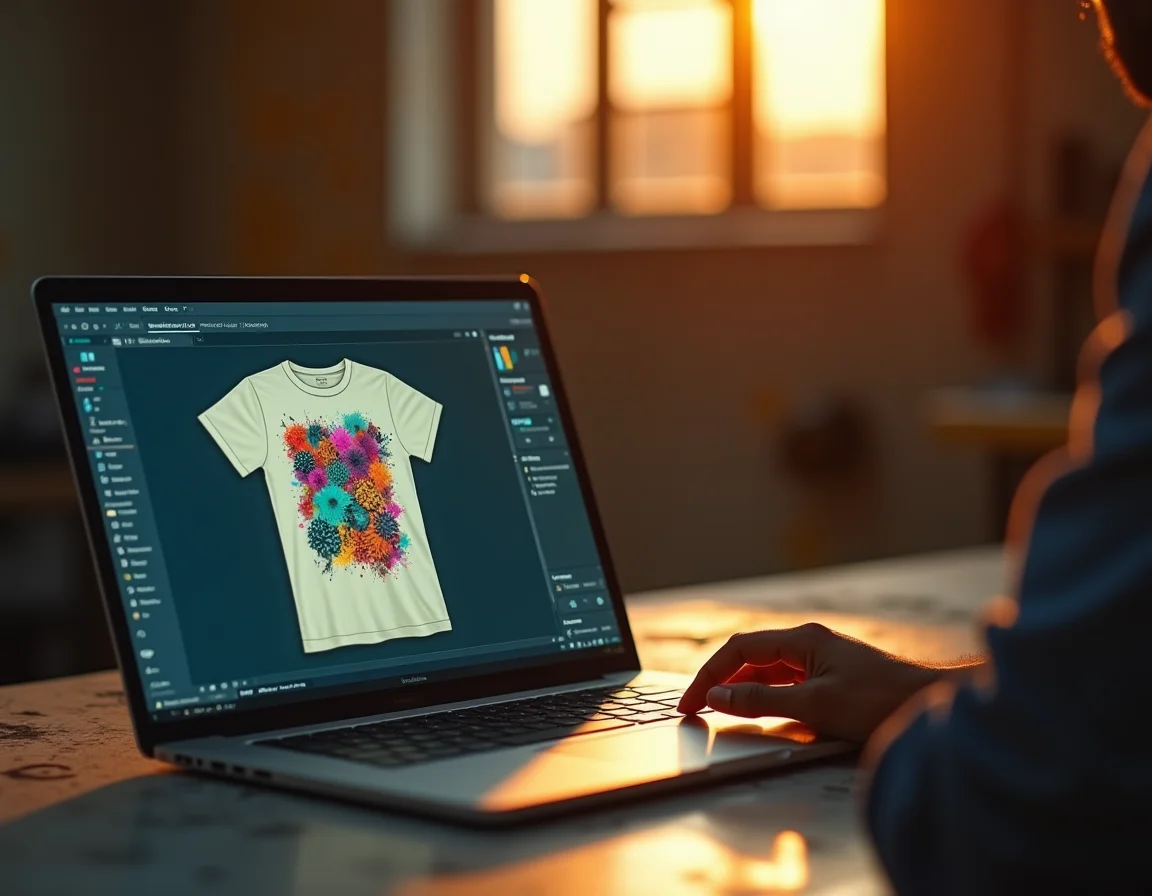
Last month, Rajesh received a large order: 500 white t-shirts with a custom design featuring colorful graphics with white outlines. The design looked perfect on screen. He ordered high-quality 200 GSM bio-washed plain white t-shirts from our catalog at BulkPlainTshirt.com, ready to deliver a premium product to his client.
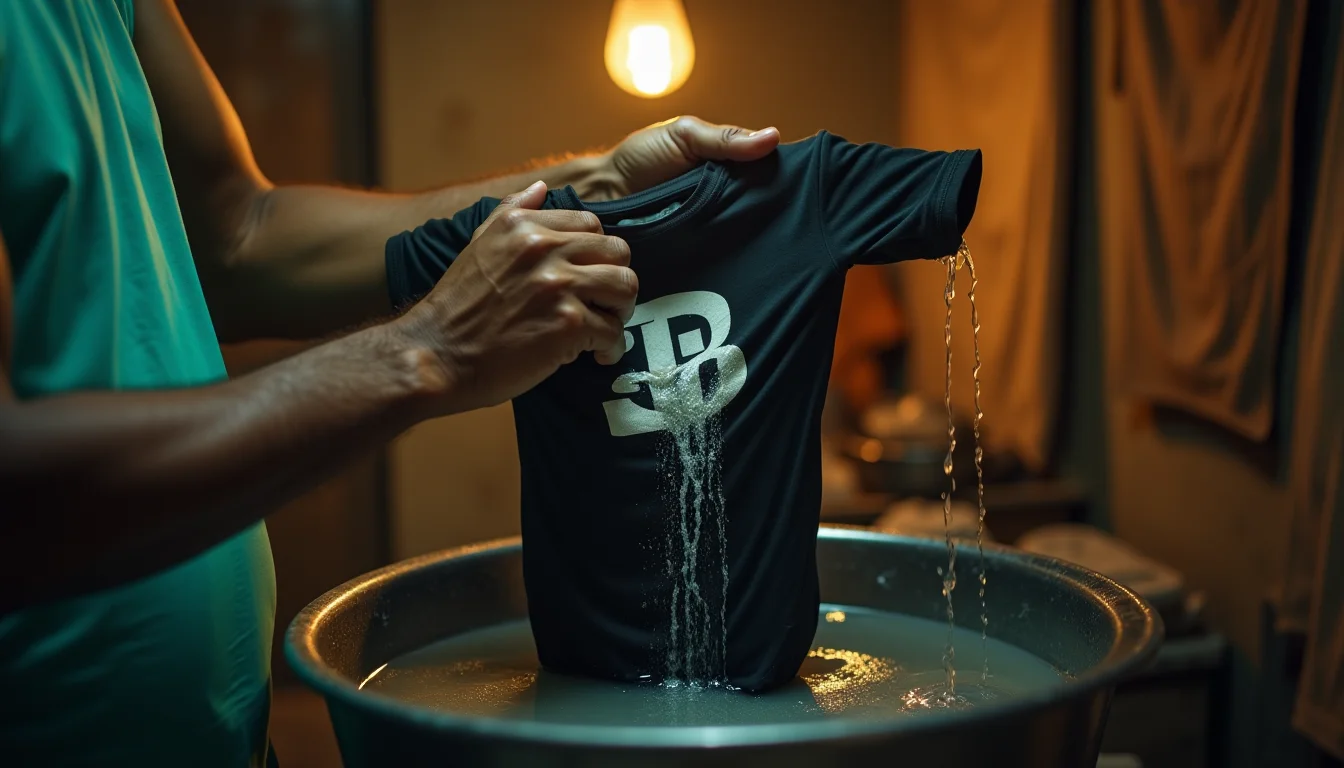
Everything seemed smooth until the printing began. Rajesh loaded the design into his DTG printer software and started the production run. The printer began laying down the white ink layer first — as DTG printers typically do for designs with white elements — followed by the colored inks.
Here's where the disaster happened: The white ink layer was set to print across the entire design area, including the white t-shirt background. White ink on white fabric. Completely invisible. Completely wasted.
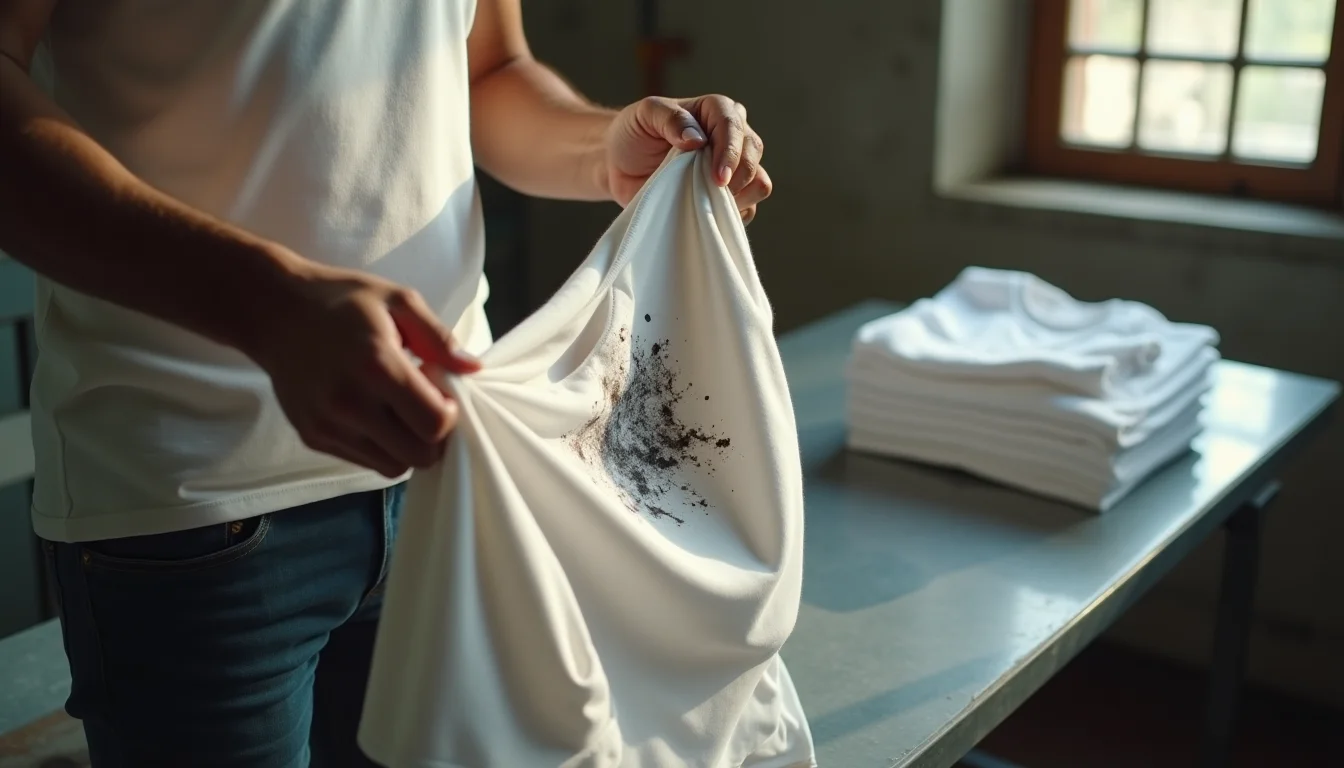
Rajesh printed 300 shirts before he realized something was terribly wrong. His ink consumption was skyrocketing, but the finished t-shirts looked... normal. Too normal. That's when it hit him — the white ink was being printed on white shirts, creating no visible effect whatsoever.
The Financial Damage
Let's break down the numbers. In DTG printing, white ink is the most expensive component. On average, printing a full white underbase costs between ₹40-50 per shirt, depending on the design size and ink coverage.
Rajesh had already printed 300 shirts with full white ink coverage before catching the mistake:
- White ink cost per shirt: ₹50
- Total shirts printed with error: 300 pieces
- Wasted white ink cost: ₹15,000
- Additional colored ink wasted: ₹3,000-4,000
- T-shirt material cost: ₹30,000 (though shirts were still usable)
- Labor and machine time lost: Approximately 8-10 hours
- Total financial loss: Approximately ₹1.5 lakh when accounting for reprinting costs, delayed delivery, and lost productivity
The worst part? All of this could have been prevented by simply turning off the white ink layer in the printer software settings before starting the job.
Understanding DTG Printing and White Ink Usage
To understand why this mistake is so common — and so costly — we need to understand how DTG printing works, especially when it comes to white ink.
Why Do DTG Printers Use White Ink?
Unlike screen printing or heat transfer methods, DTG printers work similarly to desktop inkjet printers. They spray water-based textile inks directly onto the fabric. However, when printing on dark-colored garments, the colored inks alone won't show up vibrantly. That's where white ink comes in.
The white ink serves as an underbase — a foundation layer that allows the colored inks printed on top to appear bright and vibrant. Without this white layer, your beautiful colored design would look dull and faded on a black or navy t-shirt.
The White-on-White Problem
Most DTG printer software automatically generates a white ink layer for designs that contain white elements. This makes perfect sense when you're printing on dark garments. But when printing on white or light-colored shirts, this automatic white layer becomes not just unnecessary — it becomes invisible and wasteful.
The problem is compounded by the fact that many printing software programs default to having the white layer enabled. Unless you manually disable it for white or light-colored garments, the printer will happily spray expensive white ink onto white fabric all day long.
How to Avoid This Costly Mistake: A Step-by-Step Guide
Now that we understand the problem, let's talk about the solution. Here's a comprehensive checklist every DTG printing business should follow:
1. Check Your Garment Color First
Before you even load the design into your printer software, identify the base color of your t-shirts. Categorize them as:
- Light colors: White, off-white, light gray, beige, pastel shades — these generally don't need white underbase
- Dark colors: Black, navy, dark gray, dark green, maroon — these require white underbase for vibrant prints
- Medium colors: Red, royal blue, bright green — these may or may not need white underbase depending on your design
2. Configure Your RIP Software Correctly
RIP (Raster Image Processor) software controls how your design is printed. Most professional DTG setups use software like:
- Wasatch SoftRIP
- AccuRIP
- Ergosoft
- Kothari Print Pro
- CADlink Digital Factory
In your RIP software settings, look for options like:
- "White ink layer" or "Underbase"
- "Print white" or "White channel"
- "Pretreatment mode"
For white and light-colored garments: Disable or turn off the white ink layer completely. You only want to print the colored CMYK inks.
For dark-colored garments: Enable the white ink layer and adjust the density based on your fabric color and design requirements.
3. Create Presets for Different Scenarios
Save yourself time and reduce errors by creating preset profiles in your RIP software:
- Preset 1: "White Garments" — White ink OFF, CMYK only
- Preset 2: "Dark Garments" — White ink ON, full coverage
- Preset 3: "Medium Colors" — White ink ON, reduced coverage (70-80%)
- Preset 4: "Spot White" — White ink only where design requires it
With presets, you just select the appropriate profile for your job, drastically reducing the chance of mistakes.
4. Always Run a Test Print
Before committing to a full production run of 500 shirts, always print 2-3 test samples. This simple step would have saved Rajesh ₹1.5 lakh. Check:
- Color accuracy and vibrancy
- Print alignment and registration
- Ink saturation levels
- Wash durability (if time permits)
- Whether white ink is being unnecessarily applied
5. Monitor Your Ink Consumption
Most modern DTG printers have software that tracks ink usage. Keep an eye on these metrics. If you notice your white ink depleting much faster than expected for a light-colored garment job, stop and investigate immediately.
6. Train Your Staff Properly
If you have employees operating your DTG machines, ensure they understand:
- The difference between printing on light and dark garments
- How to check and modify white ink settings
- The importance of test prints
- When to ask for help or clarification
Pro Tip: Create a laminated checklist and stick it right next to your DTG printer. Make it mandatory for operators to go through this checklist before starting any new job. This small investment in time can save lakhs of rupees.
Why Quality Blank T-Shirts Matter for DTG Printing
While we're discussing DTG printing best practices, it's crucial to emphasize the importance of starting with high-quality blank t-shirts. At Sale91.com, we manufacture our own fabric in-house at our Tiruppur facility, ensuring consistent quality that's essential for professional DTG printing results.
The Right Fabric Makes a Difference
For DTG printing, you need t-shirts that are:
- 100% Cotton or high cotton blend: DTG water-based inks bond best with natural cotton fibers. Our 100% combed ring-spun cotton t-shirts are ideal for this purpose.
- Pre-shrunk: This prevents size distortion after the first wash, which is critical for customer satisfaction.
- Bio-washed: This enzyme treatment removes excess lint and creates a smoother surface for better ink absorption and print clarity.
- Consistent GSM: Whether you choose 180 GSM for everyday wear, 200 GSM for premium feel, or 220 GSM for heavy premium quality, consistency matters for predictable printing results.
Why We Recommend Our Products
We're not just saying this as a sales pitch. The quality of your blank t-shirts directly impacts:
- Ink absorption: Poor quality fabric won't absorb DTG inks properly, leading to color bleeding or dull prints
- Wash durability: Low-quality t-shirts will fade or crack after just a few washes, damaging your reputation
- Customer returns: Fabric shrinkage or poor print quality leads to returns and negative reviews
- Your profit margins: When you factor in returns, reprints, and lost customers, cheap t-shirts become very expensive
Our manufacturing facility in Tiruppur — India's textile hub — gives us complete control over fabric quality. From knitting to dyeing to bio-washing, every step happens under our supervision. This is why printing businesses across India trust us for their blank t-shirt supply.
Other Common DTG Printing Mistakes to Avoid
While we're on the topic of costly printing mistakes, here are other common errors that can hurt your printing business:
1. Incorrect Pretreatment Application
DTG printing on dark garments requires pretreatment solution to help the ink bond with the fabric. Too little pretreatment results in poor ink adhesion and dull colors. Too much pretreatment creates a stiff, uncomfortable feel and can cause print discoloration.
2. Skipping the Heat Press Curing Step
After DTG printing, garments must be heat-pressed at the correct temperature (usually 160-170°C) for the right duration (60-90 seconds) to cure the ink. Rushing this step leads to prints that wash out quickly.
3. Not Maintaining Your Printer Properly
DTG printers require regular maintenance — daily cleaning cycles, weekly deep cleans, and monthly servicing. Neglecting this leads to:
- Clogged print heads
- Inconsistent ink flow
- Print quality issues
- Expensive repairs
4. Using the Wrong Color Profile
Each fabric color may require different color profiles for accurate color reproduction. Not calibrating your printer or using generic profiles can result in colors that don't match your client's expectations.
5. Overloading Your Production Schedule
In the rush to fulfill orders, many printing businesses skip quality checks. This is how mistakes like Rajesh's happen. Build buffer time into your schedule for testing and quality control.
The Economics of Running a DTG Printing Business
Understanding the economics helps put mistakes like this into perspective. Let's look at the typical cost structure for DTG printing:
Cost Per Print Breakdown
For a light-colored garment (no white ink):
- Blank t-shirt cost: ₹100-150 (depending on quality and GSM)
- CMYK ink cost: ₹8-15 per print
- Pretreatment: ₹2-3 per shirt
- Electricity and machine wear: ₹5-8 per print
- Labor: ₹10-15 per print
- Total cost: ₹125-191 per finished t-shirt
For a dark-colored garment (with white ink):
- Blank t-shirt cost: ₹100-150
- White ink cost: ₹40-50
- CMYK ink cost: ₹8-15
- Pretreatment: ₹5-8 per shirt (more needed for dark colors)
- Electricity and machine wear: ₹5-8
- Labor: ₹10-15
- Total cost: ₹168-246 per finished t-shirt
As you can see, white ink represents a significant portion of your per-unit cost — about 20-25% of total production cost for dark garments. Wasting it on white shirts where it serves no purpose is literally throwing money away.
Profit Margins and Volume
Most DTG printing businesses work on margins of 40-60% for retail orders and 25-35% for bulk B2B orders. On a 500-piece order, a mistake like Rajesh's can wipe out your entire profit and even push you into loss.
This is why attention to detail matters so much in this business. You're not just printing t-shirts — you're running a precision operation where small oversights have big consequences.
Watch the Video
Want to see this story explained visually? Watch our detailed YouTube Shorts video where we break down exactly what happened and how to prevent it:
Frequently Asked Questions (FAQ)
No, white ink is only necessary when printing on dark or medium-colored garments. For white, light gray, cream, or pastel-colored t-shirts, you can print directly with CMYK colored inks without any white underbase. This saves significant cost and production time.
For DTG printing, 180-200 GSM works excellent for most applications. The 180 GSM provides good ink absorption for everyday wear, while 200 GSM offers a more premium feel. Avoid very heavy fabrics (240+ GSM) as they may require more pretreatment and longer curing times.
White ink typically costs ₹40-50 per full-coverage print (like an A4-sized design). The cost varies based on design size, white ink density settings, and your printer model. This makes white ink the single most expensive component in DTG printing, which is why avoiding unnecessary usage is crucial.
Pure polyester is not ideal for DTG printing as water-based inks don't bond well with synthetic fibers. You'll get better results with 100% cotton or cotton-poly blends with at least 70% cotton content. Our bio-washed, pre-shrunk 100% cotton t-shirts from Sale91.com are specifically designed for professional DTG printing.
At Sale91.com, our MOQ is as low as 10 pieces for ready stock items. For bulk orders of 500+ pieces, you get ₹2 per piece discount. Plus, there's a ₹3 per piece online purchase discount for any quantity. We keep 1 lakh+ t-shirts in ready stock across 15+ colors and multiple GSM options.
Start with quality blank t-shirts that are bio-washed and pre-shrunk. Always run test prints before bulk production. Maintain your printer regularly with daily cleaning cycles. Use proper pretreatment amounts, cure prints at correct temperature and time, and most importantly, configure your white ink settings correctly based on garment color.
Bio-washed t-shirts undergo an enzyme treatment that removes excess lint and creates a smoother fabric surface. This results in better ink absorption, clearer print details, and improved wash durability. For professional DTG printing, bio-washed fabric is essential for consistent, high-quality results.
Calculate your total cost including blank t-shirt, ink (white + CMYK), pretreatment, labor, electricity, and overheads. Then add your desired profit margin — typically 40-60% for retail and 25-35% for bulk orders. For example, if your total cost is ₹180 per shirt, you might sell at ₹300 retail (67% margin) or ₹240 bulk (33% margin).
Ready to Start or Scale Your Printing Business?
Get high-quality, bio-washed, pre-shrunk blank t-shirts perfect for DTG, DTF, screen printing, and heat transfer. Manufactured in-house at our Tiruppur facility with 100% quality control.
✓ 1,25,232+ pieces sold in last 30 days
✓ 1 lakh+ t-shirts in ready stock
✓ MOQ as low as 10 pieces
✓ Pan-India delivery from our Delhi warehouse
✓ Export available
Conclusion: One Click Can Save Lakhs
Rajesh's story is a powerful reminder that in the printing business, small details matter enormously. A single software setting — the white ink toggle — cost him ₹1.5 lakh, wasted materials, and delayed delivery to his client.
But this story also has a silver lining. After fixing his process, implementing proper checklists, and creating preset profiles for different garment colors, Rajesh hasn't had a single similar incident in the six months since. He's shared his experience with other printing business owners in his network, helping them avoid the same mistake.
The key lessons to remember:
- Always check your garment color before setting up a print job
- Disable white ink for white and light-colored t-shirts
- Create and use preset profiles for different scenarios
- Never skip test prints, especially for large orders
- Monitor your ink consumption for unexpected spikes
- Train your staff thoroughly on proper DTG procedures
- Start with quality blank t-shirts designed for printing
At Sale91.com, we're not just a blank t-shirt supplier — we're your partner in building a successful printing business. We understand the challenges you face because we work with hundreds of printing businesses across India. From helping you choose the right GSM for your target market to ensuring consistent quality for predictable printing results, we're here to support your growth.
Browse our complete range of plain t-shirts, hoodies, and sweatshirts at our catalog, and place your order at Sale91.com today. With ready stock of 1 lakh+ pieces, same-day dispatch for orders placed before 2 PM, and pan-India delivery, we make sure you never run out of inventory.
Remember: The difference between profit and loss in the printing business often comes down to attention to detail. Don't let a simple mistake cost you lakhs. Set up your process right, use quality materials, and watch your printing business thrive.