₹40 vs ₹85 Plain T-Shirt Wholesale — Why Cheap Fabric Ruins Print Quality for B2B Buyers
Every printing business owner has heard this line at least once: "Bhai, sab se sasta wala dena." The client wants the cheapest blank t-shirt available — no questions asked. And in the short term, agreeing feels like good customer service. In the long term, it is a guarantee of returns, refunds, and a client who never comes back.
This article is built around a straightforward scenario that plays out constantly in India's B2B printing market: a buyer asks for a ₹40 plain t-shirt, and the right supplier — rather than simply filling the order — sends a 200 GSM bio-washed blank at ₹85 instead. What happens next is the entire lesson. We'll break down the fabric economics, the print quality math, and the exact decision framework you need before choosing a blank for your next bulk order.
Why the ₹40 T-Shirt Is a False Economy
The appeal of a ₹40 blank t-shirt is obvious: lower fabric cost means either a lower selling price (competitive advantage) or a fatter margin on paper. But "on paper" is doing a lot of heavy lifting in that sentence. Here is what the ₹40 price point actually tells you about the product:
- GSM is almost certainly below 160–170. At that weight, the fabric is visually thin, prone to forming see-through patches after a single wash, and structurally weak under any print process heat.
- Yarn quality is open-end or carded, not ring-spun combed. This means more surface fuzz, more pilling, and a rougher hand-feel that any end customer notices the moment they put it on.
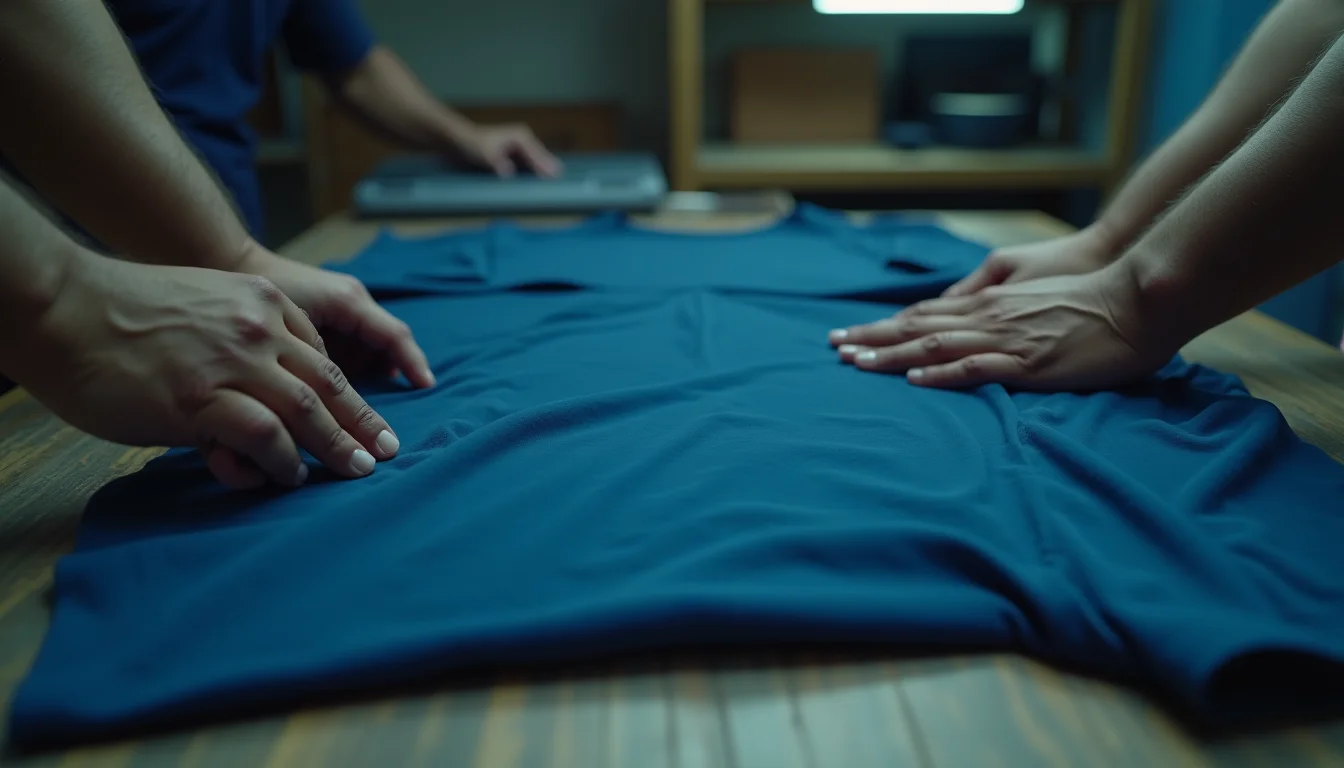
- No bio-wash treatment. The fabric comes out of manufacturing stiff, with excess enzyme, and with a raw cotton smell. It will shrink unpredictably in the first wash — easily 5–7% in both length and width if not pre-shrunk and pre-washed. (The real cost of unexpected shrinkage is documented in this guide on t-shirt shrinkage in bulk orders.)
- No pre-shrink process. Meaning the print on the chest or back will crinkle, lift, or crack as the fabric contracts around it after the first wash.
None of these are theoretical problems. They are physical properties of low-cost fabric that directly affect your print output — and therefore your business reputation.
What a 200 GSM Bio-Washed Blank Actually Does for Your Print
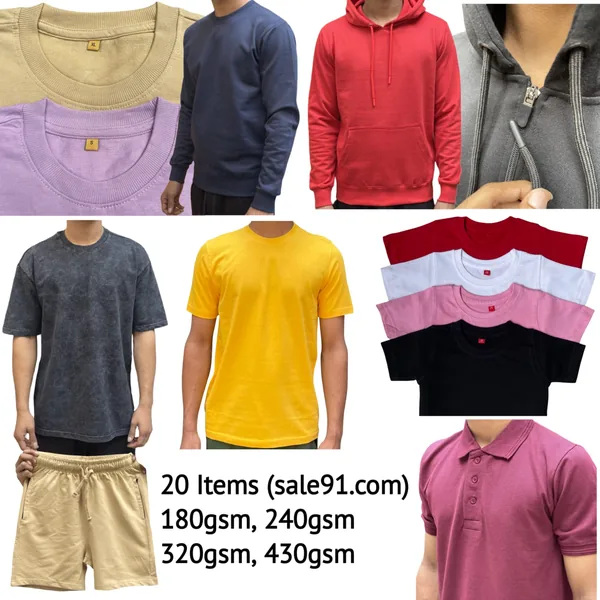
A 200 GSM ring-spun combed cotton blank — the kind Sale91.com manufactures in Tiruppur with fabric knitted in-house — is not just a "nicer" shirt. It is a fundamentally different printing substrate. Here is why GSM and fabric prep matter far more than most new printing businesses realise:
Surface Stability for DTG and DTF
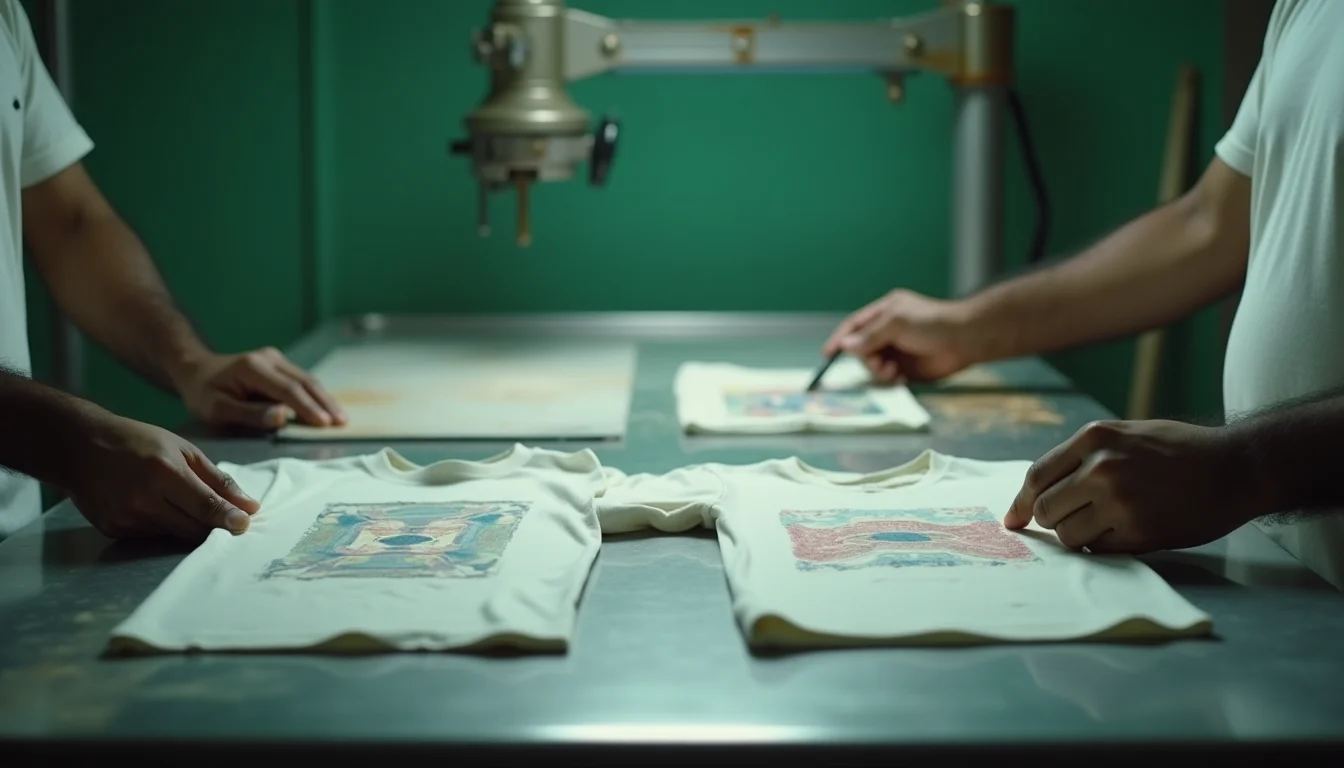
DTG (Direct to Garment) and DTF (Direct to Film) printing both depend on ink or film adhesion to a consistent surface. Thin, loosely woven fabric flexes more during the printing process and stretches unevenly on the platen. The result is micro-shifts in print registration — edges look soft, fine details blur, and Pantone-accurate colour matching becomes impossible. On a 200 GSM pre-shrunk combed cotton base, the fabric sits flat, stays flat, and gives the print head a stable canvas. If you want to see exactly how this plays out after repeated washing, the DTF print durability after 50 washes comparison is worth reading in full.
Screen Print Ink Penetration
Screen printing pushes ink through a mesh at controlled pressure. On thin fabric, excess ink bleeds through to the back, creating ghost impressions and wasting expensive plastisol or water-based inks. On 200 GSM fabric, the tighter weave holds ink within the surface fibres, producing clean edges and colour density that looks premium on the shelf.
Heat Transfer Adhesion
Heat transfer vinyl (HTV) and sublimation require heat and pressure application for 10–20 seconds. Low-GSM, non-bio-washed fabric can scorch, develop sheen marks, or fail to hold adhesion uniformly. A bio-washed, pre-shrunk 200 GSM blank absorbs heat evenly and holds transfer film without surface distortion.
The Profit Math: ₹40 vs ₹85 Side by Side
Let us build the actual unit economics so the choice is unambiguous. The numbers below use the ₹85 fabric price for a 200 GSM bio-washed blank from Sale91.com, a standard ₹20 per piece print cost (screen print or DTF at typical job volumes), and a realistic B2C retail price of ₹250 for a custom-printed tee in the Indian market.
| Cost Factor | ₹40 Cheap Blank | ₹85 Premium 200 GSM Blank |
|---|---|---|
| Blank fabric cost (per piece) | ₹40 | ₹85 |
| Print cost (per piece) | ₹20 | ₹20 |
| Total cost of goods | ₹60 | ₹105 |
| Selling price (retail) | ₹200–₹220 (price-sensitive market) | ₹250 |
| Gross margin per piece | ₹140–₹160 (before returns) | ₹145 |
| Return rate (industry estimate, thin fabric) | High — colour bleed, shrinkage complaints | Near zero — pre-shrunk, bio-washed |
| Repeat order probability | Low — end customer dissatisfaction | High — consistent quality, predictable output |
| Brand reputation impact | Negative reviews, refund pressure | Word-of-mouth referrals, premium positioning |
The gross margin difference between ₹40 and ₹85 fabric is ₹45 per piece. But the actual margin difference — once you factor in returns, reprints, and lost repeat orders — consistently favours the premium blank. One return on a ₹60-cost product erases the "savings" from approximately 30 pieces. One lost repeat order from a dissatisfied client erases far more.
The Free Sample Strategy: How to Move a Price-Sensitive Buyer
The most effective tool in this situation is not a price negotiation — it is a free sample. Here is the exact logic:
Suppose a new B2B buyer contacts you asking for the cheapest blank available. Instead of either (a) giving them the cheap fabric and letting print quality speak for itself negatively, or (b) simply refusing and losing the inquiry, you send a free 200 GSM bio-washed sample. One piece. No invoice.
The buyer receives a shirt that:
- Feels noticeably softer and fuller than what they expected at "budget" pricing
- Has a smooth, even surface — the result of enzyme bio-washing and combed ring-spun yarn
- Is dimensionally stable — it will not shrink or warp after washing
- Actually prints beautifully, which they can verify on their own DTG, DTF, or screen printing machine
The conversation shifts from "how cheap can you go?" to "how soon can you ship?" This is not manipulation — it is letting the product make an argument that words cannot. At Sale91.com, MOQ starts at just 10 pieces for ready-stock items, which makes low-risk trial orders viable even before committing to 500-piece bulk runs.
The Original Fabric Decision Matrix: Which GSM for Which Print Use Case
One piece of information that rarely appears in generic wholesale guides is a concrete mapping between GSM specification, print method, and end-use scenario. The table below is built from Sale91.com's actual product range (180 GSM to 430 GSM, manufactured in Tiruppur) and from standard print industry substrate requirements:
| GSM | Best For | Print Methods | End Retail Positioning | Wholesale Approx. Price* |
|---|---|---|---|---|
| 180 GSM | High-volume everyday merchandise, corporate giveaways | Screen print, DTF, HTV | Value / everyday wear | Lower price band |
| 200 GSM | Custom print retail, D2C brands, quality merchandise | DTG, DTF, Screen print, Sublimation | Premium everyday / mid-range retail | ~₹85 (bio-washed) |
| 210 GSM | Premium brand drops, streetwear, export-quality merchandise | DTG, Screen print, Embroidery base | Premium / aspirational retail | Mid-upper price band |
| 220 GSM | Heavy-premium retail, structured fits, luxury merch | All methods — best DTG ink hold | Heavy premium | Upper price band |
| 240–430 GSM | Hoodies, sweatshirts, winter collections | Screen print, embroidery, HTV | Seasonal premium / winterwear | Per hoodie/sweatshirt pricing |
*Prices vary by quantity, colour, and order timing. Check the current product catalog for live pricing.
Notice that 200 GSM sits at the intersection of the widest range of print methods and the most commercially viable end-retail price points. It is not the most expensive option — that is why the ₹85 price point still allows a healthy ₹145 margin at a ₹250 retail price. It is, however, the sweet spot where fabric quality reliably supports print quality across all common methods used by Indian B2B printers.
Why Cheap Fabric Specifically Destroys Your Print Business Reputation (Not Just the Shirt)
There is a structural difference between a product defect and a printing business reputation problem. A single bad batch of ink is a product defect — fixable, one-time. Consistently using thin, unstable blank t-shirts is a reputation problem — it becomes associated with your brand name, your print shop, your Instagram page, your Meesho/Amazon listings.
The end consumer who receives a ₹250 custom-printed tee that shrinks 6% in the first wash and whose print starts peeling at the edges does not know or care about your fabric supplier. They know your brand. They leave a 1-star review for you. They request a refund from you. They tell their friends not to order from you. The ₹45 you saved per piece on blank fabric has now cost you a customer relationship worth — conservatively — dozens of future orders. The hidden cost of poor DTG print adhesion on cheap blanks is documented further in this analysis of common DTG printing mistakes on substandard blanks.
The Wholesale Supplier Side: Why a Good Manufacturer Pushes Back
A good B2B plain t-shirt manufacturer is not just a fabric-moving intermediary — they are a quality control partner. At Sale91.com (BulkPlainTshirt.com), the fabric is knitted in-house at the Tiruppur facility. This means quality specifications — GSM accuracy, yarn grade, bio-wash process, pre-shrink treatment — are controlled at source, not sourced from a third-party mill and resold. Over 1,25,232 pieces sold in a single 30-day window is only possible because buyers reorder. Reorders only happen when print quality is consistent. Consistent print quality only happens on consistent fabric.
When a supplier pushes back on a ₹40 request and offers a ₹85 sample instead, they are protecting their own repeat order pipeline — which perfectly aligns with the buyer's interest in zero returns and growing repeat business. This is one of the clearest examples in B2B wholesale of incentives being genuinely aligned.
Ordering Strategy: How to Get the Best Price on 200 GSM Blanks
If you have decided (correctly) that 200 GSM bio-washed blanks are your baseline fabric, here is how to structure your ordering to maximise margin:
- Order 500+ pieces: Sale91.com offers a ₹2/piece discount at 500+ quantity — that is ₹1,000 saved on a 500-piece order before any other negotiation.
- Order online via Sale91.com: An additional ₹3/piece discount applies to online purchases regardless of quantity. On 500 pieces, that is another ₹1,500 — total additional discount of ₹2,500 on a 500-piece order.
- Use 50% COD for your first order: New buyers can place their first order with 50% Cash on Delivery (plus a 3% COD charge). This de-risks the initial bulk commitment significantly — you receive and inspect before full payment.
- Start with a low-MOQ trial: MOQ begins at 10 pieces for ready-stock items. Order 10–20 pieces, run your own print tests across your machines, wash-test two or three pieces, then scale to 500 with full confidence.
- Check the catalog for ready stock: With 1 lakh+ pieces in ready stock at any time (warehouse in Khanpur, South Delhi), dispatch timelines are short — particularly important for time-sensitive merchandise orders.
- Confirm GSM is declared and matches your print method requirement (200 GSM for most DTG/DTF work)
- Verify fabric is ring-spun combed cotton — not open-end or carded yarn
- Confirm bio-wash treatment is applied (enzyme-washed for smoothness)
- Confirm pre-shrunk process — ask for a wash-test spec or shrinkage certificate
- Request a physical sample before committing to 100+ pieces
- Check available colours match your production plan (Sale91.com stocks 15+ colours)
- Confirm dispatch location and lead time — Delhi warehouse stock ships faster for North India
- Calculate landed cost per piece including shipping before comparing suppliers
Also worth checking: how consistent is colour across batches? This is especially important for bulk orders where you are matching a pantone or brand colour. The cost of a colour inconsistency at bulk scale is detailed in this comparison of dyeing quality across vendors — a common but underestimated risk in wholesale t-shirt sourcing.
For a full FAQ on bio-wash, pre-shrink, and GSM specifications, see the product FAQ page — the basics are covered there so we can keep this article focused on the business decision layer.
The Long Game: Repeat Orders Are the Real Business Model
In a printing business, the first order from any client is essentially a marketing cost. You spend time quoting, sampling, communicating, and sometimes discounting to win the initial business. The margin on that first order is rarely the best you will see from that client. The second order, the third, the standing monthly reorder — that is where a printing business actually makes money.
Suppose a printing business runs 12 bulk orders of 500 pieces each over a year from a single loyal client. At ₹145 margin per piece and 500 pieces per order, that is ₹72,500 per order, ₹8.7 lakh per year — from one client. Protecting that client relationship with consistent, reliable print quality on properly specified fabric is not an overhead cost. It is the business model. Losing that client to one bad batch of cheap fabric — where the print cracked, the colour bled, or the shirt shrank two sizes — costs far more than any per-piece fabric saving.
The ₹40 mistake is not in the per-piece price. It is in the compounding cost of the decision over 12 months of orders that never come.
Watch the Video
This scenario is also explained in our YouTube Short — watch the 60-second version before reading the FAQ below:
Frequently Asked Questions
More Articles
 T-Shirt Shrinkage Test for Bulk Orders — How 6% Shrinkage Rejected a ₹45K 200 GSM Order
 Navy Blue vs Black T-Shirt: This Color Mistake Cost 800 Pieces
 Same Colour, 2 Vendors — One Looks Premium, One Cheap! Dyeing Check
 ₹1.5 Lakh Gone! This DTG Printing Mistake Ruined 500 Tees
 DTF Print After 50 Washes — Cheap vs Premium Blank T-Shirt Result for Indian Printers
 Plain T-Shirt Factory Cost vs MRP — Why a ₹999 Branded Tee Costs Only ₹180 to Make in India
 All Over Print Mistake 90% T-Shirt Printers Make
Order Premium 200 GSM Plain T-Shirts in Bulk
India's own-knitting manufacturer. 1 lakh+ pieces ready stock. Bio-washed, pre-shrunk, ring-spun combed cotton. MOQ 10 pieces. 50% COD available on first order.
Order Now at Sale91.com →