DTF Print After 50 Washes — Cheap vs Premium Blank T-Shirt Result for Indian Printers
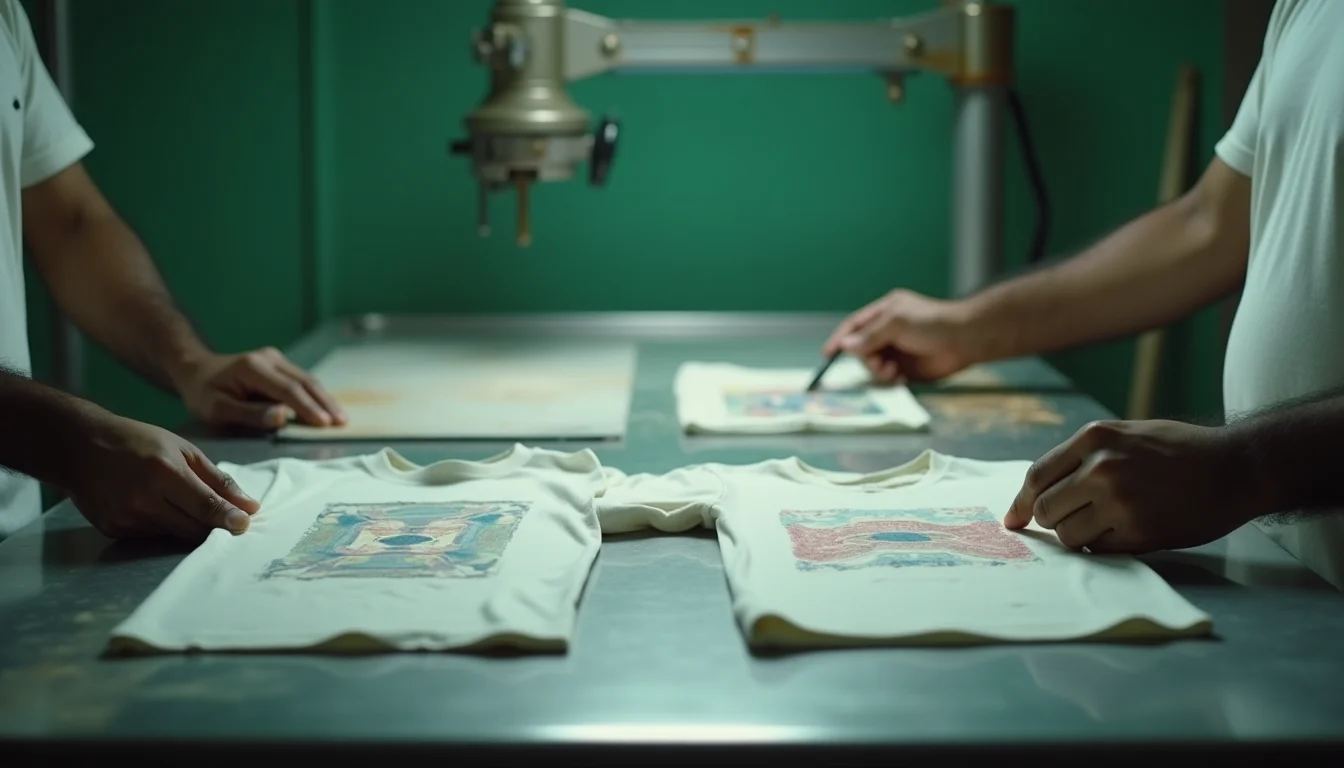
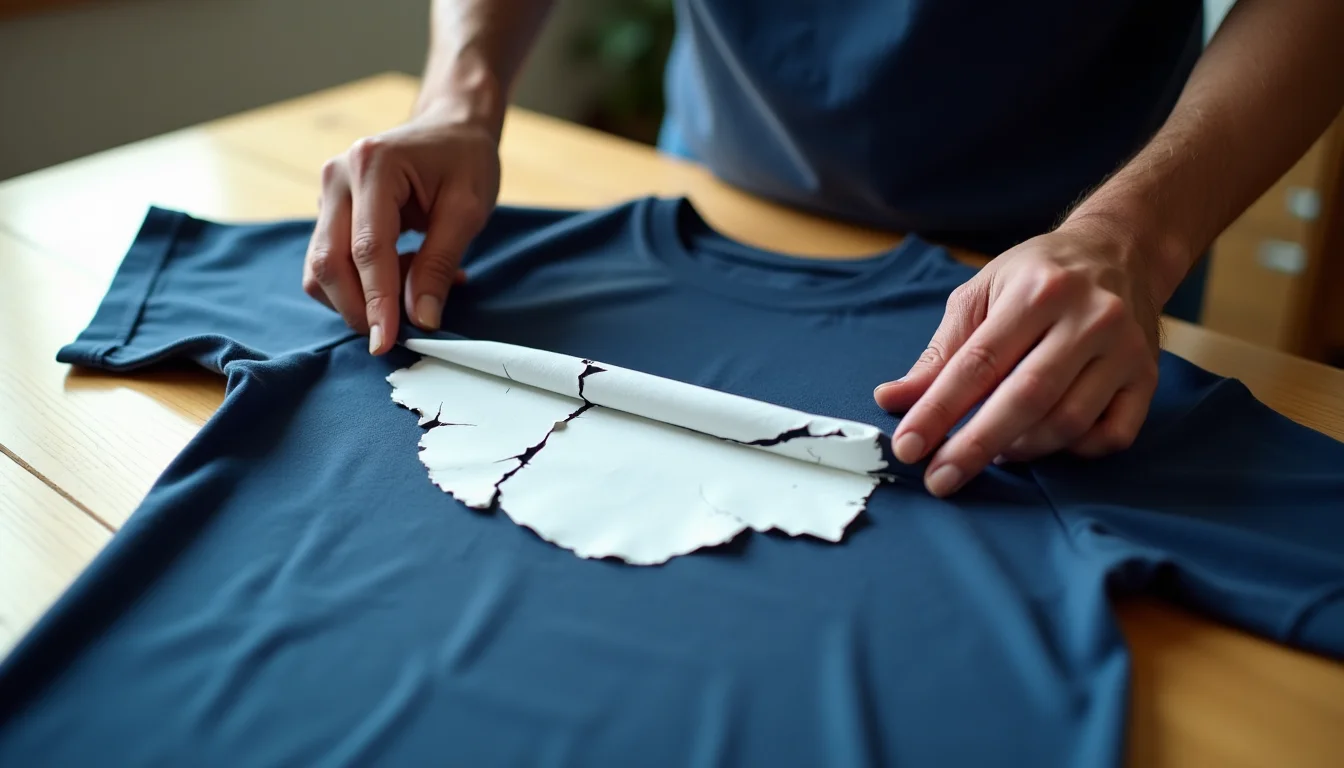
A customer recently sent us two t-shirts for inspection. Both had identical DTF prints, done on the same machine, by the same operator, on the same day. After 50 machine washes, one shirt looked nearly brand new — vibrant, clean, no peeling. The other was an embarrassment. The print had cracked, the film had lifted at the edges, and the fabric itself looked tired and pilled.
The only difference? The blank t-shirt.
This is a story every custom printing business owner in India needs to hear — whether you are running a DTF studio in Delhi, a screen-printing unit in Surat, or a garment customisation setup in Bengaluru. The fabric you print on is not just a background. It is an active participant in how long your print will last, how good it will look, and ultimately, how many repeat customers you will earn or lose.
💡 Key Insight: The ₹80 premium blank t-shirt survived 50 washes with the DTF print fully intact. The ₹45 cheap blank cracked at just 15 washes. That's a 3x difference in print life — caused entirely by fabric quality, not printing technique.
Why the Blank T-Shirt Is the Foundation of Every DTF Print
Most new printers in India focus obsessively on ink quality, film type, and machine settings. These things matter, of course. But there is an uncomfortable truth that experienced printers learn — often after expensive mistakes: a great DTF print on a bad blank is still a bad product.
DTF (Direct to Film) printing works by transferring a printed design from a special PET film onto the fabric surface using heat and pressure. The adhesive powder that bonds the film to the fabric relies on the fabric's surface being clean, smooth, and receptive. When the blank t-shirt does not meet these conditions, the bond is weak from day one — and it will only get worse with every wash.
Think of it like painting on a dusty, oily wall versus a freshly primed, smooth wall. The paint job on the rough wall might look okay initially, but it will peel, crack, and fade far faster. The chemistry is similar with DTF printing on low-quality fabric.
If you have ever lost a bulk order because of print failures similar to HTV peeling disasters, you already know how expensive a wrong blank choice can be. The logic is the same for DTF — the substrate is everything.
What Makes a Cheap Blank T-Shirt Fail Under DTF Printing?
Cheap blank t-shirts — typically priced below ₹50 — cut corners in three critical areas that directly affect DTF print durability. Understanding these will help you make smarter purchasing decisions for your printing business.
1. Rough, Open-End Spun Yarn
Budget blanks are almost always made from open-end spun yarn — a faster, cheaper spinning method that produces coarser, hairier fibres. The surface of the knitted fabric ends up uneven, with lots of fibre ends sticking out. When a DTF film is pressed onto this rough surface, the adhesive cannot form a continuous, even bond. There are microscopic air gaps and weak points from the very beginning. The result? Print cracking starts early — sometimes as soon as 10 to 15 washes.
2. No Bio-Wash Treatment
This is one of the most overlooked factors. Raw cotton fabric, straight from the loom or knitting machine, carries natural cotton waxes, seed-coat fragments, sizing agents, and processing chemicals on its surface. Without a proper enzyme bio-wash treatment, these residues create a chemical barrier between the DTF adhesive and the cotton fibre.
Cheap blanks typically skip bio-washing because it adds cost and time. The fabric might look clean visually, but at a microscopic level, the surface is contaminated. Your DTF adhesive sticks to the chemical layer, not to the cotton itself — and that layer will wash away, taking your print with it.
3. Insufficient GSM and Loose Knit Structure
Very thin fabrics — below 160 GSM — simply do not have enough fibre density to hold a DTF film securely over many washes. The fabric stretches more, the weave is looser, and the thermal bonding during pressing is less effective because there is less material mass to absorb and retain the heat evenly. The film bonds to a thin, unstable substrate that flexes and deforms with every wear and wash cycle, causing progressive delamination of the print.
Cheap vs Premium Blank T-Shirt — DTF Performance Comparison
| Factor | Cheap Blank (₹40–₹50) | Premium Blank (₹75–₹90) |
|---|---|---|
| Yarn Type | Open-end spun (rough) | Ring-spun combed cotton (smooth) |
| Bio-Wash | No — surface has residues | Yes — enzyme treated, clean surface |
| GSM Range | 140–170 GSM (thin) | 180–220 GSM (substantial) |
| Pre-shrunk? | Usually no | Yes — dimensionally stable |
| DTF Bond Quality | Weak — air gaps in adhesion | Strong — continuous surface bond |
| Print Life (Washes) | Cracking starts at ~15 washes | Intact at 50+ washes |
| Customer Return Risk | High | Very Low |
GSM and DTF Printing — What's the Right Choice?
GSM — Grams per Square Metre — is the single most important number on a blank t-shirt specification sheet for a DTF printer. It tells you about the weight, density, and overall substance of the fabric. Here is how to read it for your printing business:
The video evidence is clear: use at least 200 GSM for DTF printing if you want your prints to survive 50+ washes consistently. At 200 GSM, the fabric has enough density to absorb heat evenly during the heat press stage, and enough fibre mass to anchor the adhesive layer securely. The print moves with the fabric rather than fighting against it during stretching and washing.
It is also worth noting that GSM claims on cheap blanks are often overstated. A blank labelled as "180 GSM" from an unverified source may actually weigh in at 155–160 GSM when tested. Always source blanks from a manufacturer who can back up their GSM claims with testing data — or order a sample and weigh it yourself.
There is also a common misconception in the market around high GSM numbers — if you want to understand why a 240 GSM claim can be misleading, the real quality indicators go deeper than weight alone.
Bio-Wash and Ring-Spun Combed Cotton — Why These Terms Matter for Printers
What Is Bio-Washing?
Bio-washing is an enzyme treatment process applied to knitted cotton fabric after manufacturing. The enzymes (cellulases) break down and remove the short, protruding fibres from the yarn surface — the ones that cause pilling and roughness. The result is a fabric surface that is noticeably smoother and cleaner at a microscopic level.
For DTF printing, this smoothness is critical. A bio-washed surface allows the DTF adhesive to make full, continuous contact with the fabric. There are no stray fibres to create air pockets, no wax residues to block adhesion. The bond formed is dramatically stronger and more uniform than what you would get on an untreated fabric. This is why bio-washed blanks are a non-negotiable for professional printing operations.
Ring-Spun vs Open-End Spun — Does It Really Matter?
Yes — significantly. Ring-spun yarn is made by continuously twisting and thinning cotton fibres into a strong, smooth, tightly wound thread. The process aligns the fibres in a parallel structure, resulting in yarn that is stronger, softer, and more uniform in diameter. Combed ring-spun cotton goes one step further — the fibres are combed before spinning to remove shorter, weaker fibres, leaving only the long, premium staples.
Open-end (or rotor) spun yarn, used in cheap blanks, is made much faster but with less fibre alignment. The resulting yarn is bulkier, uneven, and has more exposed short fibre ends. When knitted into fabric, this creates that characteristic rough, almost fuzzy surface that cheap blanks have — and that DTF films struggle to bond to properly.
The ₹35 Price Difference That Can Save (or Cost) Your Business
Let us do the math that many printing business owners in India avoid doing until it is too late.
Suppose you take an order for 500 custom t-shirts. You choose the ₹45 cheap blank to save ₹35 per piece — saving ₹17,500 on the blank cost. Sounds like smart margin management, right?
Now the prints start cracking at 15 washes. Your client's customers are complaining. The client wants a replacement or a refund. Suddenly you are looking at:
- Replacement cost of 500 shirts (blanks + printing + labour)
- Loss of the client relationship and future orders
- Damage to your brand reputation in your local market
- Time spent managing complaints instead of growing your business
That ₹17,500 "saving" just cost you ₹50,000+ in real terms. This is the hidden cost of cheap blanks that never appears on the initial purchase invoice but always shows up eventually.
📌 The real calculation: A ₹35 premium over a cheap blank, multiplied by 500 pieces = ₹17,500 extra upfront. But one bulk return or reprint order will cost you 3–5x that amount. Premium blanks are not an expense — they are insurance for your business.
This same principle applies when choosing your printing method. Understanding the real cost breakdown across printing methods — including DTF vs screen print vs embroidery — helps you price correctly and choose the right combination of blank and method for each job.
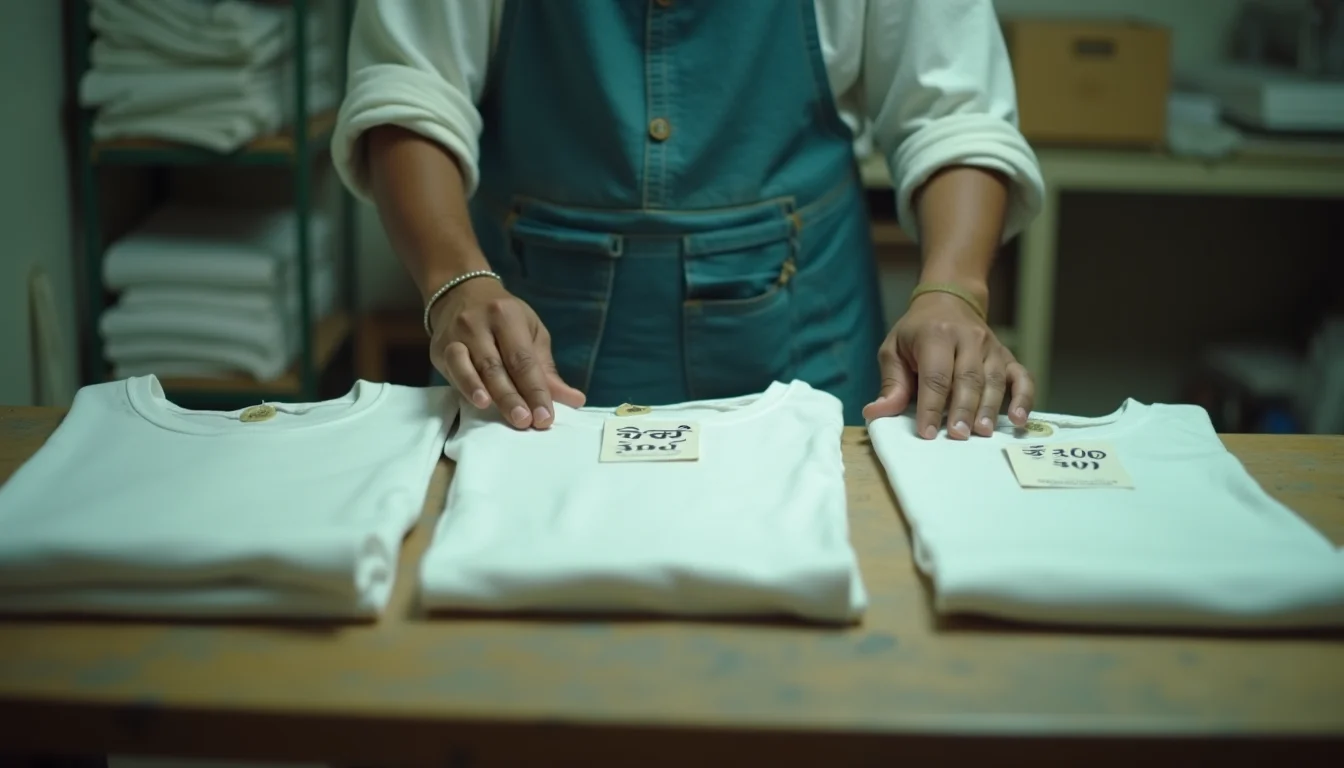
How to Test Your Blank Before Committing to a Bulk Order
Here is a simple, practical protocol that every Indian printing business should follow before placing any bulk blank order with a new supplier:
Step 1: Order One Sample Piece
Always request a sample before bulk ordering. Any reputable manufacturer will provide samples. Apply your standard DTF print to the sample using your normal press settings.
Step 2: Conduct a 10-Wash Home Test
Wash the printed sample 10 times at 40°C with normal detergent. Tumble dry if that matches your end-customer's likely washing behaviour. After 10 washes, closely examine the print for any edge lifting, cracking, fading, or loss of vibrancy. If the print shows visible degradation at 10 washes, it will certainly fail by 30–50 washes in real-world use.
Step 3: Do the Stretch Test
Hold the printed area between both hands and gently stretch it horizontally and vertically. A good DTF bond on quality fabric will stretch with the fabric and snap back without cracking. On a poor blank, you will often see micro-cracks appearing in the print during this test — a clear warning sign.
Step 4: Check the GSM Yourself
Cut a 10cm × 10cm swatch, weigh it on a precision scale, and multiply by 100. This gives you the actual GSM. Compare it to what the supplier claimed. Any reputable fabric manufacturer should be within 5% of their stated GSM.
Step 5: Compare Visual Surfaces
Under good lighting, lay the sample flat and look at the surface. A quality bio-washed combed cotton blank should look smooth, even, and tight. A cheap blank will look slightly fuzzy, uneven, and you may see small pilling even before washing.
What to Order for Your DTF Printing Business in India
Based on the evidence from the 50-wash test and years of working with India's custom printing industry, here are the specifications you should insist on for your DTF blanks:
- Minimum 200 GSM — 180 GSM is acceptable for low-wash use cases; 200 GSM is the sweet spot for commercial durability
- 100% Ring-Spun Combed Cotton — no blends, no open-end spun yarn
- Bio-washed — non-negotiable for clean surface adhesion
- Pre-shrunk — ensures the garment does not distort and delaminate the print in the first few washes
- Manufacturer-direct sourcing — eliminates middlemen and ensures consistent quality batch to batch
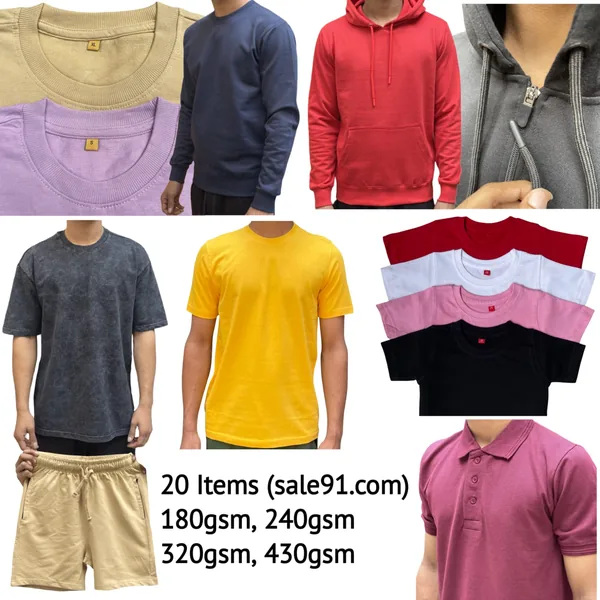
At Sale91.com, all plain t-shirts are manufactured in-house in Tiruppur using own-knitted fabric. Every piece is 100% ring-spun combed cotton, bio-washed, pre-shrunk, and available from 180 GSM to 220 GSM — exactly the specifications your DTF printing business needs. You can browse the full range on the BulkPlainTshirt.com product catalog.
With over 1 lakh pieces in ready stock at any time and MOQ as low as 10 pieces, you can test before you commit — and then scale up confidently with bulk discounts at 500+ pieces.
Watch the Video
See the actual 50-wash comparison in action — the cracked cheap blank vs the intact premium blank, side by side:
Frequently Asked Questions
More Articles
Ready to Print on Blanks That Actually Last?
Order 200 GSM bio-washed, ring-spun combed cotton blank t-shirts directly from the manufacturer. 1 lakh+ pieces in ready stock. MOQ as low as 10 pieces. PAN India delivery. Export available.
Order at Sale91.com →