DTF vs Screen Print vs Embroidery — Real Cost Breakdown on ₹500 T-Shirt for Indian Printers
A question that comes up again and again in India's growing custom t-shirt printing community is simple: which printing method makes me the most money? You might be running a DTF setup, running screens, or offering premium embroidery — but if you haven't calculated the actual cost-per-piece against a fixed selling price, you could be leaving serious money on the table or worse, operating at thinner margins than you realise.
In this detailed breakdown, we'll compare all three major decoration methods — DTF (Direct-to-Film) printing, screen printing, and embroidery — using the same ₹500 selling price per t-shirt. We'll factor in blank tee cost, decoration cost, and give you the real profit figure so you can make an informed business decision.
Why the Blank T-Shirt Cost Matters More Than You Think
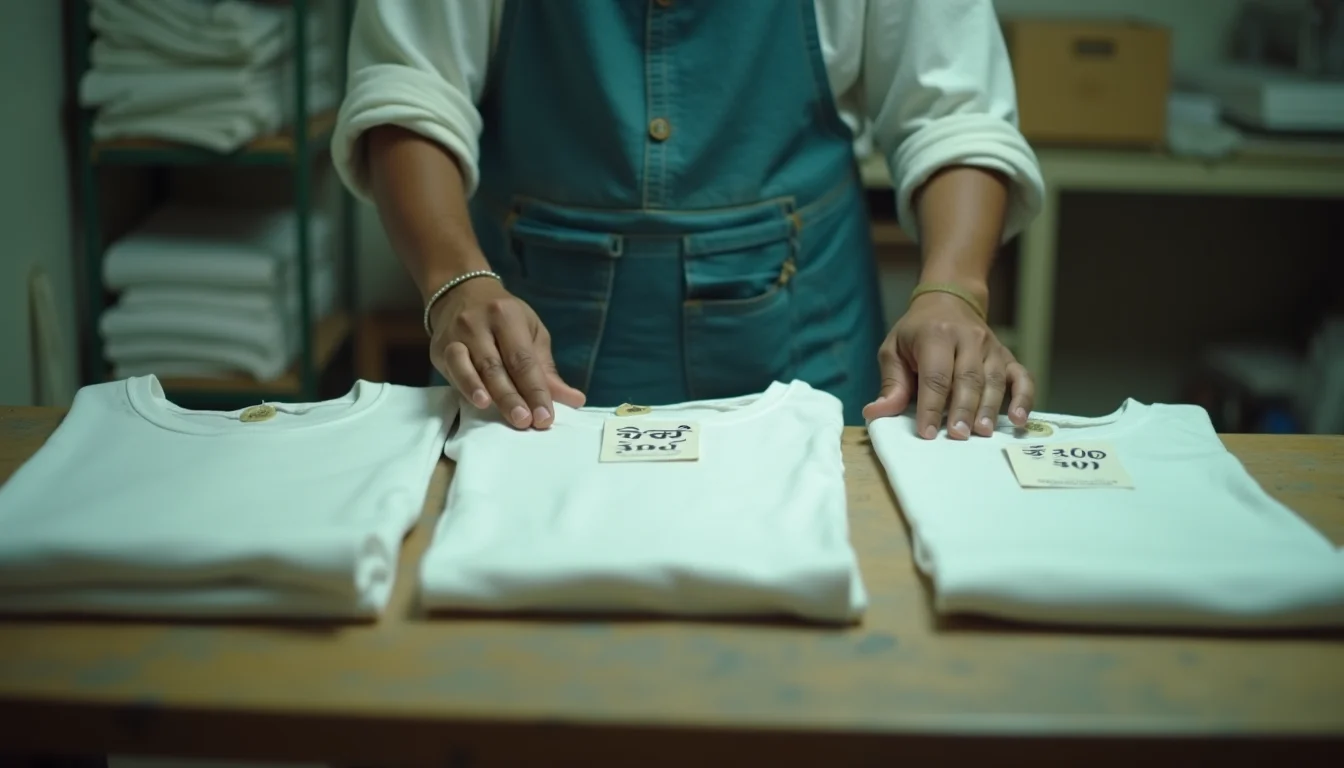
Before we get into printing costs, let's talk about the foundation of every printed garment: the blank t-shirt itself. This is the single biggest variable that most small printers in India overlook. Buying from a reseller at ₹120–₹150 per piece versus sourcing directly from a manufacturer at ₹80–₹100 per piece can completely change your margin calculation.
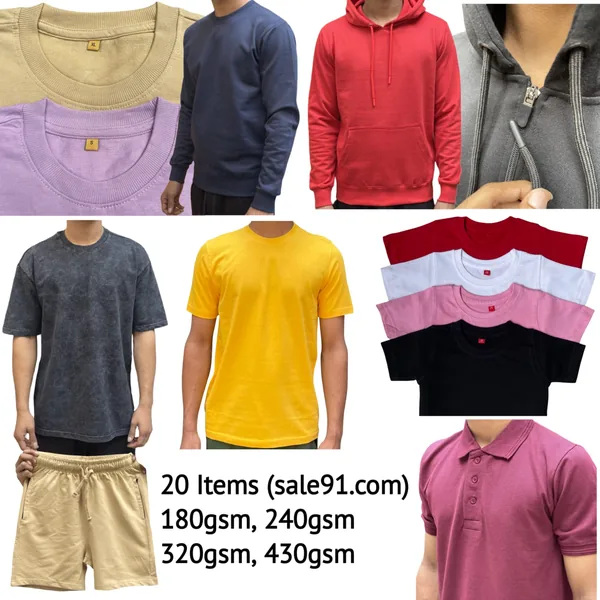
At Sale91.com, which is the order portal for BulkPlainTshirt.com — India's own knitted blank wear manufacturer based in Tiruppur — you get 100% cotton, bio-washed, pre-shrunk, ring-spun combed cotton t-shirts at manufacturer-direct prices. With GSM options from 180 to 220, there is a blank for every printing method and every end-use.
For this cost breakdown, we're using a standard 180–200 GSM plain round neck t-shirt sourced at approximately ₹90–₹100 per piece in reasonable wholesale quantities — a realistic price for anyone ordering 50 pieces or more from a direct manufacturer. You can browse the full range at the BulkPlainTshirt.com catalog to see current pricing across all GSMs and colours.
Now, why does GSM matter for printing? A thinner 180 GSM shirt is perfectly adequate for DTF and screen printing on everyday merchandise. However, for embroidery, you typically want at least a 200 GSM fabric because the needle and thread put stress on the fabric — a too-thin shirt can pucker, distort, or show the embroidery backing through the front. Choosing the wrong GSM can literally ruin an order, as many printers have discovered painfully. In fact, GSM mistakes have cost printers ₹40,000+ in a single bad batch — a mistake that's entirely avoidable with the right sourcing.
Method 1: DTF Printing (Direct-to-Film) — The Flexible Choice
What Is DTF Printing?
DTF printing involves printing your design onto a special PET film using a DTF printer, applying a hot-melt adhesive powder, curing the film, and then heat-pressing the finished transfer onto the garment. It works on virtually any fabric — cotton, polyester, blends — and requires no minimum order quantity per design, making it extremely popular for custom and small-batch orders.
DTF Cost Breakdown on a ₹500 T-Shirt
- Blank t-shirt (180–200 GSM, bio-washed, ring-spun cotton): ₹90–₹100
- DTF transfer print (A4 size, full-colour design): ₹60–₹75
- Heat press electricity + operator time: ₹10–₹15
- Packaging (poly bag, tag, label): ₹5–₹10
- Total approximate cost per piece: ₹175–₹195 (we'll use ₹185 as the midpoint)
DTF has seen a massive surge in India over the last two years. Printers love it for its flexibility — you can do a single piece or 500 pieces with no change in setup cost per unit. The colour accuracy is excellent, gradients and photographic designs print beautifully, and the transfers are washable (though print longevity depends heavily on press temperature, transfer quality, and the fabric being printed on).
However, if you're deciding between a budget DTF machine and a professional one, the economics can shift. The difference between a ₹50K and ₹2 lakh DTF printer — especially in print head life and running cost — significantly affects your real cost per transfer, so factor machine amortisation into your calculations.
Method 2: Screen Printing — The High-Volume Profit Machine
What Is Screen Printing?
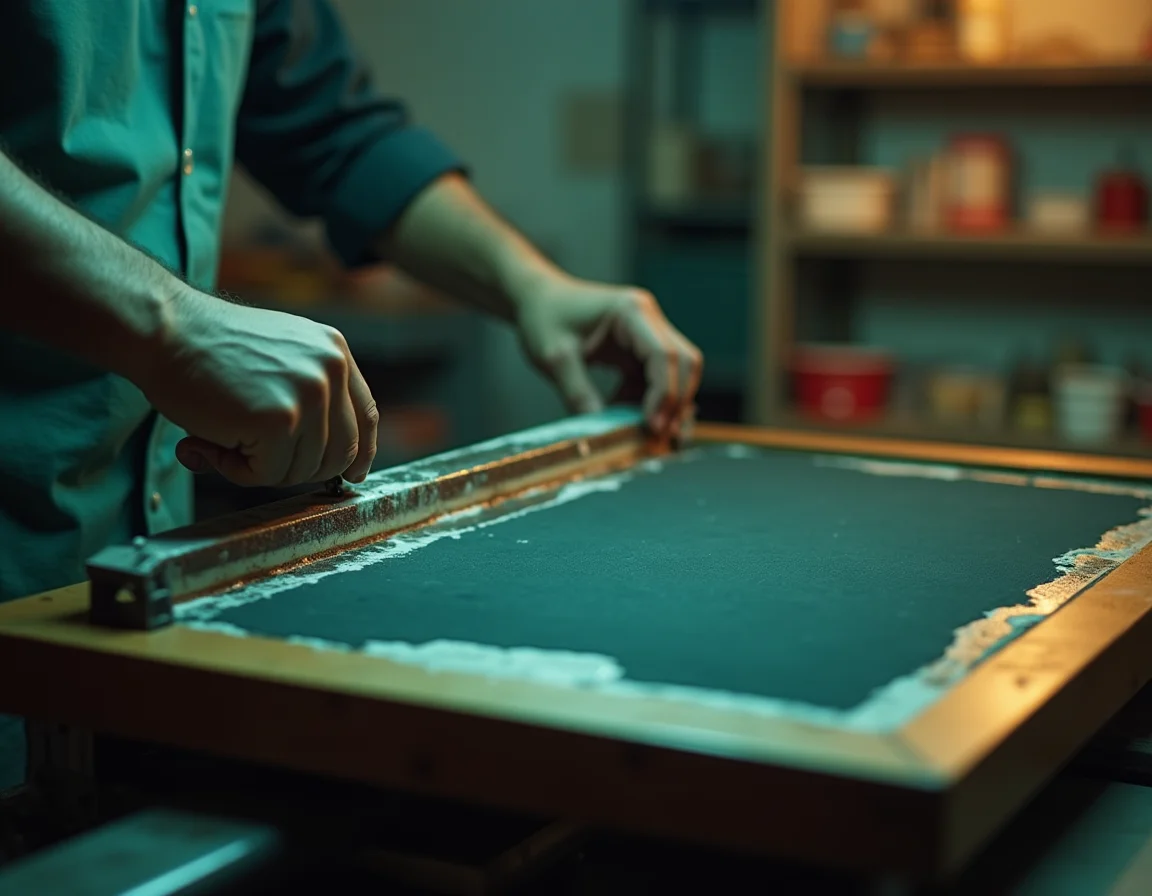
Screen printing is the oldest and most established garment decoration method. A mesh screen is coated with a light-sensitive emulsion, your design is exposed onto it, and ink is then pushed through the screen onto the fabric. Each colour in your design requires a separate screen. Once screens are made, per-piece cost drops dramatically — making screen printing the undisputed king for high-volume, consistent orders.
Screen Printing Cost Breakdown on a ₹500 T-Shirt
- Blank t-shirt (180–200 GSM, bio-washed, ring-spun cotton): ₹90–₹100
- Screen making cost (amortised over 50+ pieces, 1–2 colours): ₹15–₹20 per piece
- Ink + squeegee + flash cure cost per piece: ₹25–₹35
- Operator time + conveyor dryer electricity: ₹8–₹12
- Packaging: ₹5–₹10
- Total approximate cost per piece (50+ pcs, 1–2 colour design): ₹155–₹175 (we'll use ₹165 as the midpoint)
Screen printing gives you the highest profit margin of the three methods — but with an important caveat: you need a minimum quantity to make it viable. Most screen printers in India operate on a minimum of 50 pieces per design per colour combination. Below that, the screen making cost per piece becomes prohibitive. The margin advantage of screen printing grows the more pieces you produce — at 100 pieces, your screen amortisation drops even further and profit per piece can approach ₹340–₹350.
Screen printing is also constrained by design complexity. A 5-colour gradient design will cost significantly more per piece than a 1–2 colour logo. For businesses dealing with corporate orders, uniform printing, and event merchandise where a consistent 1–2 colour logo is required in bulk, screen printing is hard to beat on margins.
Screen Printing Limitations to Plan Around
- Minimum 50 pieces per design (ideally 100+ for best economics)
- Each additional colour adds to cost — best for 1–3 colour designs
- Artwork changes require new screens — not ideal for variable data printing
- Dark fabric printing requires an underbase white layer — adds cost and time
Method 3: Embroidery — The Premium Perception Play
What Is Embroidery?
Embroidery uses a computerised multi-head machine to stitch your design directly into the fabric using thread. The design is first digitised into a stitch file (.DST or .EMB format), and then the machine stitches it onto the garment, typically on the chest, collar, or sleeve. Embroidery carries a premium perception — it looks and feels expensive, and is closely associated with workwear, corporate uniforms, polo shirts, and high-end merchandise.
Embroidery Cost Breakdown on a ₹500 T-Shirt
- Blank t-shirt (200–220 GSM recommended for embroidery stability): ₹100–₹115
- Digitisation charge (one-time, amortised over batch — approx ₹500–₹800 total): ₹5–₹15 per piece
- Thread, backing (stabiliser), topping material: ₹20–₹30
- Machine time (stitch count dependent — 8,000–15,000 stitches typical chest logo): ₹50–₹70
- Trimming, QC, hooping labour: ₹15–₹20
- Packaging: ₹5–₹10
- Total approximate cost per piece: ₹195–₹240 (we'll use ₹210 as the midpoint)
Embroidery gives you the lowest margin among the three methods at a ₹500 selling price — but here's the catch: embroidered t-shirts often don't sell at ₹500. Customers instinctively perceive embroidery as more premium and are willing to pay ₹700, ₹900, or even ₹1,200 for the same blank tee with a well-embroidered logo or design. This is the "perceived value premium" of embroidery, and smart printers use it to command significantly higher selling prices.
If you raise your embroidered t-shirt price to ₹750 while keeping costs at ₹210, your profit jumps to ₹540 per piece — comfortably the highest of all three methods. This is why embroidery-focused businesses servicing corporate clients, hotel chains, and premium brands can be extremely profitable even with lower piece volumes.
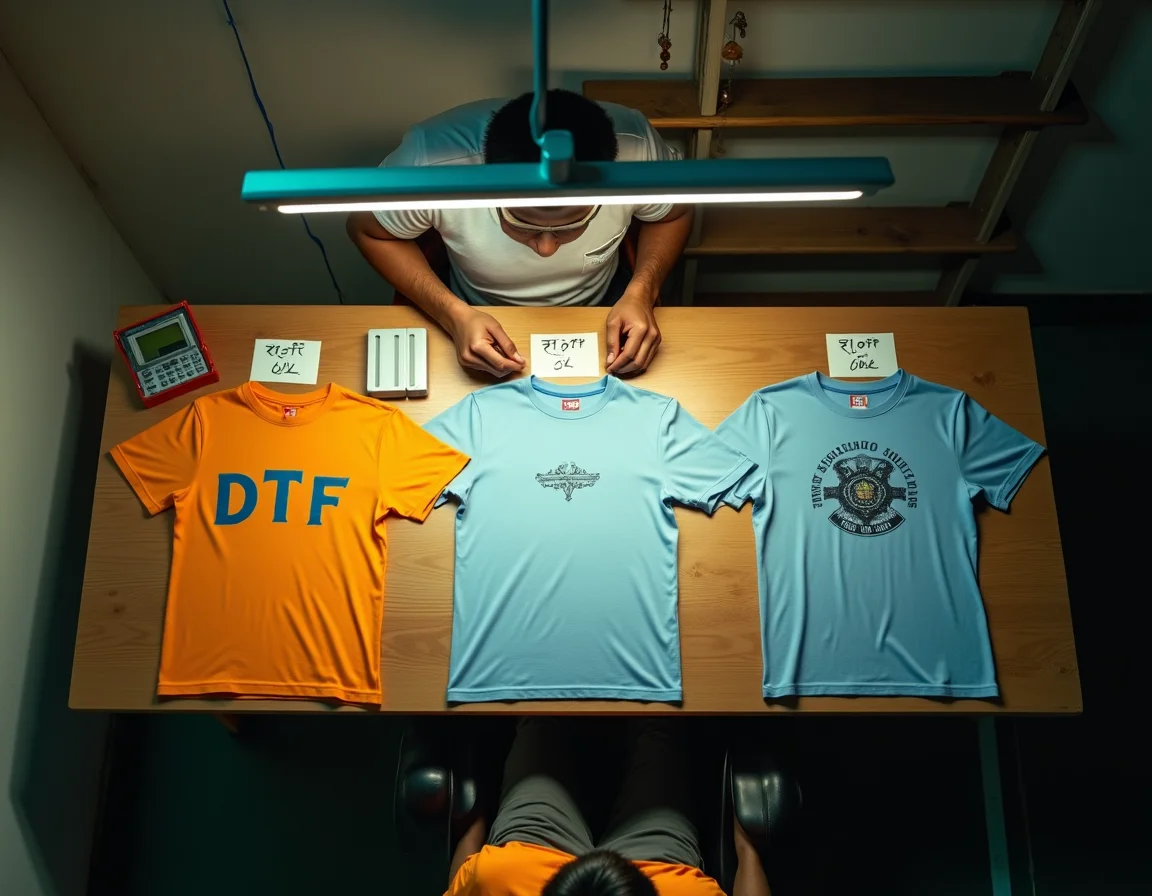
Side-by-Side Comparison: All Three Methods at ₹500 Selling Price
| Factor | DTF Printing | Screen Printing | Embroidery |
|---|---|---|---|
| Blank Tee Cost | ₹90–₹100 | ₹90–₹100 | ₹100–₹115 |
| Decoration Cost | ₹75–₹95 | ₹65–₹75 | ₹95–₹125 |
| Total Cost/Piece | ~₹185 | ~₹165 | ~₹200–₹220 |
| Profit at ₹500 | ₹315 | ₹335 (highest) | ₹280–₹300 |
| MOQ Needed | 1 piece | 50 pieces minimum | 12–24 pieces |
| Design Flexibility | Full colour, photos, gradients | 1–4 colours ideal | Logo/text, limited gradients |
| Perceived Value | Medium | Medium | High (premium look) |
| Best For | Custom, small batches, full-colour | Bulk corporate, events, uniforms | Corporate, workwear, premium brands |
| Sell Price Ceiling | ₹400–₹600 | ₹350–₹600 | ₹600–₹1,200+ |
What Happens When You Change the Selling Price?
The ₹500 selling price is just a reference point. Let's see how margins shift at different price points — because your real business advantage comes from knowing when to push pricing higher.
At ₹350 Selling Price (Budget End Market)
- DTF: ₹350 – ₹185 = ₹165 margin
- Screen Print: ₹350 – ₹165 = ₹185 margin
- Embroidery: ₹350 – ₹210 = ₹140 margin (very thin — avoid)
At ₹700 Selling Price (Premium Market)
- DTF: ₹700 – ₹185 = ₹515 margin
- Screen Print: ₹700 – ₹165 = ₹535 margin
- Embroidery: ₹700 – ₹210 = ₹490 margin (now very competitive!)
At ₹700+, all three methods become highly profitable. But only embroidery justifies the higher price in the customer's mind without heavy discounting pressure. A customer will question why a DTF-printed shirt costs ₹700, but they'll accept it readily for a neatly embroidered polo. This is the psychology of decoration methods, and it directly impacts your ability to hold your price point.
Which Method Should You Choose for Your Business?
The honest answer is: it depends on your order profile. Here's a practical decision guide:
Choose DTF If:
- You handle custom single-piece to small-batch orders (1–49 pieces)
- Your customers want full-colour, photo-realistic, or complex multi-colour designs
- You serve the e-commerce POD (Print on Demand) market
- You want maximum flexibility without managing screens or digitisation files
- You're operating from a small studio or working from home
Choose Screen Printing If:
- You consistently receive orders of 50 pieces or more per design
- Your designs are 1–4 colours (logos, text-based artwork)
- You serve schools, colleges, corporates, NGOs, or event organizers
- You want the highest margin per piece in bulk volumes
- You're building a factory-scale printing operation
Choose Embroidery If:
- You're targeting corporate uniforms, hotel staff wear, or luxury brand merchandise
- Your customers are sensitive to perceived quality and willing to pay ₹700+
- You work with polo shirts, sweatshirts, or caps where embroidery looks natural
- You want to differentiate your business from the commodity DTF/screen market
- You want to combine methods — embroidery on chest + DTF on back sleeve (a powerful combo)
Some of the most profitable printing businesses in India run all three methods strategically — and if you're thinking about that route, understanding how to run embroidery and DTF together efficiently without double investment can be a real competitive edge.
How Blank T-Shirt Quality Affects Print Results (And Your Reputation)
Even if your printing is flawless, a low-quality blank tee will undermine the entire product. Here's what to look for:
- Bio-washing: Enzyme-treated fabric gives a smoother surface — essential for DTF adhesion and screen print ink absorption. Non-bio-washed shirts can feel stiff and show inconsistent print quality.
- Pre-shrinking: A shirt that shrinks 3–5% after first wash can distort a precisely placed DTF transfer or embroidery design. Always use pre-shrunk blanks.
- Ring-spun combed cotton: Removes short, coarse fibres — gives a tighter, smoother weave that is ideal for all decoration methods. Cheaper open-end spun cotton will show more pilling and surface irregularity.
- Consistent GSM: A 180 GSM shirt may vary by ±5 GSM batch to batch from resellers. When you buy from a manufacturer who knits their own fabric, GSM consistency is far higher — this matters for embroidery in particular.
All plain t-shirts from Sale91.com are bio-washed, pre-shrunk, and made from ring-spun combed cotton — specifically because these properties make a measurable difference to the final printed product. With 1 lakh+ pieces in ready stock across 15+ colours, you can order as few as 10 pieces or as many as thousands with consistent quality batch after batch.
The Hidden Costs Printers Forget to Calculate
A proper margin calculation includes more than just blank tee + print cost. Here are the costs most printers don't account for, which quietly erode profitability:
- Rejection rate: Even experienced printers see 2–5% rejection. Factor this into your cost per piece.
- Rework and reprint: A misaligned DTF transfer or an embroidery digitisation error that requires re-stitching costs time and material.
- Machine depreciation: A ₹1.5 lakh DTF printer producing 30 pieces/day over 3 years amortises at roughly ₹5–₹7 per piece. Embroidery machines and screen printing setups have similar depreciation considerations.
- Ink/thread wastage and maintenance: DTF ink wastage on tube fills, screen printing mesh replacement, embroidery machine servicing — all are real costs.
- Freight and logistics: If you're delivering orders, packaging and courier adds ₹30–₹80 per shipment that needs to be baked into your pricing.
- Returns and customer complaints: A low-quality blank that shrinks or fades hits your reputation and may result in a free replacement.
When you account for all these hidden costs, the gap between screen printing's ₹335 margin and DTF's ₹315 margin looks smaller in practice. The real differentiator becomes your order volume, your machine utilisation rate, and the quality of your sourcing chain.
Watch the Video: DTF vs Screen Print vs Embroidery — ₹500 T-Shirt Real Cost Breakdown
Watch the full short-form breakdown video where we walk through these numbers in under 60 seconds — great for sharing with your team or customers:
Frequently Asked Questions
More Articles
Ready to Order Blank T-Shirts for Your Printing Business?
India's own knitted blank wear manufacturer. 1 lakh+ pieces in ready stock. 180–220 GSM options. Bio-washed, pre-shrunk, ring-spun combed cotton. Pan India delivery + exports. MOQ as low as 10 pieces. 50% COD on first order.
Order Now at Sale91.com →