DTF vs Screen Print vs Embroidery Cost Per Piece — ₹500 T-Shirt Real Profit Breakdown for Indian Printers
Imagine this: one printer, one blank t-shirt, one selling price — and three completely different profit outcomes depending on which printing method he chose. That is not a hypothetical. That is exactly what a real printing business owner in India tested, and the results will force you to rethink how you calculate your margins.
In this article, we break down the actual cost-per-piece for DTF (Direct-to-Film) printing, Screen Printing, and Embroidery — all applied to the same blank t-shirt, selling at the same ₹500 price point. We will look at printing costs, blank t-shirt cost, total input, gross margin, order minimums, and the hidden factors that determine which method wins for your specific business model.
The Experiment: Same T-Shirt, Same Price, Three Methods
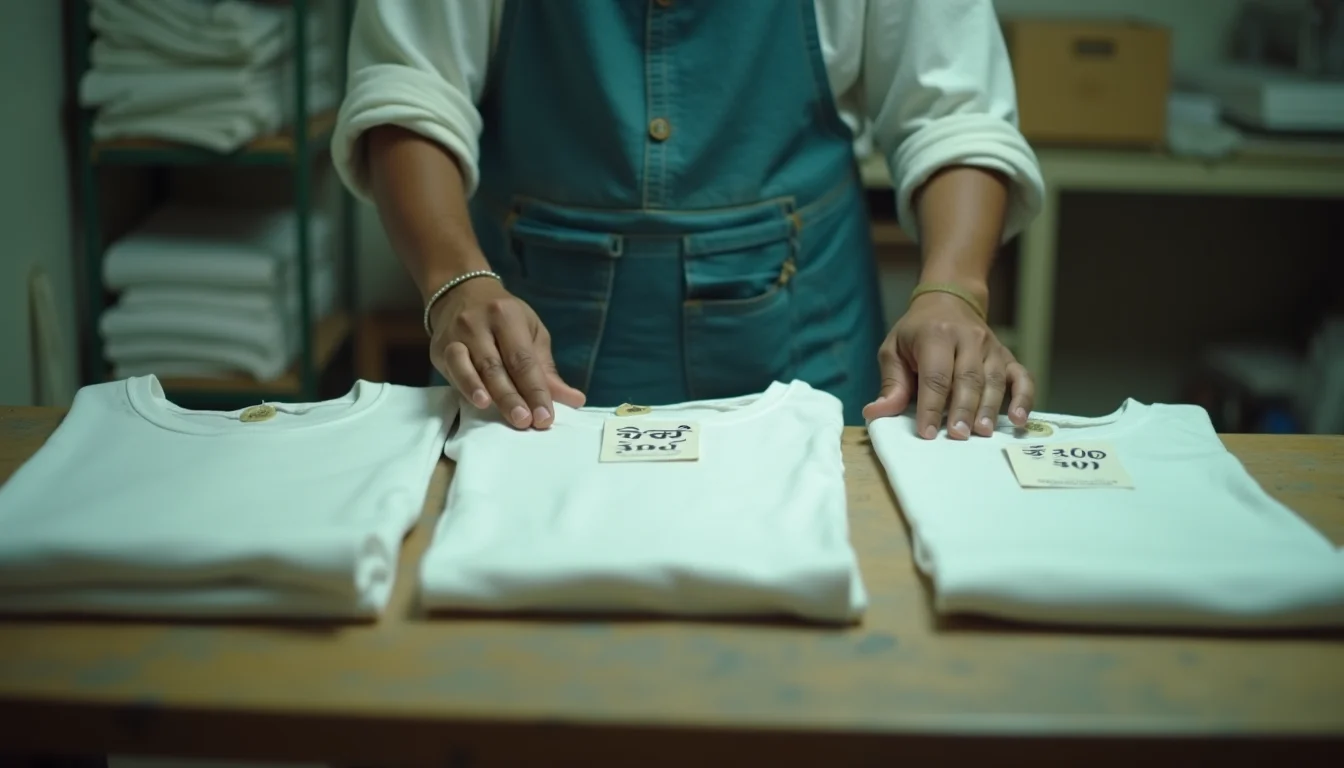
A printing business owner — let us call him Rahul — runs a custom t-shirt operation in Delhi. He wanted to find out definitively which printing method would leave him with the most profit on a ₹500 selling price per piece. So he ordered the same 180 GSM plain round-neck blank t-shirt for all three tests, kept the design complexity similar, and got real quotes from his printing vendors.
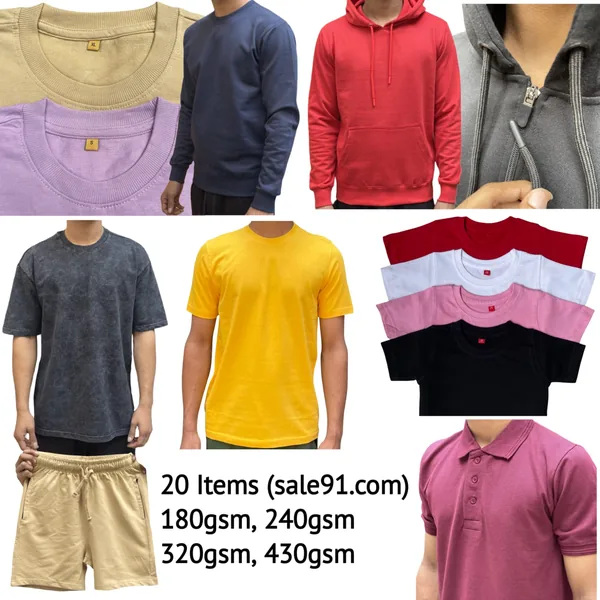
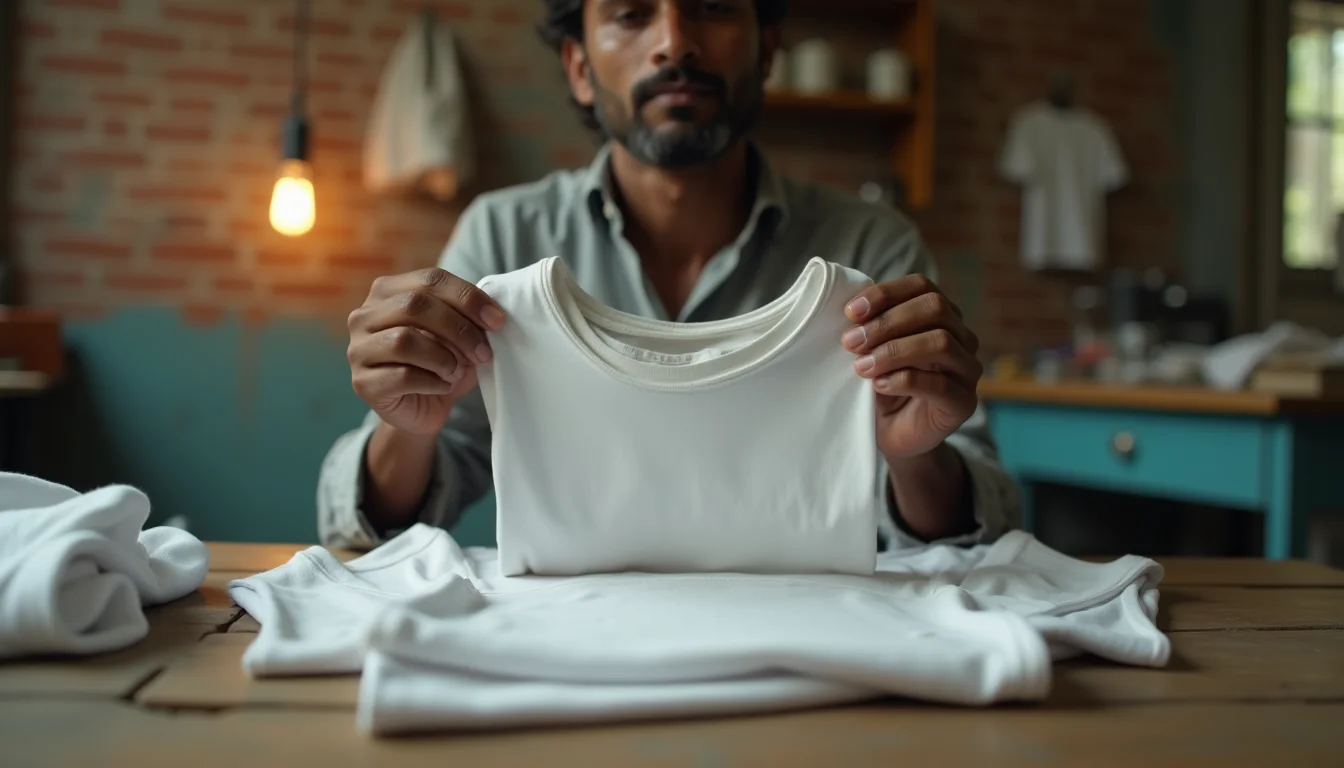
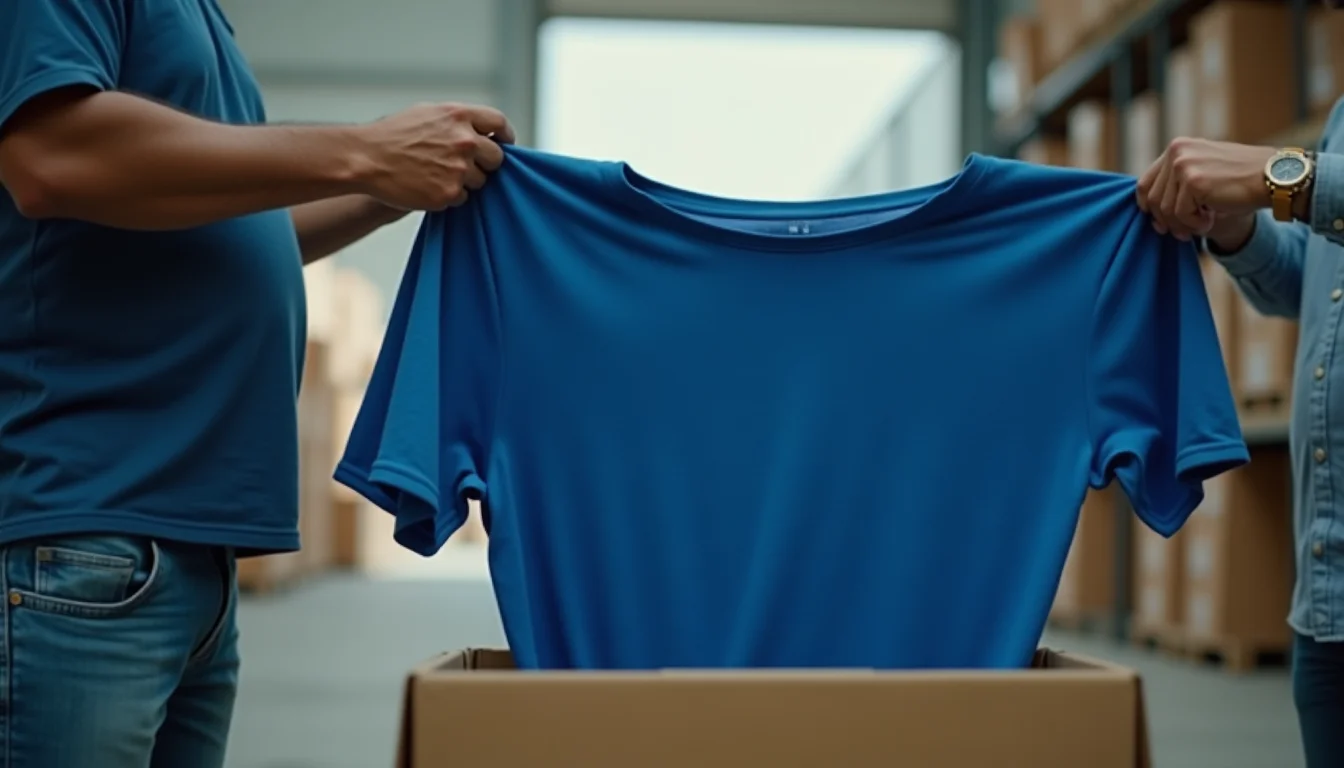
The blank t-shirt he used was a standard 180 GSM, 100% combed cotton, bio-washed, pre-shrunk piece — exactly the kind of high-quality blank available from Sale91.com. At the time, this blank cost him approximately ₹140 per piece (including GST and delivery). This was his fixed cost across all three tests.
Here is what he found when he got the printing done:
- DTF Printing: ₹35 per piece (for a standard A4-size graphic)
- Screen Printing: ₹18 per piece (minimum order: 100 pieces)
- Embroidery: ₹65 per piece (for a standard logo on chest, ~5,000 stitches)
The Real Numbers: Cost Breakdown Per Piece
| Cost Component | DTF Print | Screen Print | Embroidery |
|---|---|---|---|
| Blank T-Shirt Cost | ₹140 | ₹140 | ₹140 |
| Printing/Decoration Cost | ₹35 | ₹18 | ₹65 |
| Packaging & Misc. | ₹15 | ₹15 | ₹15 |
| Total Cost Per Piece | ₹190 | ₹173 | ₹220 |
| Selling Price | ₹500 | ₹500 | ₹500 |
| Gross Profit Per Piece | ₹310 | ₹327 ✓ Highest | ₹280 (Lowest) |
| Margin % | 62% | 65.4% | 56% |
| Minimum Order Quantity | 10 pieces | 100 pieces | 10 pieces |
On paper, screen printing wins with the highest gross profit per piece at ₹327 and a 65.4% margin. But there is a very important caveat that the numbers above do not show: screen printing required a minimum order of 100 pieces, while DTF and embroidery could be done in as few as 10 pieces at a time.
DTF Printing — The Flexible Middle Ground
What Makes DTF Attractive for Small-to-Medium Printers?
DTF (Direct-to-Film) printing has become one of the most popular decoration methods in India's custom t-shirt market in the last two to three years. The process involves printing a design onto a special film, applying a hot-melt adhesive powder, and then heat-pressing the finished transfer onto the fabric. The result is a vibrant, full-colour print that works on virtually any fabric colour — including dark blanks.
At ₹35 per piece for a standard A4 graphic, DTF sits comfortably in the middle of the cost spectrum. The key advantages are:
- No minimum order commitment: You can print even a single piece, making it ideal for D2C brands, influencer merchandise, and small corporate orders.
- Full-colour, photographic prints: Gradients, detailed artwork, and photographs all print beautifully — something screen printing cannot do easily or cheaply.
- Works on any GSM: Whether you are using a 180 GSM everyday tee or a 220 GSM premium blank, DTF adheres equally well.
- Quick turnaround: No screen setup, no curing time — your order can be ready within hours.
- Lower risk per batch: If a design does not sell, you have not over-committed to 100+ pieces of dead inventory.
The ₹310 gross profit per piece on a ₹500 sale is genuinely strong. If you sell 50 pieces of a DTF design, that is ₹15,500 in gross profit from a ₹9,500 investment in blanks and printing — a respectable return. And because you can test multiple designs without a large upfront commitment, DTF allows you to fail cheaply and scale winners quickly.
The key limitation: DTF print quality and durability depends heavily on the vendor and the film/adhesive quality. Always do a wash test before committing to a large batch. If you are comparing DTF against other methods at tighter budgets, check out this breakdown on choosing the right method on a ₹100/pc printing budget.
Screen Printing — Highest Margin, But Capital Risk is Real
Why Screen Print Wins on Per-Piece Profit
Screen printing is the oldest and most established decoration method in the t-shirt industry, and for good reason: once the screens are set up, the per-piece printing cost drops dramatically. At ₹18 per piece, it is nearly half the cost of DTF, which is why it delivers the highest gross margin at 65.4%.
The economics of screen printing work like this: there is a fixed setup cost (making the screens, mixing inks, aligning the press) that is typically ₹500–₹2,000 per colour, per design. Once that setup cost is spread across 100 or more pieces, the per-piece cost becomes very competitive. This is why most screen printers enforce a minimum order of 100 pieces — below that, the economics simply do not work for them.
The Hidden Risk of Screen Printing at Scale
Let us run the actual numbers for a 100-piece screen print order at ₹500 selling price:
- Total blank cost: 100 × ₹140 = ₹14,000
- Total printing cost: 100 × ₹18 = ₹1,800
- Packaging: 100 × ₹15 = ₹1,500
- Total investment: ₹17,300
- If all 100 sold at ₹500: Revenue = ₹50,000
- Gross Profit: ₹32,700
That looks incredible. But what if only 60 pieces sell? Your revenue is ₹30,000 against a ₹17,300 investment — still profitable, but you are sitting on 40 pieces of dead stock. Screen printing is best suited to:
- Businesses with confirmed bulk orders (corporate events, schools, NGOs, sports teams)
- Sellers with strong brand presence and predictable design demand
- Printers who already know a design will move fast (franchise, uniforms, election campaign wear)
If you are new to the printing business, the 100-piece MOQ of screen printing means you need to tie up ₹17,000+ before you have sold a single piece. That is significant working capital risk for a beginner. In fact, mismanaging multi-method orders without understanding these risk profiles has led some printers to losses — a scenario explored in detail in this case study on how a ₹40,000 loss happened from mixing methods in one order.
Embroidery — Lowest Margin, But Highest Perceived Value
Why Embroidery Commands Premium but Squeezes Profit
At ₹65 per piece, embroidery is the most expensive printing/decoration method of the three. When you add it to a ₹140 blank, your total cost hits ₹220 — and on a ₹500 selling price, the gross profit drops to ₹280 per piece, with a 56% margin. That is still not bad, but it is noticeably lower than DTF and significantly lower than screen print.
So why do printers keep doing it? Because embroidery delivers something no other method can: a tactile, three-dimensional, premium finish that customers recognise as quality the moment they touch it.
The Repeat Order Phenomenon
Here is the data point that changes the game: Rahul — our printer from Delhi — found that his embroidered t-shirt customers came back for repeat orders at a rate nearly 2x higher than his DTF or screen-print customers. Why? Because embroidery is typically used for corporate logos, club badges, sports jerseys, and premium branded merchandise — these are recurring, relationship-based orders where the client needs restocking regularly.
If a corporate client orders 50 polo t-shirts with their logo embroidered every quarter, that is 200 pieces per year at ₹280 gross profit each — totalling ₹56,000 in annual gross profit from a single client. Compare that to a one-off screen print order from someone who never comes back.
Embroidery is best suited for:
- B2B corporate gifting and uniform suppliers
- Sports clubs and academies with seasonal uniform requirements
- Premium lifestyle brands targeting ₹800–₹2,000 selling prices where the margin opens up dramatically
- Exporters targeting European and US markets where embroidery carries high perceived value
The note here is that at a ₹500 selling price, embroidery is genuinely tight. But if you bump the selling price to ₹800 or ₹1,000 for an embroidered polo — which is very common and very justifiable — the margin picture changes completely.
What the Per-Piece Numbers Don't Tell You
1. Scalability and Cash Flow
Screen print may have the best margin per piece, but if your cash flow cannot support a 100-piece minimum commitment, that higher margin is inaccessible to you right now. DTF at 10-piece MOQ lets you stay lean and test multiple designs simultaneously — critical when you are building an audience.
2. Design Complexity Matters
The ₹35 DTF cost assumes a standard A4 print with moderate colour complexity. A full-torso, A3 DTF print could cost ₹60–₹80 per piece, which drastically changes the math. Similarly, a screen print with 4 colours may cost ₹35–₹45 per piece because each colour requires a separate screen setup. Always get quotes for your specific design before planning your margins.
3. Fabric Quality Amplifies Everything
Investing in a slightly better blank — say, a 200 GSM bio-washed, ring-spun cotton tee instead of a basic 160 GSM — adds perhaps ₹30–₹40 to your per-piece blank cost but allows you to justify a ₹600–₹700 selling price instead of ₹500. The printing cost stays the same, but your selling price increases by 20–40%. This is where smart sourcing of blanks from a direct manufacturer (rather than a trader adding markups) becomes a genuine competitive advantage.
You can browse the full range of plain blank tees available by GSM and colour at the BulkPlainTshirt.com product catalog to find the right base for your printing business.
4. Rejection and Wastage Rate
Screen printing has a small but non-zero setup waste (the first few pieces during press calibration may be unusable). Embroidery occasionally has thread breakage or misalignment issues. DTF transfers that are not pressed at the exact right temperature and time can peel. Budget a 2–3% wastage allowance into your cost calculations — on a 100-piece screen print order, that is 2–3 pieces you may need to replace from your pocket.
5. Summer vs. Winter Seasonality
In India's extreme climate, the season dramatically affects which printing method performs best. DTF transfers can behave differently in high humidity. Screen printing ink cure times change with ambient temperature. Understanding how DTF vs Screen Print vs Sublimation performs across Indian seasons is a whole separate subject worth studying before scaling a single method as your primary revenue driver.
Choosing the Right Method for Your Business Stage
| Business Profile | Best Method | Why |
|---|---|---|
| New seller, testing designs | DTF | Low MOQ, low risk, full-colour flexibility |
| Confirmed bulk corporate orders | Screen Print | Highest margin when volume is guaranteed |
| Premium lifestyle or export brand | Embroidery | Perceived value drives repeat orders and premium pricing |
| D2C brand scaling fast | DTF → Screen Print | Start with DTF, switch winning designs to screen at volume |
| Sports team / uniform supplier | Embroidery + Screen | Logo in embroidery, name/number in screen for cost efficiency |
The Smart Strategy: Don't Pick Just One Method
The most profitable printing businesses in India are not those that committed exclusively to one method. They are the ones who learned to use all three strategically — matching the decoration method to the order type, customer segment, and quantity. Some printers even run embroidery and DTF simultaneously from the same studio without needing two separate machines — a strategy worth exploring before making capital decisions about equipment. If you are considering expanding your decoration capabilities, you might want to understand how to run embroidery and DTF together without buying two separate machines.
The key is to use the right blank for every method. A 180 GSM tee is fine for DTF and most screen-print jobs. For embroidery, always go 200 GSM or above — the denser weave gives the embroidery needle better grip and produces a cleaner finish. For oversized or streetwear pieces, a 210 or 220 GSM blank elevates the overall product feel significantly.
Why the Blank T-Shirt Is Not a Place to Cut Corners
Across all three printing methods, the blank t-shirt is the foundation that determines customer satisfaction and repeat purchases. A badly shrunk, scratchy, or poorly cut blank will undermine even the best DTF print or the most intricate embroidery design. Here is what to look for in a blank for printing businesses:
- Bio-washed: Enzyme treatment removes loose fibers, giving the fabric a smooth surface that accepts DTF transfers cleanly and gives screen print ink a flat, even base to sit on. Un-washed fabric has micro-fibers that cause fuzziness in fine details.
- Pre-shrunk: Critical for embroidery, where shrinkage post-wash can distort the design. Pre-shrunk fabric means the customer's logo stays exactly where you placed it, wash after wash.
- Ring-spun combed cotton: The yarn quality directly affects how smooth the surface is for printing. Ring-spun combed cotton is tighter, stronger, and smoother than carded cotton — which translates to sharper print edges and longer print life.
- GSM appropriate for the method: 180 GSM for light casual wear, 200 GSM for premium retail and corporate gifting, 220 GSM for heavy-duty prints, oversized streetwear, and export markets.
Watch the Video
See the real cost breakdown explained in under 60 seconds — same blank, three methods, actual numbers:
Frequently Asked Questions
More Articles
Ready to Source Blanks That Print Perfectly?
Whether you print via DTF, screen, or embroidery — the right blank is where profit starts. Bio-washed, pre-shrunk, ring-spun 100% cotton blanks from India's own knitting facility in Tiruppur. Ready stock of 1 lakh+ pieces. MOQ from 10 pieces. COD available for first order.
Order Blank T-Shirts at Sale91.com →