₹500 Ki T-Shirt Pe Kitna Margin? Screen Print vs DTF vs Embroidery — Monsoon Edition Calculator 🧮
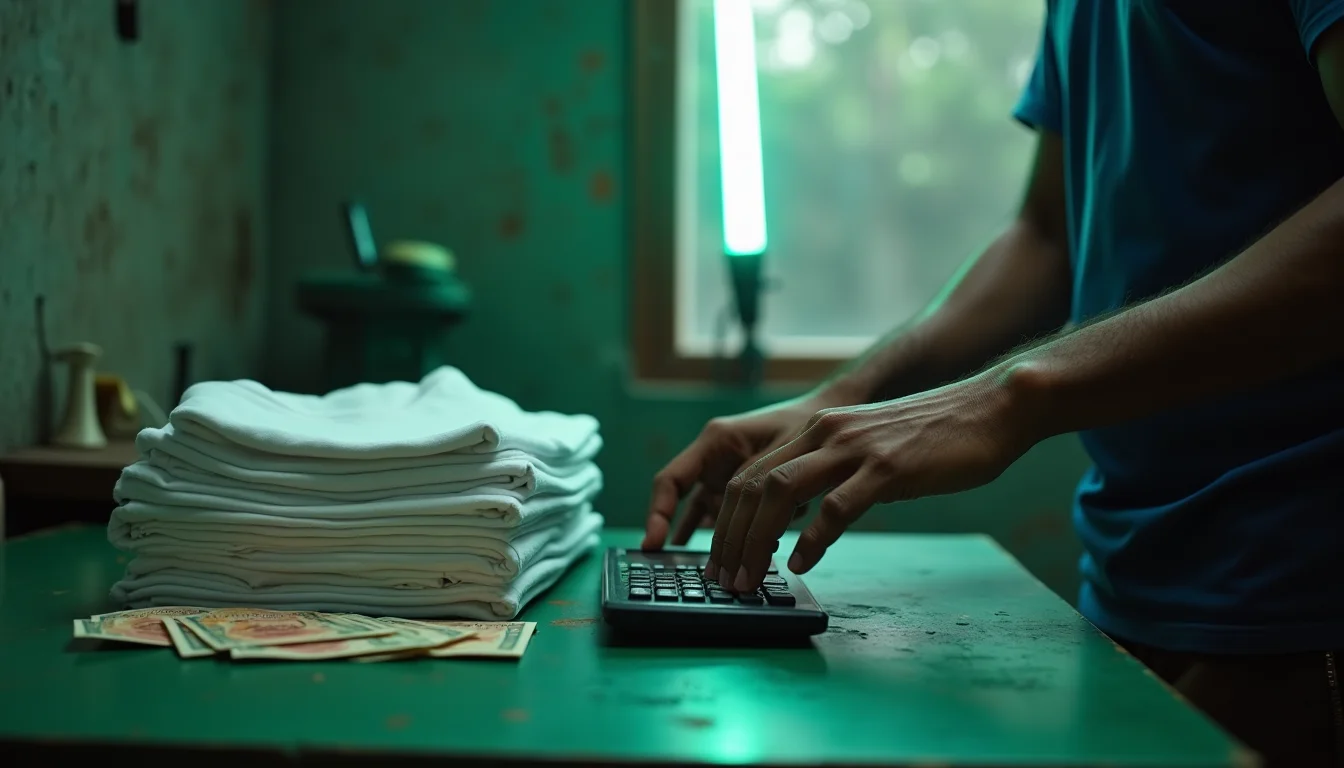
"Bhai, margin hi nahi bach raha." Sound familiar? A custom t-shirt seller recently came to us with exactly this complaint. He was selling printed t-shirts at ₹500 per piece, had decent volumes, yet at the end of every month, profit was nearly invisible. When we asked him which printing method he was using, he said DTF — and that is exactly where the math broke for him.
If you run a t-shirt printing business in India — whether you do screen printing, DTF (Direct-to-Film), or embroidery — margin galat nikla? Then this guide is for you. We are going to break down the real cost structure for each printing method applied to a ₹500 selling price t-shirt, factor in monsoon season variables that most printers ignore, and give you a clear margin calculator so you never underprice again.
This is not theory. These are the actual numbers from the ground, drawn from conversations with hundreds of custom printers across India who source blank t-shirts from Sale91.com — India's leading B2B plain t-shirt manufacturer.
Why Your Margin Math Breaks — The Most Common Mistake
The single biggest mistake custom t-shirt printers make is calculating margin as: Selling Price − Blank T-Shirt Cost = Profit. That is dangerously wrong. Your real cost is: Blank T-Shirt + Printing Cost + Packaging + Rejection Waste + Delivery + Platform/GST = Total COGS.
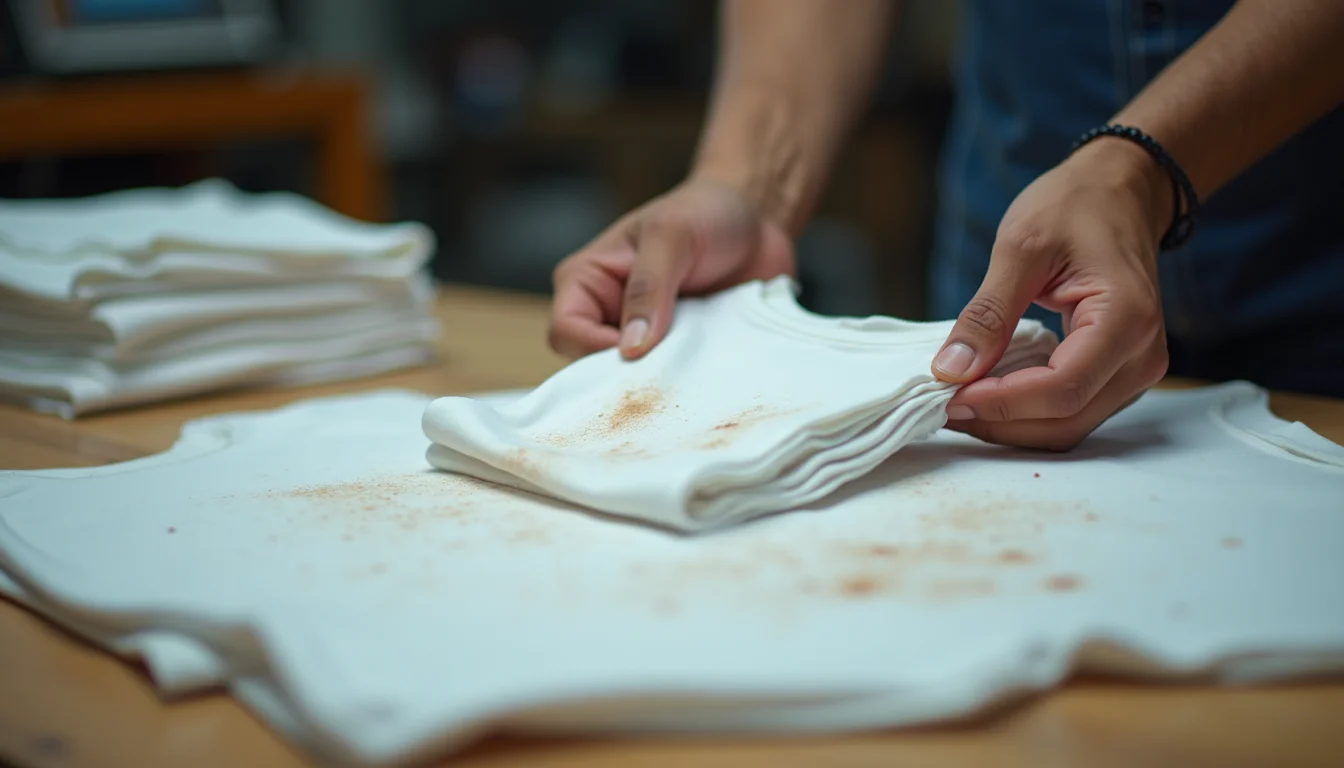
Most printers get the blank t-shirt cost right (or close enough), but they dramatically underestimate printing method costs, especially when dealing with rejection rates, monsoon drying delays, and consumable wastage. For instance, if you are doing screen printing and your ink is not drying fast enough due to humidity, you are not just losing time — you are potentially losing pieces. In fact, the screen print rejection rate during monsoon months can be significantly higher than what most printers budget for.
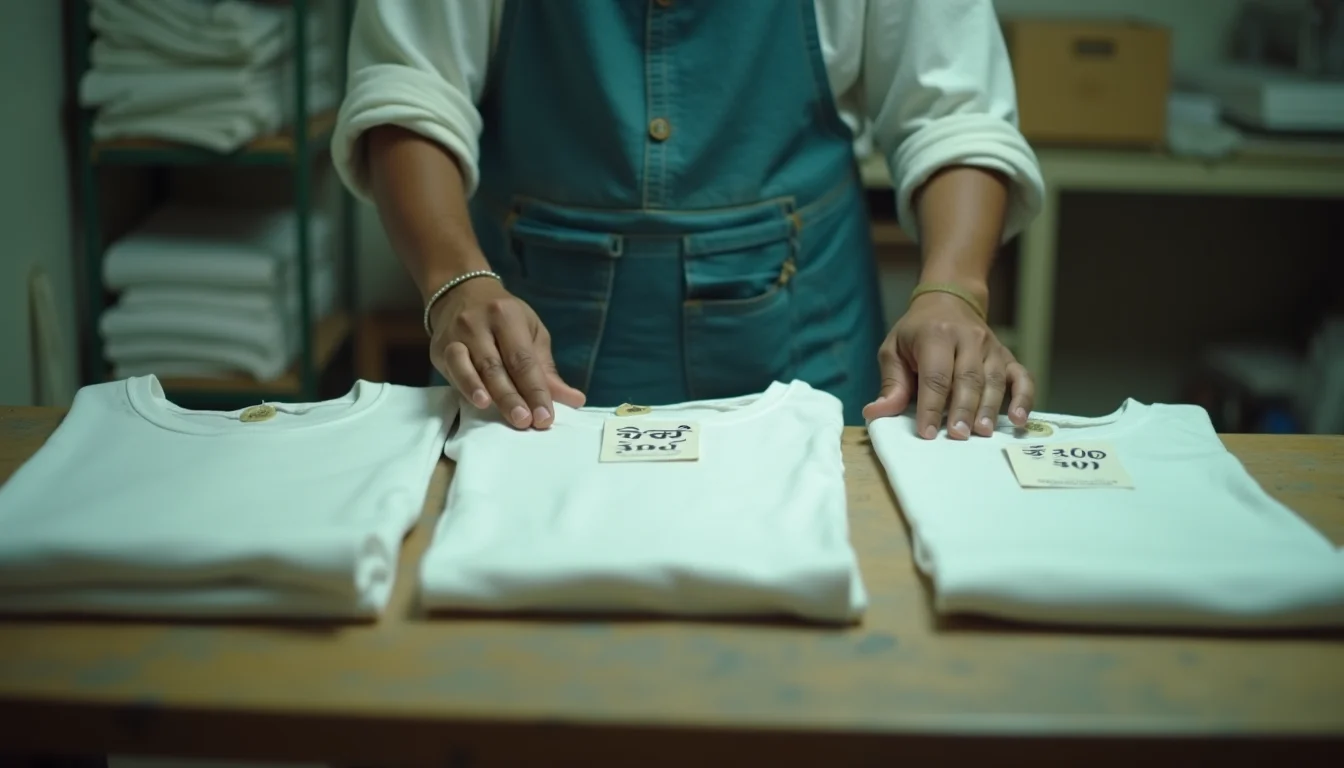
Let us start with the baseline: a quality 200 GSM blank t-shirt from a manufacturer like Sale91.com. At bulk quantities, a bio-washed, ring-spun combed cotton 200 GSM t-shirt costs approximately ₹140 per piece. That is your foundation cost. Everything built on top of that determines whether you make money or lose it.
The ₹500 T-Shirt Margin Calculator — All Three Methods
Let us fix the selling price at ₹500 and map out the costs for each printing method. We are using realistic, current market rates for India (2025–2026 figures).
Base Cost: Blank T-Shirt (200 GSM)
A 200 GSM plain t-shirt is the industry sweet spot for custom printing. At 180 GSM, the fabric is thinner and not ideal for embroidery — in fact, using the wrong GSM for embroidery is a costly error that has ruined entire batches of t-shirts for printers who did not check fabric weight first. At 200 GSM, you get the right balance of printability, durability, and cost.
- Blank T-Shirt (200 GSM, Bio-washed, Pre-shrunk): ₹140/piece
- Packaging (poly bag + tag): ₹8/piece
- Delivery/Logistics average: ₹15/piece (for local delivery on 50+ pcs)
- Platform fee / GST buffer: ₹12/piece
- Fixed base cost before printing: ~₹175/piece
Method 1: Screen Printing
Screen printing is the traditional workhorse of the Indian custom t-shirt industry. For single-colour or two-colour designs at volume (100+ pieces), it remains the most cost-effective printing method per piece.
- Printing cost per piece (single colour, 100+ pcs): ₹25–30
- Setup / screen cost amortised over batch: ₹5/piece (for 100 pcs)
- Total COGS: ₹175 + ₹28 (avg) + ₹5 = ₹208/piece
- Selling Price: ₹500
- Gross Margin per piece: ~₹292 (≈58.4%)
Method 2: DTF (Direct-to-Film)
DTF printing has exploded across India in the last two years. It allows full-colour, photographic-quality prints with no screen setup cost, making it ideal for low quantities and complex designs.
- Printing cost per piece (A4 size, standard design): ₹45–50
- No screen setup cost (design-to-print is digital)
- Total COGS: ₹175 + ₹47 (avg) = ₹222/piece
- Selling Price: ₹500
- Gross Margin per piece: ~₹278 (≈55.6%)
Method 3: Embroidery
Embroidery is the premium option — it feels tactile, looks high-end, and commands respect. But it is also the most expensive printing method per piece, and it has strict fabric requirements.
- Embroidery cost per piece (small-medium chest logo, ~5000 stitches): ₹60–70
- Backing/stabiliser material: ₹5/piece
- Total COGS: ₹175 + ₹65 (avg) + ₹5 = ₹245/piece
- Selling Price: ₹500
- Gross Margin per piece: ~₹255 (≈51%)
Side-by-Side Margin Comparison Table
| Method | Print Cost/Pc | Total COGS | Margin @ ₹500 | Margin % |
|---|---|---|---|---|
| Screen Print | ₹28–35 | ~₹208 | ~₹292 | 58.4% |
| DTF (Direct-to-Film) | ₹45–50 | ~₹222 | ~₹278 | 55.6% |
| Embroidery | ₹65–75 | ~₹245 | ~₹255 | 51.0% |
Key Takeaway: On paper, screen printing wins with the highest margin. But "on paper" and "in monsoon" are two very different realities in the Indian custom printing business.
The Monsoon Factor — Why Season Changes Everything
India's monsoon season (June to September) is when most custom t-shirt printers experience their worst margin compression — not because of lower demand, but because of higher operational costs and lower throughput. If you are selling event t-shirts, college batch orders, or corporate gifting pieces during this period, you need a monsoon-adjusted margin calculator.
Screen Printing in Monsoon: The Drying Problem
Screen printing relies on air drying or tunnel dryer curing. In high humidity conditions (70–90% RH, which is normal in coastal cities and even Delhi/NCR in peak monsoon), ink drying time can double or even triple. A batch that takes 2 hours to dry in March can take 4–6 hours in July. This means:
- Your daily output drops by 30–50% (direct labour cost per piece goes up)
- Risk of smudging and ghosting increases if you rush the drying cycle
- Rejection rate rises to 3–5% in humidity vs. 1–2% in dry weather
- Electricity cost increases if you use forced-air drying or industrial dehumidifiers
At 4% rejection on a 500-piece batch at ₹500 selling price, you are absorbing 20 rejected pieces × ₹208 COGS = ₹4,160 in wasted cost, on top of the replacements you have to reprint.
DTF Printing in Monsoon: The Clear Advantage
This is where DTF earns its keep during monsoon. DTF transfers are heat-pressed, not air-dried. The film is pre-printed and cured before application, and the heat press itself operates at 160–165°C. Humidity in the room? Largely irrelevant to the bonding process.
- No drying time dependency — same throughput in July as in January
- Consistent quality regardless of ambient humidity levels
- Lower rejection rate in monsoon (typically under 1%)
- DTF film rolls can be stored and pressed on demand — no rush-to-dry urgency
So while DTF earns ₹14 less per piece than screen print in ideal conditions, during monsoon months, DTF's operational consistency makes it the smarter choice for volume orders. When you account for the hidden costs of screen print delays — overtime labour, electricity, reprints — DTF's effective margin in monsoon can actually exceed screen print's real-world margin.
Embroidery in Monsoon: Thread Tension and Moisture Issues
Embroidery machines are generally indoor-operated and less humidity-dependent, but there are still monsoon-specific challenges. Thread tension is affected by moisture absorption, especially with cotton threads. Backing materials can become limp in high humidity. And most importantly — at ₹255 margin on a ₹500 t-shirt, embroidery at this price point is simply not worth it during any season.
The rule of thumb from experienced printers: Only offer embroidery if the client is paying ₹700 or more per piece. At ₹700, your embroidery margin jumps to approximately ₹455 per piece — that is a meaningful number that justifies the machine time, thread cost, and lower throughput.
How to Choose: Screen Print vs DTF vs Embroidery
Choose Screen Printing When:
- Order quantity is 100+ pieces minimum
- Design is 1–3 colours maximum
- Season is October to May (dry months, optimal drying conditions)
- Client wants lowest-cost customisation at volume
- You have tunnel dryer or flash cure infrastructure
Choose DTF When:
- Order is for 1–100 pieces (DTF excels at low MOQ)
- Design has multiple colours, gradients, or photographic elements
- You are fulfilling orders in monsoon season (June–September)
- Turnaround time matters more than per-piece cost savings
- You want consistent, repeatable quality across colour variants
Choose Embroidery When:
- Client is paying ₹700+ per finished t-shirt
- Order is for corporate gifting, premium polo shirts, or formal uniform wear
- Design is a logo or text (not a complex illustration)
- Fabric is 200 GSM or above (never embroider on 180 GSM — the fabric puckers)
- Client specifically wants a premium, tactile print finish
Why the Blank T-Shirt You Choose Determines Your Margin
Here is the uncomfortable truth that many printers avoid: the quality of your blank t-shirt directly impacts your printing rejection rate, your client retention, and ultimately your margins over time. A cheaper, lower-quality blank might save you ₹20 per piece upfront, but if the fabric shrinks post-wash (because it was not pre-shrunk), or if the surface is not smooth enough for DTF adhesion, you are looking at client complaints, reprints, and lost repeat business.
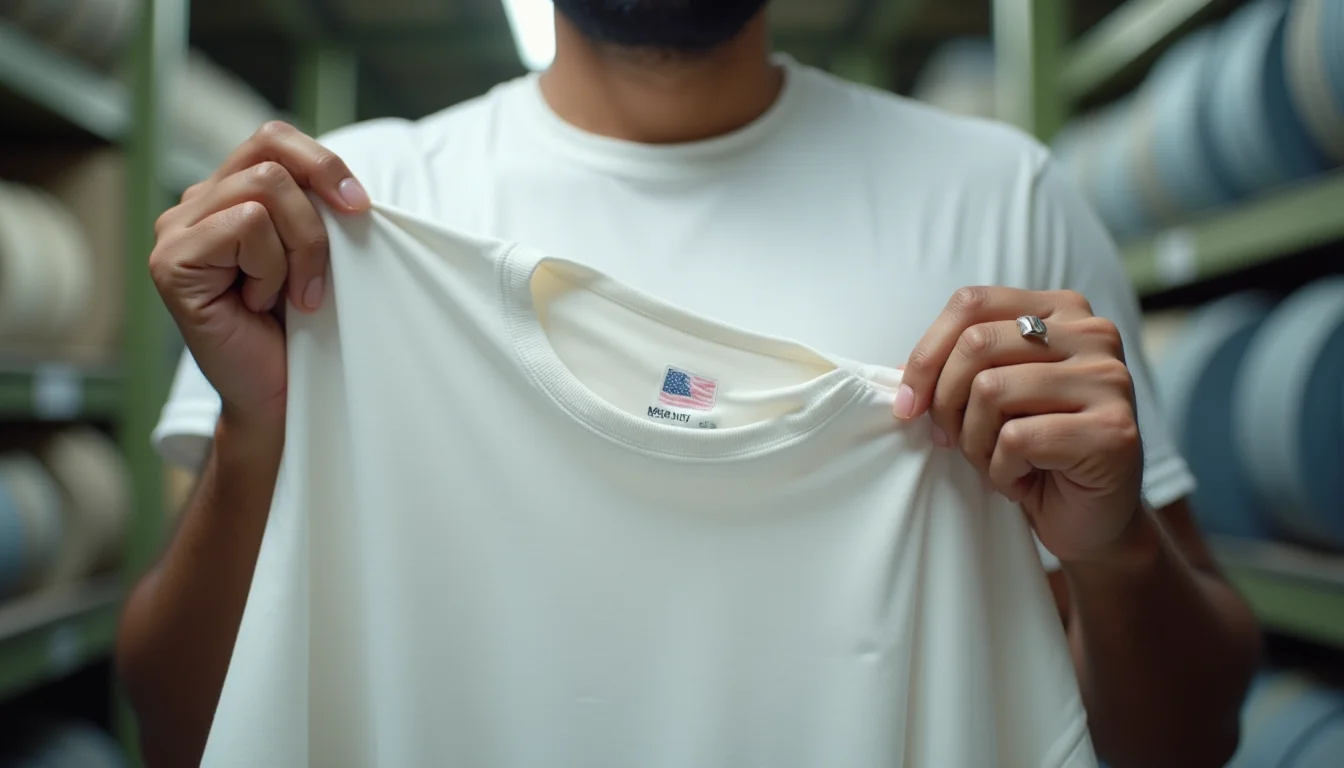
At Sale91.com, every blank t-shirt is made from 100% ring-spun combed cotton, bio-washed (enzyme-treated for surface smoothness), and pre-shrunk — which means the fabric has already been through tension and heat treatment before it reaches you. For DTF and screen printing, a bio-washed surface gives you better ink/film adhesion and a cleaner print result. For embroidery, a pre-shrunk, stable fabric means no post-wash distortion of your stitched design.
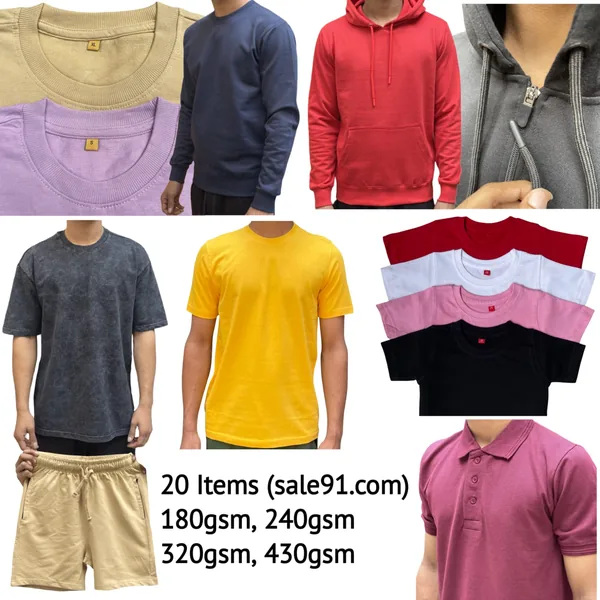
The available GSM options matter for printing decisions too. Use 180 GSM for everyday promotional wear where screen print is the method. Use 200 GSM for premium screen print and DTF — the slightly heavier fabric gives a better drape and print surface. Use 220 GSM for embroidery and heavy-duty DTF applications. Browse the full range at the BulkPlainTshirt.com product catalog.
Fixing Your Pricing: Before You Quote, Run the Numbers
The most dangerous thing you can do in the custom t-shirt business is quote a price based on what a competitor charged or what "feels right." Here is a simple, practical pricing formula you can use:
The 3-Step Pricing Formula
- Calculate True COGS: Blank T-Shirt + Printing Cost + Packaging + Logistics + Rejection Buffer (add 3–5% of COGS)
- Add Desired Margin: Minimum 40% gross margin recommended; aim for 50%+ on small batches
- Check Market Ceiling: What will your target customer pay? If your cost-plus price exceeds market ceiling, renegotiate your supplier costs or choose a cheaper printing method for that client
Monsoon Adjustment: Add 8–12% to Your COGS During June–September
This accounts for: slower throughput (more labour hours per piece), higher electricity for drying/dehumidifying, slightly higher rejection rates, and the cost of rush reprints when deadlines are tight. Do not absorb this cost as reduced margin — price it in.
Real Example: A printer in Surat doing 500-piece batches for college events was quoting ₹450 per printed tee in July. After calculating: ₹140 (blank) + ₹30 (screen print) + ₹15 (logistics) + ₹8 (packaging) + 4% monsoon buffer + ₹12 (GST/platform) = ₹215 COGS. At ₹450 selling price, margin was ₹235 or 52%. Not bad — until he missed delivery by 2 days due to drying delays and had to give a ₹20/piece discount. That knocked his margin to ₹215 on ₹430 effective price. Do the math before the monsoon hits.
The Danger of Mixing Methods in a Single Order
One of the costliest mistakes in the printing business is accepting a single order that requires multiple printing methods — say, screen print on the front, DTF on the sleeve, and embroidery on the chest — without properly pricing each element. The combined complexity leads to higher defect rates and operational chaos. We have documented real cases of printers taking ₹40,000 losses on mixed-method orders because they did not account for the multi-step handling cost and rejection risk compounding across methods.
If a client asks for multiple techniques on one shirt, price each technique separately, add a 10% complexity surcharge, and ensure your blank t-shirt is 200 GSM or above so it can withstand multiple printing processes without distortion.
Watch the Video
See the full breakdown explained in under 60 seconds — with real numbers for the Indian printing market: