20 Rejected Out of 500? Screen Print Waste Truth Revealed
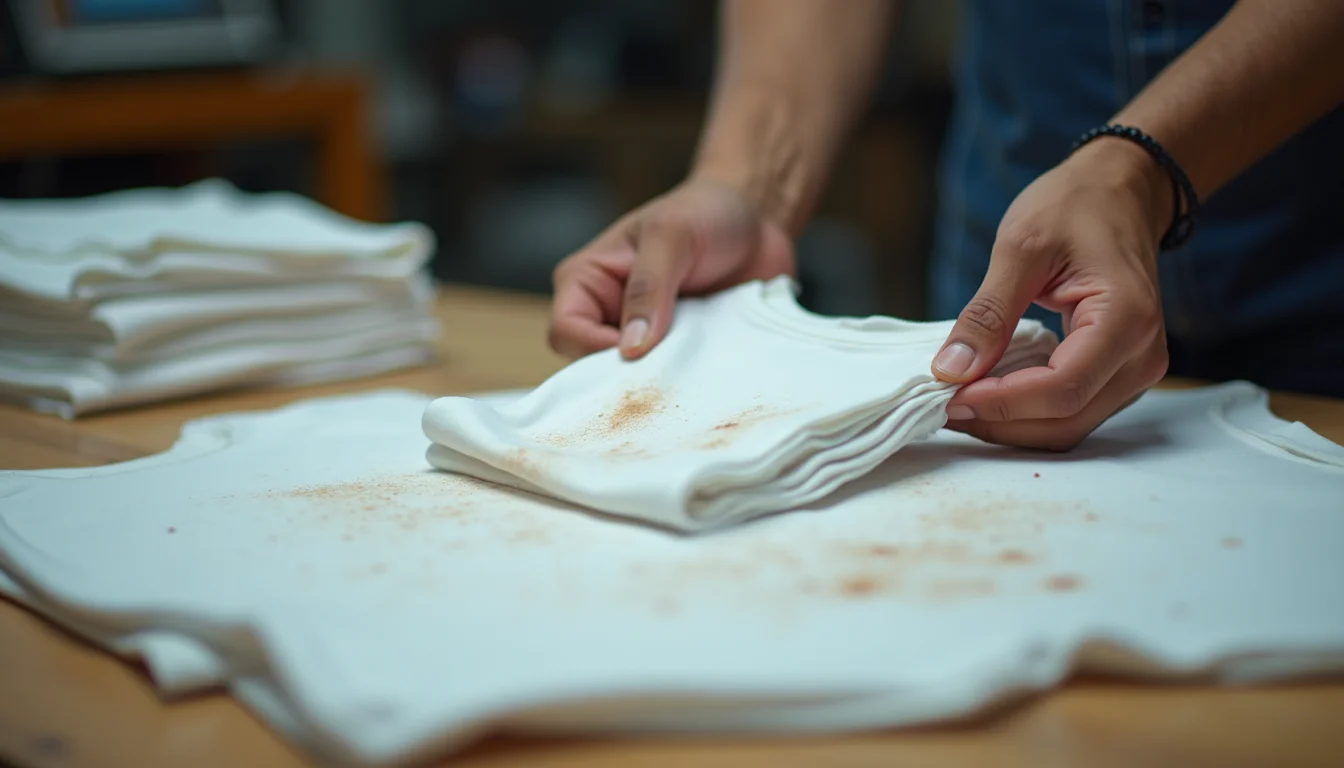
If you're running a custom t-shirt printing business in India, you've probably faced this situation: you receive a bulk order for 500 pieces, complete the screen printing job, and then realize that 20 pieces are rejected due to various defects. Your immediate reaction might be panic—"Is this normal? Am I losing money? Is my printer doing a bad job?"
This is one of the most common concerns we hear from our clients at Sale91.com, India's leading B2B plain t-shirt manufacturer. As someone who has been in the textile and printing industry for years, I can tell you that understanding wastage rates is crucial for running a profitable printing business.
Let's dive deep into the reality of screen printing wastage, what's considered normal in the industry, and how you can plan your orders to avoid last-minute disasters.
The Reality Check: What Happened in This Case
Recently, one of our customers called us with genuine concern. He had placed a 500-piece screen printing order with a local printer, and when the job was completed, 20 pieces were rejected. That's a 4% rejection rate. He was worried whether this was acceptable or if he should look for a new printer.
Before jumping to conclusions, I asked him a critical question: "Where did the problem occur—in the printing process or in the fabric itself?"
His answer was revealing: "Both."
This single answer tells us a lot about what actually happens in real-world bulk printing operations. Wastage doesn't come from just one source—it's a combination of multiple factors that occur throughout the production chain.
Industry Standard Wastage: The 2-4% Rule
Here's the truth that every printing business owner needs to understand: in screen printing, 2-4% wastage is considered industry standard.
Let's break down what this means for different order quantities:
- 100 pieces order: 2-4 pieces wastage is normal
- 500 pieces order: 10-20 pieces wastage is acceptable
- 1000 pieces order: 20-40 pieces wastage is expected
- 2000 pieces order: 40-80 pieces wastage is within standards
This standard has evolved over decades of commercial printing experience across India and globally. It takes into account the realities of mass production, manual handling, machine limitations, and human error.
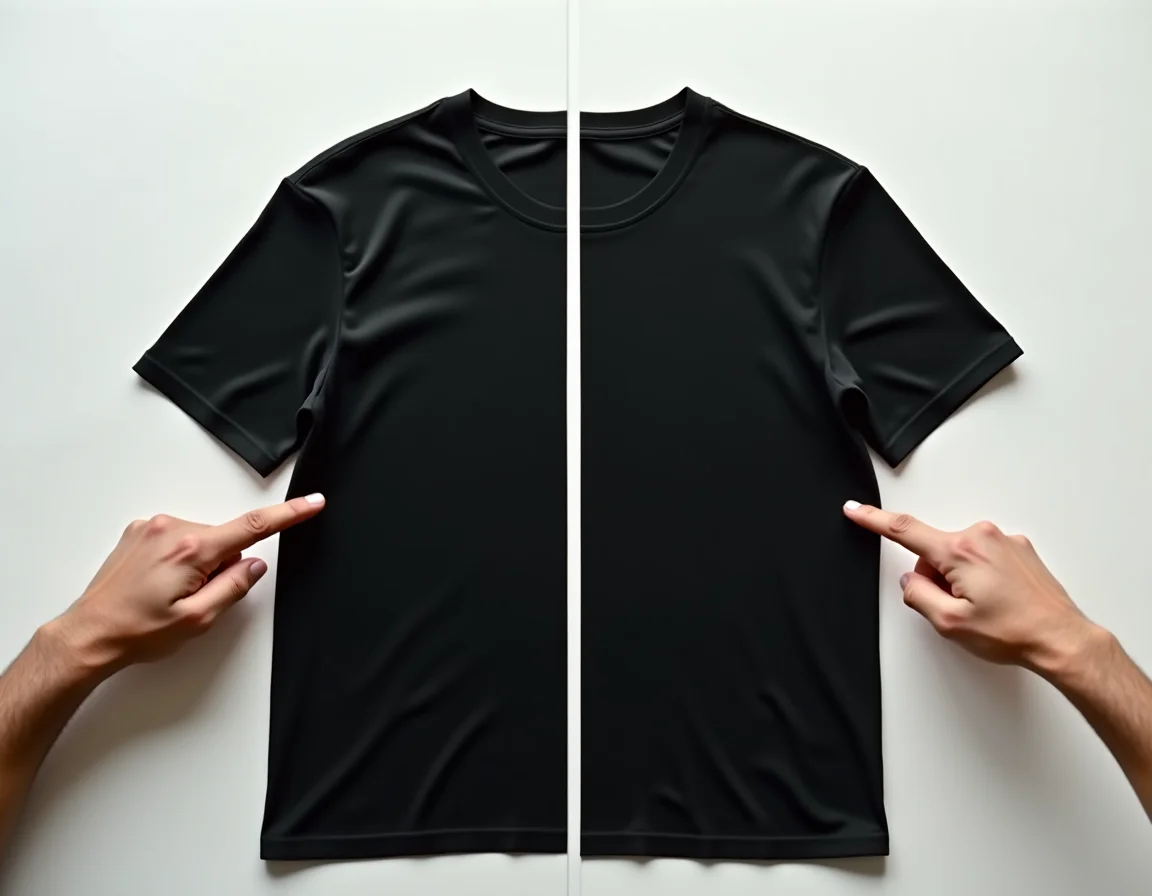
Why Does Wastage Happen? Understanding the Sources
To truly understand whether your wastage is normal or excessive, you need to know where these rejections come from. Let's examine each source:
1. Print-Related Defects (60-70% of wastage)
Print Smudging: This is one of the most common issues. During screen printing, wet ink can smudge if the t-shirt is moved too soon after printing, or if there's accidental contact with the screen or squeegee. In high-speed production, especially when printing 500+ pieces, a few smudges are almost inevitable.
Registration Shift: When printing multi-color designs, each color requires perfect alignment (registration). Even with the best equipment, slight shifts can occur, especially as the screen frame expands slightly due to pressure and temperature. A 1mm shift might not be noticeable in a simple design, but in intricate artwork with fine lines, it's a rejection.
Ink Bleeding: If the ink viscosity isn't perfect, or if too much pressure is applied, ink can bleed beyond the design boundaries. This is especially common with water-based inks on certain fabric types.
Incomplete Print: Sometimes the ink doesn't transfer completely, leaving gaps or light patches in the design. This can happen due to screen blockage, insufficient ink, or uneven pressure.
Color Mismatch: When mixing custom colors, slight batch-to-batch variations can occur. While most pieces will be acceptable, a few might fall outside the tolerance range.
2. Fabric-Related Defects (30-40% of wastage)
Fabric Holes or Tears: Even with the highest quality control, a few t-shirts in a large batch might have small holes or tears that weren't caught during initial inspection. These become obvious only after printing when you're doing final quality checks.
Stitching Defects: Loose stitching, uneven seams, or needle holes can occur in any garment manufacturing. At Sale91.com, we maintain strict quality control with our in-house knitting facility in Tiruppur, but we still recommend checking a sample before bulk printing.
Color Shading: In a batch of 500 white t-shirts, you might find 1-2 pieces that are slightly off-white or have shading differences. This is a natural outcome of dyeing large fabric batches.
Fabric Defects: Slubs, knots, or weaving irregularities can appear even in premium combed cotton fabric. These might not affect wearability but can be visible on a printed t-shirt, especially with light-colored prints.
3. Handling and Storage Issues (10% of wastage)
During the printing process, t-shirts are handled multiple times—loading onto the printing table, removing after printing, moving to the drying area, folding, and packing. Each handling stage carries a risk of:
- Staining from dirty hands or tables
- Accidental stretching or damage
- Contamination from dust or other materials
The Buffer Strategy: How to Plan Your Orders
Now that you understand that 2-4% wastage is normal, the question becomes: how do you plan your orders to ensure you can deliver exactly what your client needs?
The answer is simple but critical: always order with a buffer.
Here's the practical formula:
Order Quantity = Client Requirement + Buffer (4-5%)
Let's apply this to common scenarios:
- Client needs 500 pieces: Order 520-525 blank t-shirts
- Client needs 1000 pieces: Order 1040-1050 blank t-shirts
- Client needs 250 pieces: Order 260-265 blank t-shirts
This buffer serves multiple purposes:
- Covers normal wastage: Your 2-4% industry standard rejections are already accounted for
- Provides emergency backup: If wastage is slightly higher (but still acceptable), you're covered
- Allows for test prints: You can use 2-3 pieces for print tests without eating into your delivery quantity
- Peace of mind: You're not counting every single piece nervously
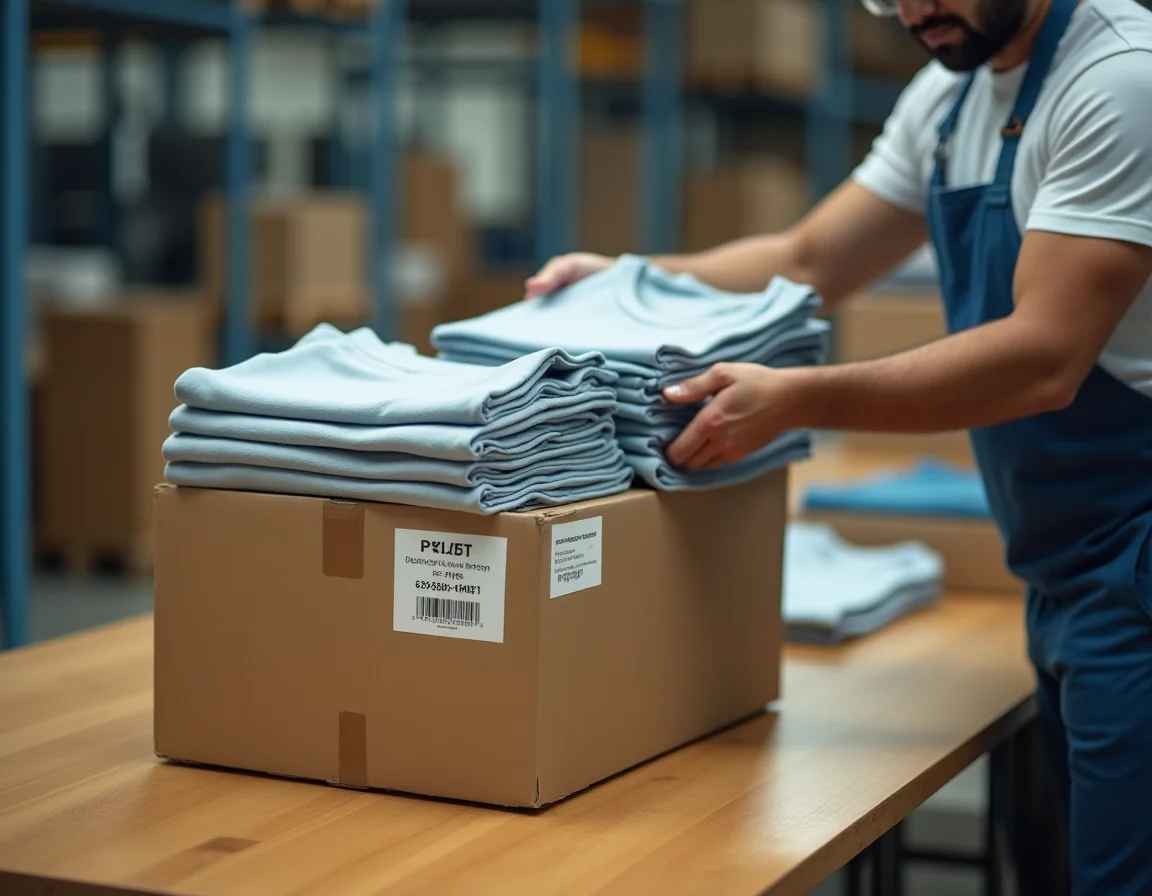
When Should You Be Concerned? The 5% Threshold
While 2-4% wastage is normal and acceptable, there's a clear threshold beyond which you need to investigate: 5% or higher wastage indicates a problem.
In our 500-piece example, if wastage crosses 25-30 pieces, you need to immediately check:
Printing Setup Issues:
- Is the screen tension correct?
- Is the squeegee blade in good condition?
- Is ink viscosity properly maintained?
- Is the printing table level and stable?
- Are registration marks properly aligned?
Operator Skill Issues:
- Is the printer experienced with this type of design?
- Is the printing speed too fast?
- Are proper quality checks happening during production?
Fabric Quality Issues:
- Did you order from a reliable manufacturer?
- Was the fabric batch inspected before printing?
- Is the GSM (fabric weight) consistent across all pieces?
This is where choosing the right t-shirt supplier becomes critical. At Sale91.com, we maintain over 1 lakh+ pieces in ready stock at any given time, all manufactured in-house at our Tiruppur facility with strict quality control. Our bio-washed, pre-shrunk combed cotton t-shirts are specifically designed to minimize fabric-related wastage in printing operations.
The Economics of Wastage: Why Buffer Is Actually Profitable
Some printing businesses hesitate to order extra pieces because they see it as "wasted money." Let's do the math to understand why this thinking is flawed:
Scenario 1: Ordering Exactly 500 Pieces (No Buffer)
- Blank t-shirt cost: ₹80 per piece × 500 = ₹40,000
- Normal wastage: 20 pieces (4%)
- Delivered to client: 480 pieces
- Shortfall: 20 pieces
- Rush re-printing cost (urgent order premium): ₹150 per piece × 20 = ₹3,000
- Delayed delivery penalty or client dissatisfaction: Potentially ₹5,000-10,000
- Total additional cost: ₹8,000-13,000
Scenario 2: Ordering 520 Pieces (4% Buffer)
- Blank t-shirt cost: ₹80 per piece × 520 = ₹41,600
- Normal wastage: 20 pieces (4%)
- Delivered to client: 500 pieces (exactly as promised)
- Additional cost compared to Scenario 1: ₹1,600
- Rush order cost: ₹0
- Penalty cost: ₹0
- Total additional cost: ₹1,600
- Savings compared to Scenario 1: ₹6,400-11,400
Plus, ordering 520 pieces from Sale91.com qualifies you for our quantity discount of ₹2 per piece for orders above 500 pieces, bringing your per-piece cost down further!
Different Printing Methods: How Wastage Varies
The 2-4% wastage standard we've discussed primarily applies to screen printing. However, it's worth understanding how wastage differs across various printing methods:
Screen Printing: 2-4% wastage
Most common for bulk orders. Manual handling and multi-color registration make this the baseline for wastage calculations.
DTG (Direct to Garment): 1-3% wastage
Digital printing is more precise, but pre-treatment issues and nozzle clogs can still cause rejections. Lower wastage but higher per-piece cost.
DTF (Direct to Film): 1-2% wastage
Transfer-based method with very low wastage in the printing stage, but application heat press can occasionally fail or create bubbles.
Vinyl/Heat Transfer: 1-2% wastage
Lowest printing wastage, but limited to simple designs. Application errors are rare but possible.
Sublimation: 3-5% wastage
Only works on polyester or polymer-coated fabrics. Color variation and ghosting can increase wastage rates.
Understanding these differences helps you set realistic expectations based on your chosen printing method.
Quality vs. Wastage: Finding the Balance
There's an important principle to understand: lower wastage is not always better.
Here's why: If a printer has 0% wastage, it might mean they're accepting borderline defective pieces just to meet the quantity. This can damage your brand reputation when these slightly defective t-shirts reach end customers.
Conversely, if wastage is consistently at 1% or below, it might indicate:
- Extremely high-quality inputs (premium fabric and inks)
- Highly skilled operators
- Slower production speed (more careful handling)
- Advanced equipment with better controls
All of these factors typically result in higher costs. You'll pay more per piece, which may or may not be justified based on your target market.
The sweet spot for most commercial printing operations is 2-3% wastage with strict quality standards. This balances cost-effectiveness with quality assurance.
How Sale91.com Helps Minimize Your Wastage
At Sale91.com, we understand that printing wastage is only one part of the equation. Fabric quality plays an equally important role. Here's how our products are designed to reduce your overall wastage:
1. In-House Manufacturing
We knit our own fabric at our Tiruppur facility, giving us complete control over quality. We're not traders or resellers—we're manufacturers. This means consistent fabric quality across every order.
2. Bio-Washed and Pre-Shrunk
All our t-shirts undergo enzyme-based bio-washing for smoothness and are pre-shrunk. This eliminates fabric shrinkage issues after printing, which can cause entire batches to be rejected.
3. Combed Ring-Spun Cotton
Our premium yarn process removes short fibers, resulting in a smoother, more uniform fabric surface. This translates to better print quality and fewer fabric-related defects.
4. Consistent GSM
We offer t-shirts in 180, 200, 210, and 220 GSM with consistent weight throughout each batch. No surprise thick or thin spots that show through prints.
5. Quality-Checked Ready Stock
With 1+ lakh pieces in ready stock, each piece has already passed our quality inspection before it reaches your printing table. You can check our complete range at our product catalog.
6. Low MOQ with High Quality
Minimum order quantity as low as 10 pieces for ready stock items means you can test our quality before committing to large orders.
Watch the Video
Practical Tips to Reduce Wastage in Your Operations
While 2-4% wastage is acceptable, here are proven strategies to keep your rejections at the lower end of this range:
Before Printing:
- Fabric Inspection: Check a sample from each carton before loading for printing. Look for color consistency, fabric defects, and stitching quality.
- Test Prints: Always do 2-3 test prints before starting the full batch. Check registration, color accuracy, and ink coverage.
- Screen Maintenance: Ensure screens are properly tensioned and free from defects. A damaged screen will create consistent defects across multiple pieces.
- Ink Preparation: Mix ink in sufficient quantity to avoid color matching issues mid-batch. Test viscosity and adjust for ambient temperature.
During Printing:
- Regular Quality Checks: Don't wait until the end. Check every 25-50 pieces to catch issues early.
- Proper Drying: Allow adequate flash cure time between colors. Rushing leads to smudging.
- Clean Work Environment: Keep printing tables, hands, and tools clean. Many rejections come from avoidable contamination.
- Maintain Consistent Speed: Don't rush. A steady, moderate pace produces better results than fast printing with high wastage.
After Printing:
- Proper Curing: Ensure ink is fully cured before handling. Undercured prints can smudge during folding.
- Systematic QC: Implement a two-person quality check system—one person checks print quality, another checks fabric quality.
- Grade Rejections: Separate clear rejections from borderline cases. Sometimes a minor defect is acceptable for certain clients or applications.
Client Communication: Setting Expectations Upfront
One often-overlooked aspect of managing wastage is client communication. Many disputes arise simply because expectations weren't clearly set at the beginning.
When taking a bulk printing order, clearly communicate:
- Industry standard wastage: Inform clients that 2-4% wastage is normal in screen printing
- Your buffer strategy: Explain that you'll order extra pieces to ensure exact delivery quantity
- Quality standards: Define what constitutes an acceptable print vs. a rejection
- Inspection process: Allow clients to inspect a sample mid-production if it's a large order
- Rejection policy: Clarify who bears the cost if wastage exceeds agreed limits
Professional businesses appreciate transparency. Setting clear expectations prevents disputes and builds long-term relationships.
Real-World Case Study: A 2000-Piece Order
Let me share a real case from our experience to illustrate these principles in action:
A Delhi-based printing business received an order for 2000 custom printed t-shirts for a corporate event. They ordered exactly 2000 pieces from a local supplier. During printing, they encountered:
- 45 pieces with print defects (2.25%)
- 32 pieces with fabric issues (1.6%)
- Total wastage: 77 pieces (3.85%)
Result: They could only deliver 1923 pieces, falling short by 77 pieces.
The solution? They had to rush-order 77 pieces, wait 2 days for delivery, re-print them on priority, and delay the event delivery by 3 days. The client was upset, the printing business lost credibility, and the extra costs (rush printing, overtime wages, courier charges) nearly wiped out their profit margin.
What should they have done? Order 2080 pieces (4% buffer). Total additional cost would have been ₹6,400 (80 pieces × ₹80), but they would have delivered on time, maintained client trust, and kept their profit intact.
This case perfectly demonstrates why the buffer strategy isn't optional—it's essential for professional operations.
The Bottom Line: Wastage Is Part of the Business Model
If there's one key takeaway from this article, it's this: wastage is not a failure—it's a built-in aspect of mass production.
Every manufacturing industry has wastage factors:
- Restaurants factor in 5-10% food wastage
- Furniture makers account for 3-5% wood wastage
- Metal fabricators expect 2-4% material wastage
- Garment printing has 2-4% wastage
Professional businesses don't try to eliminate wastage entirely (which is impossible). Instead, they:
- Understand what's normal for their industry
- Plan for it in their costing
- Implement best practices to minimize it
- Monitor for abnormal increases
- Build buffer inventory to ensure delivery commitments
Order Quality Blank T-Shirts for Your Printing Business
Reduce fabric-related wastage with Sale91.com's premium bio-washed, pre-shrunk, combed cotton t-shirts. Manufactured in-house at our Tiruppur facility. 1+ lakh pieces ready stock. Minimum 10 pieces order. Bulk discounts available.
Visit Sale91.com