Screen Print Cracking in Monsoon — Why 300 T-Shirts Failed and the ₹15 Humidity Fix Every Printer Misses
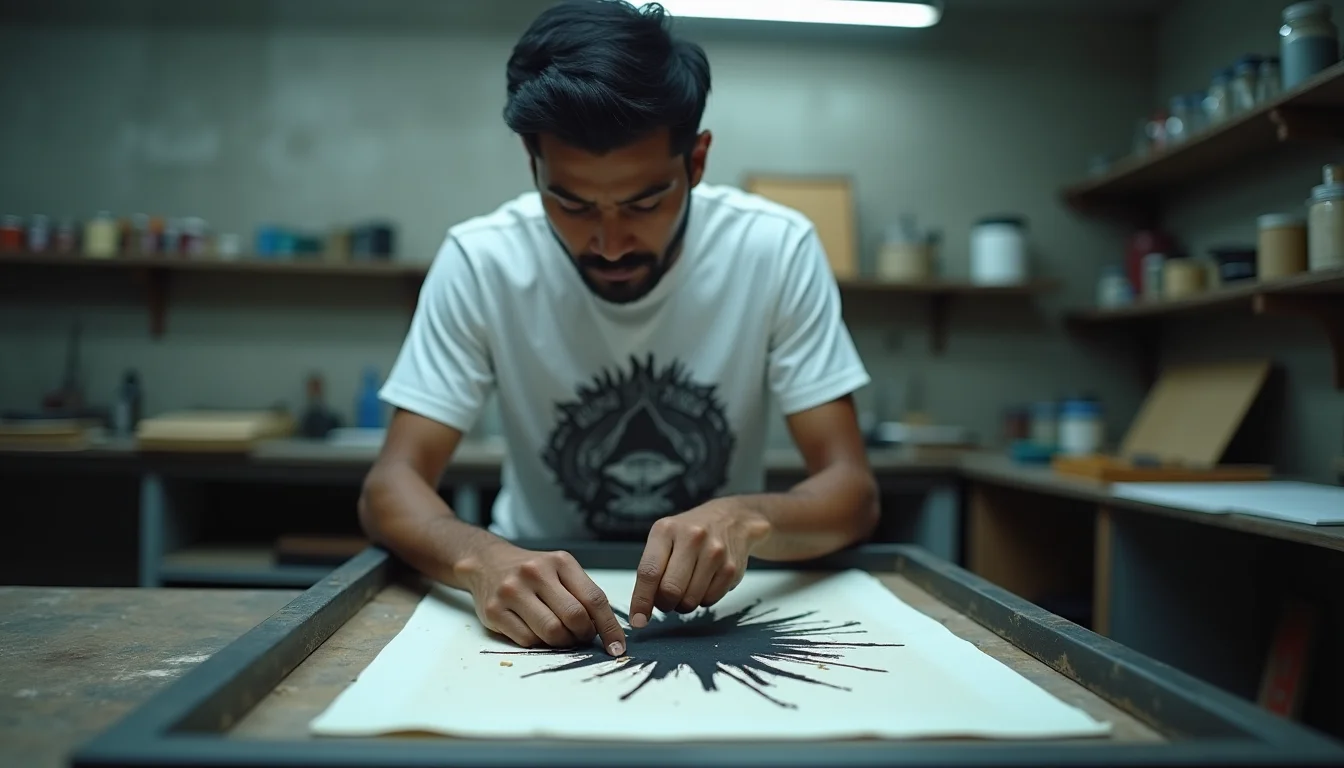
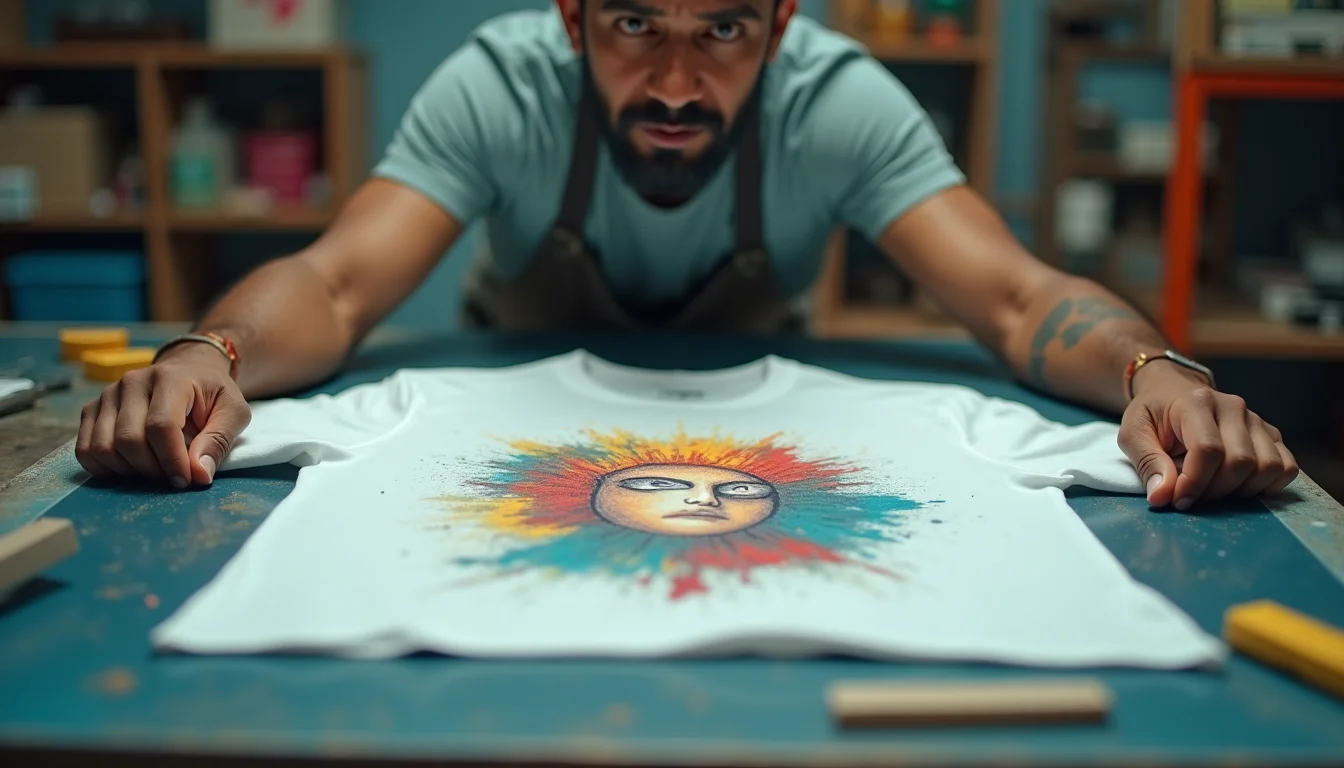
Picture this: you've just screen-printed and cured 300 t-shirts. The colours look sharp, the prints feel solid, and you're ready to dispatch. Then, 48 hours later, your customer calls. The prints are cracking. Not one or two — all 300 pieces. That is not a nightmare. For many printing businesses across India, that is July, August, and September.
Monsoon season is the single biggest hidden threat to screen printing quality in India, and the culprit is something you cannot see — humidity. The devastating part? The fix costs ₹15. Most printers never bother because they don't know why it happens in the first place. This guide breaks down the entire science, the real-world consequences, and the practical monsoon protocol that will protect every batch you print this rainy season.
The ₹0 Problem That Causes ₹30,000+ Losses
Humidity is invisible. It doesn't stop your machine, it doesn't trigger an alarm, and it doesn't affect the print while you're looking at it fresh off the conveyor dryer. That's exactly why it's so dangerous. When ambient humidity in your shop crosses 70–75%, moisture starts infiltrating your entire printing workflow — and nowhere does it cause more damage than during the curing phase.
During India's monsoon months, outdoor humidity regularly hits 80–95% in cities like Mumbai, Kolkata, Chennai, Kochi, and even in Tiruppur — India's textile manufacturing hub — where humidity remains persistently high. Even inland cities like Delhi, Jaipur, and Hyderabad see humidity spike well above 70% during heavy rain periods. If your screen printing shop is not climate-controlled, the air inside your workshop is nearly as humid as the air outside.
The Science: Why Does Screen Print Crack in Monsoon?
To understand the problem, you need to understand what "curing" actually means for plastisol ink (the most widely used ink in screen printing businesses across India). Plastisol ink is a PVC-based ink that does not air-dry — it must be heated to a specific temperature (typically 320°F / 160°C) for the PVC particles to fuse together into a durable, flexible film. This fusion process is called polymerisation, and it must happen completely throughout the entire ink layer — top to bottom.
What Humidity Does to Plastisol Curing
Here is where monsoon becomes your enemy. When ambient humidity is high, two things happen simultaneously:
- The fabric retains moisture: Cotton fibres are hygroscopic — they absorb and hold moisture from humid air. Even pre-shrunk, bio-washed cotton t-shirts (like the ones from Sale91.com) will absorb ambient moisture if stored in a humid environment before printing.
- Moisture acts as a thermal barrier: Water has a very high specific heat capacity. When your conveyor dryer applies heat, a significant portion of that energy is spent evaporating the moisture in the fabric rather than curing the ink. This means the ink at the base of the print layer never reaches full cure temperature.
- Layered prints trap moisture: In multi-colour or thick-deposit prints (like white underbase + colour), moisture can get trapped between ink layers. The top layer cures, sealing the moisture in. The bottom layer remains undercured.
- Result — adhesion failure: The partially cured ink film has poor inter-layer adhesion and poor adhesion to the fabric. When the garment is stretched, washed, or even just folded and unfolded repeatedly, the weakly bonded ink film cracks and peels.
This is precisely what happened to those 300 t-shirts. The printer ran the exact same curing settings used in winter or summer — 25 seconds at 320°F. In low-humidity conditions, that is perfectly adequate. But at 80% humidity, those 25 seconds simply weren't enough to drive out the moisture and achieve full cure. The prints looked fine. They were not fine.
Why the Damage Appears After Delivery — Not Immediately
One of the cruelest aspects of humidity-induced under-curing is that the damage is not always visible right off the dryer. The ink surface cures, creating a film that looks and feels normal. The failure is structural — deep within the ink layers and at the ink-fabric interface. The cracks appear after the first wash, after a few days of handling, or after the garment is stretched during wearing. By then, the batch has already been dispatched. This is why understanding the common screen printing mistakes that cause delayed failures is critical for anyone running a volume printing business.
The ₹15 Fix That Most Printers Don't Know About
Before we talk about curing time adjustments (which is the primary fix), let's address the ₹15 solution that gives this entire story its headline: silica gel moisture absorber packets.
You can buy a pack of small silica gel desiccant packets from any stationery shop, hardware store, or online marketplace for ₹10–20. These are the same packets found inside electronics boxes, medicine bottles, and shoe boxes. They are designed to absorb ambient moisture from the immediate surrounding environment.
How to Use Moisture Absorber Packets in Screen Printing
- Near the dryer: Place 2–3 packets near the entry and exit zones of your conveyor dryer. This helps reduce the moisture load in the immediate curing environment.
- In ink storage: Keep packets inside your ink storage cabinet or shelf. Plastisol inks are relatively stable, but water-based inks and specialty inks can be affected by humidity.
- With printed stock: When stacking freshly cured shirts before packaging, place silica packets between layers if you're doing overnight dispatch. This prevents moisture re-absorption after curing.
- Screen storage: Moisture can degrade emulsion on stored screens. Keep packets in your screen storage area.
The Curing Time Formula: Your Monsoon Screen Print Protocol
The ₹15 hack is a support measure. The primary fix is adjusting your curing parameters. Here is the formula that has saved batches for printers across India:
Monsoon Season (Jun–Sep): 40–45 seconds at 320°F (160°C)
Rule: Add 15–20 extra seconds whenever ambient humidity exceeds 70%
Temperature: Keep at 320°F — do NOT increase temperature to compensate for time. Higher temp risks scorching thin fabrics.
Why Extend Time Instead of Raising Temperature?
It's a logical instinct: if the ink isn't curing fully, just turn up the heat. But this is the wrong approach, especially for 100% cotton t-shirts. Excessive heat causes fabric scorching, colour discolouration (especially on lighter shades), and can damage the bio-wash finish on premium garments. The issue isn't lack of heat — it's that the heat is being spent evaporating moisture rather than curing ink. The solution is giving the process more time to complete, not adding more heat.
Additionally, extending dwell time allows heat to penetrate through thicker ink deposits (like a white underbase or a heavy spot colour) more evenly. This is critical for those multi-layer jobs where cracking is most likely to originate.
Setting Your Conveyor Dryer for Monsoon
- Reduce belt speed to achieve longer dwell time at the same temperature
- Use a donut probe or thermometer to verify actual ink surface temperature is reaching 320°F
- For flash dryers: add one flash pass before the final cure, giving moisture a chance to escape before the final ink fusion
- For heat presses used in small operations: extend press time from 15 sec to 25–28 sec and use parchment paper to prevent sticking
- Test print and wash before committing to a full run — wash one test piece after 30 min and check for cracking
The Fabric Factor: Why Your T-Shirt Choice Also Matters
Here's something that many printers overlook: the base fabric itself plays a major role in how susceptible prints are to humidity-induced cracking. Two fabric properties matter most — GSM and cotton treatment.
GSM and Moisture Retention
GSM (grams per square metre) is the weight of the fabric. Higher GSM fabrics are thicker and therefore retain more moisture. During monsoon, a 220 GSM t-shirt holds significantly more moisture than a 180 GSM shirt. This means higher GSM garments require even more additional curing time during humid conditions.
- 180 GSM — Everyday wear, lighter fabric, absorbs less moisture. Add ~12–15 seconds in monsoon.
- 200 GSM — Premium fabric, moderate moisture retention. Add ~15–18 seconds in monsoon.
- 210–220 GSM — Heavy premium fabric. Add ~18–20 seconds in monsoon. Especially critical for oversized t-shirts which have denser fabric construction.
Pre-Shrunk and Bio-Washed Fabric
Bio-washed and pre-shrunk cotton (like the ring-spun combed cotton t-shirts available at Sale91.com) have smoother surface fibres. While this is excellent for print quality and ink adhesion under normal conditions, it also means the fabric surface has less texture to "grip" a partially cured ink film. This makes proper curing even more important on premium bio-washed garments — a partial cure that might survive on a rougher, lower-quality fabric could fail on a smooth, premium shirt.
The good news: bio-washed cotton has already been treated to reduce fabric shrinkage, which means the ink-to-fabric dimensional relationship remains stable post-wash. If your ink is fully cured, bio-washed shirts actually perform better in wash tests than untreated cotton.
A Complete Monsoon Screen Printing Checklist
Beyond curing time adjustments, here is a comprehensive protocol to protect your printing business during monsoon season. Many printers who've faced batch failures due to humidity-related issues also discover they were making other compounding errors — much like the analysis in this breakdown of which print methods survive Indian climate extremes.
Before Printing
- Check ambient humidity with a hygrometer (available for ₹200–500 online)
- If humidity exceeds 70%, activate monsoon protocol: +15–20 sec curing time
- Pre-warm blank t-shirts for 8–10 seconds under a flash dryer before printing to drive out absorbed moisture
- Keep blank t-shirt stock in sealed poly bags or airtight bins when not in use
- Ensure ink is at room temperature and not cold (cold ink spreads poorly and takes longer to cure)
During Printing
- Use a flash dryer between colours for multi-colour jobs — this is even more critical in monsoon
- Add a moisture absorber packet near your printing station
- Avoid leaving screens with ink loaded for extended periods in humid air — ink can absorb moisture
- For white underbase printing: increase flash time and ensure base is fully gelled before printing next colour
During and After Curing
- Apply the monsoon curing formula: 40–45 seconds at 320°F on conveyor dryer
- Do a wash test on the first 5 pieces of every new run — wash, dry, check for cracking before printing the full batch
- Allow cured shirts to cool fully before stacking — stacking hot shirts traps moisture
- Pack in breathable packaging if dispatch is same-day; use desiccant if holding overnight
The Real Cost of Ignoring This
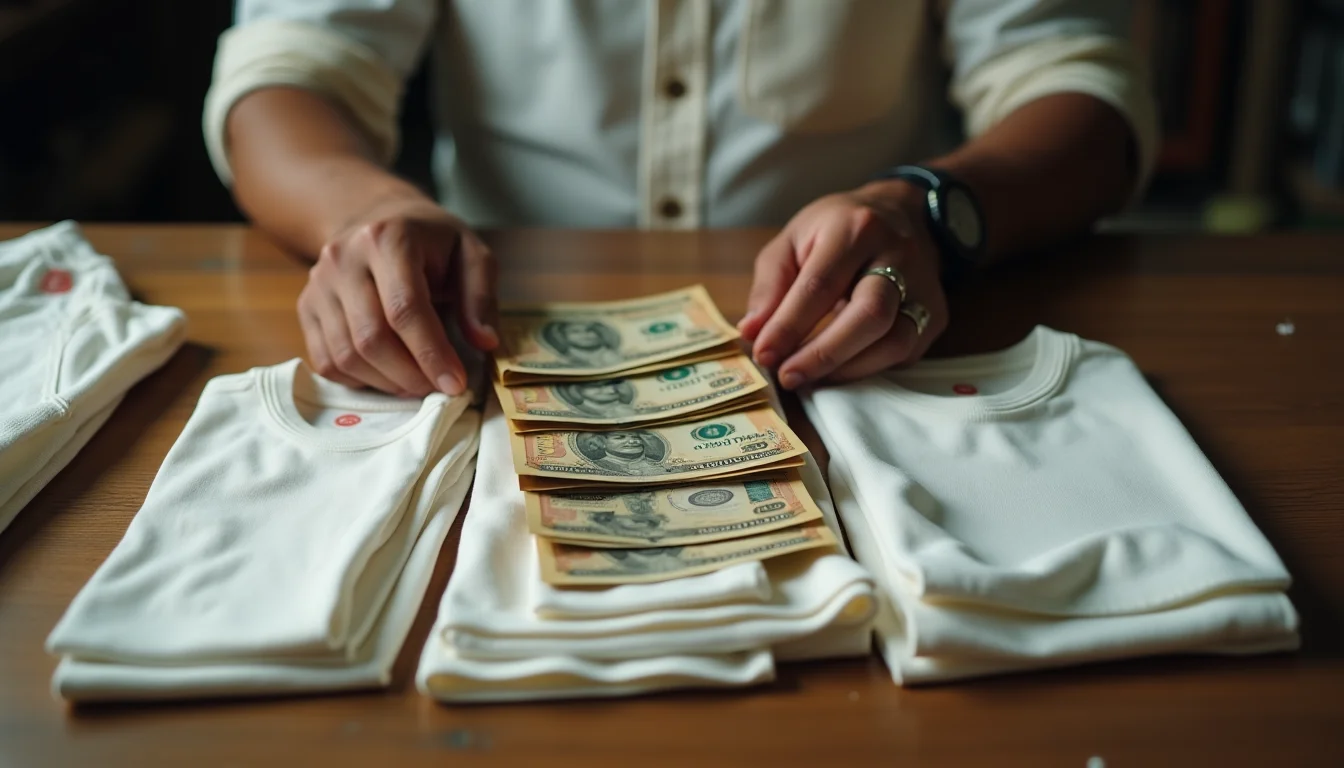
Let's put a number to why this matters at a business level. A typical batch failure scenario:
- 300 t-shirts × avg. ₹200/shirt base cost = ₹60,000 in material cost
- Printing labour + ink + screens: approx. ₹15,000–20,000
- Customer return + rework or replacement: full cost is your liability
- Loss of customer, reputation damage, negative word-of-mouth: priceless (and very real)
Total: one bad monsoon batch can cost ₹75,000–1,00,000+. The fix? ₹15 in silica gel and a 15-second adjustment to your curing belt speed. The math speaks for itself. Choosing the right print method for your order type also matters — if you're evaluating print costs across methods, this real cost breakdown for screen, DTF, and embroidery on a ₹500 t-shirt is worth reading before your next bulk order.
Getting the Right Blank T-Shirts for Your Printing Business
Even the best monsoon curing protocol cannot compensate for poor-quality blank garments. The right blank t-shirt makes a measurable difference to print quality, wash durability, and customer satisfaction. For B2B printers across India, Sale91.com (BulkPlainTshirt.com) offers 100% cotton, bio-washed, pre-shrunk, ring-spun combed cotton t-shirts in 180, 200, 210, and 220 GSM — manufactured in-house at Tiruppur with their own knitted fabric.
With 1 lakh+ pieces in ready stock, 15+ colours, and MOQ as low as 10 pieces for ready stock items, it's the go-to source for printing businesses needing reliable blank stock in bulk. Explore the full range at the product catalog — from plain round neck and polo t-shirts to oversized, hoodies, sweatshirts, and acid-wash styles.
Watch the Video
See the real case study — 300 cracked t-shirts, the ₹15 fix, and the exact monsoon curing formula explained in 60 seconds.
Frequently Asked Questions
More Articles

Ready to Print on Premium Blank T-Shirts?
Get 100% cotton, bio-washed, pre-shrunk t-shirts in 180–220 GSM — manufactured in-house at Tiruppur. 1 lakh+ pieces ready stock. MOQ 10 pieces. PAN India delivery + exports.
₹3/pc discount on online orders | 50% COD available for new buyers | 15+ colours
Order at Sale91.com →