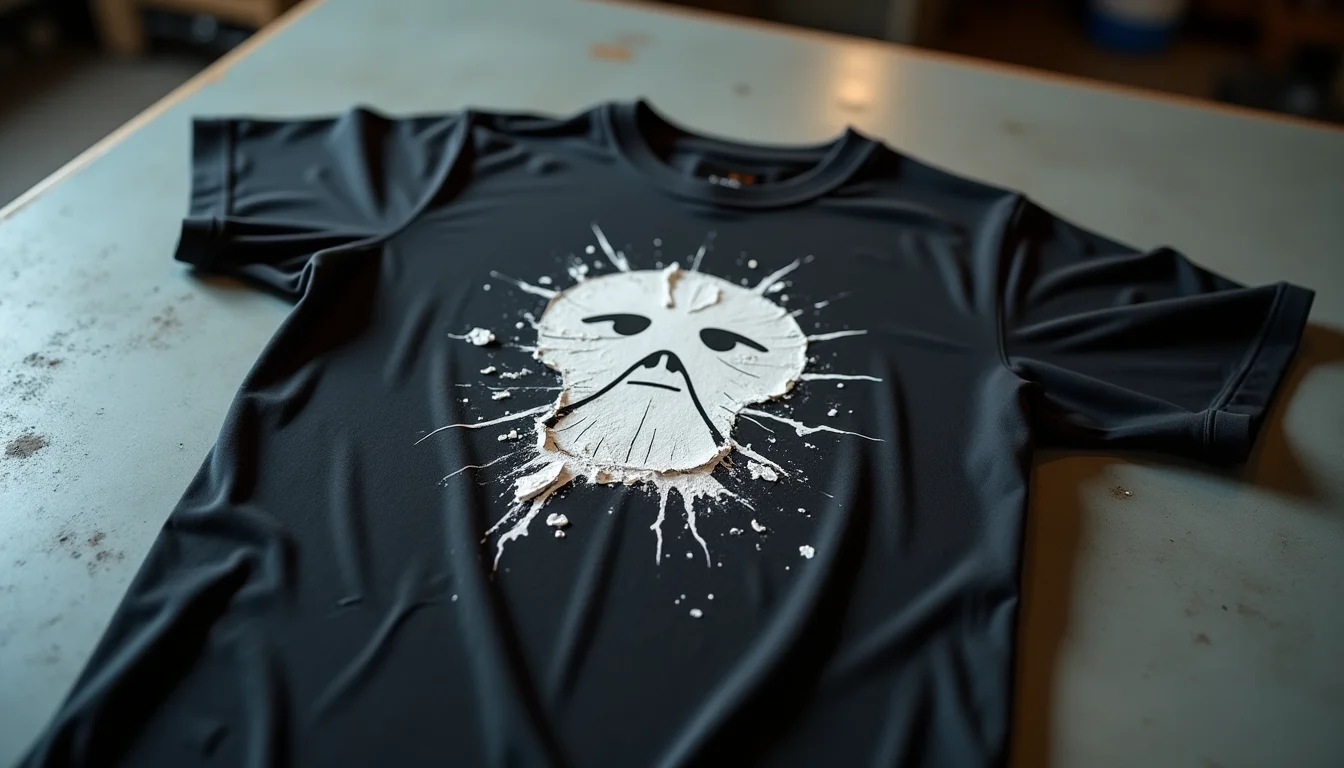
Spot Color vs CMYK – Ye Galti Margin Kha Gayi!

In the competitive world of custom t-shirt printing, one wrong decision can eat up your entire profit margin. I recently spoke with a client who sent a beautiful 6-color logo design to his screen printer. He got it printed using spot colors, and when the invoice came, he was shocked. The printing cost was so high that his margin completely vanished. When I asked if he had considered CMYK printing, his response was telling: "I didn't know when to use what."
This is a common mistake that countless printing businesses make every day across India. Understanding the fundamental difference between spot color and CMYK printing is not just technical knowledge—it's a business survival skill. In this comprehensive guide, we'll break down everything you need to know about these two screen printing methods, when to use each one, and how to maximize your profitability while maintaining print quality.
What Is Spot Color Printing?
Spot color printing, also known as solid color printing, is a screen printing technique where each individual color in your design requires a separate screen. If your design has three distinct colors—let's say red, blue, and yellow—you'll need three separate screens, one for each color.
How Spot Color Works
The process is straightforward but labor-intensive:
- Screen Creation: Each color in the design is separated and a dedicated screen is created for that specific color
- Ink Mixing: Each color is mixed to exact specifications, often matched to Pantone color standards
- Sequential Printing: Each color is printed one at a time, allowing proper drying between applications
- Solid Application: The ink is applied in a solid, opaque layer that completely covers the fabric underneath
Advantages of Spot Color Printing
Spot color printing has several significant benefits that make it the preferred choice for certain applications:
- Vibrant Colors: Spot colors produce bright, solid, saturated colors that really pop on fabric
- Pantone Matching: You can achieve exact color matching using Pantone Matching System (PMS), ensuring brand consistency
- Opacity: Spot colors are fully opaque and work well on both light and dark colored t-shirts
- Durability: The thick ink layer is highly durable and withstands multiple washes without fading
- Cost-Effective for Simple Designs: When you have 1-3 colors, spot printing is usually more economical
When to Use Spot Color
Spot color is your best choice when:
- Your design has 1-3 solid colors
- You need exact Pantone color matching for brand consistency
- You're printing logos, text, or simple graphic designs
- You need vibrant colors that stand out
- You're printing on dark colored t-shirts
- You have a large order quantity where screen costs can be amortized
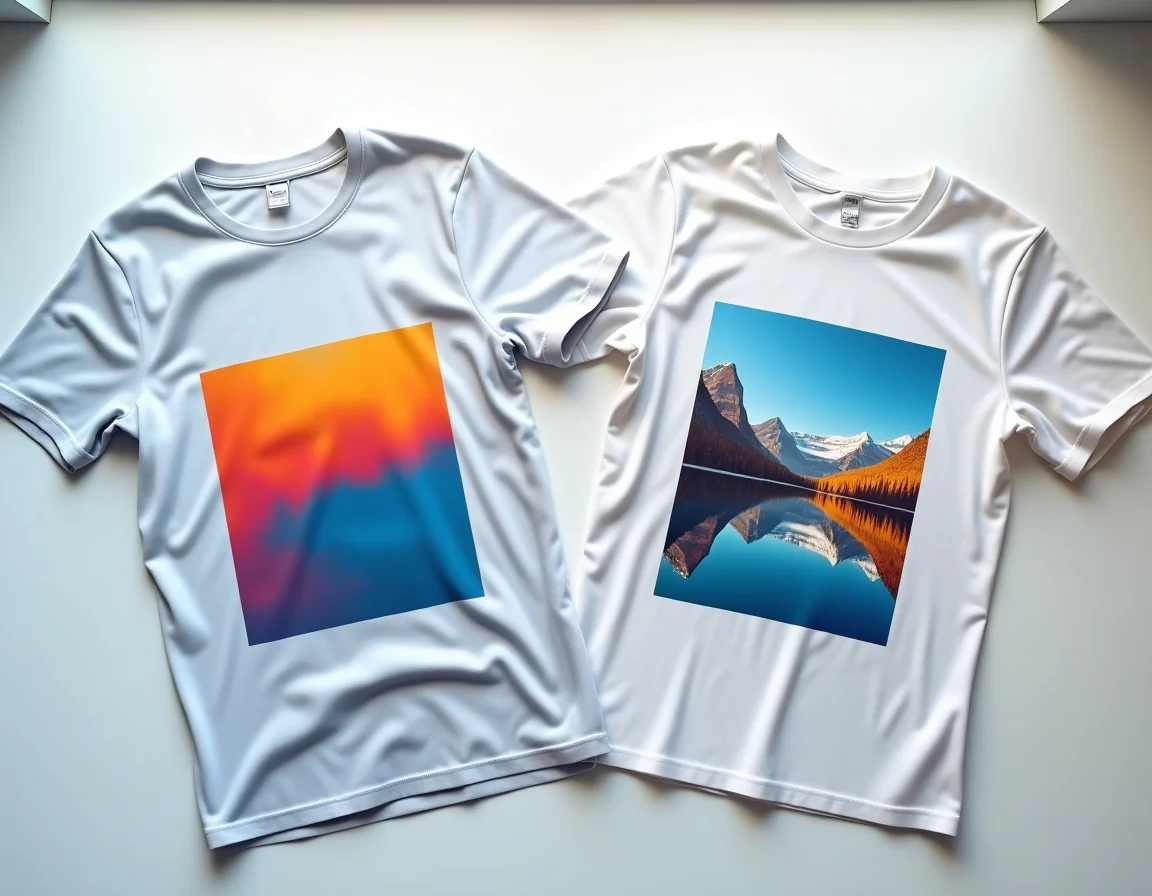
What Is CMYK Printing in Screen Printing?
CMYK stands for Cyan, Magenta, Yellow, and Key (Black). This is a process printing method that uses only these four colors in varying combinations to create a full spectrum of colors. Unlike spot color printing where you need a screen for every color, CMYK uses just four screens regardless of how many colors appear in the final design.
How CMYK Works
The CMYK process is based on color theory and optical mixing:
- Color Separation: The design is separated into four color channels—Cyan, Magenta, Yellow, and Black
- Halftone Dots: Each color is printed as tiny dots at different sizes and angles
- Overprinting: The four colors are printed on top of each other in precise registration
- Optical Mixing: When viewed from a distance, the dots blend optically to create the illusion of many different colors
Advantages of CMYK Printing
CMYK process printing offers unique benefits for specific types of designs:
- Unlimited Colors: Create virtually any color using just four screens
- Photographic Images: Perfect for printing photo-realistic images with gradients and color blends
- Cost-Effective for Complex Designs: When you have 5+ colors, CMYK is significantly cheaper than spot colors
- Smooth Gradients: Achieve beautiful color transitions and subtle shading
- Faster Setup: Only four screens need to be created regardless of design complexity
When to Use CMYK
CMYK is the right choice when:
- Your design has 5 or more colors
- You're printing photographic or photo-realistic images
- The design includes gradients, shadows, or blended colors
- You're printing on white or light colored t-shirts
- You need to reproduce artwork with many subtle color variations
- You want to keep screen costs low for complex multi-color designs
The Critical Difference: Cost Analysis
Let's break down the economics with a real example. Suppose you have a logo design with 6 different colors.
Spot Color Costing for 6-Color Design
- Screen making cost: ₹300-500 per screen × 6 = ₹1,800-3,000
- 6 separate ink mixing and color matching processes
- 6 separate print passes (more labor time)
- Higher setup time = higher setup charges
- Per piece printing cost: significantly higher due to multiple screens
CMYK Costing for Same 6-Color Design
- Screen making cost: ₹300-500 per screen × 4 = ₹1,200-2,000
- Standard CMYK ink setup (no custom mixing needed)
- 4 print passes regardless of how many colors in design
- Faster setup = lower setup charges
- Per piece printing cost: much lower
In this scenario, choosing CMYK over spot color can save you ₹600-1,000 in screen costs alone, plus additional savings in labor and printing time. For a 500-piece order, this difference could mean the difference between profit and loss.
The White T-Shirt vs Dark T-Shirt Factor
One crucial consideration that many beginners overlook is the base color of the t-shirt you're printing on. This significantly affects which printing method will work best.
CMYK on White T-Shirts
CMYK printing works beautifully on white and light-colored t-shirts. The white fabric acts as a natural base that allows the semi-transparent CMYK inks to show their true colors. The halftone dots can blend optically, creating smooth color transitions and accurate color reproduction.
At Sale91.com, we offer premium white t-shirts in various GSM options (180, 200, 210, 220) that are perfect for CMYK printing. Our 100% combed cotton, bio-washed, and pre-shrunk t-shirts provide a smooth surface that helps the CMYK dots print cleanly and consistently.
CMYK on Dark T-Shirts: The Underbase Problem
When you try to print CMYK on dark colored t-shirts like black, navy, or dark green, you'll immediately encounter a problem: the colors look muddy, dull, and completely washed out. This is because CMYK inks are semi-transparent, and the dark fabric underneath shows through, muddying the colors.
The solution is to print a white underbase first—a solid white layer that covers the dark fabric and provides a bright base for the CMYK colors to sit on top of. However, this adds:
- One additional screen (white underbase)
- Extra printing pass
- Additional curing time
- Higher cost per piece
- Thicker feel on the t-shirt
For dark t-shirts, spot color printing is often the better choice, as spot colors are naturally opaque and don't require an underbase.

Practical Decision Framework
Here's a simple framework to help you decide which printing method to choose for any given design:
Step 1: Count the Colors
Look at the design and count how many distinct, solid colors it contains (excluding gradients and blends).
- 1-3 colors: Spot color is usually more economical
- 4 colors: It's a toss-up; calculate both options
- 5+ colors: CMYK is almost always cheaper
Step 2: Analyze the Design Type
- Logo, text, or simple graphics with solid colors: Spot color
- Photograph or photo-realistic image: CMYK
- Design with gradients, shadows, or color blends: CMYK
- Design requiring exact Pantone matching: Spot color
Step 3: Consider the T-Shirt Color
- White or light colored shirts: Both methods work; choose based on design complexity
- Dark colored shirts: Spot color is usually better; CMYK requires expensive underbase
Step 4: Calculate the Total Cost
Get quotes for both methods including:
- Screen making charges
- Setup fees
- Per-piece printing cost
- Additional charges (underbase, extra colors, etc.)
Multiply the per-piece cost by your order quantity and add setup costs to get the total. The method with the lower total cost wins.
Common Mistakes to Avoid
Mistake #1: Using Spot Color for High Color Count Designs
This is the mistake that cost my client his margin. When you have a complex, multi-color design—especially something like an illustration with 7-8 different colors—using spot color becomes prohibitively expensive. Each additional screen adds to your cost, and at some point, CMYK becomes far more economical.
Mistake #2: Using CMYK for Simple Logo Designs
On the flip side, some printers default to CMYK for everything, even simple 2-3 color logos. This is wasteful. Spot color will give you brighter, more vibrant colors for logos, and it's actually cheaper for simple designs. Plus, logos need exact color matching for brand consistency, which spot color provides better than CMYK.
Mistake #3: CMYK on Dark Shirts Without Considering Underbase Cost
Many beginners see a beautiful photo-realistic design and immediately think "CMYK!" But if you're printing on black or navy t-shirts, you need that white underbase. Once you factor in the cost of the additional screen and printing pass, spot color might actually be cheaper and give better results.
Mistake #4: Not Testing Before Bulk Production
Whether you choose spot color or CMYK, always get a sample printed first, especially for new designs or new printers. The sample will show you the actual color reproduction, print quality, and hand feel. This small investment can save you from costly mistakes on bulk orders.
Speaking of bulk orders, when you're sourcing plain t-shirts for printing, quality matters just as much as your printing technique. At Sale91.com, we manufacture premium blank t-shirts specifically designed for printing businesses. Our t-shirts are bio-washed for smoothness, pre-shrunk to prevent size changes, and made from combed cotton for superior print adhesion.
Quality T-Shirts Make Better Prints
No matter which printing method you choose, the quality of your base t-shirt directly affects the final print quality. Here's what to look for:
Fabric Quality Matters
- Combed Cotton: Smoother surface means better ink adhesion and sharper print details
- Bio-washed Finish: Removes impurities and creates an even, smooth surface for printing
- Pre-shrunk Fabric: Prevents the print from cracking or distorting after the first wash
- Consistent GSM: Uniform fabric weight ensures consistent print results across all t-shirts
Why Sale91.com T-Shirts Are Perfect for Printing
As manufacturers with our own knitting facility in Tiruppur, we control every aspect of quality:
- Own Knitted Fabric: We're not traders; we knit our own fabric, ensuring consistent quality
- Ring-Spun Combed Cotton: Premium yarn that creates a smooth, tight weave perfect for detailed prints
- Bio-washed & Pre-shrunk: Ready to print out of the box with minimal shrinkage after washing
- Multiple GSM Options: Choose 180 GSM for everyday wear, 200 GSM for premium feel, or 220 GSM for heavy-duty t-shirts
- 15+ Colors Available: From classic white perfect for CMYK to vibrant colors for spot printing
- Consistent Stock: Over 1 lakh pieces in ready stock so you never face supply issues
Real-World Case Studies
Case Study 1: The Birthday T-Shirt Order
A customer wanted to print 50 t-shirts for a birthday party. The design was a photo of the birthday person with colorful decorative elements—easily 10+ colors with gradients.
Spot Color Quote: ₹10 screen making × 10 screens = ₹100 setup + ₹80/piece = ₹4,100 total
CMYK Quote: ₹10 screen making × 4 screens = ₹40 setup + ₹50/piece = ₹2,540 total
Result: CMYK saved ₹1,560 (38% cost reduction). The customer was thrilled with the photo-quality result.
Case Study 2: The Corporate Logo Order
A company needed 200 t-shirts with their 2-color corporate logo on navy blue t-shirts.
CMYK with Underbase Quote: ₹10 × 5 screens (4 CMYK + 1 white underbase) = ₹50 setup + ₹45/piece = ₹9,050 total
Spot Color Quote: ₹10 × 2 screens = ₹20 setup + ₹35/piece = ₹7,020 total
Result: Spot color saved ₹2,030 (22% cost reduction), plus the colors were brighter and more vibrant with exact Pantone matching.
Advanced Tips for Printing Business Owners
Mix and Match When Appropriate
Sometimes the best solution is a hybrid approach. For example, if you have a design with a photographic element plus a company logo, you might:
- Print the photo using CMYK (4 screens)
- Add the logo as a spot color (1 additional screen) for vibrant, exact color matching
This gives you the best of both worlds—photo-quality imaging plus vibrant branding.
Build Relationships with Your Screen Printer
A good screen printer is a valuable business partner. When you understand the difference between spot color and CMYK, you can have intelligent conversations about the best approach for each design. This collaboration helps both businesses succeed.
Educate Your Customers
Many of your customers won't understand printing techniques. When they send you a complex 8-color design, explain why CMYK might give them better results at a lower cost. When they want exact brand colors, explain the value of spot color Pantone matching. This education builds trust and positions you as an expert.
Optimize Your Design Files
Before sending designs to your printer:
- For spot color: Provide vector files with colors separated and Pantone codes specified
- For CMYK: Provide high-resolution images (minimum 300 DPI) in CMYK color mode
- Avoid RGB files—they need to be converted to CMYK anyway and colors may shift
Watch the Video
For a quick visual explanation of spot color vs CMYK printing, watch this short video where I break down the key differences and when to use each method:
Frequently Asked Questions
Ready to Start Your Printing Business?
Now that you understand the difference between spot color and CMYK printing, the next step is sourcing quality blank t-shirts. Sale91.com offers premium plain t-shirts manufactured in-house with printing businesses in mind.
- 100% Combed Cotton - Ring Spun
- Bio-washed & Pre-shrunk
- Multiple GSM options: 180, 200, 210, 220
- 15+ colors in ready stock
- MOQ as low as 10 pieces
- Bulk discounts on 500+ pieces
Conclusion
Understanding when to use spot color versus CMYK in screen printing is fundamental to running a profitable printing business. The rule is simple: for logos and simple designs with 1-3 colors, use spot color for vibrant results and exact color matching. For complex designs with 5+ colors or photographic images, use CMYK to save on screen costs and achieve smooth color transitions.
Always consider the base t-shirt color—CMYK works beautifully on white t-shirts but requires an expensive underbase on dark colors. Count your colors, analyze your design type, calculate total costs, and make informed decisions rather than defaulting to one method for everything.
Remember, even the best printing technique won't compensate for poor quality blank t-shirts. Start with quality fabric from a reliable manufacturer like Sale91.com to ensure your prints look great and last long. With 1,25,232+ pieces sold in the last 30 days and a reputation built on quality and consistency, we understand what printing businesses need.
Don't let costly printing mistakes eat your margins. Apply the knowledge from this guide, test your designs, and make smart choices. Your profitability depends on it.