Same Colour, 2 Vendors — One Looks Premium, One Cheap! How to Check Dyeing Quality Before a Bulk T-Shirt Order
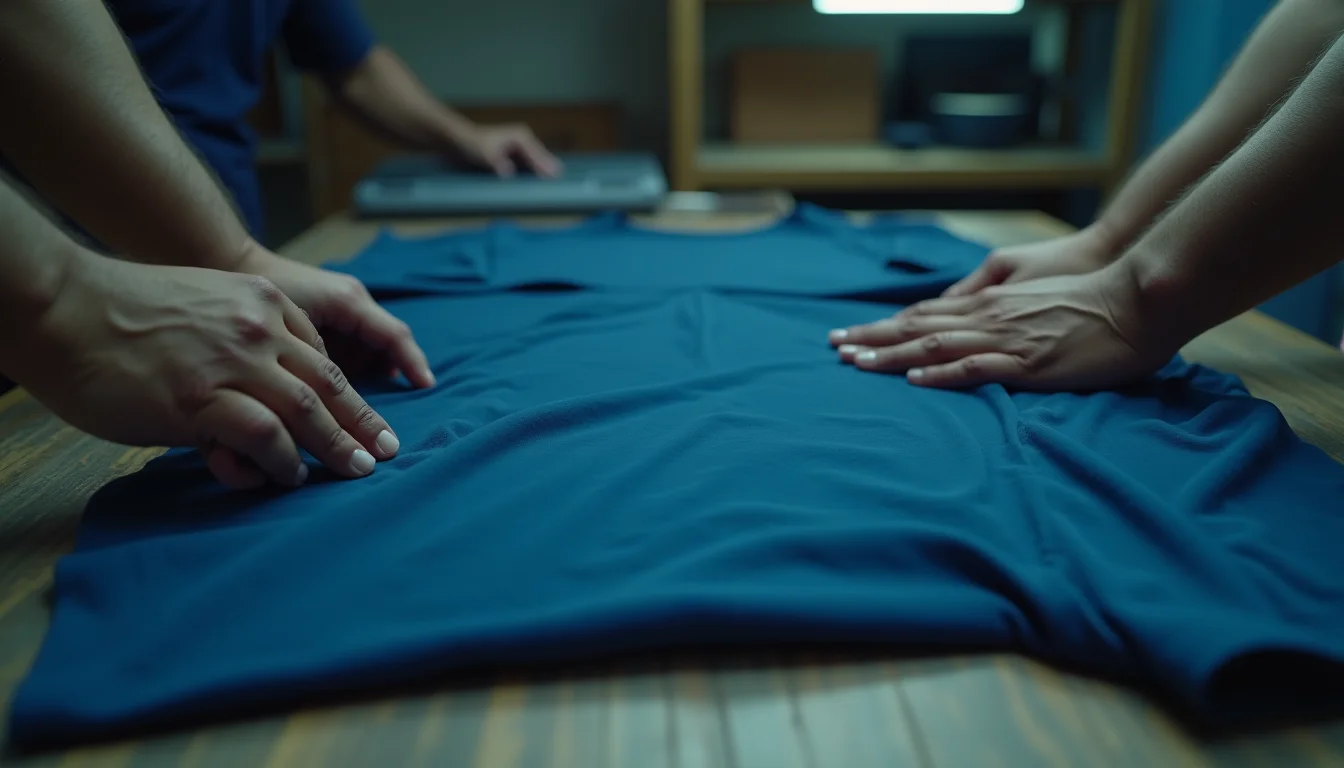
Imagine this scenario: You source navy blue t-shirts from two different vendors. Same colour code. 500 pieces each. You're ready to send them to your DTG or screen printing client. But when the shipment arrives and you lay them side by side — one looks rich, deep, and premium. The other looks dull, slightly chalky, and just… cheap. Your client notices immediately. You've lost credibility. Maybe you've lost the client.
This is not a hypothetical. It happens every single day to t-shirt printing businesses across India — from Surat to Delhi, from Kolkata to Bengaluru. And the root cause is almost always the same: the dyeing method used by the vendor. Specifically, the difference between reactive dyeing and pigment dyeing — and most buyers have no idea this distinction even exists.
In this guide, we break down exactly what these two dyeing processes are, why the quality difference is so dramatic, how you can test it yourself before placing any bulk order, and what to look for when choosing a reliable blank t-shirt supplier in India. This one piece of knowledge can genuinely save you lakhs of rupees in returns, reprints, and lost customers.
The Real Story: Same Colour Code, Two Very Different Results
A customer recently placed orders with two vendors simultaneously — a common practice in the printing business to compare quality and pricing. Both orders were for navy blue, both vendors confirmed the same colour code, and both quoted competitive per-piece rates. On paper, everything looked identical.
When the 500-piece samples arrived from each vendor and were placed side by side under natural light, the difference was shocking. One batch had that deep, saturated navy blue that makes a t-shirt look premium and well-made. The other had a flat, slightly faded look — almost as if the fabric had already been washed 10 times before it even left the factory. The colour saturation, the hand feel, and even the way the fabric caught light were completely different.
The problem was not the colour shade selection. The problem was the dyeing chemistry used at the factory level. This is a supply chain detail that most B2B buyers never think to ask about — until it's too late. Stories like this are unfortunately very common; we've even seen cases where a colour confusion alone cost 800 pieces — and that's without even factoring in dyeing quality issues on top.
Reactive Dyeing vs Pigment Dyeing: What's Actually Happening Inside Your Fabric
To understand why two t-shirts with the "same colour" look so different, you need to understand what's happening at the molecular level inside the cotton fiber. There are two fundamentally different approaches to putting colour into a cotton t-shirt.
Reactive Dyeing — The Premium Standard
In reactive dyeing, the dye molecule forms a covalent chemical bond with the cellulose molecules inside the cotton fiber itself. Think of it like the colour being permanently fused into the fiber at a molecular level. The dye literally becomes part of the cotton structure.
- Colour penetrates deep into each cotton fiber
- Result is vibrant, rich, saturated colour — consistent across the entire fabric
- Excellent wash fastness — colour stays true even after 30+ washes
- Soft hand feel is preserved — no surface coating interfering with texture
- Better performance under heat, UV exposure, and repeated wear
- The go-to method for premium blank t-shirts used in professional printing businesses
Reactive dyeing requires more sophisticated equipment, better quality control, and more expensive chemicals — which is why it costs more. But for any t-shirt destined for DTG printing, screen printing, DTF, or heat transfer, this is the only acceptable dyeing method.
Pigment Dyeing — The Surface Illusion
Pigment dyeing works very differently. Instead of bonding with the fiber, pigment particles are mixed with a binder and essentially coated onto the surface of the fabric. Think of it like painting a wall — the paint sits on top, but it hasn't merged with the wall material underneath.
- Colour sits on the fiber surface, not inside it
- Initial appearance can look acceptable — but depth of colour is limited
- Very poor wash fastness — colour begins fading significantly after just 3-4 washes
- Binder coating can make the fabric feel slightly stiff or rough
- Problematic for printing: the surface binder can interfere with DTG ink adhesion
- Often used because it's cheaper and faster to produce
The Visual and Tactile Differences You Can Spot Immediately
You don't need a laboratory to tell the difference between reactive and pigment dyed fabric. Here's what to look for when you receive a sample:
| Characteristic | Reactive Dyeing | Pigment Dyeing |
|---|---|---|
| Colour depth (visual) | Rich, deep, saturated | Flat, slightly dull or chalky |
| Hand feel | Soft, natural cotton texture | Slightly stiff or coated feel |
| Colour after 5 washes | Minimal to no fading | Noticeable fading, colour shift |
| Wet rub transfer | Little to no colour transfer | Clear colour transfer on white cloth |
| Print surface compatibility | Excellent — smooth, uniform | Can cause adhesion issues |
| Cost to produce | Higher | Lower |
| Long-term value for buyer | High | Low |
The Simple Test That Can Save You Lakhs: The Wet Rub Method
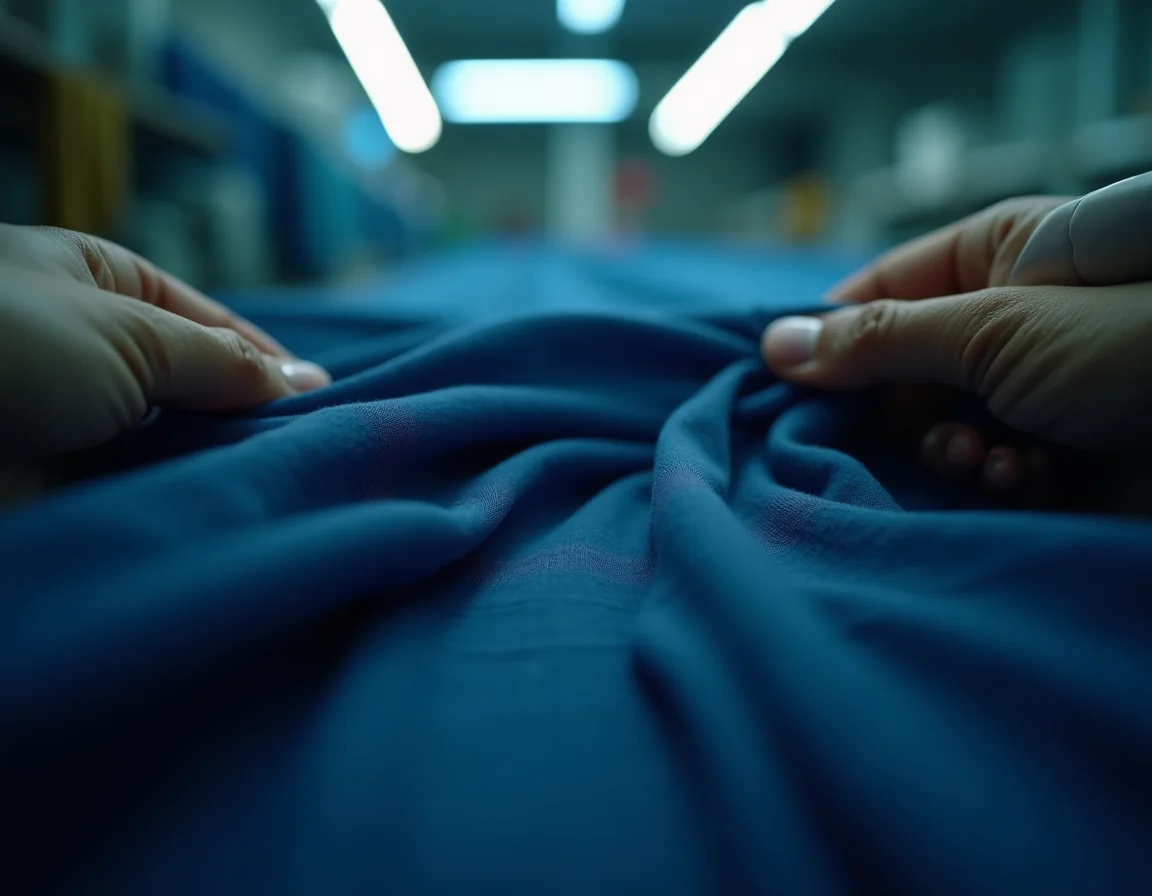
Here is the single most important quality check you can perform on any t-shirt sample before placing a bulk order. It takes less than two minutes and requires nothing more than a piece of white cloth and water.
Take a small piece of white cotton cloth (a white handkerchief works perfectly) and wet it thoroughly with plain water. Squeeze out the excess so it's damp but not dripping.
Take your t-shirt sample and rub the damp white cloth firmly over a coloured area of the fabric — about 10-15 strokes with moderate pressure. Focus on a flat area like the chest or back panel.
Look at the white cloth immediately after rubbing. If there is visible, clear colour transfer onto the white cloth — the fabric is pigment dyed. The colour is sitting on the surface and will bleed and fade in real-world use. Avoid this vendor for bulk orders.
Always wash one sample piece before placing any bulk order. Machine wash at 40°C with standard detergent. After washing and drying, compare the washed piece with an unwashed sample. In reactive-dyed fabric, the difference should be negligible. In pigment-dyed fabric, you'll see clear fading — often within the very first wash.
Why This Matters Even More for Printing Businesses
If you're in the t-shirt customisation business — whether that's DTG printing, DTF transfers, screen printing, or heat transfer — the quality of your base fabric's dyeing directly impacts your final product quality and customer satisfaction. Here's why:
Print Adhesion and Ink Absorption
DTG printers rely on pre-treatment chemicals (PTFE sprays) bonding with the cotton fiber surface for ink adhesion. On pigment-dyed fabric, the binder coating on the surface can repel or interfere with pre-treatment, leading to uneven prints, poor ink absorption, and flaky prints after washing.
Colour Matching Accuracy
Professional screen printing requires a stable, consistent base colour. If the fabric colour shifts after the first wash, your client's finished product looks different from the approved proof — creating disputes, reprints, and damaged relationships.
Your Business Reputation
Your client doesn't know — or care — about reactive vs pigment dyeing. They just know that the t-shirts they ordered from you looked great initially but faded embarrassingly fast. That reputation damage follows your printing business. This is exactly why experienced operators in the industry always never place large orders without sampling first — the cost of a few sample pieces is nothing compared to the cost of a bad bulk order.
Other Key Fabric Quality Checks to Always Perform
Dyeing quality is critical, but it's one part of a larger quality assessment you should perform on every new vendor's samples. Here's a comprehensive checklist:
1. GSM Verification
GSM (Grams per Square Metre) is the most fundamental measure of fabric weight and quality. Always use a GSM cutter and weighing scale to verify the actual GSM of your sample against what the vendor has quoted. A vendor quoting 200 GSM delivering 175 GSM fabric is one of the most common — and costly — forms of fraud in the Indian wholesale t-shirt market. We've documented how GSM discrepancies have cost buyers lakhs on bulk orders.
2. Shrinkage Test
Wash the sample and measure dimensions before and after. Premium t-shirts should be pre-shrunk, meaning post-wash shrinkage should be below 3-4%. Excessive shrinkage (8-10%+) means the fabric is not properly pre-shrunk and will cause sizing problems for your end customers.
3. Fabric Composition Check
Ask for a fabric composition test certificate if ordering in large quantities. Some vendors blend polyester into "100% cotton" fabric to reduce costs. Blended fabric behaves very differently under DTG printing and shows colour differently under light.
4. Bio-Wash Quality
Premium blank t-shirts should be bio-washed (enzyme treated) to achieve a smooth, pill-free surface. You can feel the difference — bio-washed fabric has a noticeably softer, smoother hand feel compared to unbio-washed fabric. This smoothness is essential for print quality and end-customer comfort.
5. Stitching and Construction Inspection
Check stitch density (ideally 10-12 stitches per inch), seam alignment, and whether the fabric has side seams or is tubular. Inspect collar elasticity and the quality of rib used. All of these affect the final presentation of your printed garment.
How to Choose a Blank T-Shirt Vendor Who Uses Reactive Dyeing
The challenge in India's wholesale t-shirt market is that vendors rarely volunteer information about their dyeing process — especially if they're using the cheaper pigment method. Here's how to get the information you need:
- Ask directly and specifically: "Do you use reactive dyeing or pigment dyeing for your coloured t-shirts?" A vendor who uses reactive dyeing will answer confidently. A vendor using pigment dyeing may become vague.
- Request wash fastness certificates: Legitimate quality-focused manufacturers often have AATCC or ISO wash fastness test certificates available. Ask for them.
- Visit or research the manufacturing facility: Reactive dyeing requires sophisticated equipment. Factories with genuine reactive dyeing capability are typically larger, more established operations — often in textile hubs like Tiruppur.
- Always test before committing: No matter what the vendor claims verbally, always perform the wet rub test and wash test on physical samples before placing bulk quantities.
- Check reviews and references: Ask for references from other printing businesses who regularly order from the vendor. Dyeing quality problems don't stay secret for long in the industry.
Why Sale91.com Uses Only Reactive Dyeing — Guaranteed
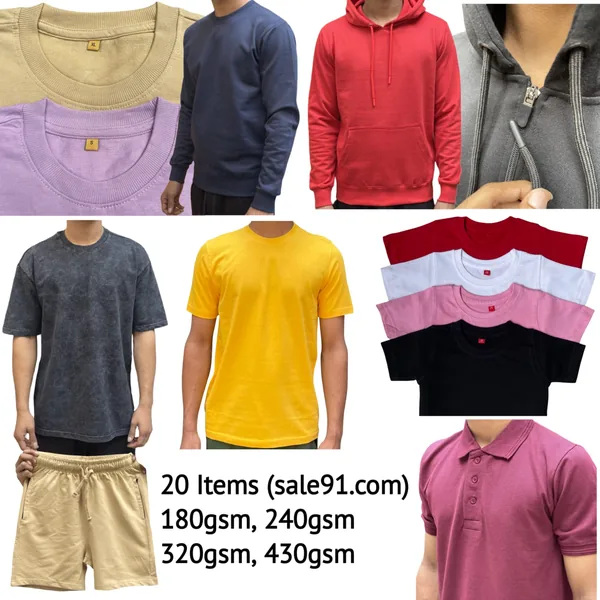
At Sale91.com (BulkPlainTshirt.com), we manufacture our own fabric in Tiruppur — India's textile capital. This means we control the entire production process, from knitting our own fabric to the final dyeing and finishing stages. We are not a trader or reseller sourcing from multiple factories with inconsistent quality standards.
Every plain t-shirt we produce uses reactive dyeing exclusively. Combined with our bio-washing and pre-shrinking process using ring-spun combed cotton, the result is a blank t-shirt that printing businesses across India and internationally trust for consistent, predictable quality. Our colour palette of 15+ shades is maintained with strict batch-to-batch consistency — so your navy blue from order #1 looks identical to your navy blue from order #50.
We sell blank t-shirts in GSM options from 180 (everyday wear) to 220 (heavy premium), plus oversized t-shirts, polo t-shirts, hoodies, sweatshirts, and acid wash variants. With 1 lakh+ pieces in ready stock at any time, and over 1,25,232 pieces shipped in the last 30 days alone, we are equipped to support your printing business at scale.
For new buyers, we offer 50% COD on the first order (with a nominal 3% COD charge), so you can verify quality before committing fully. Orders of 500+ pieces get an additional Rs 2/piece discount, and all online purchases get Rs 3/piece off automatically. Browse our full range in the product catalog or place your order directly at Sale91.com.
Quick Reference: Before You Place Any Bulk T-Shirt Order
- ✅ Always order physical samples — never order bulk from photos or specifications alone
- ✅ Perform the wet rub test on every new vendor's sample in a dark colour
- ✅ Wash one sample piece before finalising the order
- ✅ Verify actual GSM with a GSM cutter — don't rely on vendor's stated GSM
- ✅ Ask specifically about dyeing method — reactive vs pigment
- ✅ Request wash fastness test certificates for large orders
- ✅ Check for pre-shrinking by measuring pre and post-wash dimensions
- ✅ Feel the hand — bio-washed, ring-spun combed cotton has a distinctly smooth, soft feel
- ✅ Choose manufacturers over traders where possible — factory-direct means fewer quality variables
Watch the Video
See this dyeing quality test demonstrated live — including the wet rub test side by side on reactive-dyed vs pigment-dyed fabric:
Frequently Asked Questions
More Articles

Order Reactive-Dyed Blank T-Shirts Direct from the Manufacturer
Stop gambling on unknown vendors. Sale91.com manufactures its own fabric in Tiruppur using reactive dyeing, bio-washing, and ring-spun combed cotton — all quality steps done in-house. Over 1,25,000 pieces shipped last month. 1 lakh+ in ready stock right now.
MOQ from 10 pieces. 50% COD for first orders. Rs 3/piece online discount on every order.
Order Now at Sale91.com →