Bulk Plain Tshirt First Order Mistakes — How ₹2 Lakh & 1500 Pieces Went Wrong in 2017
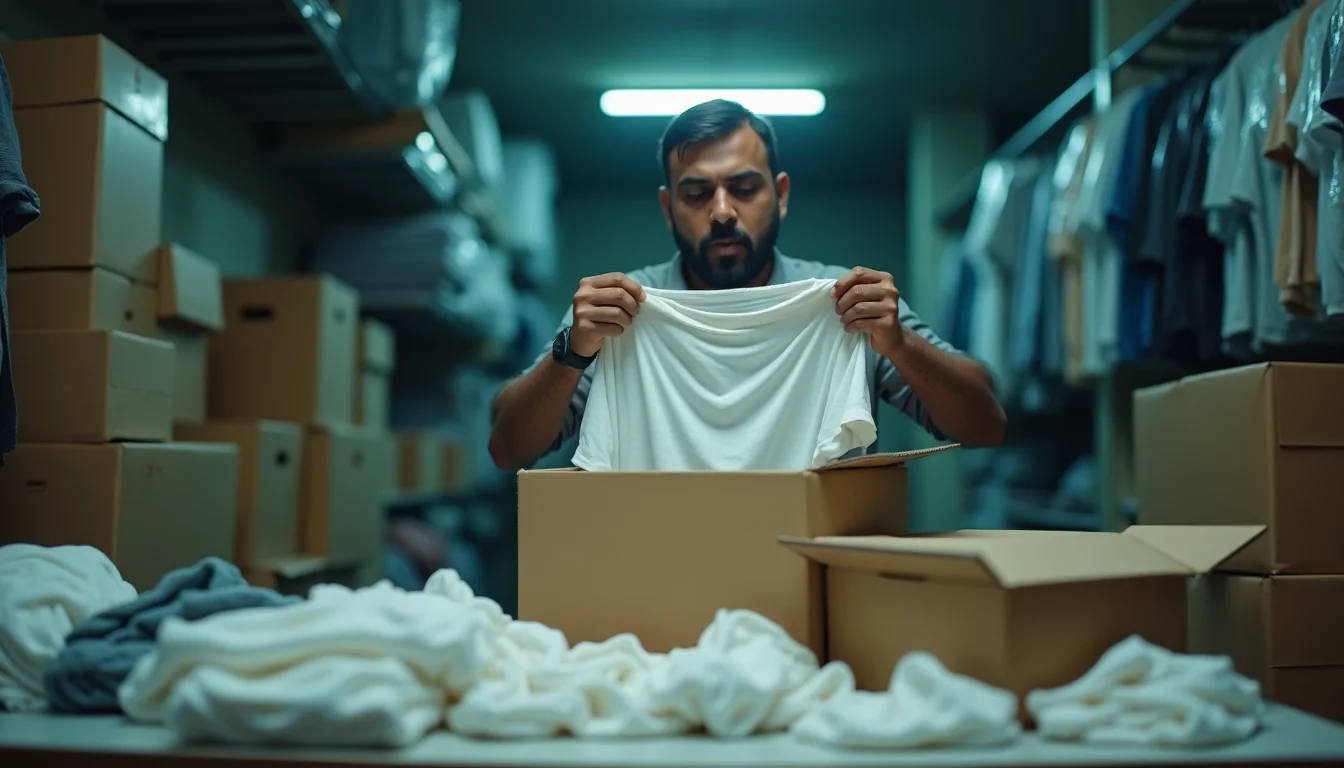
There is a moment every bulk buyer remembers — the first time a large order goes badly wrong. In 2017, a ₹2 lakh order for 1,500 white plain t-shirts arrived with the wrong fabric weight, sizes that were off by nearly an inch, and over 200 pieces so heavily creased they were unsaleable. The money was spent. The client was waiting. And there was no easy way out.
This article breaks down exactly what went wrong in that order, why it happened, and — most importantly — what the specific pre-order checks are that every new bulk buyer in India must do before committing to a large quantity. Whether you run a DTG printing studio, a screen printing unit, a heat transfer business, or you are sourcing blank tees for a custom apparel brand, these lessons apply directly to you.
₹2 LAKH ORDER BARBAAD. Not because of a dishonest supplier. Not because of bad luck. Because the buyer — like most first-timers — skipped the basics.
The 2017 Order: What Was Ordered and What Arrived
The order seemed straightforward: 1,500 pieces of white plain round neck t-shirts for a bulk printing job. The supplier quoted a good rate, the timeline looked fine, and the order was placed based on a catalogue photo and a verbal assurance about quality. No physical sample was requested. No size chart was cross-checked. No fabric weight was verified before payment.
When the shipment arrived, three problems surfaced immediately:
- Wrong GSM: The fabric was 170 GSM instead of the 200 GSM that had been discussed. At 170 GSM, a white t-shirt is visibly thinner — you can see the outline of a hand through the fabric. For printing businesses, this matters doubly because a thin base fabric can cause ink bleed-through on DTG and screen print jobs, and the final product looks cheap to the end customer.
- Sizes off by approximately 1 inch: The chest measurement across multiple sizes was consistently about an inch narrower than the standard chart. For 1,500 pieces across multiple sizes, this kind of deviation means the entire batch does not match the size chart you promised your customer.
- Over 200 pieces heavily creased and unusable: These arrived packed so tightly and with no proper poly-bagging per piece that the creasing had set into the fabric. These pieces could not be printed on cleanly — heat press and screen printing both require a flat, even surface.
Why GSM Is the Most Commonly Misunderstood Spec in Bulk T-Shirt Orders
GSM stands for grams per square metre — it is the single most important number that determines the weight, feel, opacity, and print-friendliness of a plain t-shirt. (For a detailed breakdown of GSM ranges and what they mean for printing, see the BulkPlainTshirt.com FAQ guide.)
Here is the practical reality: a difference of just 30 GSM between 170 and 200 feels dramatic when you hold the two garments side by side. For printing businesses, the GSM directly affects:
- Ink consumption on DTG — thinner fabric absorbs pre-treatment unevenly
- Heat press results — lighter fabric warps more under repeated pressing
- Customer perception — a 170 GSM white tee feels like an event freebie; a 200 GSM tee feels like a product worth paying for
- Post-wash appearance — lower GSM fabric loses shape faster, directly hurting your brand reputation
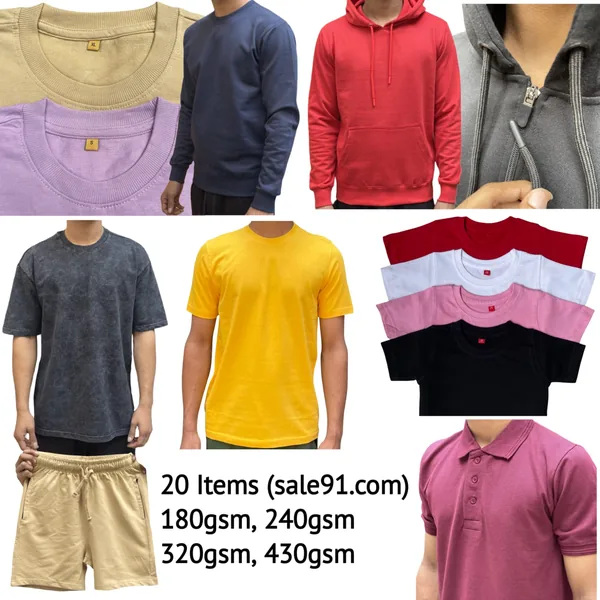
At Sale91.com (BulkPlainTshirt.com), the plain round neck t-shirts are manufactured in-house in Tiruppur in 180, 200, 210, and 220 GSM variants — all from ring-spun combed cotton. The 180 GSM is positioned for everyday casual wear, 200 GSM is the most popular choice for premium printing work, and 220 GSM is chosen for heavy-duty or oversized applications. Every GSM is knitted in-house on our own machines — we are not a trader buying from a third party and relabelling.
| GSM | Best Use Case | Print Compatibility | Opacity (White) |
|---|---|---|---|
| 180 GSM | Everyday casual, summer wear | Screen print, Heat Transfer | Semi-opaque |
| 200 GSM | Premium retail, DTG, DTF | Excellent — all print types | Good opacity |
| 210 GSM | Mid-premium, structured brands | Excellent — all print types | High opacity |
| 220 GSM | Heavy premium, oversized styles | Best for bold screen prints | Highest opacity |
The table above makes it visually obvious why ordering "200 GSM" verbally and receiving 170 GSM is not a minor variation — it is a different product category entirely. Always specify GSM in writing in your purchase order, and always request a physical sample to weigh on a kitchen scale before releasing bulk payment.
How to Actually Verify GSM Before Your Order Ships
You do not need a laboratory. Here is a straightforward field method that anyone can do before accepting a bulk consignment:
- Request a sample piece — a single full-size t-shirt from the actual batch fabric, not a swatch.
- Cut a 10cm × 10cm square from the body of the shirt (avoiding seams). This gives you 0.01 square metre of fabric.
- Weigh it on a kitchen scale (0.1g precision). Multiply the weight in grams by 100. That is your GSM.
- Compare against the spec you ordered. Acceptable tolerance in industry is ±5 GSM. Anything beyond that should be raised before the batch ships.
This takes five minutes. It is the single step that would have prevented the 2017 order disaster described in this article.
Size Deviations: Why 1 Inch Matters More Than You Think
A one-inch deviation in chest width sounds like a rounding error. It is not. In a typical size run for a custom printing order, your end customer has ordered specific sizes based on a size chart you shared. When the actual garment is an inch narrower across the chest than what the size chart says, you have a problem that cannot be fixed after printing.
Consider a hypothetical: suppose you order 500 pieces with a size breakdown of S/M/L/XL/XXL. If every piece across every size is 1 inch narrower than spec, the customer wearing "L" gets something that fits like an "M." Returns follow. Refund requests follow. Your printing business takes the reputation hit even though the blank tee was the issue.
Before placing any bulk order, do the following:
- Get the supplier's official size chart in centimetres (not just inches)
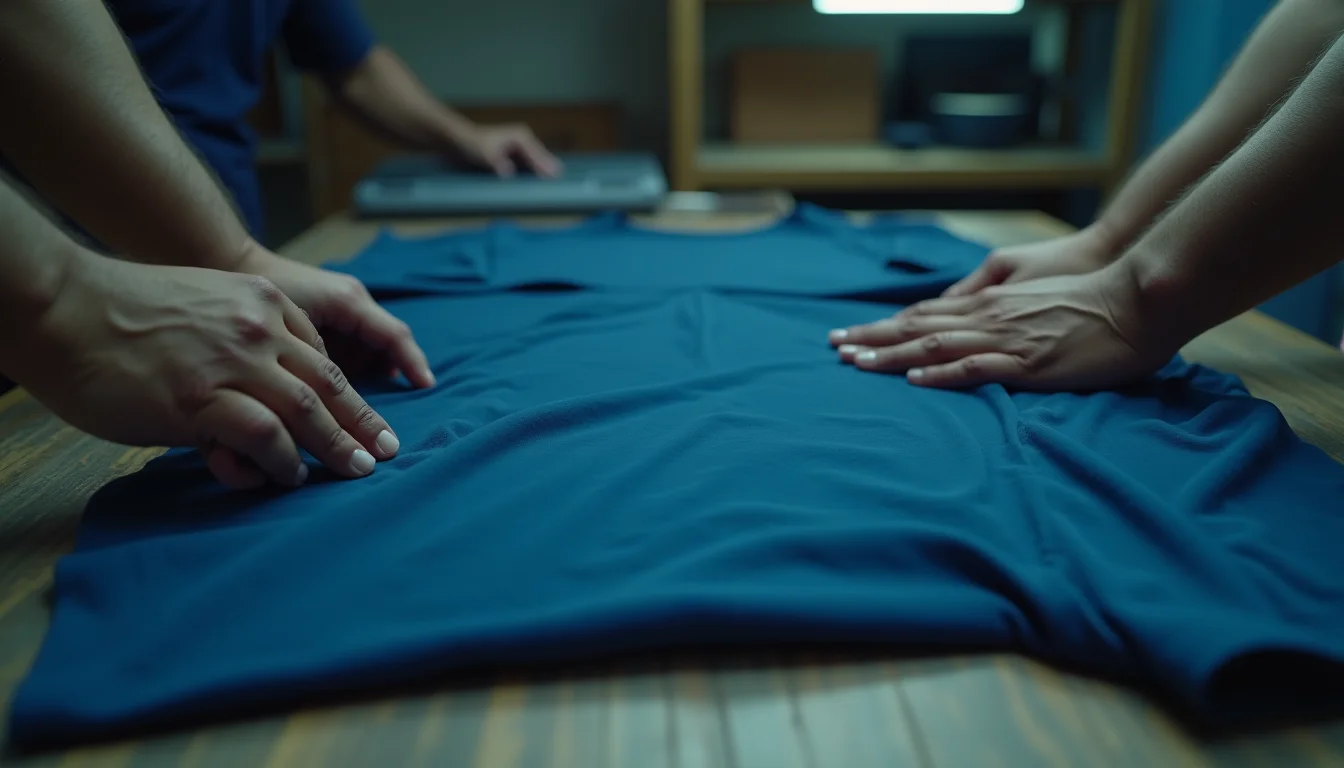
- Measure the sample piece yourself with a flat measuring tape — chest width, body length, sleeve length, and shoulder width
- Compare against your own standard (or your client's requirement)
- Document the measurements and include them in your purchase order
This is especially critical when sourcing from a new supplier for the first time. Even suppliers with good reputations can have batch-to-batch variation if they are working across multiple knitting units. At Sale91.com, because knitting is done in-house in our own Tiruppur manufacturing facility, size consistency is controlled at the production stage — not patched together from multiple external vendors. You can browse our full product range and size charts at the product catalog.
Packing: The Silent Destroyer of Bulk Orders
Over 200 pieces in the 2017 order arrived with creasing so deep that the fabric had set permanently in folds. This happens when pieces are packed into bulk polybags without individual poly-bagging per piece, stacked under pressure during transit, and remain compressed for several days in a hot logistics chain.
For printing businesses, deep-set creasing is a real operational problem. Screen printing, DTG, and especially heat transfer all require a perfectly flat substrate. A creased area under a heat press creates uneven pressure, which leads to patchy print adhesion. Steam ironing helps, but adds time and labour cost — and some heavy creases in bio-washed cotton do not come out completely with ironing alone.
What to specify in your purchase order regarding packing:
- Individual poly-bag per piece (ask explicitly)
- Size label on each poly-bag
- Maximum pieces per master carton (overpacking creates pressure creases)
- Carton sealing method (tape vs strap)
This might feel like micromanagement for your first order. It is not — it is the minimum standard for a professional bulk textile transaction. Once you have established a relationship with a supplier and verified packing quality across one or two orders, you can relax these requirements. Never on the first order.
It is also worth noting that colour consistency is a related packing and production risk. Different dye batches — even for the same colour name — can look visually different side by side. This is one of the more invisible first-order traps, and a topic covered in detail in this article on colour consistency between vendors.
The Pre-Order Verification Checklist for New Bulk Buyers
This checklist is built from the real specifications used internally at BulkPlainTshirt.com when onboarding new fabric suppliers. It is not a generic list — every item maps to a documented failure mode in bulk t-shirt orders.
- Request a physical sample before releasing any payment — minimum 1 piece per colour per GSM
- Weigh a 10×10cm cut from the sample to verify GSM (acceptable variance: ±5 GSM)
- Measure chest width, body length, shoulder width, and sleeve length against your size chart
- Confirm fabric composition in writing: 100% cotton, ring-spun combed, bio-washed, pre-shrunk
- Specify GSM in writing in the purchase order — not verbally
- Confirm colour against a physical swatch, not a digital photo (screens show colour differently)
- Specify individual poly-bagging per piece and maximum pieces per carton
- Confirm size labelling on individual bags
- Ask about the supplier's return/replacement policy for quality deviations
- For first orders with a new supplier: consider placing a smaller verification order (even 50–100 pieces) before committing to full volume
First-Order Payment Terms: How to Protect Your Cash Flow
One reason the 2017 order was so painful was full prepayment — the entire amount was sent before any goods were inspected. For new buyers working with a new supplier, this is a significant financial risk. If goods arrive substandard, the path to recovery is long and uncertain.
Sale91.com offers 50% COD (Cash on Delivery) on first orders for new buyers. This means you pay 50% upfront and 50% when the goods arrive — plus a 3% COD processing charge. From the second order onwards, the default moves to prepaid. This structure is not a marketing offer — it exists specifically because we understand that new buyers need to verify quality before committing full payment. You can read the full breakdown of COD terms in this detailed guide on bulk t-shirt COD in India.
When evaluating any supplier, ask these payment-related questions upfront:
- Do you offer COD or partial payment on first orders?
- What is your replacement policy if GSM or size deviates from the spec on the purchase order?
- Do you provide a quality test report or batch certificate?
- Is GST invoice provided on every shipment?
Why Sampling is Non-Negotiable — Even When the Supplier Seems Trustworthy
The supplier in the 2017 story was not a fraudster. They were a legitimate Tiruppur vendor with years of experience. The problem was information asymmetry — the supplier made assumptions about what the buyer needed, and the buyer assumed the supplier understood. Neither party was dishonest. Both parties were sloppy.
Sampling breaks this asymmetry. When you hold a physical sample, measure it, weigh it, and wash it once to check for shrinkage, you have ground truth. You are no longer working from assumptions on either side. The purchase order that follows becomes a precise legal document, not a casual verbal agreement.
Post-wash shrinkage is a particularly sneaky variable in this context. A fabric that measures correctly before washing may shrink 4–6% after the first wash cycle. For a printing business, this matters because your customer will wash the garment before wearing it, and if the tee has shrunk significantly, it reflects on the print business — not the blank tee supplier. This is why bio-washing and pre-shrinking during manufacturing (as done at BulkPlainTshirt.com) are so important, and why shrinkage testing before bulk acceptance should always be part of your QC process.
What Sale91.com Does Differently for Bulk Buyers
The lessons from 2017 are baked into how Sale91.com operates today. Here is what is standardised across every order:
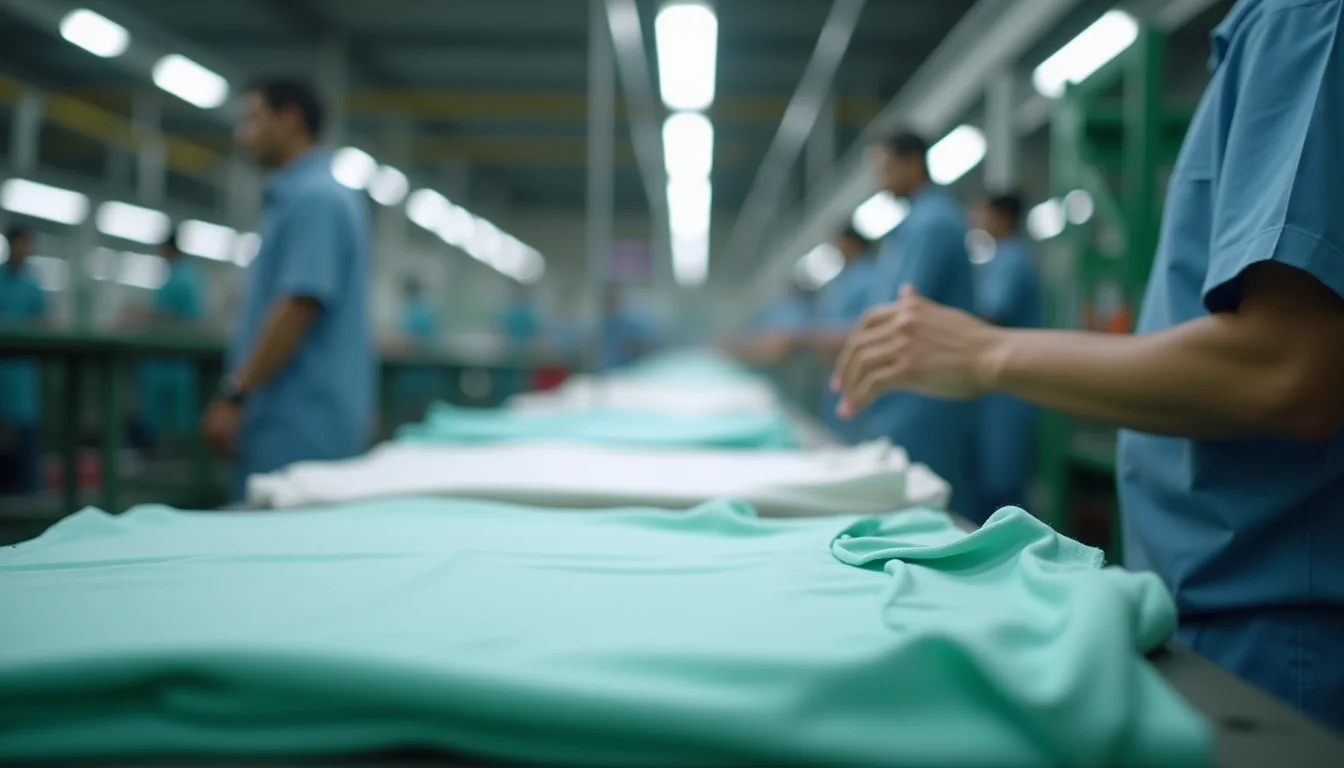
- In-house knitting in Tiruppur — fabric is not purchased from outside mills. We knit our own fabric, which means GSM consistency is controlled at our own production level, not dependent on an external supplier's batch quality.
- 1 lakh+ pieces in ready stock at all times — with over 1,25,232 pieces dispatched in the last 30 days alone, stock is live and real. No waiting for production on standard ready-stock items.
- MOQ as low as 10 pieces — new buyers can order a small verification batch before committing to larger volumes. This is the sampling model built into the ordering system.
- Delhi warehouse (Khanpur, South Delhi) — for buyers in North India, goods dispatched from our Delhi warehouse arrive significantly faster, reducing transit-related packing damage risk.
- ₹3/piece discount for online orders on any quantity via Sale91.com, plus an additional ₹2/piece discount for orders of 500 pieces or more.
The combination of in-house manufacturing, live stock, low MOQ, and transparent pricing is specifically designed so that first-time bulk buyers do not have to take the same risk that cost so much in 2017.
A Decision Framework: Before You Place Your First Big Order
| Decision Point | What to Do | Why It Matters |
|---|---|---|
| GSM specification | State in writing; verify with physical sample cut | 170 vs 200 GSM = completely different product |
| Size chart | Measure sample against your spec; document deviations | 1-inch deviation = wrong size for every customer |
| Colour | Match against physical swatch in natural light | Screen colour ≠ fabric colour; dye batches vary |
| Shrinkage | Wash sample once; re-measure | Uncontrolled shrinkage ruins print dimensions |
| Packing | Specify individual poly-bag + max carton count | Compression creases damage print surface |
| Payment | Use COD on first order; pay balance on delivery | Protects cash flow if quality deviates |
| Quantity | Start with a smaller verification batch | Limits exposure before supplier trust is established |
This framework does not require sophisticated tools or industry expertise. It requires discipline — the same discipline that the 2017 order lacked. Every item in this table can be completed in under 48 hours with a sample in hand before you commit to full volume.
Watch the Video
This short video tells the story directly — what went wrong in the 2017 ₹2 lakh order and the three lessons every new bulk buyer should take from it:
Frequently Asked Questions
More Articles


Ready to Order Right — The First Time?
Browse ready-stock plain t-shirts from 180 to 220 GSM in 15+ colours. MOQ as low as 10 pieces. 50% COD on first orders. In-house knitted fabric from Tiruppur — no middleman, no quality surprises.
Order on Sale91.com →