Zero Investment T-Shirt Brand From College — ₹3,000 to Crores Real Journey 2017-2026

In 2017, the idea of starting a t-shirt brand in college with zero investment sounded like a fantasy. No funding. No mentor. No garment industry background. Just a ₹3,000 budget, a borrowed printer access, and one simple question: can I sell a printed t-shirt for more than it costs me to make it?
The answer was yes — and that first "yes" became a nine-year journey that touches on every mistake, pivot, and hard-earned lesson that any aspiring t-shirt entrepreneur in India will face. This article is not a motivational post. It is a structured breakdown of what actually happened, what the numbers looked like at each stage, and what decisions ultimately separated thin margins from real scale. If you are thinking about starting a t-shirt printing business — whether you are a college student, a DTF printer, or a bulk reseller — this story has something concrete for you.
"Start small, learn margins, make your own fabric. That's the real zero-to-something path."
Stage 1 — The ₹3,000 First Order (2017, Delhi University)
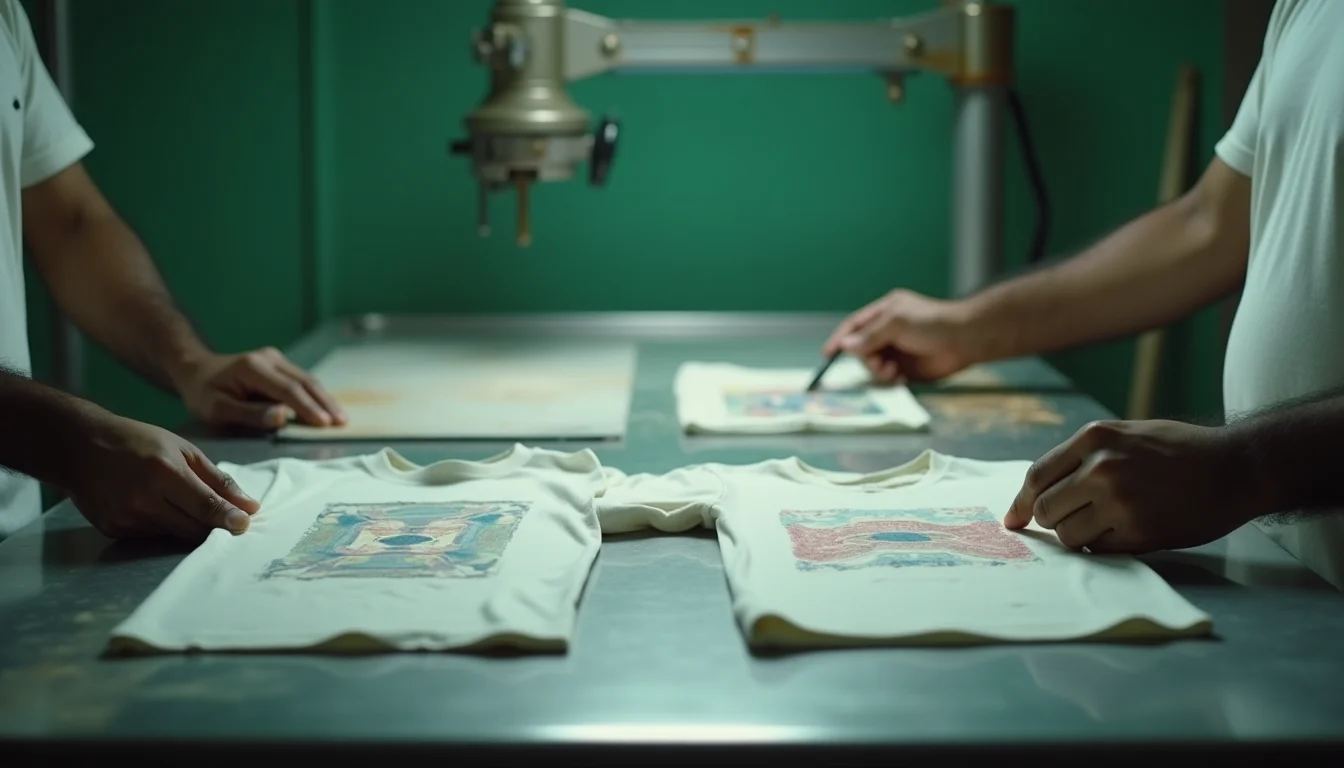
The first batch was 10 t-shirts. Cost of blanks plus printing came to approximately ₹140 per piece. Selling price was ₹280. That is a 100% markup — and on day one, the profit was ₹1,400. Not life-changing money, but the margin math was clear: this business model works.
The early operation was hyper-local. T-shirts were sold to college friends, hostel mates, and anyone attending campus events who wanted something printed — a batch name, a band logo, a political slogan for a student election. The customer acquisition cost was essentially zero because the market was right outside the door. But this phase also revealed the first hard lesson: the blank t-shirt you start with determines everything downstream.
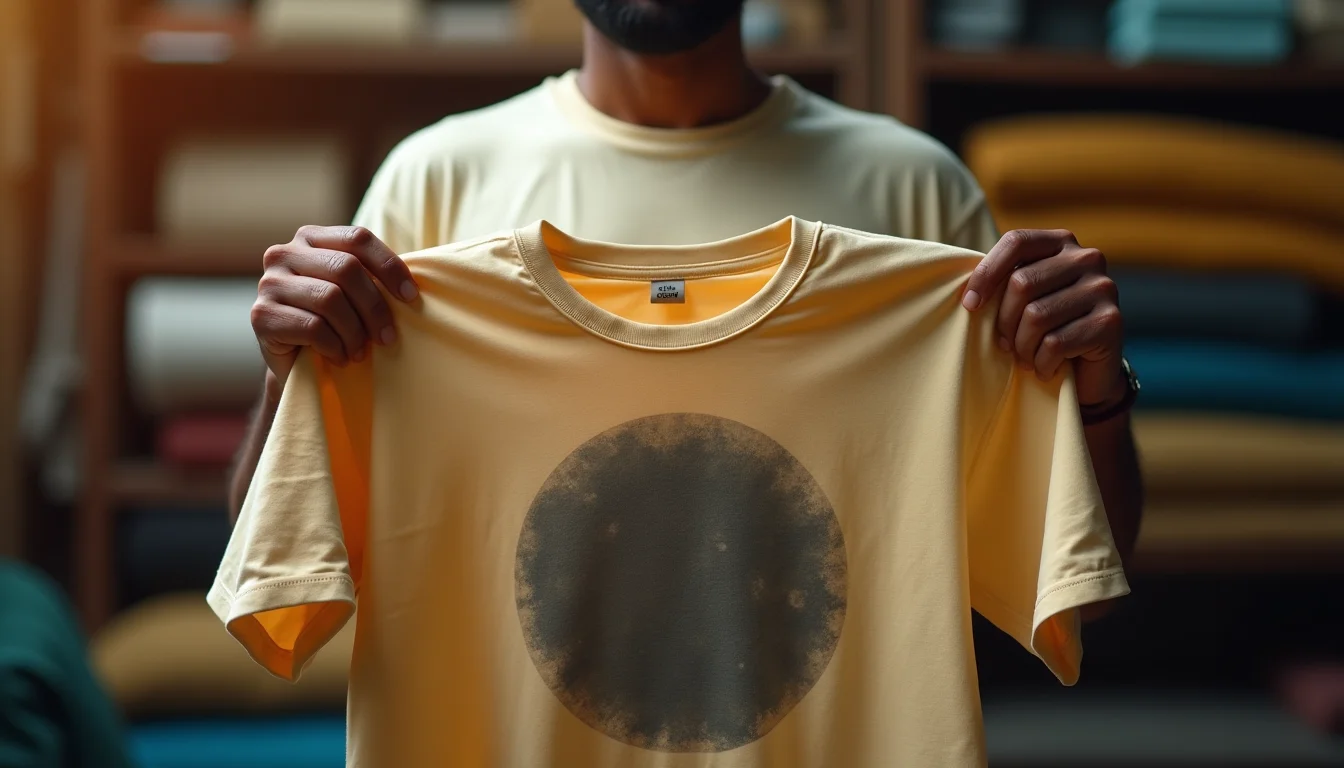
In those early days, blanks were sourced from whatever was available at the cheapest price — often 180 GSM carded cotton from local market traders. They were inexpensive, but the printing results were inconsistent. Fabric with poor cotton quality absorbs ink differently, and what looks vivid on the screen looks faded after two washes. If you are new to GSM and fabric quality basics, the FAQ page at BulkPlainTshirt.com covers the fundamentals — but the key point here is that cheap blanks cost more in the long run than they save upfront.
This is also why, if you are starting a printing business today, the case against 180 GSM for serious print work is worth reading before you place your first bulk blank order.
What Made the First Stage Work
- Zero advertising spend — community-based selling only
- Reinvesting all ₹1,400 profit into the next batch immediately
- Keeping SKUs minimal — one style, 3-4 colours, no size confusion
- Tracking cost-per-piece obsessively from batch one
Stage 2 — The Reseller Years: ₹50,000/Month But Thin Margins (2018–2020)
After college ended, the business went full-time. Volume grew. Monthly revenue reached approximately ₹50,000. On paper, that sounds solid for a first-generation entrepreneur with no funding. In practice, the margins were uncomfortably thin — because every blank t-shirt was still being sourced from third-party traders and resellers, not directly from a manufacturer.
This is the stage most small t-shirt printing businesses get stuck in. You are not a trader, but you are not yet a manufacturer either. You are somewhere in the middle — buying from someone who bought from someone who bought from Tiruppur. Every middleman adds 8–15% to your cost. Multiply that across thousands of pieces a month and the margin erosion is significant.
The reseller phase also introduced quality inconsistency as a real business problem. A batch of 200 pieces ordered in January might arrive in a different shade of white than the 200 ordered in March — because the supplier changed their yarn lot without notice. For a customer running a DTF printing operation, inconsistent fabric base means inconsistent print output — and that erodes client trust faster than any pricing mistake.
The Hidden Costs of the Reseller Model
| Cost Element | Buying from Reseller | Buying Direct from Manufacturer |
|---|---|---|
| Per-piece fabric cost | Higher (2–3 middlemen) | Lower (mill-direct pricing) |
| Quality consistency | Variable (yarn lot changes) | Controlled (own knitting) |
| MOQ flexibility | Often rigid (100+ per colour) | As low as 10 pieces (ready stock) |
| Lead time predictability | Low (depends on supplier's stock) | High (1 lakh+ pieces ready) |
| GSM accuracy | Often mislabelled | Verified in-house |
Stage 3 — The Turning Point: Knitting Our Own Fabric (2020–2022)
The decision to move into in-house fabric knitting was the single most consequential business decision of the entire journey. It did not happen overnight — it required studying the Tiruppur manufacturing ecosystem, understanding circular knitting machines, and building relationships with yarn suppliers who deal in Ring-spun Combed Cotton at volume.
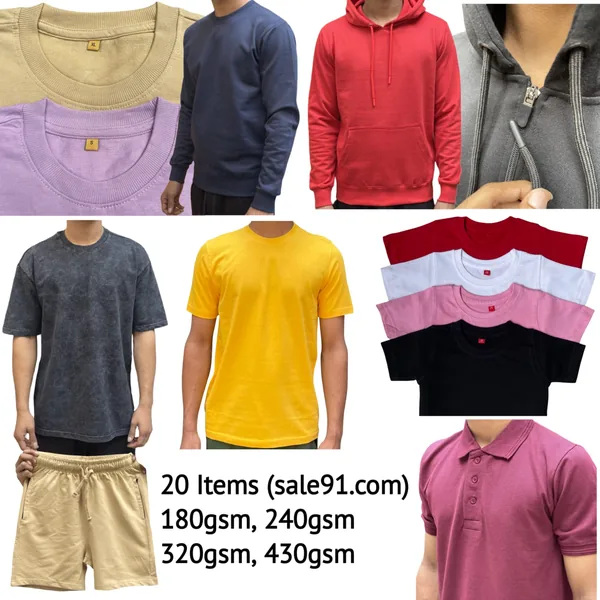
The result was immediate and measurable: per-piece cost dropped by approximately 20%, and more importantly, quality control became internal rather than dependent on a supplier's promises. When you knit your own fabric, you control the GSM precisely — 180, 200, 210, 220 for regular t-shirts; 240, 320, 430 for hoodies and sweatshirts. You control the bio-washing process (enzyme treatment that gives the fabric its smooth, anti-shrink finish). You control the pre-shrinking step. Nothing is outsourced to a vendor who may or may not cut corners on a busy week.
This vertical integration is exactly what makes Sale91.com different from a typical plain t-shirt reseller — and it is the model that any serious t-shirt entrepreneur should aspire toward if they want to eventually compete on something other than price.
Why In-House Knitting Changes Everything
- GSM consistency: Every batch is knitted to specification, not sourced from whatever yardage a trader happens to have in stock
- Yarn quality: Ring-spun Combed Cotton produces a tighter, softer, more uniform fabric — critical for high-resolution DTG and DTF printing
- Bio-wash control: Enzyme treatment duration and temperature directly affect hand-feel and shrinkage — in-house means this is never skipped
- Pre-shrink guarantee: When you control the finishing process, pre-shrinkage is documented, not just claimed
- Color accuracy: Dyeing is done on known fabric weight — colour reproducibility across batches improves dramatically
Stage 4 — Building a Real Product Line With Real Specs (2022–2024)
Once fabric quality was under control, the next challenge was building a product range that served different customer segments without creating inventory chaos. The t-shirt printing industry in India is not monolithic — a college fest organiser wants something different from a premium streetwear brand, and both want something different from a corporate bulk buyer.
The solution was to structure the product line by GSM and style, not by end-use. This gave customers a clear, rational way to choose:
| Product | GSM | Best For | Print Methods |
|---|---|---|---|
| Plain Round Neck T-shirt | 180 | Everyday summer wear, large event batches | Screen print, Heat Transfer |
| Plain Round Neck T-shirt | 200 | Premium retail, DTF printing | DTF, DTG, Screen print |
| Plain Round Neck T-shirt | 210 / 220 | Heavy premium, streetwear brands | DTG, DTF, Embroidery |
| Oversized T-shirt | 200–220 | Streetwear, youth brands | DTF, Screen print |
| Plain Polo T-shirt | 200–220 | Corporate gifting, uniforms | Embroidery, Heat Transfer |
| Hoodie / Sweatshirt | 240 / 320 / 430 | Winter collections, premium drops | DTF, Embroidery, Screen print |
| Acid Wash T-shirt | 200–220 | Vintage / distressed aesthetics | DTF, Screen print |
Having this decision table internally — and being able to communicate it clearly to buyers — reduced order errors significantly. When a printer knows that 200 GSM ring-spun combed cotton is the right base for DTF printing (because the tighter weave holds ink film better), they stop ordering the cheapest possible blank and start ordering the right one. The full current catalog is available at BulkPlainTshirt.com/catalog.
It is worth noting here that GSM alone does not determine quality — yarn type matters just as much. The difference between 240 GSM carded cotton and 200 GSM ring-spun combed cotton is not just a number; the combed yarn produces a measurably softer hand-feel and better print surface. If you have wondered why heavier GSM sometimes feels cheaper, that article explains the yarn science behind it.
Stage 5 — What "Scale" Actually Looks Like in the Blank T-Shirt Business (2024–2026)
Scale in this business is not measured by revenue alone. It is measured by your ability to deliver consistently, quickly, and without surprises. Maintaining 1 lakh+ pieces in ready stock at all times is not a marketing claim — it is a logistical commitment that requires precise inventory forecasting, warehouse management, and manufacturing scheduling.
The Delhi warehouse in Khanpur, South Delhi, serves as the fulfilment hub for North India orders and same-day dispatch for urgent bulk requirements. The Tiruppur manufacturing facility handles production, quality control, bio-washing, and pre-shrinking before pieces reach the warehouse. This two-node model — manufacturing in Tiruppur, warehousing in Delhi — is what allows PAN India delivery at speed.
The Operational Reality of Ready Stock at Scale
- 1,25,232+ pieces dispatched in the last 30 days — across DTF printers, screen printers, resellers, and corporate buyers
- 15+ colours maintained in ready stock at all times
- MOQ as low as 10 pieces for ready stock items — so a new buyer can test quality before committing to large volumes
- Export dispatches via courier and sea freight to international buyers
- 50% COD available on first orders for new buyers (with a 3% COD charge) — reducing the trust barrier for first-time purchasers
The Zero-to-Scale Checklist — A Stage-by-Stage Framework for T-Shirt Entrepreneurs
This is the original framework distilled from the 2017–2026 journey. It is not theoretical — every item on this list represents a real decision point that either moved the business forward or stalled it.
Phase 1: Test the Market (0–3 months)
- Start with 10–50 pieces from a reliable manufacturer with low MOQ
- Choose 200 GSM ring-spun combed cotton — not the cheapest 180 GSM carded
- Pick 2–3 colours only — white, black, and one mid-tone
- Sell to a known community first (college, office, local market)
- Track cost-per-piece, selling price, and margin on every single batch
- Do not invest in printing equipment until volume justifies it
Phase 2: Build the Supply Chain (3–12 months)
- Identify a manufacturer who knits their own fabric (not a trader)
- Verify GSM and fabric specs with a physical sample before committing to bulk
- Negotiate MOQ flexibility — a real manufacturer can supply 10 pieces for testing
- Understand bio-wash and pre-shrink — ask for process documentation, not just claims
- Map your print method to the right GSM (DTF works best on 200+ GSM ring-spun)
- Set up a basic QC checklist for every incoming blank batch
Phase 3: Grow Systematically (12–36 months)
- Expand SKUs only after existing ones are consistently profitable
- Use volume discounts (500+ pieces = ₹2/pc saving) to reinvest in marketing or equipment
- Build repeat buyer relationships — move from COD to prepaid as trust is established
- Explore export markets via courier for smaller consignments, sea freight for containers
- Document everything: GSM used, colour codes, supplier batch numbers, wash test results
Phase 4: Consider Vertical Integration (36+ months)
- Study the knitting process — circular knitting machines and yarn sourcing in Tiruppur
- Calculate break-even volume for in-house production vs. buying from a manufacturer
- Alternatively, partner with a manufacturer who treats you as a long-term B2B buyer (not a one-time order)
- Invest in warehouse space or use a 3PL service to reduce fulfilment bottlenecks
- Build a product line structured by GSM and use case — not just by colour or size
Three Mistakes That Slow Down Most T-Shirt Startups in India
Mistake 1: Optimising for Price Before Quality
The temptation to buy the cheapest blank t-shirt is strong when margins are thin. But a lower per-piece cost on a 180 GSM carded cotton shirt can result in print rejection, fabric shrinkage after the first wash, or colour inconsistency that damages your reputation with end customers. Suppose you order 500 pieces of 180 GSM carded cotton at ₹20 cheaper per piece than a 200 GSM ring-spun alternative — the ₹10,000 apparent saving can be wiped out by a single batch of printing defects or customer returns.
Mistake 2: Ignoring the Blank-to-Print Compatibility Matrix
Not every blank t-shirt is suitable for every printing method. DTG printing, for example, requires a fabric with consistent cotton fibre distribution and a smooth surface — which is why ring-spun combed cotton at 200+ GSM is the standard recommendation. Polyester blends or carded cotton with loose weave will produce faded, patchy prints. This is not a vendor's excuse — it is fabric science.
Mistake 3: Scaling Too Fast Before the Supply Chain Is Stable
Taking on a 5,000-piece order before you have confirmed that your supplier can deliver consistent quality at that volume is one of the most common — and most damaging — mistakes in the t-shirt business. Stable supply chain first, growth second. This is why testing with 10–50 pieces from a manufacturer's ready stock before committing to large production runs is not just smart — it is essential.
Watch the Video
The full story — condensed into a short, direct format. Watch the real journey from ₹3,000 to scale:
Frequently Asked Questions
Ready to Order Plain T-Shirts in Bulk?
1 lakh+ pieces in ready stock. MOQ as low as 10 pieces. 15+ colours. 180–430 GSM range. Bio-washed, pre-shrunk, ring-spun combed cotton. PAN India delivery and export available. First order: 50% COD option.
Order on Sale91.com →