100% Cotton T-Shirt Burn Test — ₹500 Polyester Fraud Exposed for Bulk Buyers in India
Picture this: you're sourcing blank t-shirts for your custom printing business. The supplier's invoice says "100% Cotton" and the price tag reads ₹500 per piece. You approve the bulk order. The shirts arrive — but something feels off. They feel slippery. The DTG ink doesn't absorb the way it should. Your clients complain the prints crack after two washes.
What went wrong? You may have received polyester fabric dressed up as cotton — a problem that is far more common in India's wholesale t-shirt supply chain than most buyers realise. This article, based on Factory Sach #3 by Ketu from BulkPlainTshirt.com's Delhi operations, will show you exactly how to catch this fraud using a 10-second, zero-cost burn test — before you commit to a single bulk piece.
"Polyester fabric, cotton ke comparison mein bada sasta milta hai — kabhi kabhi cotton ke per kilo rate ke aadhe se bhi kam. Uspe ₹2–₹10 ki apni branding laga ke log achhe margin mein bech dete hain."
— Ketu, BulkPlainTshirt.com Delhi Warehouse
Why Fabric Fraud Hits Bulk T-Shirt Buyers the Hardest
For an individual retail buyer, buying a fake-cotton shirt is an annoyance. For a bulk buyer running a custom t-shirt printing business, it is a potentially business-ending mistake. Here is why:
- DTG (Direct-to-Garment) printing relies on cotton fibre's ability to absorb water-based ink. Polyester repels it. Prints on polyester-disguised shirts look faded and wash out within weeks.
- DTF (Direct-to-Film) and Screen Printing are more forgiving, but a high-polyester blend still affects adhesion, stretchability of prints, and final hand-feel.
- Resale reputation. Suppose you order 500 pieces for a corporate or college event — if those shirts pill, shrink unevenly, or feel plasticky, your client blames you, not your supplier.
- The margin math is brutal. Polyester raw fabric can cost significantly less per kilogram compared to combed ring-spun cotton. That difference goes straight into the fraudulent supplier's pocket. You pay cotton prices; you get plastic fabric.
If you're evaluating your first bulk order, this connects directly to the broader economics explained in our breakdown of plain t-shirt factory cost vs MRP — understanding what a shirt actually costs to make is the first defence against being overcharged for inferior fabric.
The ₹10 Branding Trap — How the Math Works Against You
Let's understand the supplier's incentive with a clearly hypothetical illustration. Suppose cotton fabric costs a manufacturer ₹X per kilogram and polyester costs ₹X/2 or less. A standard 200 GSM t-shirt uses roughly 200 grams of fabric per piece. The savings per piece by substituting polyester can easily be ₹20–₹60 or more at scale, depending on current commodity prices.
Now add a label that says "100% Cotton," charge a premium price, and apply ₹2–₹10 worth of their own branding or swing tag. The margin on a fraudulent piece is dramatically higher than the margin an honest manufacturer earns on genuine cotton. This is not a small-time problem — it exists at all price points, even at ₹500 per piece.
The only reliable counter-measure that costs you nothing? The burn test. No lab, no instrument, no expert needed.
The Fabric Burn Test — Complete Step-by-Step Guide
This test works on any fabric you already own, any sample you receive, or any shirt you're about to approve for a bulk run. It takes under 10 seconds and requires only a lighter or matchstick.
🔥 4-Step Burn Test Protocol
- Step 1 — Turn the shirt inside out. Always perform this test from the inside — specifically near the hem or a side seam. This ensures the garment's visible exterior remains undamaged if you decide to return it or use it as a display sample.
- Step 2 — Pull a fabric thread, NOT a sewing thread. This is the most critical step people get wrong. Use a pin or your fingernail to separate and pull a single thread from the fabric weave itself. Do not use the sewing/overlock thread that holds seams together — sewing threads often contain polyester for strength, and burning them will give you a false polyester reading even on a genuine 100% cotton shirt.
- Step 3 — Burn the thread safely. Hold the thread with tweezers or place it on a ceramic plate or over a metal sink. Never hold it in your fingers. Keep children, loose clothing, and flammable materials away. Burn in open air or near an exhaust fan. Touch the flame to the end of the thread.
- Step 4 — Read the result. Observe both the burning behaviour and what remains after the flame goes out. The result tells you everything.
Burn Test Result: Cotton vs Polyester — What You'll See
This is the decision table you'll want to save or bookmark. It covers every observable characteristic during and after the burn:
| Observable Characteristic | 100% Cotton ✅ | Polyester / Poly Blend ❌ |
|---|---|---|
| Behaviour at flame edge | Ignites quickly, burns steadily toward fingers | Shrinks away from flame before igniting |
| Flame colour & character | Yellow-orange, gentle, consistent | Blue-orange, sputtery, may self-extinguish |
| Smell during burn | Smells like burning paper or dry leaves | Smells like burning plastic, chemical, acrid |
| What remains after flame | Soft grey/black ash — crumbles to powder with a touch | Hard, dark bead or blob — like a plastic pellet, does not crumble |
| Residue texture | Ash dissolves completely when rubbed between fingers | Hard rigid bead remains; may still be warm/sticky |
| Dripping / melting | No dripping — burns in place | May drip molten polymer downward while burning |
Blended fabrics (e.g., 60% cotton / 40% polyester) will show mixed signals — partial ash with a small hard bead, or a smell that is somewhere between paper and plastic. Any hard residue at all indicates polyester content. For printing businesses where print quality and wash durability matter, even a 20% polyester blend can cause measurable problems with water-based inks.
When Should You Run the Burn Test?
Before Approving a Bulk Sample
Any supplier who sends you a sample should expect you to test it. Run the burn test on the sample fabric before placing your bulk order. If a supplier refuses to send samples or pressures you to order without testing, treat that as a red flag.
When Buying from a New Supplier for the First Time
This is the highest-risk moment. Until you have established trust through consistent delivery history, every new supplier's first batch deserves a burn test. Even if they have certifications printed on paper, verify the fabric physically.
When the "Feel" Doesn't Match the Label
Experienced buyers develop a touch sense for cotton over time. If a shirt that claims to be 200 GSM 100% cotton feels lighter, slippery, or static-prone compared to what you know cotton should feel like, run the test immediately. Trust your instincts, then verify with fire.
For Shirts You Already Own
This test works on any garment in your current inventory or wardrobe. Pull a fabric thread from an inner hem, burn it, and you'll know for certain what you've been wearing — or selling.
Why Polyester Ruins Your Printing Business Results
DTG Printing on Polyester: Why It Fails
DTG printers use water-based textile inks that bond with natural cotton fibres through a pre-treatment process (PTFE/PTM). On polyester, the pre-treatment does not absorb properly, the ink sits on the surface rather than bonding with the fibre, and the result washes off within a few cycles. If you're running a DTG operation and experiencing poor wash durability, your blank shirt's fabric composition should be the first thing you investigate — not your ink brand or curing settings.
This connects to a broader problem of hidden costs in printing. If you've also experienced issues with transfer media, you'll recognise the same pattern we documented in the DTF film cost trap — cheap inputs at the material level create expensive failures at the output level.
Screen Printing: The Polyester Dye Migration Problem
Screen printers working with plastisol inks on high-polyester fabric face dye migration — where polyester dyes bleed into the print during curing heat, causing colour ghosting or discolouration over time. This is a well-known industry problem. A "100% cotton" shirt that fails the burn test puts your entire print run at risk.
What Genuine 100% Cotton Bulk T-Shirts Actually Look Like — From a Manufacturer's Perspective
At BulkPlainTshirt.com, our t-shirts are manufactured in Tiruppur — India's textile capital — using 100% ring-spun combed cotton yarn. We knit our own fabric in-house, which means we control the fibre from the yarn stage onwards. We are not traders or resellers sourcing from a third party; we are the manufacturer. (For a full technical FAQ on what bio-washing, pre-shrinking, and GSM mean in practical terms, see our product FAQ here.)
Here is what genuine cotton blank t-shirts — the kind we ship from our 1 lakh+ ready-stock inventory — will always show in a burn test:
- The fabric thread burns completely, leaving only grey powder ash
- No hard bead, no plastic smell, no molten dripping
- The smell is distinctly of burning paper or dry grass — natural and organic
- The ash crumbles between your fingers with zero resistance
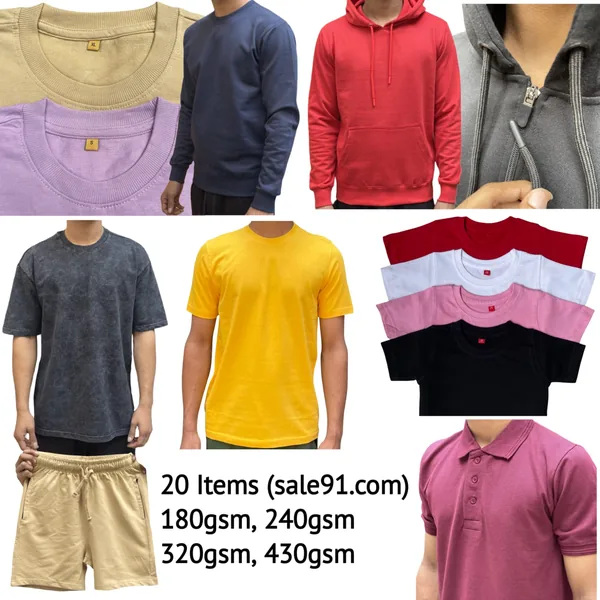
We carry plain round-neck t-shirts in 180, 200, 210, and 220 GSM, oversized t-shirts, polo t-shirts, hoodies and sweatshirts (240 to 430 GSM), and acid wash variants — all in 100% cotton, all bio-washed and pre-shrunk, available in 15+ colours. You can browse our full range at the BulkPlainTshirt.com product catalog.
Choosing the Right GSM — A Decision Table for Bulk Printing Buyers
Once you've confirmed the fabric is genuinely cotton (via burn test), the next decision is GSM. Here's a quick reference built specifically for printing business use cases:
| GSM | Best For | Print Technique Compatibility | Feel Category |
|---|---|---|---|
| 180 GSM | Everyday wear, summer merchandise, high-volume promotional runs | DTF, Screen Print, Heat Transfer | Light, breathable |
| 200 GSM | Premium retail blanks, brand merchandise, college collections | DTG, DTF, Screen Print, Heat Transfer | Medium, structured |
| 210 GSM | Mid-premium retail, influencer drops, gifting | DTG, DTF, Screen Print | Medium-heavy, soft drape |
| 220 GSM | Heavy premium, streetwear, export-quality blanks | Screen Print, DTF, premium DTG | Heavy, luxurious hand-feel |
Pre-Bulk-Order Quality Checklist for Indian Printing Businesses
This checklist is original to our manufacturing experience — use it before approving any new supplier's sample, regardless of price point or claimed certification.
✅ 7-Point Sample Approval Checklist
- Burn test passed: Fabric thread burns to ash only — zero hard residue.
- Sewing thread identified separately: Confirmed you pulled a fabric thread, not overlock thread, for the test.
- GSM verified: Weigh a cut swatch on a digital scale — 200 GSM shirt fabric should weigh approximately 200g per square meter.
- Bio-wash check: Surface feels smooth, no raw or stiff texture. Bio-washed cotton has a noticeably softer hand-feel versus greige (unprocessed) fabric.
- Shrink test: Wash one sample piece at 40°C and measure before/after. Pre-shrunk fabric should not shrink more than 2–3%.
- Colour fastness: Rub a damp white cloth against the coloured fabric for 30 seconds. Minimal colour transfer indicates good dyeing quality.
- Print test on actual blank: Run one test print on the sample before ordering bulk. Evaluate ink absorption, sharpness, and wash durability after one wash cycle.
How to Order Verified 100% Cotton Blanks in Bulk — Without the Fraud Risk
The safest way to eliminate fabric fraud from your supply chain is to buy directly from a manufacturer who knits their own fabric — not a trader who sources from multiple unknown mills and relabels the product.
At Sale91.com, every t-shirt we sell is made from fabric we knit ourselves in Tiruppur. Our Delhi warehouse (Khanpur, South Delhi) holds over 1 lakh pieces in ready stock at any given time — which means you can order samples, test them using this burn test protocol, and receive bulk delivery fast without compromise on traceability. We shipped over 1,25,232 pieces in the last 30 days alone.
For new bulk buyers, we offer 50% COD on your first order (with a 3% COD charge) so you can inspect the goods before committing full payment. From the second order onwards, prepaid terms apply. We also offer a ₹3/piece discount for online orders at any quantity, and a ₹2/piece additional discount for orders of 500+ pieces.
If you're just starting a t-shirt printing business and evaluating whether bulk ordering is viable for your model, our detailed look at starting a t-shirt printing business in India covers the real economics from the ground up.
Watch the Video — Factory Sach #3
Watch Ketu pull a fabric thread from a ₹500 "100% cotton" t-shirt and burn it live — the polyester bead result speaks for itself:
Frequently Asked Questions
Order Verified 100% Cotton Blanks — Directly from the Manufacturer
Skip the fraud. Buy directly from BulkPlainTshirt.com — we knit our own fabric in Tiruppur, stock 1 lakh+ pieces in Delhi, and ship PAN India. 50% COD available for first orders. MOQ from just 10 pieces.
Browse & Order at Sale91.com →₹3/pc online discount on all orders · ₹2/pc additional discount on 500+ pieces · 15+ colours available