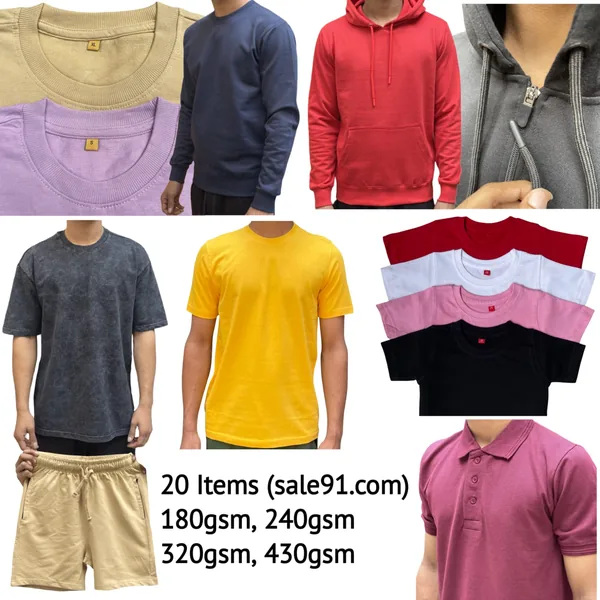
240 GSM Drop-Shoulder T-Shirts — Buy Heavyweight Terry Cotton Oversized Blanks (Black, White, Maroon | S–XXL)
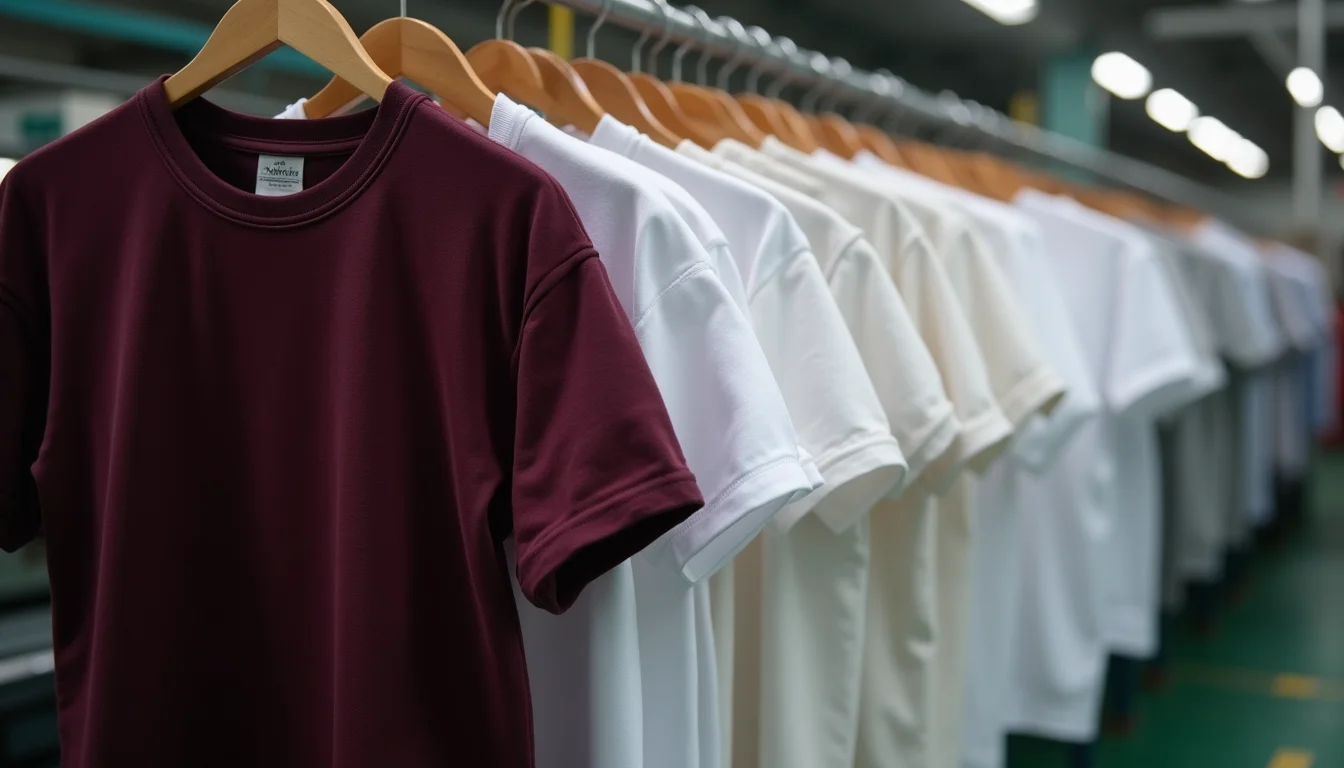
🛒 Buy Now / Order a Sample — Quick Details
Price starts from ₹X/pc — exact bulk pricing by MOQ tier available on the product catalog page. Save ₹3/pc on online orders and ₹2/pc extra on 500+ qty. 50% COD available on first order (+3% COD charge).
📦 Ready stock at our Delhi warehouse (Khanpur, South Delhi) & manufactured in Tiruppur. PAN India delivery | Export available via courier & sea.
If you are in the custom printing business — running a DTF setup, a screen-print shop, or selling branded streetwear — you already know that the blank t-shirt you choose is half the product. A 180 GSM everyday tee is fine for corporate gifts, but the moment a customer asks for a drop-shoulder oversized heavyweight with a thick, premium feel, you need a different fabric entirely. That's exactly where the 240 GSM terry-cotton loop-knit drop-shoulder t-shirt comes in.
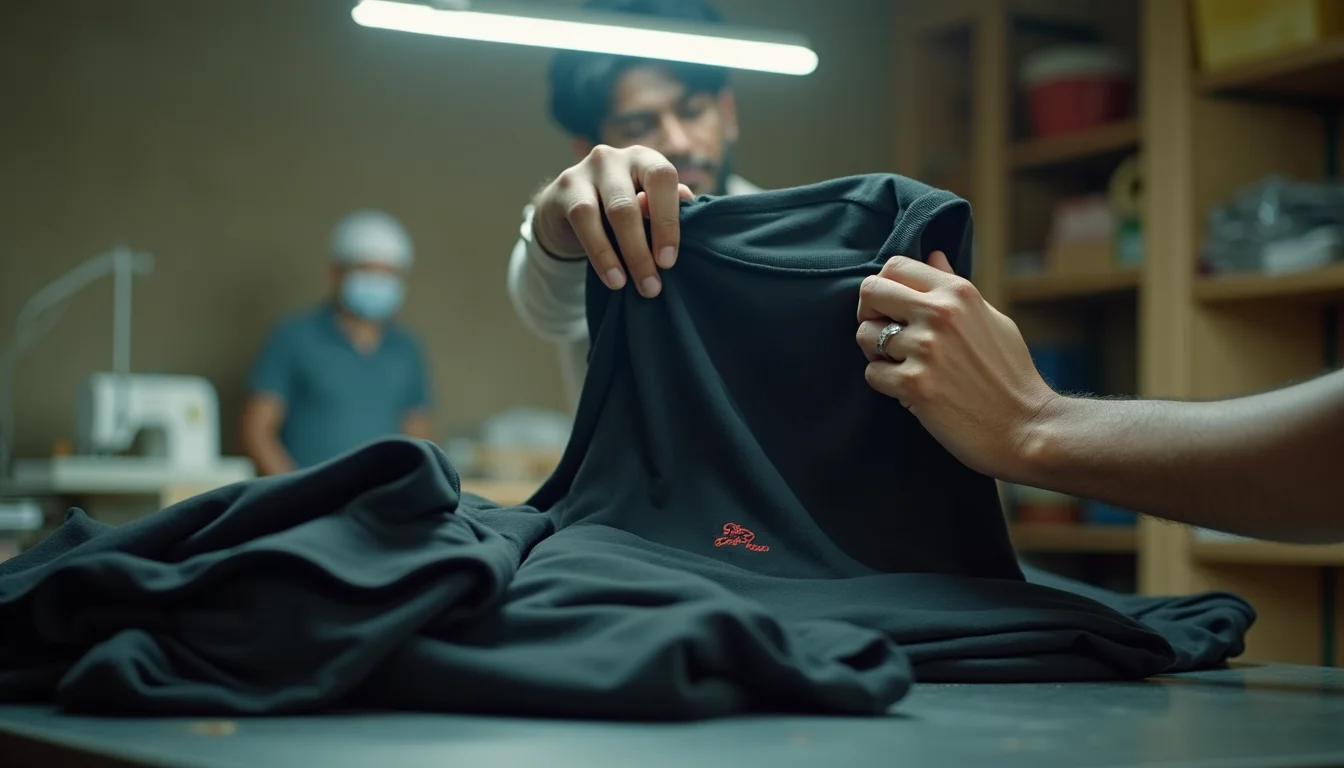
At Sale91.com, we manufacture these in-house at our Tiruppur facility — knitting our own terry-cotton fabric on the loop, bio-washing every batch, and stocking them at our Delhi warehouse for quick dispatch. Below, we walk you through everything a B2B buyer needs to know: what to order right now, what 240 GSM actually means in real-world fabric weight, how terry-cotton loop-knit differs from single jersey, and a full GSM comparison so you can pick the right blank for every print job and resale margin.
What Is a 240 GSM Drop-Shoulder T-Shirt — And Why It's Trending in India
"Drop-shoulder" simply means the shoulder seam is intentionally placed a few centimetres down the arm, creating a wider, boxier silhouette. Combined with a slightly longer body and wider sleeves, this gives you the oversized streetwear look that has dominated fashion retail — from Instagram drops to college fest merchandise — for the past three years. The style is now mainstream enough that both Tier-1 city boutiques and Tier-3 print shops are sourcing it.
But what truly differentiates the premium version of this silhouette from a cheap imitation is the fabric weight and construction. A 180 GSM single-jersey tee styled as oversized will look limp and underwhelming. A 240 GSM terry-cotton loop-knit version has structure, heft, and a tactile softness that customers immediately recognise as premium — which means you can charge more, reduce return rates, and build a stronger brand around it.
Key insight for printers: The heavier the blank, the more ink you can push through it without bleed-through or ghosting. A 240 GSM terry base is especially forgiving for large DTF transfers and heavy screen-print coverage areas.
What Does 240 GSM Actually Mean? A Fabric Weight Explainer for Buyers
GSM stands for Grams per Square Metre — the standard unit for measuring fabric weight in the textile industry. Take a 1 metre × 1 metre swatch of your fabric, weigh it, and that number in grams is its GSM. The higher the number, the heavier and generally thicker the fabric per unit area.
However, GSM alone doesn't tell the whole story. A 240 GSM fabric could be achieved through a dense single-jersey weave or through a loop-knit terry construction. These two fabrics at the same GSM will look and feel completely different — and perform differently under print.
Why GSM Matters for Your Print Business
- Ink absorption: Higher GSM = more fibre density = better ink hold for screen printing and DTF without bleed-through.
- Heat resistance: Thicker fabric tolerates the heat press curing process better, reducing scorching risk.
- Customer perception: Heavier shirts feel expensive. Customers who pay ₹500–₹800 for a printed tee expect weight in their hands.
- Resale margin: A 240 GSM blank commands a higher retail price point than a 180 GSM one, protecting your margin.
- Wash durability: Heavier fabric holds its shape after multiple washes — crucial for streetwear brands that compete on longevity.
Terry-Cotton Loop-Knit vs Single Jersey — What's the Real Difference?
This is the question most buyers don't ask until they've already made a wrong sourcing decision. Let's break it down clearly.
Single Jersey (Standard T-shirt Fabric)
Single jersey is the fabric structure used in your everyday round-neck tees. Yarn is knitted in a single loop layer — one face is smooth and flat (the print-side), and the other is slightly textured. It's breathable, lightweight, and great for 180–220 GSM applications. The print method cost breakdown for single jersey is well-understood across Indian print shops — screens and DTF both work excellently on it.
Terry-Cotton Loop-Knit (What Makes 240 GSM Special)
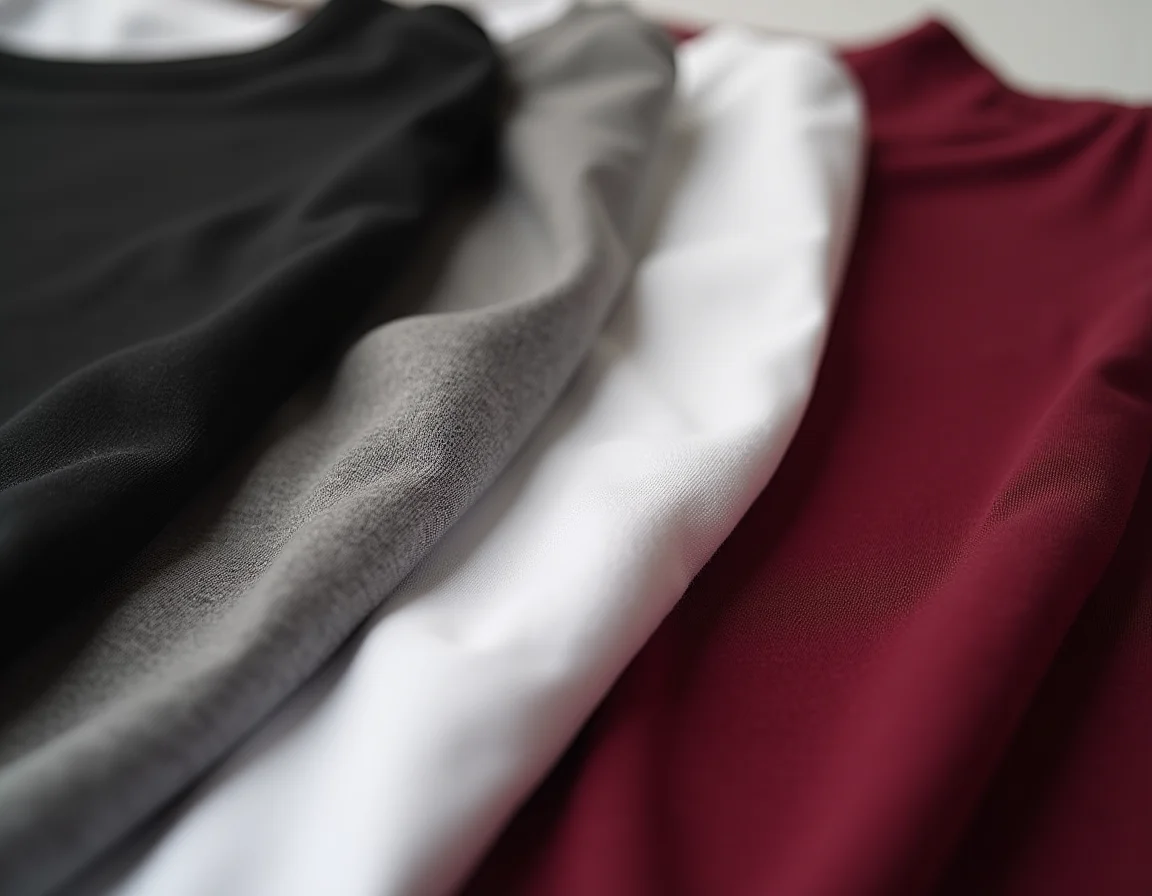
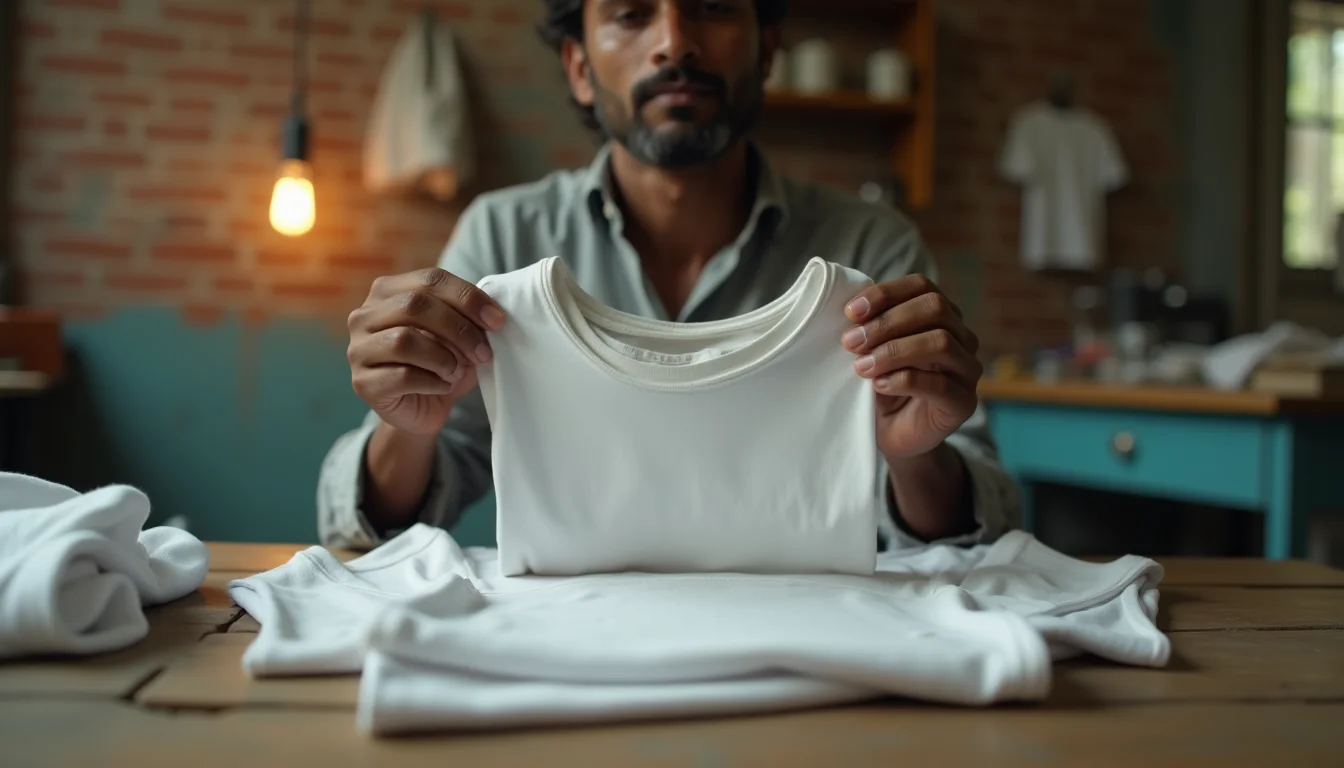
Terry-cotton loop-knit is a double-layer construction. The outer face of the fabric is smooth (like single jersey), but the inner face has soft looped pile fibres — similar to the inside of a French terry hoodie, but lighter than fleece. This construction does three important things:
- Adds substantial weight without making the fabric stiff — you get 240 GSM that still drapes beautifully.
- Creates an insulating air layer between the loops, making it comfortable in light cold weather (ideal for October–February sales in North India).
- Gives a premium hand-feel on both sides — the outer print surface is smooth, the inner worn-against-skin surface is softly looped and gentle.
For printers specifically: Because the outer face of terry-cotton loop-knit is smooth (not brushed like fleece), it accepts DTF transfers, screen printing, and heat transfer vinyl just as cleanly as regular single jersey. You do not need to change your printing workflow for these blanks.
Why Not Just Buy a 240 GSM Single Jersey?
A 240 GSM single jersey is possible but would be quite stiff and boardy — not the soft, drape-friendly weight you want for a drop-shoulder oversized silhouette. Terry-loop construction achieves the same weight target with a much more wearable, premium result. This is why virtually every quality oversized t-shirt above 220 GSM uses terry-cotton loop-knit construction globally. When you see "heavyweight French terry tee" on international streetwear brands, this is the same fabric family.
Complete GSM Comparison: 180 / 200 / 210 / 220 / 240 / 320 — Which Is Right for You?
At Sale91.com, we manufacture across the full GSM range — from 180 GSM everyday blanks to 430 GSM winter hoodies. Here's how each weight compares for different use cases, especially for Indian print businesses and resellers:
| GSM | Fabric Type | Best Use Case | Print Suitability | Retail Price Point |
|---|---|---|---|---|
| 180 GSM | Single Jersey | Corporate gifts, summer events, high-volume promos | Good (DTF, Screen, HTV) | Economy (₹250–₹399 retail) |
| 200 GSM | Single Jersey | Everyday brand merchandise, school/college uniforms | Very Good | Mid (₹350–₹499 retail) |
| 210 GSM | Single Jersey | Premium round-neck, fashion retail basics | Excellent | Mid-Premium (₹399–₹549) |
| 220 GSM | Single Jersey | Heavy-premium everyday, export blanks | Excellent | Premium (₹499–₹649) |
| 240 GSM THIS PAGE | Terry-Cotton Loop-Knit | Drop-shoulder oversized streetwear, seasonal collections | Excellent (smooth outer face) | Super-Premium (₹599–₹899) |
| 320 GSM | Terry / Fleece | Sweatshirts, heavy hoodies, winter merchandise | Good (screen & embroidery preferred) | Sweatshirt tier (₹799–₹1200) |
| 430 GSM | Heavy Fleece | Winter hoodies, premium outerwear | Embroidery & screen (HTV not ideal) | Hoodie tier (₹999–₹1800) |
As you can see, 240 GSM sits in the sweet spot — heavy enough to feel genuinely premium, light enough to remain wearable across September through March in most Indian climates, and with a smooth enough outer surface to take any popular print method without modification.
What Is "True Bio-Wash" and Why It Matters for Printing Businesses
You will see "bio-washed" thrown around loosely in the Indian wholesale market. But there's a meaningful difference between a proper enzyme bio-wash and just calling a tee "bio-washed" to sell it faster.
True bio-wash (also called enzyme wash) is a process where the knitted fabric is treated with cellulose enzymes in a controlled temperature bath. This does three things: removes surface fuzz/pills, softens the yarn at the fibre level (not just surface softening), and stabilises the fabric against further shrinkage. The result is a fabric that's both softer and dimensionally stable.
Why Printers Care About Bio-Wash
- Pre-shrunk means consistent print registration: If your blank shrinks 5% after the first wash, your print design appears distorted. Bio-washed + pre-shrunk blanks hold their dimensions.
- Smoother surface = sharper prints: Enzyme treatment removes micro-pilling that can cause DTF film to lift at edges or screen halftones to look fuzzy.
- Customer satisfaction: When a customer washes their printed tee and it doesn't shrink or feel scratchy, they come back. That's your repeat business.
Every 240 GSM drop-shoulder blank from Sale91.com goes through genuine bio-wash processing at our Tiruppur facility. We don't outsource this — we control the wash chemistry in-house, which is part of why our quality consistency is trusted by 1,25,232+ pieces sold in the last 30 days across PAN India and export customers.
Printing on 240 GSM Terry-Cotton: What Works Best
DTF (Direct-to-Film) Printing
DTF works extremely well on the smooth outer face of terry-cotton loop-knit. The transfer film bonds to the flat surface without sinking into loops. Use standard cure temperatures (160–165°C, medium pressure, 15–20 seconds). Peel hot or cold per your film supplier's recommendation. Full-coverage chest prints and photorealistic designs look excellent. If you're evaluating your DTF printer investment, know that running it on 240 GSM terry blanks can justify premium pricing per piece.
Screen Printing
240 GSM is arguably the ideal weight for water-based and plastisol screen printing. The extra fibre mass absorbs ink load without bleed-through, and the smooth face allows precise halftone work. For a large front graphic (A3 or larger), this weight prevents show-through on lighter colours. The fabric holds up well to flash-cure temperatures between prints.
Heat Transfer Vinyl (HTV)
HTV adheres cleanly to the flat terry-cotton face. Use standard cotton settings (150–165°C, firm pressure, 12–15 seconds). The heavier base means the vinyl doesn't buckle or warp the shirt during press, which is a common issue on thinner blanks.
Embroidery
For embroidery, use a medium-weight cutaway stabiliser (not tear-away) on terry-cotton to prevent the loops from distorting during hooping. The density of 240 GSM supports detailed multi-colour embroidery without puckering. Chest left pocket logos and sleeve hits work beautifully on this blank.
Print business tip: The combination of a 240 GSM drop-shoulder silhouette + a large DTF chest print is currently one of the highest-converting products for Instagram and Meesho sellers in the ₹599–₹799 price range. The blank's premium feel justifies the retail price, and the DTF print handles photographic art that customers actively post and share.
Available Colors & Size Chart
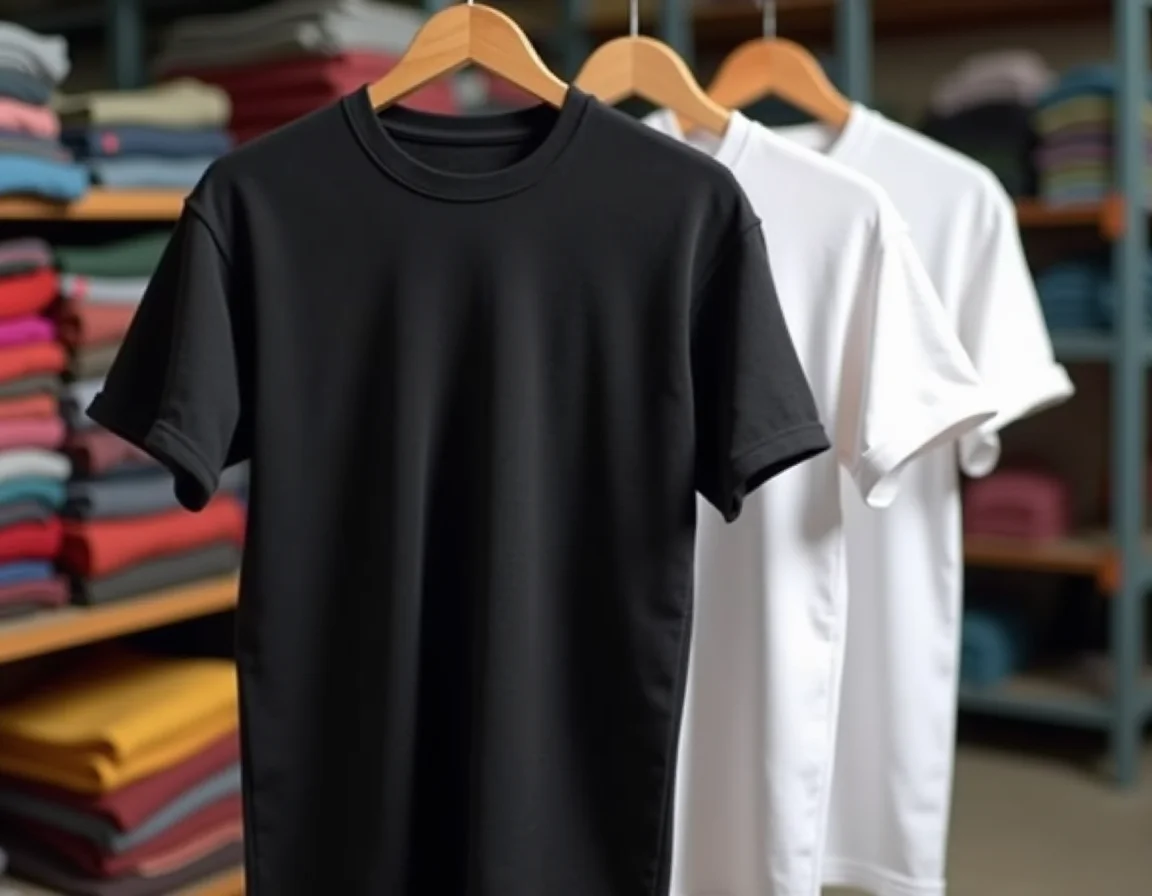
Our 240 GSM drop-shoulder blanks are currently available in three core colours: Black, White, and Maroon. These are the three highest-demand neutrals for custom printing — Black gives the most vivid colour contrast for DTF and HTV, White is essential for full-colour sublimation-adjacent prints and light garment screen printing, and Maroon anchors any winter/heritage streetwear aesthetic.
Sizes run S through XXL in the drop-shoulder fit. Note that because this is an oversized silhouette, customers typically size down by one — an L in this cut fits like an XL in a regular t-shirt. We recommend communicating this in your product listings to reduce return requests.
For the full MOQ tier pricing, colour availability updates, and bulk ordering, visit our complete product catalog — and for detailed per-unit pricing by quantity, check the canonical Dropshoulders product page linked from the catalog.
How to Buy in Bulk: MOQ, Pricing Tiers & Shipping
Minimum Order Quantity
You can start with as few as 10 pieces for ready stock items — perfect for ordering a sample set to check fit, quality, and print results before committing to bulk. There is no premium charged for small sample orders; you pay the standard per-piece price.
Pricing Discounts
- ₹3/pc off on all online orders at Sale91.com (any quantity)
- ₹2/pc additional discount for orders of 500+ pieces
- Both discounts can stack — a 500+ piece online order gets ₹5/pc off the base price
Payment Terms
- First order: 50% COD available (+3% COD charge on the COD portion)
- Second order onwards: Prepaid
- Online payment available via all major UPI, NEFT, RTGS methods on Sale91.com
Delivery & Export
Warehouse dispatch from Delhi (Khanpur, South Delhi) for fast PAN India delivery. Manufacturing base in Tiruppur allows large custom dye batches for very high quantities. We also export internationally — courier for smaller quantities, sea cargo for container-load orders. Contact us via Sale91.com for export enquiries.
Watch: Our Manufacturing Process at Tiruppur
See how we knit our own fabric, bio-wash every batch, and quality-check before dispatch:
Frequently Asked Questions
More Articles

Ready to Order Your 240 GSM Drop-Shoulder Blanks?
Start with a 10-piece sample or go straight to bulk. Bio-washed, pre-shrunk, terry-cotton loop-knit — manufactured in Tiruppur, dispatched from Delhi. PAN India delivery + export available.
✔ 50% COD on first order | ✔ ₹3/pc online discount | ✔ ₹2/pc off on 500+ pcs
Order Now on Sale91.com Browse Full Catalog