300 T-Shirt Order But Zero Profit? Freight Trap!

If you're running a custom printing business in India — whether you're doing DTG, DTF, screen printing, or heat transfer — there's one silent profit killer that catches almost everyone off guard: freight costs. You calculate everything perfectly: fabric cost, printing charges, packaging, even your markup. You quote a competitive rate to your client, win the order, complete the job, and then... the courier bill arrives. Suddenly, your entire margin has vanished.
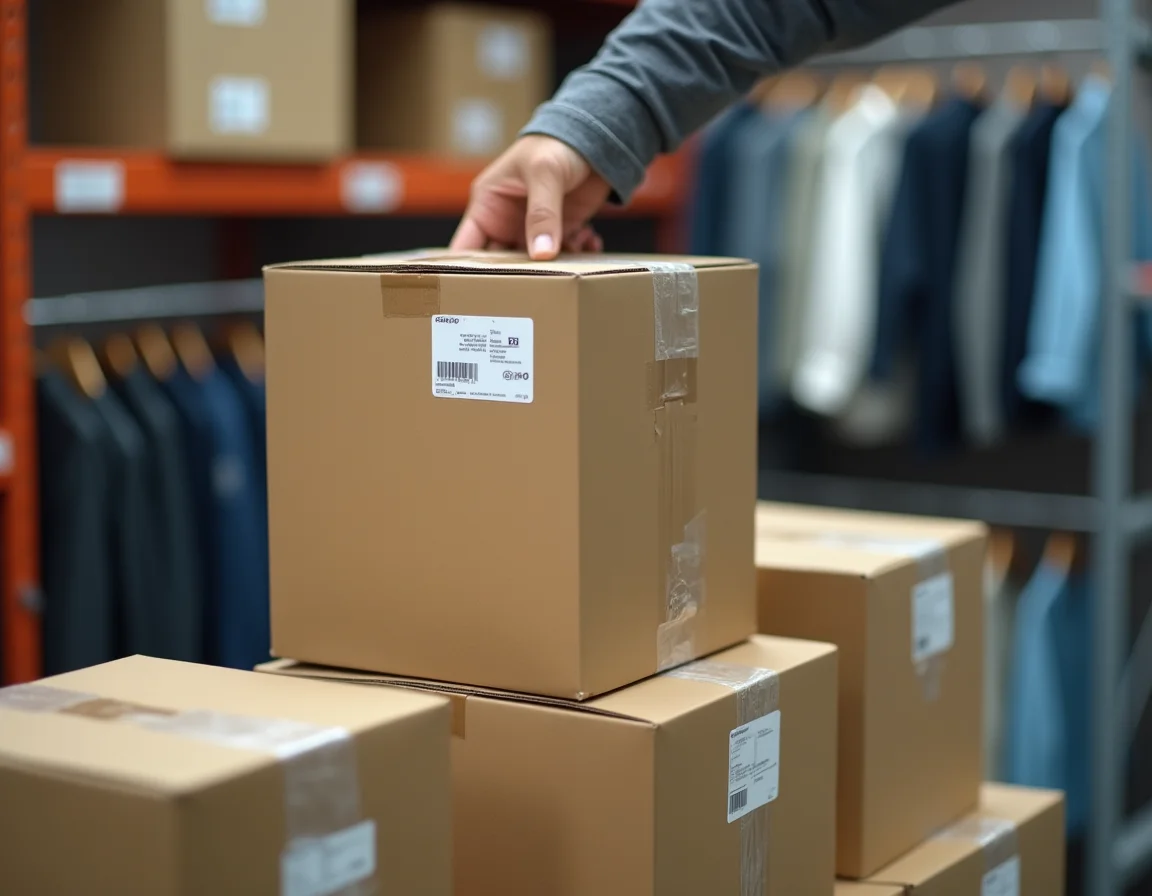
This isn't a hypothetical scenario. It happens every single day across India to printing businesses of all sizes. In fact, one of our clients at Sale91.com recently shared a painful story: he took a 300-piece order, fixed his rate per piece at what seemed like a profitable margin, got the printing done beautifully, packed everything professionally, and shipped it to his client in Bangalore. When the freight bill came, he realized he had made almost zero profit on the entire order.
The Most Common Mistake in T-Shirt Printing Business: Forgetting Freight
Let's break down what typically happens. When you're quoting a rate to your client, you're usually thinking about:
- Fabric cost: The price of the blank t-shirt from your supplier
- Printing cost: DTG ink, DTF film, screen printing setup, whatever method you use
- Packaging cost: Poly bags, cartons, labels, tape
- Your margin: The profit you want to make per piece
All of this seems logical. You add everything up, add your margin, quote Rs. 250 per piece to the client. They agree. Order confirmed. You feel good about the deal.
But here's what you forgot: How is this order reaching the client?
If it's a local delivery within your city, maybe the cost is manageable — Rs. 50-100 total. But what if your client is in another state? What if you're shipping from Delhi to Chennai, or Mumbai to Kolkata? That's when freight becomes a real cost center that can completely wipe out your profit.

Understanding Freight Cost: Weight, Distance, and Courier Rates
Freight cost isn't random. It's calculated based on two primary factors:
1. Weight of the Shipment
This is where GSM (Grams per Square Meter) becomes critical. A standard plain round neck t-shirt in 200 GSM, which is one of the most popular fabric weights for custom printing, weighs approximately 180-200 grams per piece. This includes the fabric weight of the t-shirt itself.
So if you're shipping 100 pieces of 200 GSM t-shirts, your total weight will be roughly 18-20 kilograms. Add packaging (cartons, poly bags, tape, labels), and you might be looking at 22-24 kg total.
If you're using 220 GSM heavy premium t-shirts, each piece weighs around 210-230 grams, making 100 pieces approximately 21-23 kg before packaging.
Here's a quick reference table:
| T-Shirt Type | GSM | Weight Per Piece | 100 Pieces Weight | 300 Pieces Weight |
|---|---|---|---|---|
| Everyday Wear | 180 GSM | 160-180g | 16-18 kg | 48-54 kg |
| Premium | 200 GSM | 180-200g | 18-20 kg | 54-60 kg |
| Heavy Premium | 220 GSM | 210-230g | 21-23 kg | 63-69 kg |
| Oversized | 220 GSM | 240-260g | 24-26 kg | 72-78 kg |
2. Distance and Courier Zone
Courier companies in India (like Blue Dart, DTDC, Delhivery, Xpressbees) typically charge based on zones. Shipping within the same city or state is cheaper (local or regional zone), while shipping across states increases the per-kg rate significantly.
Here's a rough estimate of courier rates in India as of 2026:
- Within city (local): Rs. 40-60 per kg
- Within state (regional): Rs. 50-70 per kg
- Metro to metro: Rs. 70-90 per kg
- Metro to non-metro (zonal): Rs. 80-100 per kg
- Pan-India (rest of India): Rs. 90-120 per kg
These rates can vary based on your negotiated contract with the courier company, volume of shipments, and seasonal demand.
Real Example: The 300-Piece Order That Made Zero Profit
Let's take the real case that inspired this article. A printing business owner received an order for 300 custom printed t-shirts from a corporate client in Bangalore. The business owner is based in Delhi.
His Original Costing (Without Freight):
- Blank t-shirt cost: Rs. 130 per piece (200 GSM premium quality from Sale91.com)
- DTF printing cost: Rs. 45 per piece (front print)
- Packaging: Rs. 5 per piece
- His margin: Rs. 40 per piece
Total quoted rate to client: Rs. 220 per piece
Total order value: Rs. 66,000
Sounds profitable, right? He expected to make Rs. 12,000 profit on this order (Rs. 40 × 300 pieces).
What He Forgot: Freight Cost
300 pieces of 200 GSM t-shirts = approximately 54-60 kg
Add packaging weight (cartons, poly bags, etc.) = approximately 8-10 kg
Total shipment weight: 65-70 kg
Delhi to Bangalore courier rate (metro to metro): Rs. 90 per kg
Total freight cost: 70 kg × Rs. 90 = Rs. 6,300
Per piece freight cost: Rs. 6,300 ÷ 300 = Rs. 21 per piece
And if he had negotiated even lower or faced unexpected fuel surcharges or GST on freight, that margin could shrink even further.
The Simple Solution: Calculate Freight BEFORE Quoting
The fix is straightforward, but it requires discipline. Before you finalize any quote for a client, especially for bulk orders or outstation deliveries, you need to estimate the freight cost and add it to your per-piece rate.
Step-by-Step Freight Calculation Process:
- Know your product weight: Check the GSM of the t-shirt and estimate weight per piece. If you're ordering from Sale91.com, you can ask for exact weight specifications. Our 200 GSM round neck weighs approximately 190g per piece.
- Calculate total order weight: Multiply pieces by weight per piece. Example: 300 pieces × 190g = 57 kg
- Add packaging weight: Estimate carton weight, poly bags, void fill. Usually 10-15% of product weight. Example: 57 kg + 8 kg = 65 kg total
- Check courier rate for destination: Contact your courier partner or check their online rate calculator. Enter pickup and delivery pincodes to get zone-based rate.
- Calculate total freight: Total weight × rate per kg. Example: 65 kg × Rs. 90/kg = Rs. 5,850
- Calculate freight per piece: Total freight ÷ number of pieces. Example: Rs. 5,850 ÷ 300 = Rs. 19.50 per piece
- Add to your costing: Include this Rs. 19.50 in your per-piece cost before adding your margin.
Revised Costing (With Freight):
- Blank t-shirt cost: Rs. 130
- Printing cost: Rs. 45
- Packaging: Rs. 5
- Freight: Rs. 20
- Your margin: Rs. 40
Revised quote to client: Rs. 240 per piece
Yes, your quote is Rs. 20 higher. But now your margin is protected. You're still making your expected Rs. 40 per piece profit, and there are no surprises when the courier bill arrives.
Pro Tips for Managing Freight Costs in T-Shirt Business
1. Negotiate Bulk Courier Rates
If you're shipping regularly, don't use retail courier rates. Approach courier companies with your monthly volume and negotiate a corporate rate. Even a Rs. 10-15 per kg reduction can significantly boost your margins over time.
2. Choose the Right GSM for the Job
Heavier t-shirts mean higher freight costs. If your client's requirement can be met with 180 GSM instead of 220 GSM, you'll save on both fabric cost and freight. However, never compromise on quality — if premium fabric is needed for print durability, use it. You can check our complete range at the BulkPlainTshirt.com catalog to choose the right GSM for each project.
3. Consolidate Orders When Possible
If you have multiple clients in the same city or region, try to batch shipments. One 500-piece shipment is more economical per piece than five separate 100-piece shipments.
4. Factor in Return Freight Risk
Sometimes shipments get rejected or need to be returned due to client issues. Build a small buffer (Rs. 2-3 per piece) for such scenarios, especially for new clients or COD orders.
5. Use Weight-Optimized Packaging
Don't over-pack. Use appropriately sized cartons and minimal void fill. Every extra kilogram costs you money. But balance this with protection — damaged goods mean re-shipping costs.
6. Consider Local Pickup Option
For clients in your city or nearby, offer a discount for self-pickup. This eliminates freight cost entirely and can be a win-win — they save money, you save freight, and you build a local relationship.
7. Use a Freight Calculator Spreadsheet
Create a simple Excel or Google Sheets calculator where you can quickly input quantity, GSM, destination, and get an instant freight estimate. This takes 5 minutes to build and saves you from costly mistakes forever.
Why Quality Blank T-Shirts Matter Even More When Freight is a Factor
When you're already paying significant freight costs, the last thing you want is to ship poor-quality t-shirts that lead to returns, complaints, or refunds. That's why sourcing from a reliable manufacturer like Sale91.com makes business sense.
Here's what you get:
- Consistent quality: Every t-shirt is bio-washed, pre-shrunk, and made from ring-spun combed cotton. No surprises after printing.
- Accurate GSM: Our 200 GSM is actually 200 GSM, not 180 GSM marketed as 200. This consistency helps you calculate freight accurately.
- Ready stock: With 1 lakh+ pieces in ready stock at our Delhi warehouse, you can fulfill orders quickly without waiting for production, which means faster delivery and happier clients.
- Bulk discounts: We offer Rs. 2/piece discount for 500+ quantity orders and Rs. 3/piece online purchase discount for any quantity, which helps offset freight costs.
- Low MOQ: Starting from just 10 pieces, you can test products before committing to large inventory.
When your base product is reliable, you eliminate the risk of freight-wasting returns and remakes.
Watch the Video
Watch this short video where we explain the freight cost trap and how to avoid it: