GSM vs Weight: Why Your Oversized T-Shirt Feels Light
If you're running a custom printing business in India, you've probably received this complaint at least once: "Bhai, t-shirt ka weight kam lag raha hai. Quality issue toh nahi hai?" This is one of the most common misunderstandings in the blank t-shirt industry, and it's costing printing businesses valuable time, money, and customer trust.
The confusion stems from a fundamental misunderstanding between two important concepts: GSM (Grams per Square Meter) and actual garment weight. While they're related, they're not the same thing—and this distinction becomes especially important when dealing with oversized t-shirts.
In this comprehensive guide, we'll break down everything you need to know about GSM versus weight, why your oversized t-shirts feel lighter than regular fits, and how to educate your clients to avoid unnecessary complaints and returns.
What is GSM in T-Shirts?
GSM stands for "Grams per Square Meter," and it's the textile industry's standard measurement for fabric density and thickness. Essentially, GSM tells you how much one square meter of fabric weighs—regardless of the garment's size or cut.
Think of GSM as a measure of fabric quality and thickness, not the total weight of the finished garment. A 200 GSM fabric is the same thickness whether you're making a small size t-shirt or an oversized XXL—the fabric density remains constant.
Common GSM Ranges for Plain T-Shirts
- 180 GSM: Lightweight, breathable, ideal for everyday wear and hot weather. Perfect for promotional t-shirts and budget-friendly printing projects.
- 200 GSM: Medium-weight premium fabric, the most popular choice for custom printing businesses. Offers a good balance of quality, durability, and cost.
- 210 GSM: Slightly heavier premium feel, excellent for retail-quality custom apparel.
- 220 GSM: Heavy premium fabric, substantial feel, ideal for high-end custom brands and winter wear.
- 240-430 GSM: Used for hoodies and sweatshirts, offering warmth and durability.
At Sale91.com, we manufacture plain t-shirts in all these GSM ranges using our own in-house knitted fabric. As a vertically integrated manufacturer based in Tiruppur (India's textile hub), we control the entire production process—from knitting the fabric to bio-washing and pre-shrinking the final garment.
What is Actual Garment Weight?
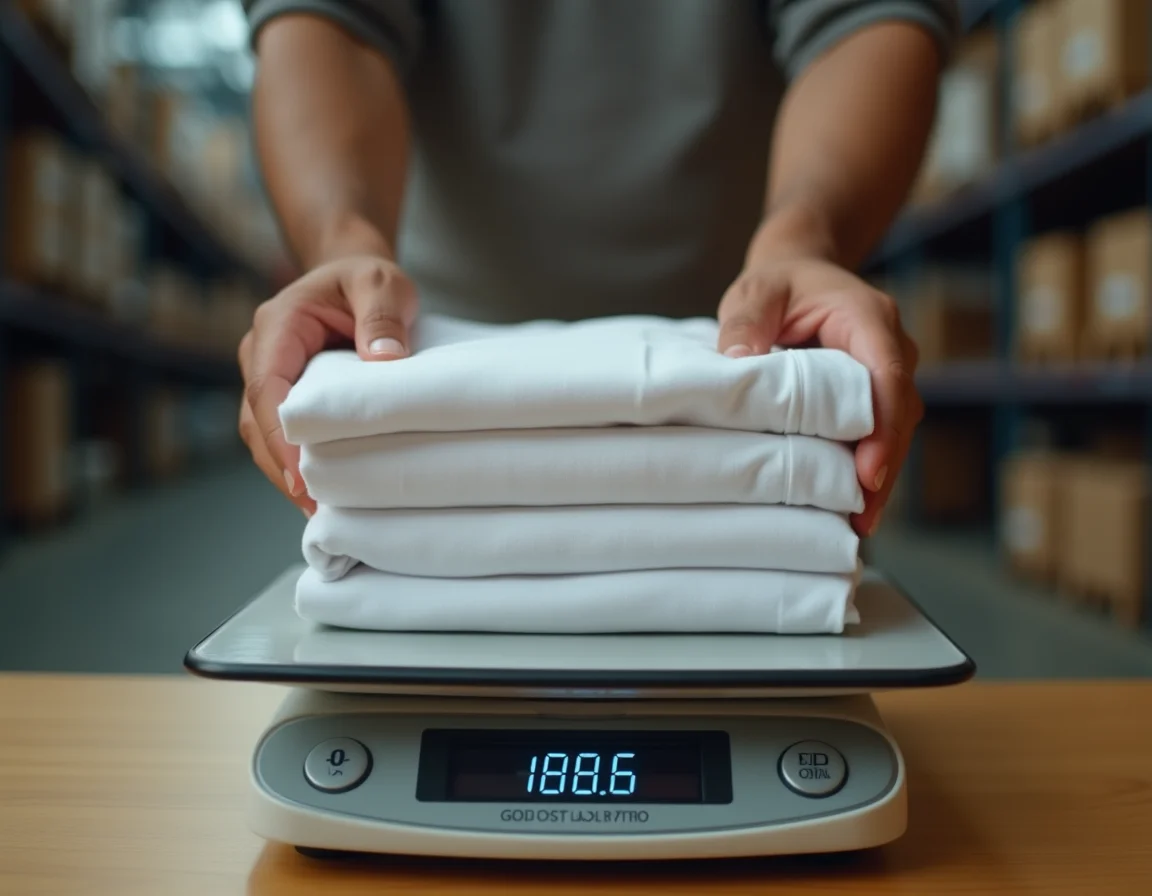
Actual garment weight is the total weight of the finished t-shirt when you place it on a weighing scale. This weight depends on multiple factors:
- Fabric GSM: The base density of the fabric
- Size and cut: How much fabric area is used
- Garment style: Regular fit, slim fit, or oversized
- Neck ribbing and stitching: Additional materials used
- Sleeve length: Short sleeve, full sleeve, etc.
Here's the key insight: A 200 GSM oversized t-shirt and a 200 GSM regular fit t-shirt use the same quality of fabric, but the oversized one will feel lighter per unit area because the fabric is spread over a larger surface.
The Oversized T-Shirt "Weight Problem" Explained
Let's break down why oversized t-shirts feel lighter, even when they're made from the same GSM fabric as regular t-shirts.
The Physics of Oversized Fit
When a t-shirt is designed in an oversized fit, several things happen:
- More fabric area: The pattern uses significantly more fabric—sometimes 20-30% more than a regular fit in the same size.
- Loose drape: The fabric hangs loosely on the body rather than fitting snugly, creating a relaxed, airy feel.
- Elongated silhouette: Oversized tees are typically longer and wider, distributing the fabric weight over a larger area.
- Perception vs reality: When fabric is stretched out and loose, it feels lighter to the touch even though the actual weight (in grams) may be higher.
This is similar to how a thin bedsheet feels lighter than a thick towel, even if the bedsheet actually weighs more—because the weight is distributed over a much larger surface area.
Real-World Example from Our Warehouse
Let's take a practical example from our Delhi warehouse at Sale91.com:
Regular Fit Round Neck T-shirt (200 GSM):
Size: Large
Actual weight: ~180 grams
Feel: Compact, substantial, "heavy"Oversized T-shirt (200 GSM):
Size: Large
Actual weight: ~210 grams
Feel: Light, airy, loose
Notice that the oversized t-shirt actually weighs more (because it uses more fabric), but it feels lighter because of how the fabric drapes on the body.
Why This Matters for Your Custom Printing Business
Understanding the GSM versus weight distinction is critical for several reasons:
1. Managing Client Expectations
When your clients (especially new ones) order oversized t-shirts for the first time, they might expect them to feel "heavy" because they're paying more. If you don't educate them beforehand, you'll face complaints like:
- "Quality kam hai"
- "Yeh toh bahut patla lag raha hai"
- "Humne 200 GSM order kiya tha, yeh 180 lag raha hai"
These complaints waste your time and can damage your reputation, even though there's nothing wrong with the product.
2. Pricing Transparency
Oversized t-shirts cost more because they use more fabric—it's that simple. If a client doesn't understand this, they might feel cheated when they see a higher price for what "feels" like a lighter t-shirt.
At our catalog, we clearly list separate pricing for regular and oversized fits for this exact reason. Transparency builds trust.
3. Quality Assurance
If you understand GSM properly, you can confidently assure your clients that the fabric quality is consistent across all sizes and fits. The "lightness" they feel in an oversized t-shirt isn't a quality issue—it's a design feature.
How to Educate Your Clients: A Script That Works
Here's a simple explanation you can use with your clients when they ask about t-shirt weight:
"Sir/Ma'am, there's an important difference between GSM and garment weight that I want to explain:
GSM is the fabric thickness—it tells you the quality and density of the fabric itself. 200 GSM means premium fabric, whether it's regular fit or oversized.
Garment weight is the total weight of the t-shirt. Oversized t-shirts use more fabric (so they actually weigh more), but they feel lighter because the fabric is loose and spread out over a larger area.
Think of it like this: a thin bedsheet feels lighter than a small towel, even though the bedsheet might weigh more—because its weight is spread over a bigger area.
Your oversized 200 GSM t-shirt has the same premium fabric quality as our regular 200 GSM, but with a relaxed, airy fit that's trending right now. That's why it costs slightly more—we're using more fabric to give you that oversized look."
This explanation is simple, uses a relatable analogy, and preemptively addresses the price difference. Use it consistently, and you'll see complaints drop significantly.
Technical Details: How We Ensure Consistent GSM
At Sale91.com (BulkPlainTshirt.com), we take GSM consistency seriously because we're manufacturers, not traders. Here's how we maintain quality:
In-House Fabric Knitting
We knit our own fabric in Tiruppur, which gives us complete control over GSM specifications. Unlike resellers who source from multiple vendors, we ensure every roll of fabric meets our exact GSM target.
Ring-Spun Combed Cotton
We use ring-spun combed cotton, which is a premium yarn type that produces stronger, softer fabric. The combing process removes short fibers and impurities, resulting in a smoother, more consistent fabric density.
Bio-Washing and Pre-Shrinking
All our t-shirts undergo bio-washing (enzyme treatment for softness) and pre-shrinking. This process stabilizes the fabric, ensuring that the GSM remains consistent even after multiple washes by your end customers.
Quality Checks
We conduct GSM testing at multiple stages:
- Raw fabric inspection after knitting
- Post-dyeing verification
- Final garment spot-checking before dispatch
With over 1,25,232+ pieces sold in the last 30 days and 1 lakh+ t-shirts in ready stock at any time, maintaining this level of quality control is how we've built our reputation across India.
Practical Tips for Custom Printing Businesses
1. Always Order Samples First
Before placing bulk orders, especially when trying oversized t-shirts for the first time, order samples in multiple GSM options (180, 200, 220). Feel the fabric yourself and show it to your regular clients. This hands-on experience will help you explain the GSM versus weight difference more confidently.
We offer samples starting from as low as 10 pieces for ready stock items, making it easy to test before committing to larger orders.
2. Create a GSM Reference Kit
Keep one t-shirt of each GSM in your stock as a physical reference. When clients visit or video call, show them the actual fabric. Let them feel the difference between 180 GSM and 220 GSM. This tactile experience is worth a thousand words.
3. Document GSM in Your Quotations
Always mention GSM clearly in your quotations and invoices. For example:
- "Plain Round Neck T-shirt - 200 GSM - Regular Fit - White - Size L"
- "Oversized T-shirt - 200 GSM - Black - Size XL (note: uses 25% more fabric than regular fit)"
This documentation protects you from disputes and sets clear expectations.
4. Educate on Your Website/Social Media
Create simple graphics or short videos explaining GSM versus weight. Share them on your Instagram, Facebook, or WhatsApp business account. Prevention is better than handling complaints later.
Common Myths About T-Shirt Weight
Myth 1: "Heavier t-shirt means better quality"
Reality: Not always. Quality depends on fabric GSM, yarn type, construction, and finishing—not just total weight. An oversized 180 GSM bio-washed combed cotton t-shirt can be superior to a regular fit 220 GSM made from inferior yarn.
Myth 2: "Oversized t-shirts are made from thinner fabric"
Reality: Oversized t-shirts use the same fabric as regular fits—they just use more of it. The GSM remains constant; it's the garment construction that changes.
Myth 3: "All 200 GSM fabrics are the same"
Reality: GSM is just one factor. The type of cotton (combed vs. carded), knitting technique (single jersey vs. others), bio-washing, and pre-shrinking all affect the final quality. This is why choosing a reliable manufacturer like Sale91.com matters—we control all these variables.
Watch the Video: GSM vs Weight Explained
For a quick visual explanation of this concept, watch our YouTube Shorts video where we break down the GSM versus weight confusion in under 60 seconds:
Frequently Asked Questions
Ready to Order Premium Plain T-Shirts?
Whether you need regular fit or oversized, 180 GSM or 220 GSM, Sale91.com has you covered with India's largest ready stock of 1 lakh+ pieces.
✓ In-house knitted fabric from Tiruppur
✓ 100% Ring-spun Combed Cotton
✓ Bio-washed & Pre-shrunk
✓ Available in 15+ colors
✓ MOQ as low as 10 pieces
✓ Rs 3/pc online discount + Rs 2/pc on 500+ quantity
Conclusion: Knowledge is Your Best Quality Control
The confusion between GSM and actual garment weight is completely understandable—it's a nuanced technical detail that most people outside the textile industry don't encounter. But as a custom printing business owner, understanding and communicating this difference is crucial for your success.
Remember these key takeaways:
- GSM measures fabric density (thickness per square meter), not total garment weight
- Oversized t-shirts feel lighter because the fabric is spread over a larger, looser area
- Oversized actually uses more fabric and weighs more in absolute terms
- Educate your clients proactively to avoid complaints and returns
- Choose reliable manufacturers who maintain consistent GSM quality
At Sale91.com (BulkPlainTshirt.com), we're not just suppliers—we're partners in your printing business success. With over 1,25,232+ pieces sold in the last 30 days and growing, we've helped thousands of printing businesses across India build their brands on our quality blank t-shirts.
From our knitting unit in Tiruppur to our warehouse in Delhi (Khanpur, South Delhi), every step of our process is designed to give you consistent, reliable, premium-quality blank t-shirts—whether regular fit or oversized, 180 GSM or 220 GSM.
Visit our catalog to explore our full range, or contact us directly at Sale91.com for personalized bulk quotes and samples.
Because when your clients understand what they're buying, everybody wins.