Starting a T-Shirt Business in India at 21 — 9 Years of Wholesale Lessons From Delhi

"Jo karna hai kar daalo. Socho mat. Cheezein kabhi perfect nahi hongi."
— The one line that explains 9 years of building a t-shirt business from scratch.
I'm 30 years old. I've been doing the same thing for 9 years — plain t-shirt wholesale. Not because I had no other options. Not because it was easy money. But because I started, I stayed, and I kept improving. This article is the written version of a video I shot at home — not from the warehouse, not from some rented studio — because things said from home are said without a filter.
If you're thinking about starting a t-shirt printing or wholesale business in India, or if you're already in it and wondering whether to push harder or quit, this is for you. Not inspiration porn. Real trajectory. Real decisions. Real numbers from the business we actually run at Sale91.com.
From Computer Science Degree to Plain T-Shirt Supplier — The Actual Backstory
The conventional path looked like this: engineering college → campus placement → software job → career growth. I followed it. Computer science background, first job in Hyderabad in 2017. And then I didn't follow it anymore.
The decision to leave a salaried tech job and move toward a business in plain t-shirt wholesale was not made after reading a book or watching a motivational video. It was made because the alternative — continuing on a path that felt like someone else's — felt worse than the uncertainty of starting something of my own.
I moved to Delhi. I started understanding the fabric business, the wholesale chain, and the gap between what printers needed and what suppliers were actually delivering. The gap was real. Quality was inconsistent. Delivery was unreliable. And most suppliers were traders — buying from other people's stock and marking up. There was no manufacturer speaking directly to the printer.
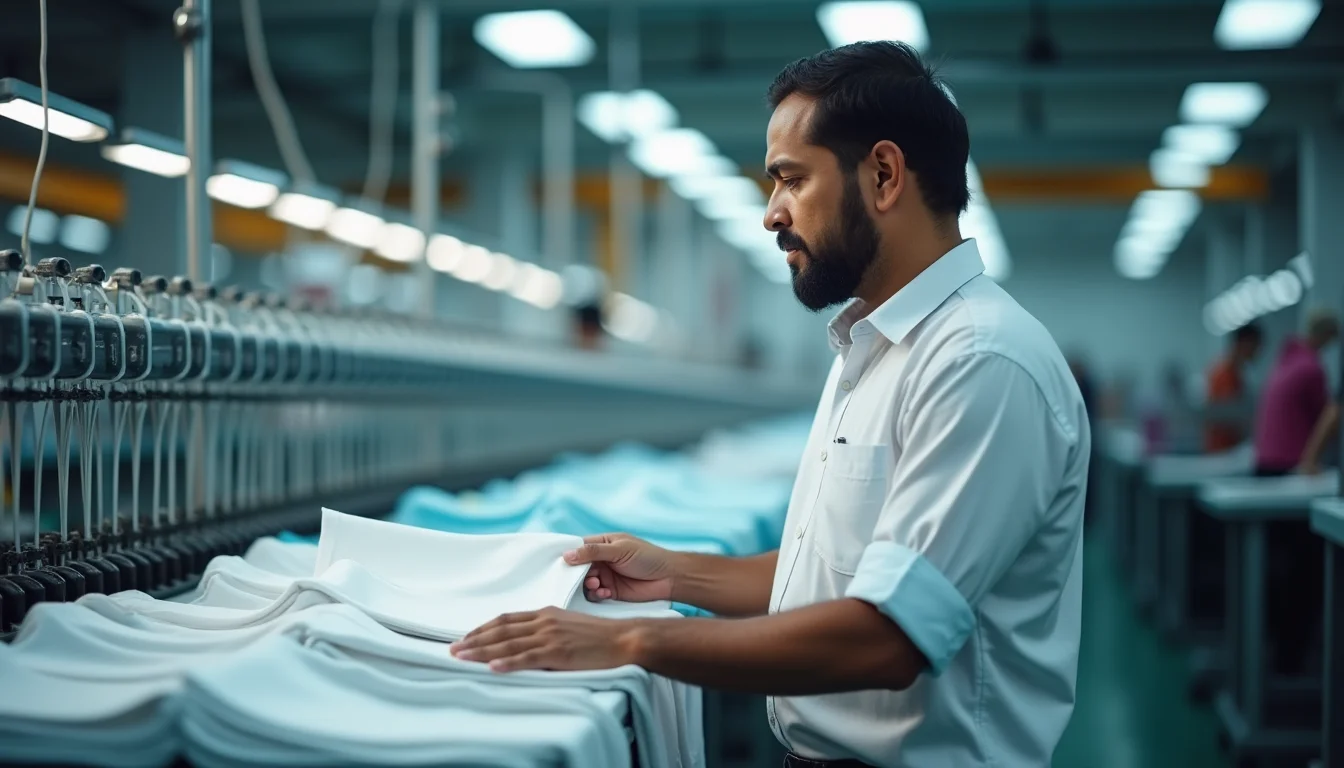
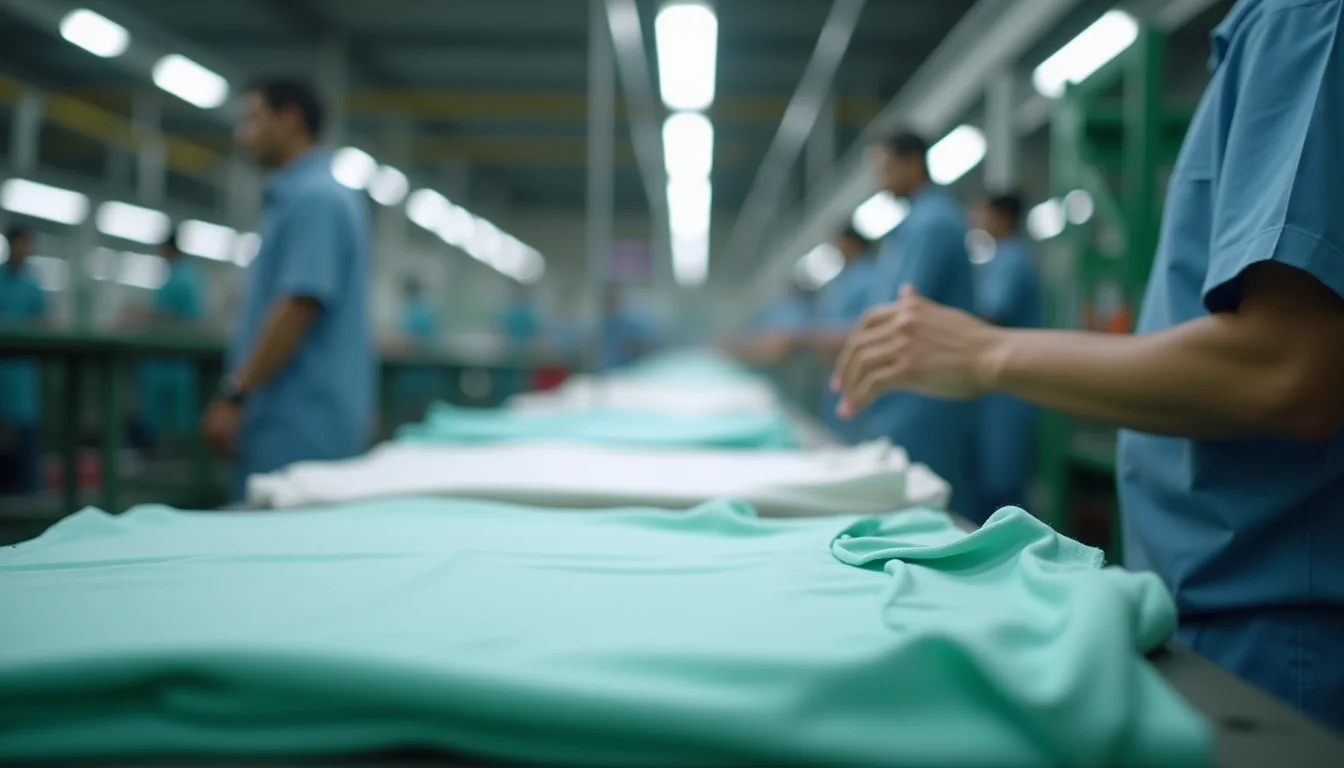
That became the foundation of what Sale91.com is today: a company that knits its own fabric in Tiruppur, the textile manufacturing hub of India, and ships directly to custom printers, DTG studios, screen printers, and heat transfer businesses across the country — and internationally.
Key differentiation: Sale91.com / BulkPlainTshirt.com is not a trader or reseller. We manufacture our own fabric in-house in Tiruppur and maintain a warehouse in Khanpur, South Delhi. This means one fewer middleman, consistent GSM, and predictable quality batch after batch.
The Business Model Nobody Talks About: Low Margin, High Volume, Prepaid Only
Here's something most people building a business don't say out loud: I chose to work on lower margins on purpose. Not because I couldn't charge more. Because I understood that in the wholesale plain t-shirt segment, the game is volume and trust — not maximum extraction per order.
When you work on thin margins, a few things happen automatically. You stop entertaining bad buyers. You focus on repeat business. You build systems that can handle scale. And you are forced to keep quality tight, because you don't have fat margins to absorb returns or complaints.
If you want to understand how this philosophy played out in the business without the udhaar drama, there's a detailed breakdown in the post on running a bulk t-shirt business with a strict no-credit policy for 9 years — one of the most consequential decisions we made early on.
The pricing structure at Sale91.com reflects this model:
- Rs 3/piece discount for any quantity when you order online at Sale91.com
- Rs 2/piece additional discount for orders of 500+ pieces
- 50% COD available for first-time buyers (with a 3% COD charge), after which orders move to prepaid
- MOQ as low as 10 pieces for ready-stock items — so new businesses can start small
This structure is designed to reduce friction for new buyers while maintaining financial discipline from the seller's side. We've shipped 1,25,232+ pieces in the last 30 days alone. That kind of volume is only possible when the ops are clean and the pricing model doesn't have complex udhaar cycles baked in.
20 Products — Every One Personally Selected. Here's How We Think About the Catalog
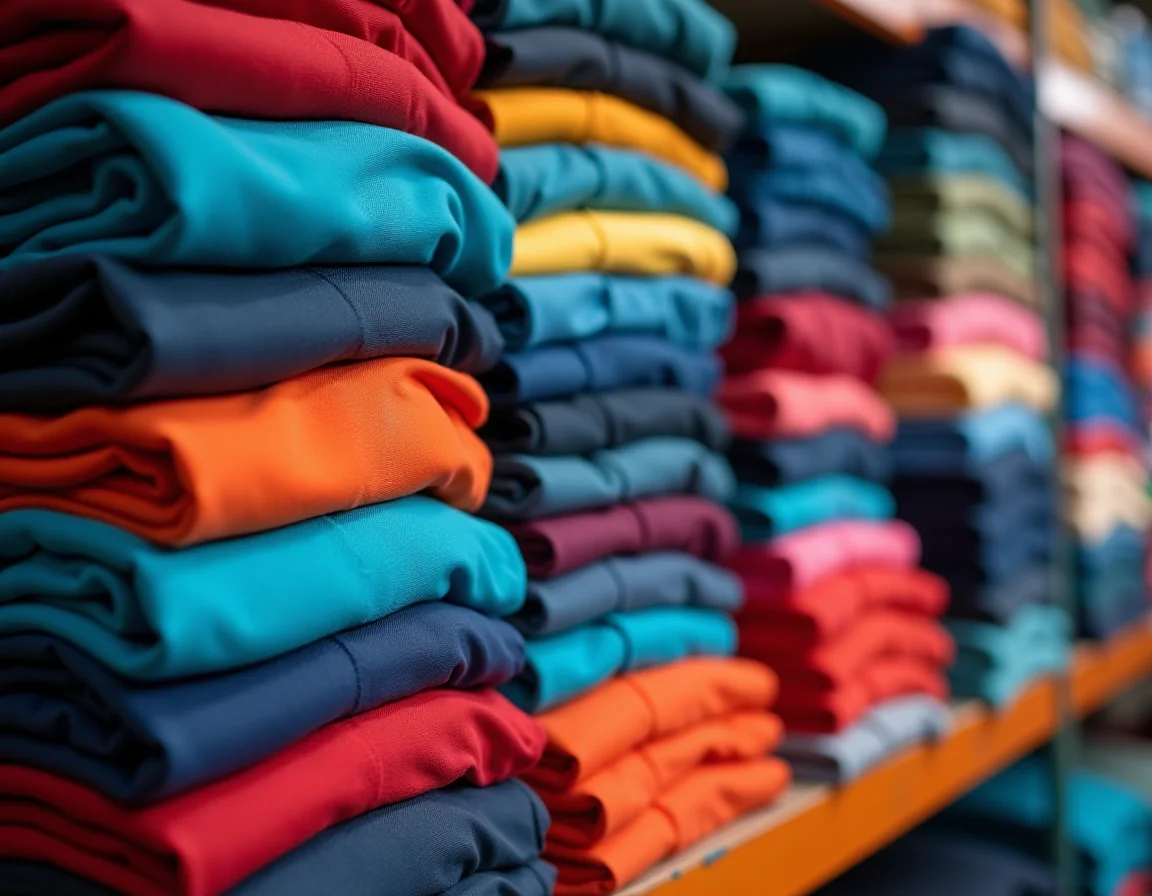
We don't stock 200 SKUs. We stock 20 products — and every single one has been chosen deliberately. This is a decision that goes against the instinct of most wholesale businesses, which believe more variety equals more customers.
What actually happens with too many SKUs: quality control becomes impossible, stock management breaks down, and your best-selling products run out while dead stock eats up cash. By staying focused on 20 well-chosen products, we can maintain 1 lakh+ pieces in ready stock at any point in time — across all sizes and colors — without gaps.
Here's the current product decision framework we use at BulkPlainTshirt.com, with real specs from our catalog:
| Product Type | GSM Range | Best For | Printing Compatibility |
|---|---|---|---|
| Plain Round Neck T-shirt | 180 / 200 / 210 / 220 GSM | Everyday wear, corporate giveaways, event tees | DTG, Screen Print, Heat Transfer, DTF |
| Oversized T-shirt | 200 / 220 GSM | Streetwear brands, youth fashion | DTG, DTF, Screen Print |
| Plain Polo T-shirt | 200 / 220 GSM | Corporate uniforms, school uniforms | Embroidery, Heat Transfer |
| Hoodies & Sweatshirts | 240 / 320 / 430 GSM | Winter drops, premium streetwear | Screen Print, DTF, Embroidery |
| Acid Wash T-shirts | 200 / 220 GSM (regular & oversized) | Fashion-forward brands, urban retail | DTF, Heat Transfer, minimal DTG |
All products are 100% cotton, bio-washed, pre-shrunk, and made from ring-spun combed cotton — the combination that makes ink sit better, fabric feel softer, and the final printed product look premium. For a full technical explainer on what bio-washing and pre-shrinking mean for printers, see our FAQ page. The complete catalog with current pricing is at bulkplaintshirt.com/catalog.
The Gym Analogy — Why Discipline in Business Looks Exactly Like Discipline in Fitness
I built a gym setup 3 or 4 times. And I dropped it each time. Not because the equipment was wrong. Because I wasn't consistent. And every time I started again, I understood one more thing about why I had stopped.
Business is the same. You start. You stop. You reconfigure. You start again. The difference between people who reach 9 years and people who quit at year 2 is not intelligence or capital or connections. It's the willingness to restart without catastrophizing the restart.
In the t-shirt business specifically — whether you're a printer, a wholesaler, or a brand — the early years are full of restarts. Wrong supplier, wrong GSM for your customer base, wrong pricing strategy. The people who make it past year 3 are the ones who treat each restart as data, not defeat.
Meditation has been a non-negotiable in this phase. Not as a productivity hack. As a way to reduce the noise between what's happening and what you decide to do about it. When you receive a bad review, or an order goes sideways, or a big buyer stops responding — the gap between event and response is where everything important happens. Making that gap wider, that's what meditation actually does in practice.
What "Akela Rehna" Actually Teaches You in Business
Living alone — being comfortable with your own company — strips away a specific kind of illusion: the idea that you need external validation to make a decision. Most business paralysis is not about lack of information. It's about waiting for someone to tell you your plan is good before you execute it.
Spending time alone forces you to be the judge of your own thinking. You either trust your reasoning or you don't. And if you don't, you find out fast — because there's no one else to blame the outcome on.
This is why the line "jo karna hai kar daalo" is not recklessness. It's a very specific instruction: stop waiting for conditions to be perfect. They won't be. Order the fabric. Launch the catalog. Open the store. Deal with the imperfection as it comes, because it will come whether you're ready or not.
What 9 Years in Plain T-Shirt Wholesale Actually Taught Me About Buyers
If you're on the buyer side — a custom printer, a DTG studio, a screen print shop — here's what I've observed after 9 years of working with this segment:
The First Order Is Always the Hardest Decision
Every buyer hesitates on the first order. That's why we made the MOQ as low as 10 pieces on ready-stock items. Suppose you're a screen printer in Jaipur trying a new blank supplier — you don't want to commit 500 pieces to test quality. You want 20 pieces, see how the ink sits on the fabric, check shrinkage after a wash, and then decide. That's exactly what the low MOQ at Sale91.com is designed for.
The Second Order Is Where the Real Relationship Starts
First-time buyers can use COD (50% upfront, 50% on delivery, with a 3% COD charge). From the second order, it moves to prepaid. This isn't arbitrary — it's the filter that separates buyers who are building a real business from those who are testing the market with your risk capital.
For printers looking to scale their blank procurement, understanding the economics of how to build a sustainable ₹50,000/month printing business is essential reading — the math of blank cost vs. print margin is where most printers leak money without realizing it.
Consistency Beats Price Every Time
The buyers who stay with us year after year are not the ones who got the cheapest quote on their first order. They're the ones who found that the 200 GSM tee they ordered in March looks and feels identical to the one they ordered in October — same ring-spun combed cotton, same bio-wash finish, same pre-shrunk dimensions.
That consistency is only possible because we knit our own fabric. When you're buying from a trader who sources from three different mills depending on availability, batch-to-batch variation is invisible until it's a problem — and by then, your customer has already printed 500 units on fabric that behaves differently than what they approved in the sample.
The Delhi Warehouse + Tiruppur Factory Model — Why It Matters for Your Business
Manufacturing in Tiruppur gives us access to India's most skilled textile workforce and the best cotton processing infrastructure in the country. But Tiruppur to most of India is a 2-4 day transit, and for printers who need stock fast, that's not always acceptable.
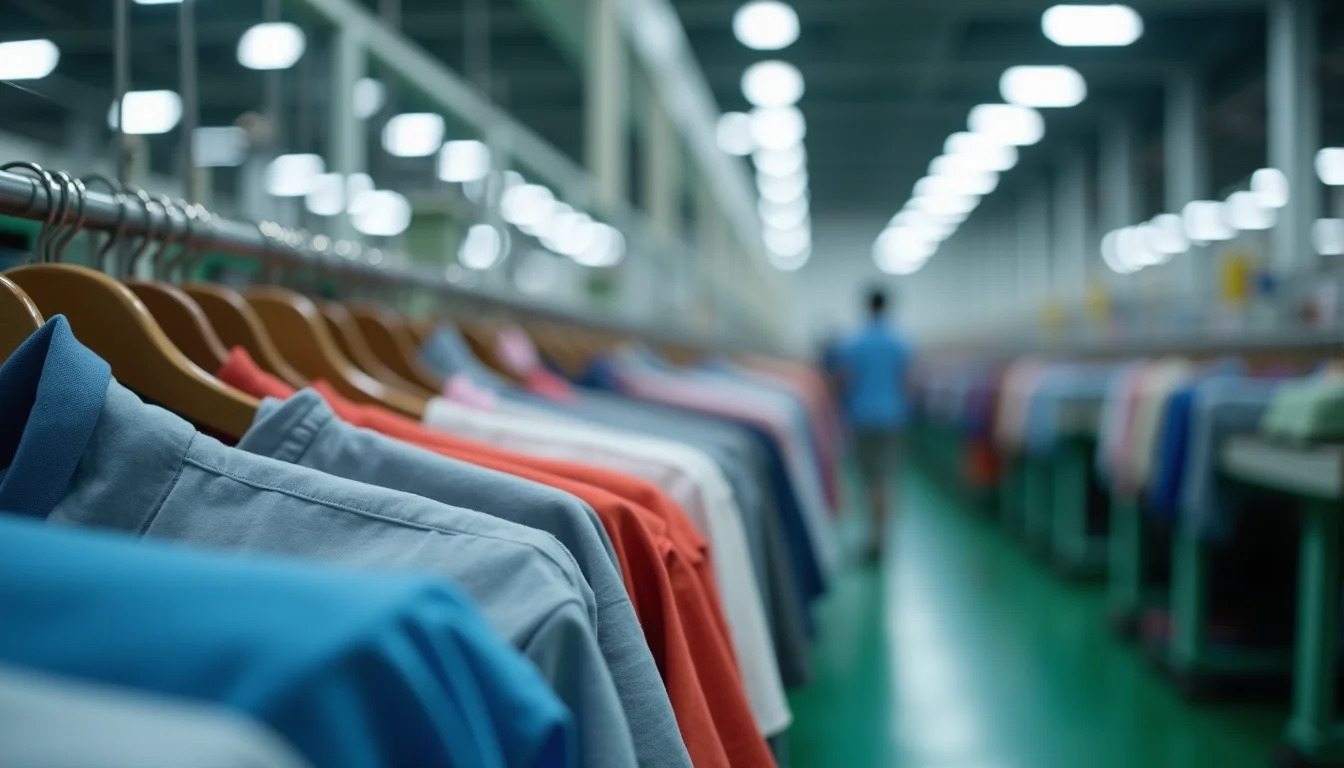
The Delhi warehouse in Khanpur, South Delhi solves this. We maintain 1 lakh+ pieces in ready stock there at any given time — across all GSM variants, all colors, all sizes. For buyers in North India, this means 1-2 day delivery. For buyers elsewhere in India, it means the stock is already in transit before the factory could even have packed the order.
For buyers in other parts of India who need plain t-shirt blanks urgently, the Delhi wholesale delivery model with 1-2 day train transit is worth understanding — it changes what "near me" means for plain t-shirt procurement in India.
We also export internationally — via courier for smaller quantities, via sea transport for larger volumes. The same in-house fabric quality that Indian printers rely on is what makes the product viable for international buyers who have consistent GSM expectations.
Operational fact: 1,25,232+ pieces were shipped in the last 30 days. That volume is only possible with a combined Tiruppur manufacturing + Delhi ready-stock model. Neither location alone could sustain it.
The "Perfect Conditions" Trap — And the Only Way Out
"Main tab shuru karunga jab thoda aur paisa ho." "Jab market thoda stabilize hoga." "Jab mujhe sab kuch pata chal jaega."
These are the sentences that have delayed more businesses than any bad economy or competitive market ever has. The person waiting for perfect conditions is waiting for something that structurally cannot arrive — because every new level of knowledge reveals new uncertainty, and more capital always reveals more ways to spend it.
The actual entry point for most businesses is simpler than it looks. For a printer buying plain blanks: start with 10 pieces. Evaluate. Order 100. Evaluate. Build from there. For someone starting a wholesale operation: the infrastructure doesn't need to be complete before you take the first order. Take the order. Figure out the delivery. Build the infrastructure on the revenue from actual orders, not hypothetical ones.
Zyada se zyada kya hoga — ek roti kam kha loge. That's the actual downside. And it's survivable.
Checklist: What I'd Do Differently If I Started the T-Shirt Wholesale Business Today (Original Decision Map)
This is the one section I haven't seen written anywhere else — not a generic "how to start a business" list, but a specific decision checklist for someone entering the plain t-shirt wholesale or custom printing space in India today, based on real patterns from 9 years of operation.
- Lock your niche before your product range. Are you serving DTG printers? Screen print shops? Streetwear brands? Each has different GSM preferences. DTG needs 180-200 GSM for ink absorption. Screen print can work across 180-220 GSM. Streetwear brands increasingly want 220 GSM+ or oversized cuts. Knowing your customer defines your catalog.
- Separate your product decision from your pricing decision. Choose what to sell based on what your customer needs. Set the price based on your cost + sustainable margin. Don't let a competitor's price dictate your product selection.
- Always sample before bulk. Even from a supplier you trust. GSM, bio-wash finish, and pre-shrunk behavior can shift between batches if the supplier is sourcing externally. An in-house manufacturer has fewer variables, but the sample habit protects you regardless.
- Start with COD where available, move to prepaid fast. COD is a trust bridge for first orders. But staying on COD forever (as a buyer) means you never build the kind of relationship with a supplier that gets you priority stock allocation and early access to new products.
- Don't optimize for cheapest blank cost in year one. Optimize for consistency. The cost of reprinting 200 units because the fabric shrank differently than expected is always higher than the ₹2-3 per piece you saved on the blank.
- Build one system before you scale. Whether it's your print process, your ordering process, or your customer communication — one tight system beats three loose ones every time.
- Track your volume monthly, not just revenue. Revenue hides margin problems. Volume tells you whether your operations are actually running efficiently. 1,25,232 pieces in 30 days isn't a random number — it's the output of a system where procurement, manufacturing, warehousing, and dispatch are all calibrated to each other.
Watch the Video
This article is the expanded written version of a YouTube Short I recorded at home — unscripted, unfiltered. Watch it here:
Frequently Asked Questions
More Articles




Ready to Order Plain T-Shirts in Bulk?
1 lakh+ pieces in ready stock. MOQ from 10 pieces. ₹3 off per piece when you order online. 50% COD available on first order.
Order at Sale91.com →