Girls Hoodies Plain Wholesale — How Adding This Category Took Turnover From ₹1.5L to ₹4.5L 🚀

In the custom printing business, everyone is chasing the same products. Men's round-neck t-shirts, oversized tees, printed quotes — the usual suspects. But there is an entire segment of the market that most small printing entrepreneurs completely ignore: girls hoodies. Not because the demand is not there. It is very much there. The problem is supply — specifically, the availability of quality plain girls hoodies in wholesale quantities suitable for DTF, DTG, screen print, or heat-transfer printing.
This article tells the real story of one of our customers who discovered this category gap, acted on it, and saw his monthly turnover triple in under 90 days. We will also walk you through the fabric, GSM, printing compatibility, pricing margins, and where to source the right blank hoodies from a reliable manufacturer.
The Real Story — From Stagnation to ₹4.5L/Month
Let us set the scene. This customer — a custom printing business owner from a Tier 2 city in India — had been running his shop for over a year. He was good at what he did. His DTF print quality was excellent. His turnaround time was fast. He had a loyal customer base. But his monthly revenue had plateaued at ₹1.5 lakh. Month after month, the same number.
When we spoke to him, the first question was simple: "What do you sell for girls?" His answer? "Nothing, really." He sold printed men's t-shirts almost exclusively. Some unisex oversized tees occasionally. But nothing specifically targeted at women or girls.
We asked him to do a simple survey — just ask ten people in his city where they buy printed girls hoodies. The answer was revealing: nobody in his city sold them. Girls who wanted a printed hoodie either ordered online from big e-commerce platforms (with long delivery times and no customisation) or simply did not buy one. The demand existed. The local supply did not.
"Nobody in his city sold printed girls hoodies. Demand existed but supply didn't. That was the real problem — and the real opportunity."
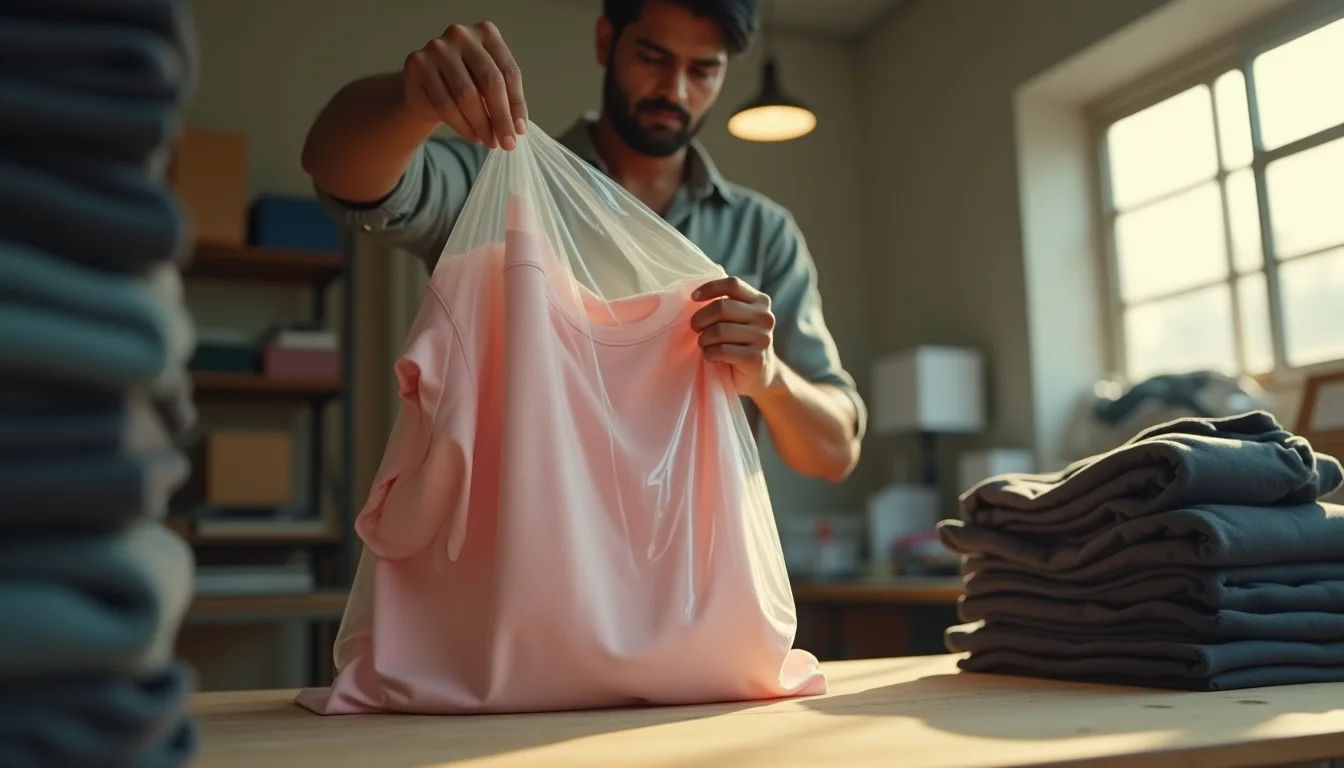
He decided to test the market. He ordered 50 pieces of plain girls hoodies in pastel colours — blush pink, lavender, mint green, off-white, and beige — from a wholesale supplier. He applied DTF prints: trendy quotes, aesthetic floral designs, college-style text. He priced them between ₹800 and ₹1,200 per piece, depending on the print complexity.
All 50 pieces sold within the first month. He reordered 200 pieces. By month three, his turnover had crossed ₹4.5 lakh. One category. Same shop. Same equipment. Same effort — just directed at an untapped market.
Why Girls Hoodies Are the Most Underserved Category in Custom Printing
The custom printing business in India is heavily skewed towards men's apparel. This makes sense historically — men's t-shirts were the entry point for most printing entrepreneurs, and the wholesale supply chain for men's blank tees is well-established. But the women's and girls' segment is catching up fast, driven by college culture, social media fashion trends, and the rise of women-led small businesses reselling custom-printed apparel.
According to our own sales data from Sale91.com, demand for women's and girls' blank hoodies has grown significantly in recent years, particularly in college towns and metro cities. And yet, most local printing shops have no women's-specific inventory at all. That gap is your opportunity.
If you are researching the broader college merch demand for girls hoodies in India, the numbers are even more striking — college students are among the highest-frequency buyers of printed apparel, and girls' hoodies are a top requested item that most local printers simply cannot fulfil.
Why Girls Hoodies Specifically — Not Just Women's T-Shirts?
- Higher selling price: A plain girls hoodie retails at ₹800–₹1,200, while a printed t-shirt rarely crosses ₹500. Same print effort, nearly double the revenue per piece.
- Higher perceived value: Hoodies feel premium. Customers are more willing to pay for customised hoodies than plain-printed tees.
- Seasonal advantage: Hoodies sell strongly from September through March — a six-month selling window that aligns with India's cool season and peak college activity.
- Gifting segment: Printed hoodies are popular gifts for birthdays, friendships, college fests, and Valentine's Day. This creates repeat, occasion-driven demand.
- Social media virality: Aesthetic hoodies photograph beautifully and are shared widely on Instagram and Pinterest, driving organic word-of-mouth for small printing businesses.
The Fabric Question — Why 240 GSM Is the Sweet Spot for Girls Hoodies
One of the most common mistakes printing entrepreneurs make when sourcing blank hoodies is ignoring GSM — Grams per Square Metre, the measure of fabric weight and density. Get the GSM wrong and you will face complaints about flimsy fabric, poor print adhesion, or shrinkage after washing.
For girls hoodies, the recommended GSM is 240 GSM. Here is why this matters for a printing business specifically:
- Dense, stable fabric surface — DTF prints bond strongly without cracking or peeling
- Enough body weight to feel premium, without being too heavy for Indian climate
- Pre-shrunk and bio-washed — dimensions remain stable after multiple washes, print stays intact
- Ring-spun combed cotton — smoother yarn gives a cleaner print surface than open-end spun cotton
- 100% cotton — better ink absorption for DTF, no polyester bleed issues
It is worth understanding the difference between GSM options before placing a bulk order. Many new buyers order 320 GSM or 430 GSM hoodies assuming heavier always means better — but for a printing business selling to college students and young women, 240 GSM strikes the ideal balance between quality and wearability in Indian conditions. If you want to understand this nuance in depth, this article on why heavier GSM can sometimes feel cheaper is a must-read — the same principles apply to hoodies.
At BulkPlainTshirt.com, our plain hoodies are manufactured in-house at our Tiruppur facility using 100% ring-spun combed cotton at 240 GSM, bio-washed and pre-shrunk. We do not resell — we knit our own fabric. This means consistent GSM, consistent colour, and consistent quality across every order.
The Colour Strategy — Why Pastels Sold Out First
The customer in our story specifically chose pastel colours for his first batch — and this was not an accident. Pastel tones are the dominant colour preference for girls' printed apparel in India right now, driven by Instagram aesthetics, K-pop influenced fashion, and the "clean girl" visual trend that has been growing since 2022.
Top Selling Colours for Girls Hoodies in India (2025–26)
- Blush Pink / Baby Pink
- Lavender / Lilac
- Mint Green / Sage
- Off-White / Cream
- Dusty Rose / Mauve
- Powder Blue
- Peach / Apricot
- Beige / Sand
These colours also work exceptionally well with DTF printing because the light base allows vibrant, full-colour designs to pop without any pre-treatment (unlike dark garments that require white underbase layers for DTF prints, which adds cost and complexity).
Our plain hoodies are available in 15+ colours including several pastel options — you can browse the full range in our product catalog and select based on what your local market demands.
The Margin Math — Why This Category Pays Better Than Men's T-Shirts
Let us do the actual numbers so you can see why our customer's turnover tripled even though his volume did not triple:
| Metric | Men's Printed T-Shirt | Girls Printed Hoodie |
|---|---|---|
| Blank garment cost (wholesale) | ₹120–₹180 | ₹280–₹350 |
| Printing cost (DTF) | ₹40–₹60 | ₹60–₹90 |
| Total cost per piece | ₹160–₹240 | ₹340–₹440 |
| Selling price | ₹350–₹500 | ₹800–₹1,200 |
| Margin per piece | ₹110–₹260 | ₹360–₹760 |
| Margin % (approx.) | 45–55% | 55–70% |
The margin per piece on a girls hoodie is nearly 3 times higher than on a men's t-shirt, even though the effort — designing, printing, packaging, selling — is essentially the same. You do not need to sell 3x more pieces to earn 3x more revenue. You just need to sell a higher-value product.
This is exactly what happened with our customer. His actual unit volume did not triple. His revenue per unit did.
Printing Compatibility — DTF, DTG, Screen Print, and Heat Transfer on Plain Hoodies
One concern printing entrepreneurs have when adding hoodies to their lineup is whether their existing equipment and workflow handles hoodie fabric well. Here is a quick compatibility guide:
DTF (Direct to Film) Printing — Best Choice for Hoodies
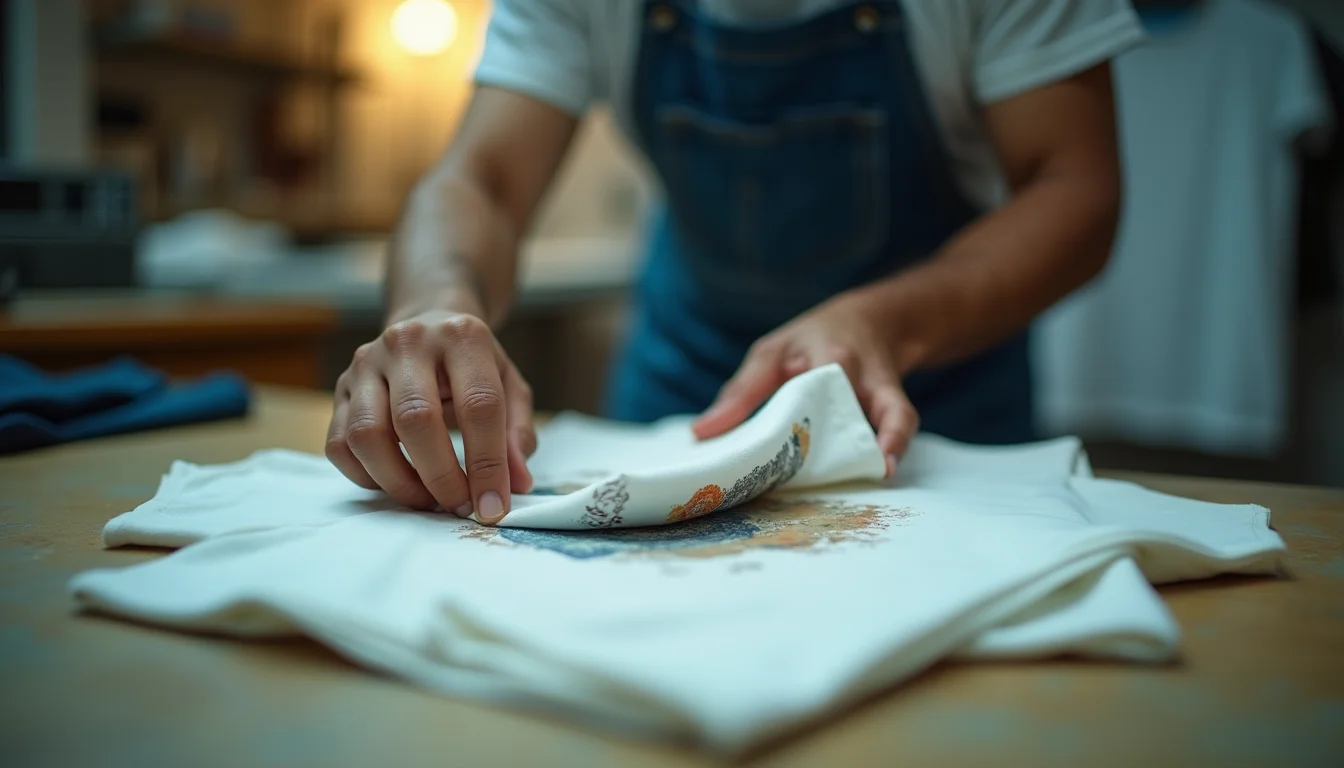
DTF is currently the most popular choice for printing on plain hoodies in India, and for good reason. The film-based transfer method works beautifully on 240 GSM cotton fabric — the print adheres firmly, retains colour after washing, and does not crack or peel even with repeated use. Pastel hoodies with DTF prints have excellent washfastness when the pressing temperature and pressure are calibrated correctly. Our 240 GSM bio-washed hoodies are specifically manufactured with this process in mind — the enzyme treatment during bio-washing creates a smooth, uniform surface that DTF transfers bond to reliably.
Note: If you are new to DTF printing and worried about waste percentage on your first hoodie batch, be sure to read about waste percentage in first-time printing runs — the same considerations apply to hoodies, and forewarned is forearmed.
Screen Printing — Works Well for Bulk Orders
Screen printing on hoodies is highly effective for bulk orders with the same design (50+ pieces per design). The thicker 240 GSM fabric holds ink layers well without bleed-through. For small-quantity, multi-design orders, DTF is more cost-effective because it requires no screen setup charges.
Heat Transfer Vinyl (HTV)
HTV works on hoodies for simple 1-2 colour designs and is popular for name/number customisation (college sports teams, club hoodies). Cotton hoodies accept HTV well at standard pressing temperatures (150–165°C).
DTG (Direct to Garment)
DTG printing on hoodies requires pre-treatment on light-coloured garments for best results. Our bio-washed 240 GSM hoodies provide a receptive surface for DTG ink, though DTF remains the preferred method for most Indian printing setups.
How to Find the Category Gap in Your Area
The most important lesson from this customer's story is not "sell girls hoodies." The real lesson is: find the category gap in your specific area and fill it. Girls hoodies happened to be the gap in his city. In your city, it might be kids' hoodies, acid wash tees for men, or plus-size printed tops. The methodology is the same:
- Survey your existing customers: Ask them what printed apparel they wish they could buy locally but cannot find.
- Check local competitors: Walk into or browse every custom printing shop in a 10-km radius. What do they NOT stock?
- Watch social media locally: What is being shared on local college groups, WhatsApp communities, and Instagram accounts? What are people wearing that they probably ordered online?
- Test with a small MOQ: Start with 25–50 pieces in the most demanded colour and design style. Validate demand before scaling.
- Price confidently: Customers are willing to pay a premium for locally-available, custom-printed premium products. Do not underprice to compete with online marketplaces.
"Find the category gap in your area. That's it. That single sentence is worth more than any marketing course."
Where to Source Plain Girls Hoodies for Wholesale Printing Business
Sourcing the right blank hoodie is as important as the printing itself. A poor-quality blank will lead to complaints, returns, and damaged reputation — even if your prints are perfect. Here is what to look for in a wholesale blank hoodie supplier:
- Own manufacturing (not a trader): Suppliers who manufacture their own fabric give you consistent GSM, colour, and quality. Traders who resell mixed-source stock cannot guarantee consistency.
- Bio-washed and pre-shrunk: Essential for print stability. Non-bio-washed hoodies shrink after the first wash, distorting prints.
- Ring-spun combed cotton: Smoother yarn, better print surface, more comfortable to wear. Avoid open-end spun cotton for premium printed products.
- Ready stock availability: For a printing business, fast replenishment is critical. You need a supplier with large ready stock, not a 30-day lead time.
- Low MOQ for testing: When testing a new category, you want to start with small quantities. Look for suppliers with MOQ as low as 10–25 pieces.
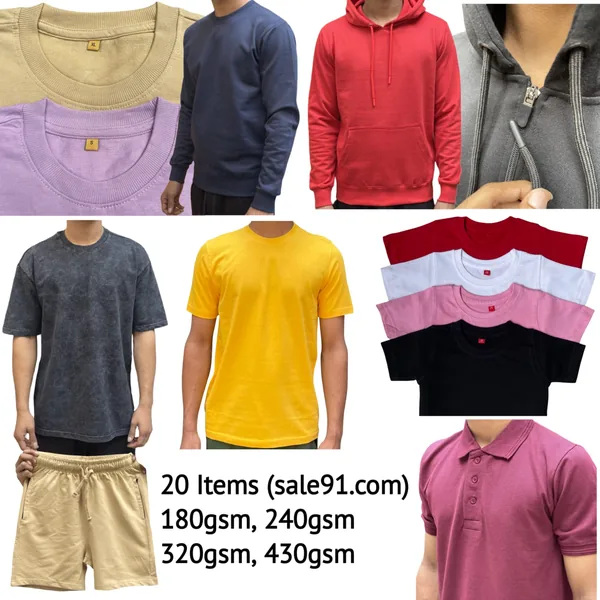
At Sale91.com, we manufacture and stock all these products in-house. Our plain hoodies are knitted at our Tiruppur facility, warehoused in Delhi (Khanpur, South Delhi), and shipped PAN India with fast turnaround. We maintain 1 lakh+ pieces in ready stock at any time across all categories, and our MOQ starts from just 10 pieces for ready stock items — making it easy to test new categories without over-committing capital.
Current Pricing Benefits at Sale91.com
- ₹3/piece discount for online purchases on any quantity
- ₹2/piece additional discount for 500+ piece orders
- 50% COD available on first orders for new buyers (+ 3% COD charge)
- From second order onwards: prepaid terms
- Export orders accepted — courier or sea transport to international destinations
Scaling from 50 Pieces to 500 — What Our Customer Did Next
After his initial 50-piece test sold out, our customer did not immediately jump to ordering 500 pieces. He was methodical. Month 2, he ordered 150 pieces — five colours, 30 pieces each. He tracked which colours sold fastest (blush pink and lavender moved first, every time), which designs drove repeat customers, and what price points customers were most comfortable with.
By month 3, he had enough data to place a 500-piece order with confidence. At that quantity, he qualified for the ₹2/piece bulk discount from Sale91.com, bringing his per-piece hoodie cost down further and improving his margin. He also began approaching local college canteen vendors and small boutiques in his city to supply ready-printed hoodies on a wholesale basis — creating a B2B channel alongside his direct-to-customer retail.
One important lesson he shared: always get a sample and test the GSM and print compatibility before placing a large order. We have documented a cautionary tale about what happens when buyers skip this step in our article about the costly GSM mistake that cost one buyer lakhs — worth reading before you scale.
Timeline of Growth
| Month | Units Ordered | Turnover | Key Action |
|---|---|---|---|
| Before girls hoodies | Men's tees only | ₹1.5L | Plateau — no growth |
| Month 1 | 50 hoodies (test) | ₹2.1L | All 50 sold — validated demand |
| Month 2 | 150 hoodies | ₹3.2L | Colour data collected, repeat buyers |
| Month 3 | 500 hoodies | ₹4.5L | Wholesale channel added, bulk discount |
Practical Tips for Starting Your Girls Hoodie Category
1. Start With Pastel Tones, Not Dark Colours
Pastel colours dominate the girls' hoodie market. They photograph better, print more vibrantly with DTF (no underbase needed), and appeal to the widest demographic of young women buyers.
2. Focus on Aesthetic and Quote-Based Designs
For the Indian girls' market, the best-performing print themes are: minimalist botanical/floral designs, motivational quotes in stylised fonts, pop culture references (anime, K-pop), and college/city pride graphics.
3. Use Social Media to Sell Before You Stock
Before ordering 100+ pieces, post mock-ups on Instagram and take pre-orders. This validates demand with zero inventory risk and generates initial capital to fund your stock purchase.
4. Price at ₹899–₹1,199 — Do Not Underprice
Many first-time sellers underprice because they are nervous. Resist the temptation. A well-printed, quality hoodie commands premium pricing. Pricing too low actually signals lower quality to buyers in this segment.
5. Offer College Group Customisation
Colleges are your biggest B2B customer for printed hoodies. Approach student councils, sports teams, and college clubs with bulk pricing for custom-name hoodies. Even a 20-piece college order at ₹900/piece = ₹18,000 revenue in a single transaction.