Polyester vs Cotton T-Shirt in Rain — ₹80K Stock Loss & Monsoon Storage Mistake for Bulk Printers

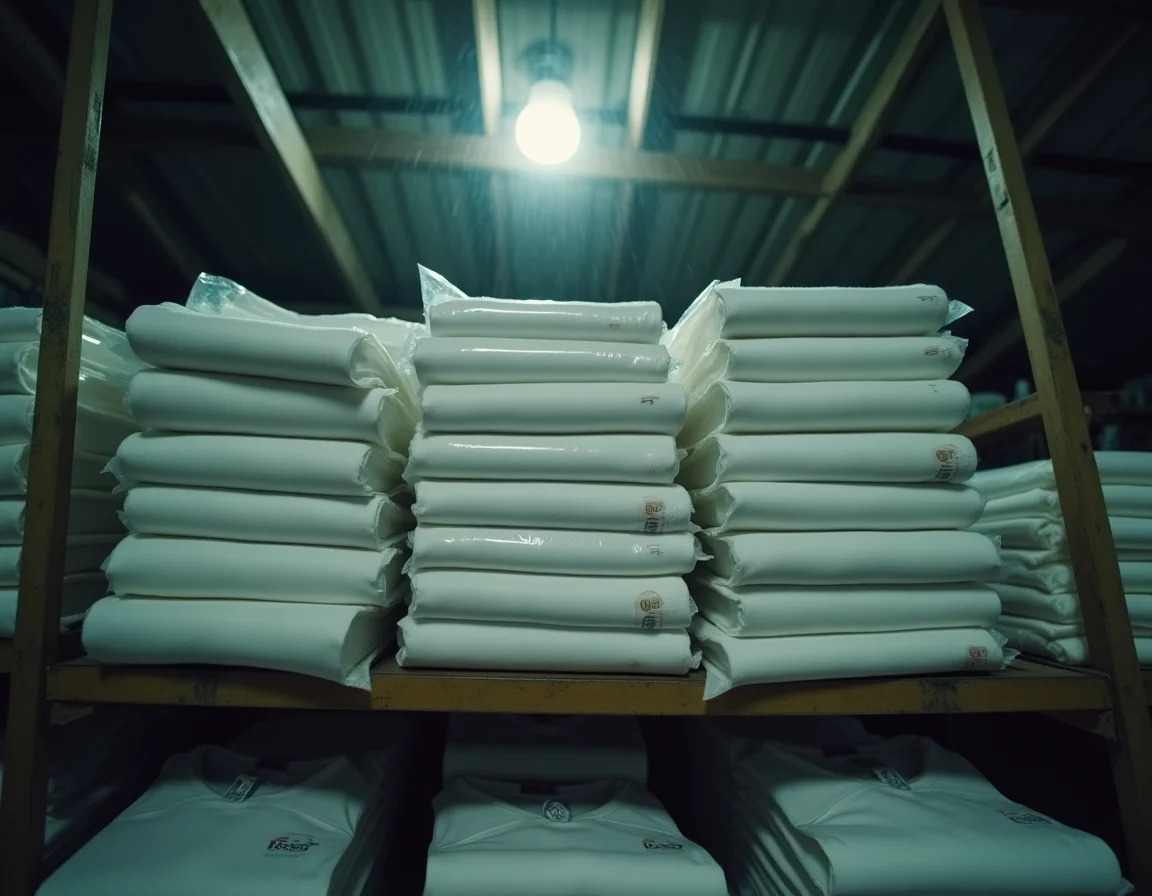
It started like any normal monsoon season. A printing business in Delhi had stored roughly 1,000 plain cotton t-shirts and several hundred polyester pieces together in a warehouse. Heavy rains came. Water seeped in through a corner of the floor. Three days later, the owner opened the stock to find fungus spreading across an entire pile — the polyester pieces were completely fine, but the cotton t-shirts were ruined beyond use. The total loss? Over ₹80,000.
This is not an isolated story. Every monsoon season, dozens of printing businesses across India lose significant inventory because they do not understand one fundamental truth: cotton and polyester behave completely differently when exposed to moisture. If you run a DTG, DTF, screen printing, or heat-transfer business, this article could save you from the same costly mistake.
The Science: Why Cotton Absorbs Moisture and Polyester Doesn't
To understand why cotton is vulnerable during monsoon, you need to understand the basic fiber chemistry. Cotton is a natural, cellulosic fiber. Its molecular structure is hygroscopic — meaning it actively attracts and holds water molecules. When humidity rises above 70% (which is common throughout India's monsoon season), cotton fibers begin absorbing moisture from the surrounding air even without direct water contact.
In contrast, polyester is a synthetic polymer. Its molecular structure is essentially hydrophobic — it repels water rather than absorbing it. Even after direct contact with rain, polyester dries quickly because moisture sits on the surface of the fabric rather than being absorbed into the fiber structure. This is why your polyester stock was perfectly fine even after the warehouse flooding incident.
Here is what this means practically for your warehouse in July or August:
- A stack of 500 cotton t-shirts packed tightly together acts like a giant sponge — once the outer layers absorb moisture, they transfer it inward
- Tightly packed cotton creates an anaerobic (low-oxygen) microenvironment — exactly the conditions where fungus, mildew, and bacteria thrive
- Cotton with absorbed moisture starts showing visible fungal growth within 48–72 hours in humid Indian monsoon conditions
- The fungus spreads from piece to piece through the pile — meaning even pieces that did not directly contact water can be destroyed
The ₹80,000 Loss — Breaking Down What Went Wrong
Let's understand the actual sequence of events in this real-world case and identify each mistake that contributed to the loss.
Mistake #1: Mixed Storage Without Separation
The polyester and cotton pieces were stored together in the same area. When moisture entered, the polyester pieces absorbed no moisture, but they also provided no barrier for the cotton — the cotton pile absorbed moisture freely. If cotton had been elevated and separated, the damage might have been contained to a smaller quantity.
Mistake #2: Direct Floor Storage
The t-shirts were stored in bags or cartons placed directly on the floor. In Indian warehouses — especially in Delhi, Mumbai, Surat, or any coastal/semi-coastal city — ground-level moisture during monsoon is a serious risk. Water doesn't have to visibly flood a space to cause damage; capillary action through concrete floors is enough to wet the bottom layers of cartons.
Mistake #3: No Silica Gel or Moisture Absorbers
No silica gel packets were placed inside the storage cartons or bags. Silica gel is inexpensive — a 500g pouch costs less than ₹50 — and it can absorb significant amounts of moisture from enclosed spaces. For a printing business storing lakhs of rupees worth of fabric, this is one of the cheapest insurance policies available.
Mistake #4: No Airflow Between Stacks
The pieces were packed tightly together without any air circulation. Even in a perfectly dry environment, tight fabric stacking creates humidity pockets over time. During monsoon, this effect is dramatically amplified.

Polyester vs Cotton T-Shirt: Full Monsoon Comparison
This is not just about storage — understanding the fabric difference matters at every step of your printing business, from ordering to delivering to your end customers. If you've ever wondered about why 200 pieces got returned in a bulk monsoon order, the fabric choice was almost certainly the root cause.
| Property | Cotton T-Shirt | Polyester T-Shirt |
|---|---|---|
| Moisture Absorption | High — absorbs 7–8% of its weight in water | Minimal — repels moisture |
| Drying Time | Slow — 3–5x longer than polyester | Fast — dries within hours |
| Fungus Risk in Monsoon | Very High — visible growth in 48–72 hrs | Very Low — moisture doesn't penetrate |
| Smell After Wetting | Strong musty/mildew odor if not dried fast | Minimal odor retention |
| Skin Feel / Comfort | Soft, breathable, natural feel | Synthetic feel, less breathable |
| Print Quality (DTG/DTF) | Excellent — cotton absorbs ink deeply | Needs special pretreatment; less vibrant |
| Customer Preference in India | Very High — especially 200–220 GSM | Moderate — preferred for sportswear |
| Storage Risk (Monsoon) | High — requires careful handling | Low — forgiving in humid conditions |
| Price Point (Bulk) | Similar base cost at same GSM | Similar or slightly lower |
The table makes one thing very clear: cotton wins on almost every customer-facing metric — comfort, print quality, market preference — but loses significantly on monsoon storage resilience. This means the problem is not with cotton as a fabric choice. The problem is with how cotton is stored and handled during the rainy season.
Why Printing Businesses Prefer Cotton Despite the Risk
If polyester is so much easier to manage during monsoon, why do the majority of India's printing businesses — from Tiruppur to Delhi, from Surat to Kolkata — still prefer 100% cotton t-shirts as their primary printing blank?
The answer lies in print quality and customer satisfaction. DTG printing on cotton produces dramatically better results than on polyester. Cotton fibers absorb water-based inks deeply and evenly, giving prints sharp edges, vibrant colors, and excellent wash durability. Polyester requires a chemical pretreatment, and even then the print quality rarely matches cotton. For DTF heat-transfer printing, cotton provides better adhesion and softer hand feel after transfer.
More importantly, Indian consumers overwhelmingly prefer cotton. In a hot and humid country like India, cotton's breathability is not a premium feature — it's a baseline expectation. A customer who receives a polyester t-shirt when they expected cotton will return it. And as we've covered in our article on COD orders gone wrong, returns can cascade into serious cash flow problems for printing businesses.
The solution, therefore, is not to switch to polyester — it's to learn how to store cotton correctly during monsoon season.
The Complete Monsoon Storage Guide for Bulk Cotton T-Shirts
These are not theoretical tips. These are practical, field-tested methods used by experienced warehouse operators in Tiruppur, the hub of Indian cotton textile manufacturing, where humidity during monsoon regularly exceeds 80%.
1. Raise All Stock Off the Floor
This is the single most important step. Use wooden pallets, plastic pallets, or metal racking to keep all cotton t-shirt stock at least 4–6 inches off the ground. Ground moisture — whether from flooding, seepage, or condensation — will not reach elevated stock. Industrial plastic pallets cost ₹400–₹800 each and are a one-time investment that will last years.
2. Use Silica Gel Packets Inside Every Carton
Place at least 2–3 silica gel packets (100g–200g each) inside every carton of cotton t-shirts before sealing. Silica gel is a desiccant — it absorbs moisture from the air inside the sealed space, keeping relative humidity low enough to prevent fungal growth. Replace or reactivate the packets every 4–6 weeks during monsoon season. You can reactivate silica gel by baking it in an oven at 120°C for 1–2 hours.
3. Create Airflow Between Stacks
Do not stack cartons flush against each other or against walls. Leave at least 3–4 inches of gap between stacks and between stacks and walls. This allows air circulation, which prevents humidity buildup in enclosed pockets between boxes.
4. Seal Cartons Properly
Use heavy-duty packing tape to fully seal all carton flaps and seams. Even better, place the t-shirts in polythene bags inside the carton before sealing the carton. Double containment significantly reduces moisture penetration risk.
5. Monitor Humidity Levels
Invest in a basic digital hygrometer (available for ₹200–₹400 online). Keep it in your warehouse. If humidity consistently reads above 65%, consider running a dehumidifier or keeping bags of calcium chloride moisture absorbers around the storage area.
6. Never Store Wet or Damp Pieces
If any t-shirts have been exposed to moisture — during delivery, during a wet unloading, or during a quality check in rainy conditions — never pack them back with dry stock. Lay them out to dry completely before returning to storage. Even a single damp piece inside a sealed carton can generate enough moisture to affect the entire box.
7. Separate Cotton from Polyester in Storage
Store polyester and cotton in different zones of your warehouse. This is not just for moisture management — it also prevents mix-ups during order fulfillment, which can lead to customer complaints and returns.
GSM and Monsoon: Does Higher GSM Cotton Carry More Risk?
One question printing businesses often ask: does a heavier GSM cotton t-shirt face more monsoon storage risk than a lighter one?
The short answer is yes, but only marginally. A 220 GSM cotton t-shirt has more fiber mass than a 180 GSM shirt, which means it can hold slightly more moisture by weight. However, the primary risk factor is not the GSM of the individual shirt — it's the density of packing and the presence or absence of airflow. A pile of 180 GSM shirts stacked tightly in a humid environment will develop fungus just as quickly as 220 GSM shirts.
What GSM does affect is drying time. If your 220 GSM cotton t-shirts get damp, they will take significantly longer to fully dry than 180 GSM shirts. This matters because incomplete drying before re-storage is one of the most common causes of repeat moisture damage. Always ensure heavier GSM pieces are given extra drying time before being packed.
Quick GSM Reference for Printing Businesses:
180 GSM — Everyday wear, dries faster, good for summer stock
200 GSM — Premium everyday, the most popular choice for printing businesses
210–220 GSM — Heavy premium, longer drying time, needs extra monsoon care
Understanding these nuances matters especially if you're comparing fabric options — for a detailed cost analysis, check out this comparison on polyester blend vs pure cotton drying speed and the ₹12 cost difference involved.
What This Means for Your Bulk T-Shirt Orders This Monsoon
If you're running a printing business and you're about to place a bulk order for this season, here are the key operational decisions you should make right now:
- Order quantities you can realistically store safely — do not over-stock cotton before your warehouse is monsoon-proofed
- Plan storage before the stock arrives — have pallets, silica gel, and sealed cartons ready before delivery day
- Stagger your orders — instead of ordering 2,000 pieces at once, consider ordering 500 every 2 weeks to keep stock fresh and manageable
- Check the GSM and bio-wash specification — bio-washed cotton has enzyme-treated surface fibers that are slightly more resistant to surface dirt and bacterial growth than untreated cotton (though bio-washing doesn't fully protect against deep moisture damage)
- Track your stock age — cotton t-shirts that have been in storage for more than 3 months should be inspected for any early signs of odor or discoloration before printing
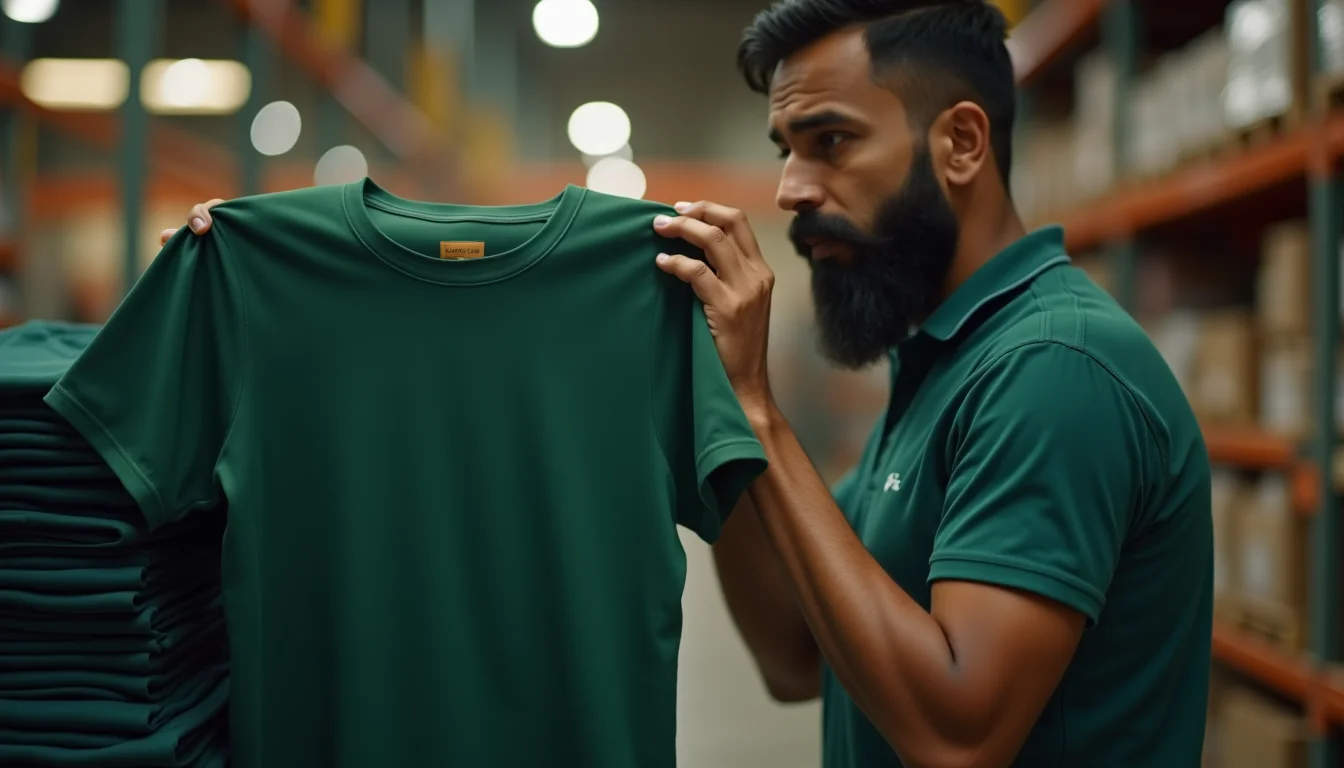
At Sale91.com, all plain t-shirts are manufactured using 100% ring-spun combed cotton and are bio-washed before shipping. Bio-washing enzyme-treats the fabric surface for smoothness and removes loose surface fibers that can harbor bacteria. Combined with pre-shrinking, this gives you a premium blank that is as ready as it can be for both printing and responsible storage.
Quick-Reference: Monsoon Checklist for Printing Businesses
Print this out and stick it in your warehouse before monsoon hits:
- ✅ All cotton stock on raised pallets (minimum 4 inches off floor)
- ✅ Silica gel packets placed inside every sealed carton
- ✅ 3–4 inch airflow gaps between all carton stacks
- ✅ Cartons fully taped and ideally double-bagged with polythene inside
- ✅ Hygrometer installed — target <65% relative humidity
- ✅ Cotton and polyester stored in separate warehouse zones
- ✅ No wet or damp pieces returned to storage without full drying
- ✅ Weekly visual inspection during peak monsoon months (July–August)
- ✅ Stock rotation — older pieces used first (FIFO: First In, First Out)
Ordering Bio-Washed Cotton T-Shirts in Bulk — What to Look For
Not all "100% cotton" t-shirts are equal in their ability to withstand India's demanding climate conditions. When placing a bulk order for your printing business, verify these specifications:
- Ring-spun combed cotton: Longer fibers, fewer loose ends, inherently cleaner fabric surface
- Bio-washed: Enzyme treatment removes surface fuzz, reduces bacterial load, and gives a smoother base for printing
- Pre-shrunk: Ensures the t-shirt doesn't change dimensions after the first wash, protecting your print alignment
- Correct GSM for your use case: 180 for everyday/summer stock, 200 for premium, 220 for heavy-premium or oversized
- Manufacturer's direct stock: Buying directly from a manufacturer like Sale91.com means the fabric comes fresh from production — not sitting in a middleman's warehouse for months
You can browse the complete range of bio-washed, ring-spun cotton plain t-shirts available in 15+ colors and multiple GSM options at the BulkPlainTshirt.com product catalog. With over 1 lakh pieces in ready stock at any time, you can order as few as 10 pieces for ready stock items, or place large bulk orders with delivery PAN India.
Sale91.com also offers a ₹3/piece discount for online purchases on any quantity, and 50% COD availability on your first order (with a 3% COD charge) — making it easier to manage cash flow during slower monsoon sales periods.
Watch the Video
See the full story of the ₹80,000 stock loss and the exact monsoon storage mistakes explained in under 60 seconds:
Frequently Asked Questions
More Articles






Order Bio-Washed Cotton T-Shirts in Bulk
Get monsoon-ready with premium 100% ring-spun combed cotton plain t-shirts — bio-washed, pre-shrunk, available in 180 to 220 GSM. Over 1 lakh pieces in ready stock. MOQ as low as 10 pieces. PAN India delivery.
Order Now at Sale91.com →