T-Shirt Colour Bleed in Monsoon — 3 Fabric Mistakes to Check Before Bulk Order in India 🌧️
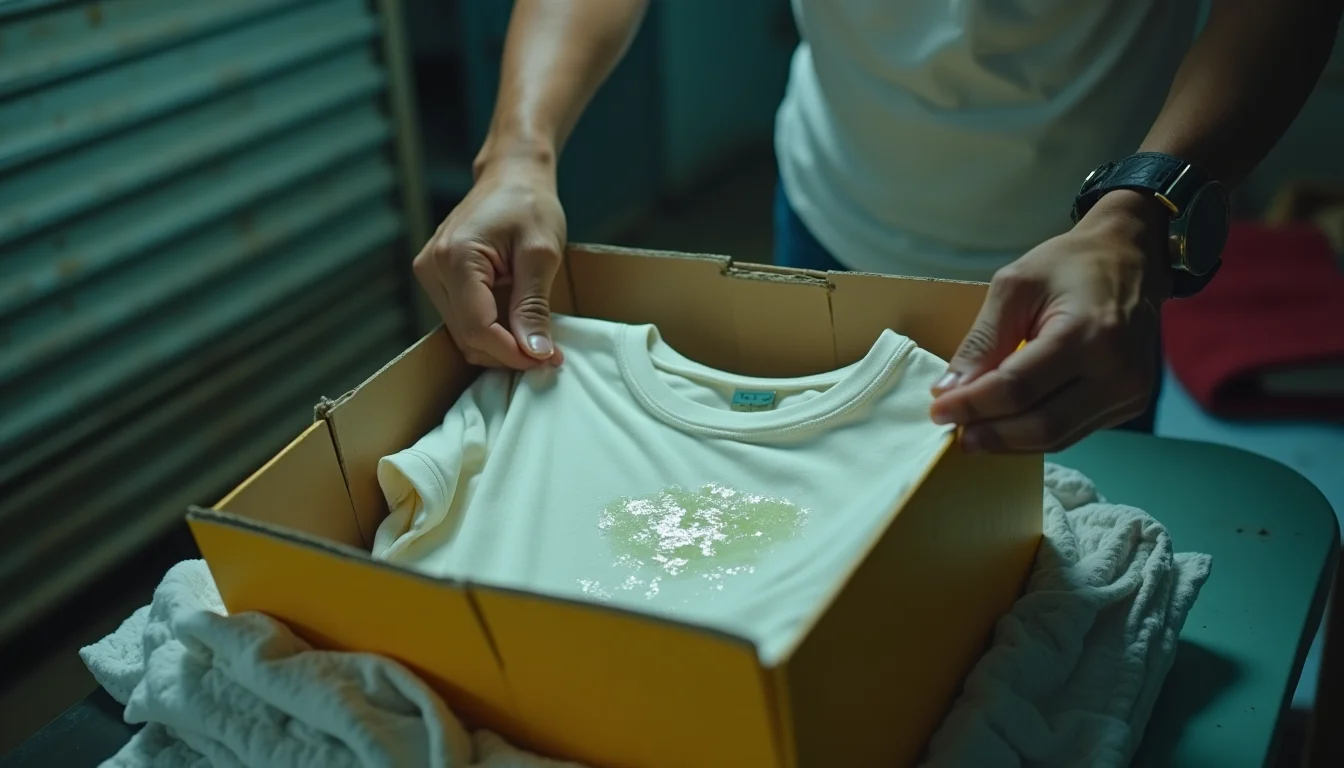
It was a regular June morning — the kind where rain hammers Tiruppur and the air smells of wet cotton. A t-shirt business owner called us in a panic. He had ordered 200 pieces of dark-coloured plain t-shirts from a cheap supplier, printed custom designs on them, and shipped to his clients. Within a week, the complaints started flooding in. The colour had bled onto white garments worn alongside them. One customer's white shirt was ruined. Another's light-coloured bag had stains. The business owner was furious — he blamed the print shop. The print shop blamed the fabric. Nobody had checked the fabric at all.
We asked him one simple question: "Did you check the colour fastness of the blank t-shirt before ordering?" Silence on the phone. He had simply ordered the cheapest option he could find online — no sample, no test, no verification. That decision cost him over ₹80,000 in returns, reprints, and lost clients.
Here's the hard truth that most people in the t-shirt printing business don't want to hear: Monsoon colour bleed is almost never a printing problem. It is a fabric problem. And it comes down to three specific fabric-level mistakes that are entirely avoidable — if you know what to look for before placing that bulk order.
Baarish Mein Colour Gaya? — Don't panic. Read this guide before your next bulk order and save yourself from a costly mistake that ruins your brand reputation.
Whether you're running a DTG studio, a screen printing unit, a heat transfer business, or you're just a reseller who buys plain t-shirts in bulk — this guide is written specifically for you. We'll break down the three fabric mistakes in detail, explain the science behind why colour bleeds in monsoon, and show you exactly how to test before you commit to hundreds or thousands of pieces.
Why Monsoon Makes Colour Bleed Worse: The Science Behind It
Before we dive into the three mistakes, it's important to understand why monsoon season specifically amplifies colour bleed problems in t-shirts. The answer lies in moisture, heat, and friction — three things India's June–September season delivers in abundance.
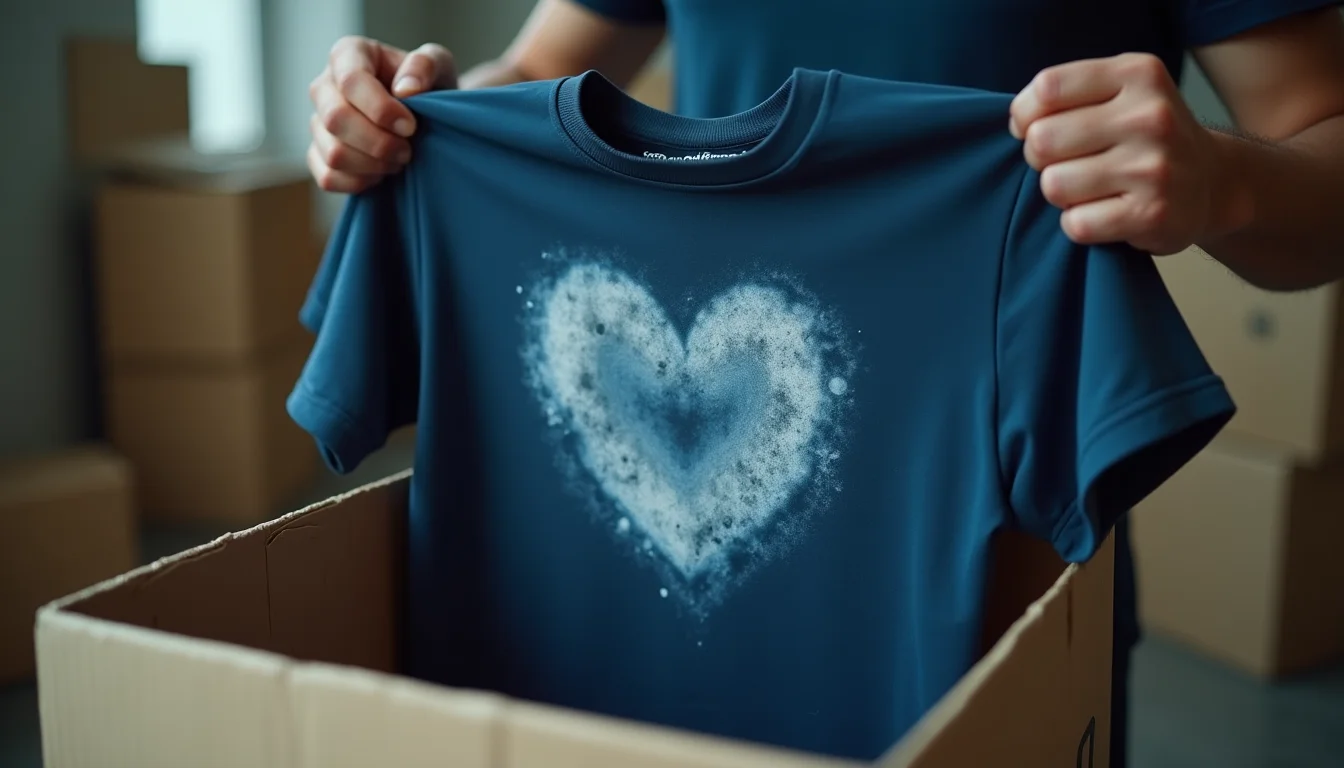
When a t-shirt gets wet — whether from rain, sweat, or washing — the cotton fibres absorb water and swell slightly. This swelling action can dislodge any loosely bonded dye molecules sitting on the surface of the fabric. In high humidity conditions, dye transfer happens even without direct contact with water — just sweating through a damp shirt against another fabric is enough. Add friction from wearing layers or stacking washed garments together, and you have a recipe for colour bleed disaster.
The temperature fluctuations of Indian monsoon — warm humid days and slightly cooler nights — also create repeated wetting and drying cycles that stress the dye bonds further. This is why a t-shirt that survived a January wash test might still bleed colour during July.
Industry term to know: Colour Fastness refers to a fabric's resistance to fading or bleeding under specific conditions — washing, rubbing (crocking), light, perspiration, or rain. It is rated on a scale of 1–5, where 1 is very poor and 5 is excellent.
Fabric Mistake #1: Not Checking the Colour Fastness Rating
Ignoring the Colour Fastness Rating Before Bulk Order
If a fabric's colour fastness rating is below 3 (on the ISO 105 scale), colour bleed in monsoon conditions is virtually guaranteed. Most budget t-shirts from unorganised suppliers don't disclose this number — and buyers don't think to ask.
The ISO 105 colour fastness test series is the global standard used by every serious textile manufacturer. It tests fabrics under washing (ISO 105-C06), rubbing/crocking (ISO 105-X12), perspiration (ISO 105-E04), and water (ISO 105-E01) conditions. The rating runs from 1 to 5:
| Rating | Quality Level | Real-World Meaning |
|---|---|---|
| 5 | Excellent | No colour transfer under any standard conditions |
| 4 | Good | Minimal transfer, suitable for B2B printing use |
| 3 | Moderate | Some transfer under heavy washing or rain — borderline acceptable |
| 2 | Poor | Noticeable bleeding in normal monsoon rain or first wash |
| 1 | Very Poor | Severe bleeding — stains adjacent fabrics, ruins prints |
For any bulk order intended for a custom printing business — especially if you're printing on both light and dark t-shirts in the same batch — you should only accept fabric with a colour fastness rating of 4 or above for washing, and 3.5 or above for wet rubbing (crocking). Anything below 3 is a guaranteed problem when monsoon arrives.
Dark colours — navy blue, black, bottle green, maroon — tend to have more dye concentration and therefore higher risk of bleeding if the dye-to-fibre bond is weak. If you've ever had the problem of a navy blue or black t-shirt bleeding colour onto lighter pieces, this is almost always a colour fastness issue at the fabric level — not something the printer can fix after the fact.
How to Test Colour Fastness at Home (The Wet Rub Method)
You don't need a lab to do a basic colour fastness check. Here's the simple field test that every t-shirt buyer should do before approving a bulk order sample:
- Take a sample piece of the coloured t-shirt you've received
- Wet a small 5cm × 5cm section with clean water (not soaking — just damp)
- Rub the wet area firmly with a white cotton cloth or white tissue 10 times in a back-and-forth motion
- Examine the white cloth: if there is visible colour transfer, the fabric has failed the wet crocking test
- Also soak a small strip in water for 30 minutes and press between two white fabrics overnight — check for staining
⚠️ Important: If any colour transfers to the white cloth during the wet rub test, reject the entire batch. Do not assume it will "wash out" over time — it will only get worse in actual monsoon conditions with repeated wetting and drying cycles.
Fabric Mistake #2: Pigment Dye vs Reactive Dye — Choosing the Wrong Dye Type
Ordering Pigment-Dyed T-Shirts for Monsoon Use Without Knowing the Difference
Reactive dye bonds chemically inside the cotton fibre. Pigment dye sits on the surface and can wash off with moisture and friction. For Indian monsoon conditions, the dye type makes an enormous difference in performance.
This is the one that catches even experienced buyers off guard. Most people assume all fabric dyes work the same way — but the chemistry is completely different between reactive dye and pigment dye, and that difference becomes critical in high-moisture conditions.
Reactive Dye: The Right Choice for Bulk T-Shirts
Reactive dye is the gold standard for dyeing cotton t-shirts in a B2B printing environment. During the dyeing process, reactive dye molecules form a covalent chemical bond directly with the cellulose molecules inside the cotton fibre. This means the dye literally becomes part of the fibre — it cannot be physically washed off or rubbed away under normal conditions. Colour fastness ratings for reactive-dyed fabrics typically range from 4 to 5 for washing and 3.5 to 4.5 for wet crocking.
The advantages for a printing business are significant: reactive dye produces bright, consistent colours; does not interfere with print adhesion for DTG or screen printing inks; and maintains colour vibrancy wash after wash, monsoon after monsoon. This is why all quality bulk plain t-shirts — including those available at Sale91.com — use reactive dye as standard.
Pigment Dye: Lower Cost, Higher Risk in Rain
Pigment dye works differently. Pigment particles do not bond chemically with cotton — instead, they are mechanically bound to the surface of the fibre using a binder (a kind of adhesive resin). This process is cheaper and faster than reactive dyeing, which is why budget t-shirts often use it. However, when the fabric gets wet repeatedly — as it inevitably does during Indian monsoon — the binder breaks down and the pigment particles detach from the surface.
The result: colour bleeds onto adjacent white or light fabrics, stains appear on other garments in the same wash, and the t-shirt itself fades unevenly. For a custom printing business, this is doubly damaging — not only does the base fabric lose colour, but it can also cause the print itself to crack or peel earlier because the surface layer it's bonded to is degrading.
If you want to understand this in more depth with real examples of batches that failed, read our detailed breakdown of the reactive vs pigment dye mistake that ruined 200 pieces in a monsoon season order.
| Property | Reactive Dye | Pigment Dye |
|---|---|---|
| How it bonds | Chemical bond inside cotton fibre | Mechanical bind on surface via resin |
| Colour fastness (wash) | 4–5 (Excellent) | 2–3 (Poor to Moderate) |
| Monsoon performance | Excellent — no bleed | Poor — bleeds in rain/sweat |
| Effect on print adhesion | Neutral — print bonds well | Can cause cracking as surface degrades |
| Cost | Higher (worth it for B2B) | Lower (false economy) |
| Suitable for bulk printing? | ✅ Yes — recommended | ❌ No — avoid for print orders |
How to identify dye type when ordering: Ask your supplier directly — "Is this reactive dyed or pigment dyed?" Any reputable manufacturer will be able to answer immediately. If the supplier doesn't know or avoids the question, that's a red flag. Also, do the wet rub test described above — pigment-dyed fabric will show much more colour transfer on the white cloth compared to reactive-dyed fabric.
Fabric Mistake #3: Skipping Biowash — The Hidden Cause of First-Wash Bleed
Buying Non-Biowashed T-Shirts That Haven't Had Loose Dye Removed
Even with reactive dye, freshly dyed fabric contains residual unfixed dye molecules that haven't fully bonded. Without a biowash (enzyme wash) process, this loose dye is still present in the fabric when you receive it — and it will bleed in the first monsoon rain or wash.
Biowash — also called enzyme wash or bio-enzymatic finishing — is a critical post-dyeing process step that is often skipped by cost-cutting manufacturers. Here's what it does: after dyeing, cotton fabric always contains some amount of residual or "unfixed" dye molecules that didn't successfully bond with the cotton fibre during the dyeing process. If this unfixed dye is not removed, it leaks out at the first opportunity — which in Indian conditions means the first monsoon rain, the first sweat session, or the first hot wash.
The biowash process uses enzymatic solutions to break down and remove this residual dye, along with loose cotton fibres on the surface (which also reduces pilling). After biowash, the fabric has a noticeably smoother hand-feel, and — critically for our purposes — no loose dye remaining to bleed into adjacent fabrics or prints.
Why Biowash Matters Especially for Printing Businesses
When you're printing on a non-biowashed t-shirt, the residual dye in the fabric creates an unpredictable dye migration problem. In heat-based printing processes like DTF (Direct to Film) or heat transfer vinyl, the heat from the press activates the residual dye and drives it upward into the print layer — causing colour ghosting, print discolouration, and adhesion failure. This is a well-known issue in the printing industry, and it's why quality print shops always insist on biowashed blanks.
For screen printing and DTG as well, non-biowashed fabric can cause inconsistent ink absorption because the residual dye and surface fuzz affect how ink sits on the cotton. If you've ever noticed your prints looking great immediately after pressing but fading unevenly after the first monsoon wash — non-biowashed fabric could be the culprit.
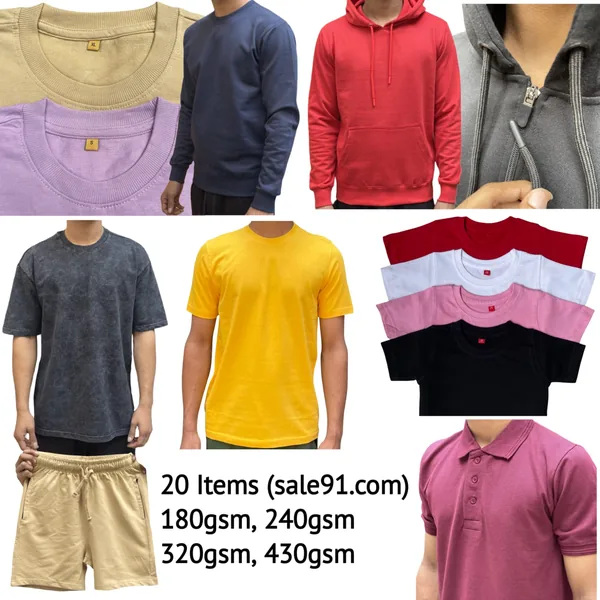
What to look for: Always verify that your blank t-shirt supplier explicitly states "bio-washed" in the product description. At Sale91.com, all plain t-shirts — from 180 GSM everyday wear to 220 GSM heavy premium — are bio-washed as standard. Check the full range at the product catalog.
Biowash vs Pre-Shrunk: Both Are Non-Negotiable
While we're on the topic of fabric finishing, it's worth mentioning that biowash and pre-shrinking are two separate but equally important processes — and both should be present in any quality bulk t-shirt for printing use. Pre-shrinking (sanforization) ensures the fabric won't shrink significantly after the first wash, which is critical when you've already printed a design. A non-pre-shrunk t-shirt can shrink by 5–8% after the first wash, distorting printed graphics and ruining the fit.
Together, biowash + pre-shrink = a fabric that is print-ready, dimensionally stable, and colour-stable in all weather conditions including Indian monsoon. This is why serious bulk buyers never compromise on these two finishing steps — the cost difference is marginal, but the protection they offer is enormous. If you've ever ordered a large batch without verifying these details, this GSM and sample check mistake that cost a buyer lakhs is worth reading before your next order.
The 3-Step Fabric Check Every Bulk Buyer Should Do Before Monsoon Orders
Now that you understand the three fabric mistakes, here is a simple, actionable protocol you should follow before approving any bulk plain t-shirt order — especially ahead of the June to September monsoon season in India.
Step 1: Always Order a Sample First
Never place a bulk order — especially 200 pieces or more — without first ordering and testing a physical sample. The cost of a sample is negligible compared to the potential loss from a bad batch. When you receive the sample, do not just look at it and feel it. Test it.
Step 2: Perform the Wet Rub Test (Crocking Test)
As described earlier: wet a small section of the sample, rub firmly with white cloth 10 times. Any visible colour transfer means the fabric has failed. Also soak a strip in water for 30 minutes, then press between two white fabrics and leave overnight. Check in the morning for any colour staining on the white fabric.
Step 3: Ask Three Direct Questions to Your Supplier
- Q1: "What dye type is used — reactive or pigment?" (Only accept reactive dye for bulk printing orders)
- Q2: "What is the colour fastness rating for washing and wet crocking?" (Accept only 4+ for washing, 3.5+ for wet crocking)
- Q3: "Is the fabric bio-washed and pre-shrunk?" (Both must be yes — no exceptions)
If a supplier cannot answer all three questions confidently and specifically, that is a major red flag. Move on. There are enough quality manufacturers in Tiruppur who can answer all three questions without hesitation — because they've built their entire production process around meeting these standards.
GSM and Colour Stability: Does Higher GSM Mean Less Colour Bleed?
This is a question we get frequently from buyers who are upgrading from cheap 160–170 GSM tees to 200–220 GSM premium fabric. The short answer: GSM alone does not determine colour fastness. A 220 GSM t-shirt dyed with pigment dye will still bleed colour in monsoon. A 180 GSM t-shirt dyed with high-quality reactive dye and biowashed properly will not bleed.
However, higher GSM t-shirts do have indirect benefits for colour stability:
- Heavier fabrics absorb and release water more slowly, reducing rapid dye stress from quick wet-dry cycles
- Premium 200–220 GSM t-shirts from quality manufacturers are almost always ring-spun combed cotton, which means the yarn is tighter, more uniform, and holds dye more effectively
- Higher-end manufacturers who produce 220 GSM fabric are more likely to use the full quality finishing chain — reactive dye, biowash, pre-shrink — because their buyers demand it
So while GSM is not the primary factor, it is a reasonable proxy for overall fabric quality when comparing suppliers. A supplier selling 180 GSM biowashed reactive-dyed tees is offering excellent value. A supplier selling 220 GSM non-biowashed pigment-dyed tees is selling a false premium.
A Real-World Warning: ₹80,000 Lost in One Monsoon Season
Let's come back to the story we started with. That buyer lost ₹80,000 — not on the cheapest tees in the world, but on a batch that was priced "reasonably" at a mid-range price point. The problem wasn't that he was the most budget-conscious buyer in the market. The problem was that he had no system for quality verification.
Here's the breakdown of how that ₹80,000 loss happened:
- 500 pieces × ₹80 per piece = ₹40,000 in garment cost (wasted — couldn't be resold)
- Printing cost already incurred: ₹22,000 (screen print setup + ink + labour)
- Return shipping and client refunds: ₹11,000
- Lost client contract renewal: estimated ₹30,000+ in future business
Total damage: over ₹80,000 — from a quality check that would have cost him ₹200 in sample costs and 30 minutes of his time.
Wet the sample. Rub on white cloth. If colour transfers, reject. — This one check, done before every bulk order, would have saved that entire business from a monsoon disaster.
Watch the Video
Watch our short explainer video where we break down all three fabric mistakes in under 60 seconds — perfect to share with your team or any printing partner before the next bulk order season:
Frequently Asked Questions
More Articles

Order Monsoon-Safe Bulk Plain T-Shirts
All t-shirts at Sale91.com are reactive-dyed, bio-washed, pre-shrunk, and made from 100% ring-spun combed cotton. 1 lakh+ pieces ready stock. MOQ from just 10 pieces. 50% COD available for first orders.
Serving DTG, DTF, screen print, and heat transfer businesses PAN India — and exporting worldwide from Tiruppur & Delhi.
Order at Sale91.com →