T-Shirt Colour Bleeding Test Before Bulk Order — ₹5 Trick That Saved 300 Pieces in Monsoon
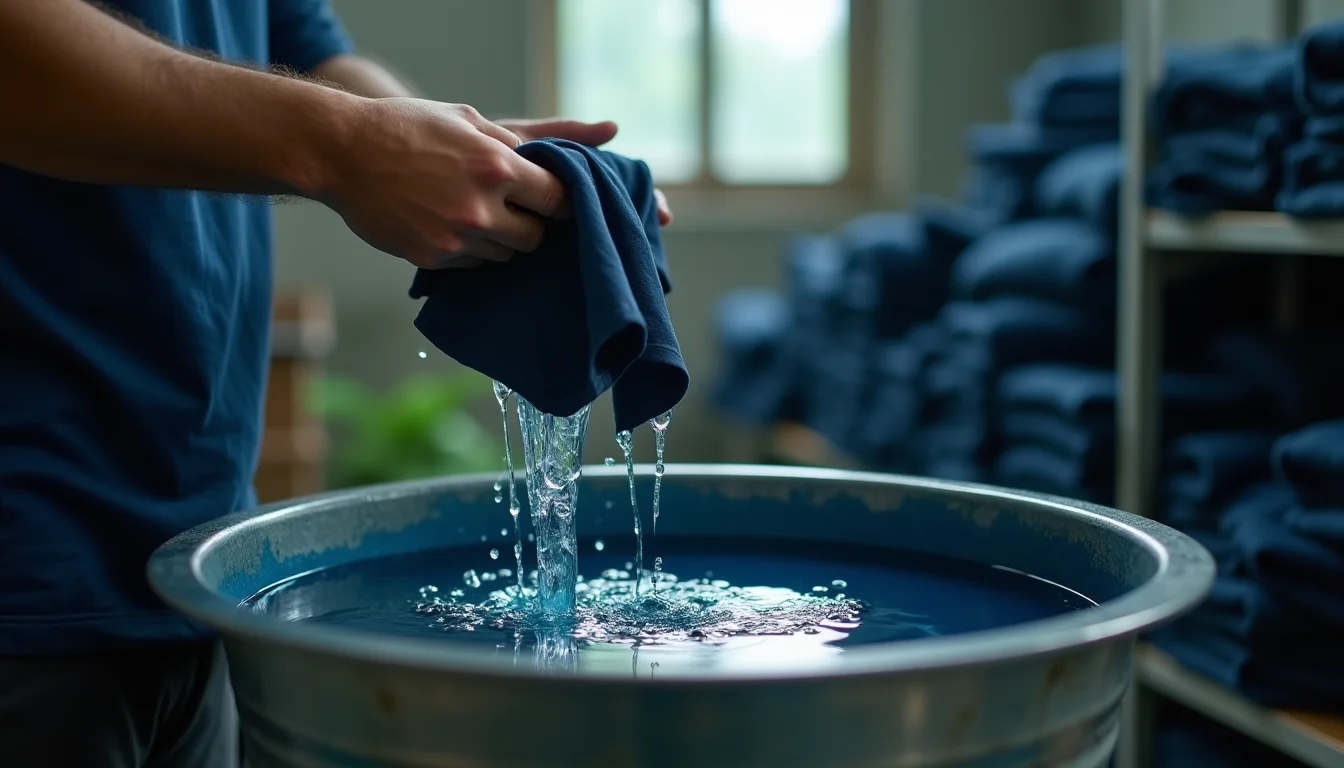
Imagine this: you've placed a bulk order of 300 dark navy t-shirts for a client's brand. Your screen printing setup is ready, the artwork is approved, and the deadline is tight. The first wash after printing happens — and every single piece bleeds colour. The dye spreads onto the print, the white areas turn blue-grey, and the entire batch is unwearable. Your client is furious, and your ₹30,000+ investment has just gone straight to the drain.
This is not a hypothetical story. This is exactly what happened to one of our customers who ordered 300 dark navy pieces without running a single pre-check. The culprit? Colour bleeding — one of the most common yet completely preventable disasters in the custom t-shirt printing business, especially during India's monsoon season.
The good news? There is a dead-simple ₹5 test that takes less than 15 minutes and can save your entire batch. If you're a custom printer, DTG printing business, screen printer, or wholesale t-shirt reseller, this guide is non-negotiable reading before you place your next bulk order.
What Is T-Shirt Colour Bleeding — And Why Does It Happen?
Colour bleeding (also called dye migration or colour transfer) happens when the dye used in fabric has not been properly fixed or "locked" during the manufacturing process. When the fabric gets wet — whether from sweat, rain, washing, or printing processes involving moisture — the unfixed dye molecules release from the fabric fibre and spread to adjacent surfaces.
In a plain t-shirt context, this means dye seeps into other garments in a bundle wash, transfers onto lighter coloured fabric placed in contact, or — worst of all for printers — bleeds under a freshly applied print, destroying the artwork.
The Monsoon Factor: Why Bleeding Gets Worse in June–September
India's monsoon season is brutal on textiles for several reasons. Humidity levels routinely cross 80–90% in most Indian cities from June to September. High humidity means fabrics are constantly absorbing atmospheric moisture even before they're washed. For dark-coloured garments with poorly fixed dye, this ambient moisture is enough to trigger slow, continuous colour migration — especially when the fabric is folded or bundled and stored in humid warehouses.
When your customer finally washes the t-shirt (or when you wash it before printing), that accumulated dye migration becomes visible as blotchy patches, uneven colour, or dye transfer onto adjacent fabrics. This is why a t-shirt that seemed perfectly fine in December can bleed badly in July under the exact same wash conditions.
Understanding why this happens is also connected to the type of dye used. Reactive dyes, when properly fixed with an alkali and salt process and then properly washed off, create an extremely stable dye-to-fibre bond. But when the washing-off process is incomplete — a common cost-cutting step at cheaper dyeing units — excess unfixed dye sits on the surface of the fibre. This is the dye that bleeds. To understand how reactive vs pigment dye choices affect fabric performance in monsoon, see this detailed breakdown on reactive vs pigment dye mistakes that ruined 200 pieces — it's essential reading for any serious printer.
The ₹5 Colour Bleeding Test — Step-by-Step
You don't need a lab, chemicals, or expensive equipment. Everything you need costs less than a cup of chai.
What you need:
- 1 piece of plain white cotton cloth (a scrap piece, old handkerchief, or white dupatta work perfectly — cost: ₹0 to ₹5)
- Warm water (not hot, not cold — ideally 35°C to 40°C, like lukewarm tap water)
- The dark t-shirt you want to test
- A flat surface and 10–15 minutes of patience
Soak your white cotton cloth in warm water and wring it out so it's damp but not dripping. The warmth is important — cold water can mask mild bleeding that will show up in real wash conditions.
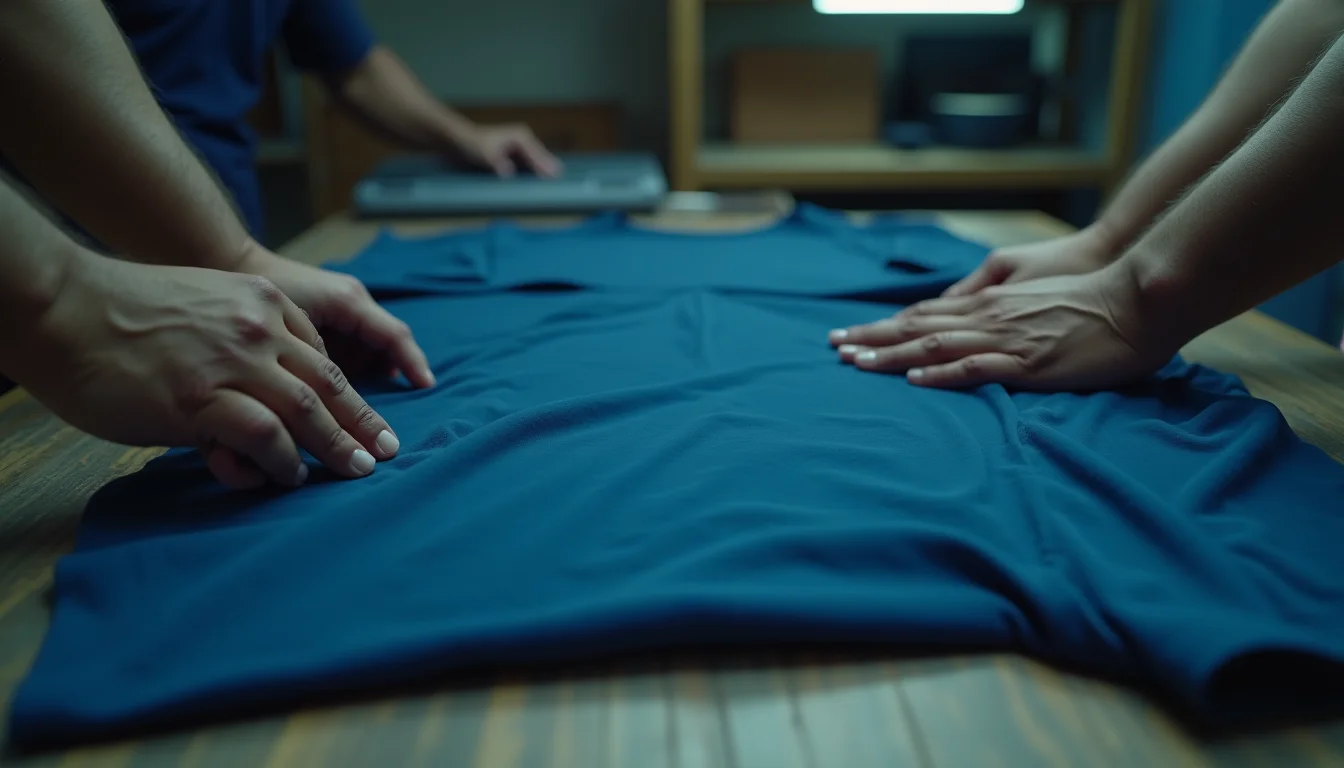
Lay the damp white cloth flat against the darkest part of the t-shirt — usually the chest or back panel. Press firmly and place a heavy book or flat object on top to maintain consistent pressure.
Leave it untouched for 10 full minutes. This simulates the moisture exposure the t-shirt would experience during washing, high-humidity storage, or wet-on-wet printing processes.
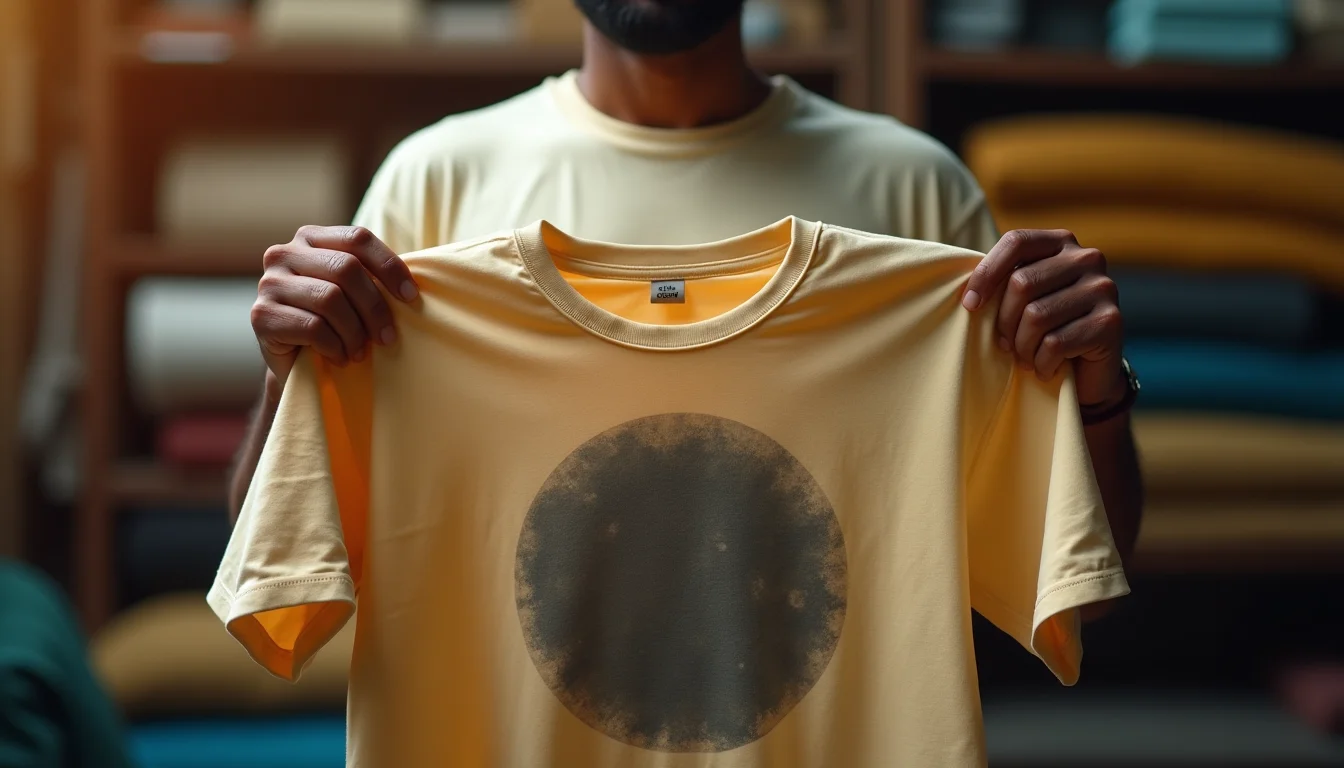
Remove the white cloth and inspect it in natural light. Any visible colour transfer — even a faint tinge — means the dye is not properly fixed. A perfectly clean white cloth means the t-shirt has passed the bleed test.
If there's no transfer: the batch is safe. If there's faint transfer: request a proper wash test or reconsider. If there's strong transfer: return the batch, do not proceed with printing. This decision right here is what separates professional printers from those who learn expensive lessons.
Which Colours Are the Highest Risk? — The Printer's Danger Zone
Not all t-shirt colours carry equal bleeding risk. The amount of dye required to achieve a shade determines the base risk level. Deeper, darker shades require significantly more dye concentration, and any fixation shortfall has proportionally more unfixed dye sitting loose in the fabric.
| Colour Category | Bleed Risk Level | Test Priority |
|---|---|---|
| Black | 🔴 Very High | Always test — no exceptions |
| Dark Navy Blue | 🔴 Very High | Always test — especially monsoon |
| Maroon / Dark Red | 🟠 High | Test before every bulk run |
| Bottle Green / Olive | 🟠 High | Test before every bulk run |
| Royal Blue / Cobalt | 🟡 Medium | Test if monsoon season |
| Charcoal Grey | 🟡 Medium | Test if bulk is 100+ pieces |
| Light Grey / Off-White | 🟢 Low | Spot check recommended |
| White | 🟢 Very Low | Standard quality check sufficient |
The pattern is clear: if your bulk order contains black, navy, or maroon — you must run this test on at least 2–3 pieces from different parts of the carton before you commit to the full batch.
Why Testing a Sample First Is Non-Negotiable for Printers
The customer who lost 300 navy pieces made one fundamental mistake: he assumed quality based on price. He bought from a known market trader in Delhi, assumed the GSM was right (it was), assumed bio-washing was done (it wasn't properly), and placed the order without touching a single piece with a damp cloth.
The cost of his mistake? Let's break it down:
- 300 pieces × ₹320 avg cost = ₹96,000 in raw material
- Screen printing job cost (already paid) = ₹18,000
- Loss of client contract = ₹2.5 lakh order cancelled
- Reputation damage with the client = unquantifiable
The cost of running the ₹5 bleed test on 3 sample pieces before placing the order? ₹5 and 15 minutes.
This is also why experienced printers always order sample pieces before bulk. At Sale91.com, you can order as low as 10 pieces from ready stock — specifically so printers can run quality checks including the bleed test, print adhesion test, and shrinkage test before committing to large quantities. This minimum order flexibility is deliberately built for the custom printing trade.
The Sample Test Protocol for Serious Printers
Before any bulk order of 100+ pieces involving dark colours, a professional printer's pre-order checklist should include:
- Bleed test (the ₹5 warm cloth test described above)
- Shrinkage test — wash one piece and measure before/after. A properly pre-shrunk, bio-washed t-shirt should not shrink more than 3–4%
- Print adhesion test — print one piece with your standard settings. If ink adhesion is poor or the print cracks after one wash, the fabric surface treatment may be incorrect
- GSM verification — use a GSM cutter and weighing scale to verify the actual GSM matches what was ordered. This matters enormously for print quality — you can read about why choosing the wrong GSM for printing leads to poor output and customer complaints
- Colour consistency check — compare 5–6 pieces from different positions in the carton under natural light
What Causes Poor Dye Fixation — The Manufacturing Side Explained
Understanding why some t-shirts bleed helps you ask the right questions when evaluating suppliers. Colour fixation quality is determined entirely at the dyeing unit stage, long before the t-shirt reaches you.
The Reactive Dyeing Process (Simplified)
For cotton fabrics, reactive dyes are the industry standard because they form a covalent chemical bond with the cotton fibre when properly processed. The process has three critical stages:
- Dyeing: The fabric is immersed in dye + salt + alkali at controlled temperature
- Fixation: Heat and time allow the dye to bond permanently with the fibre
- Washing off: Excess unfixed dye is removed through a series of hot water washes — this is the stage most often compromised to cut costs
When the "washing off" stage is shortened — to save water, energy, or time — surplus unfixed dye remains in the fabric. It looks the same to the naked eye. The colour appears rich, full, even vibrant. But that surface dye is sitting loose, and the first meaningful moisture exposure will release it.
This is also why the dye quality from different vendors can vary dramatically even for the same colour name. Two vendors both selling "dark navy" can have completely different colour fastness ratings based on their dyeing process discipline. For a direct comparison of how vendor quality differences show up in real-world colour tests, the article on same colour from two vendors — one premium, one cheap is extremely instructive.
Bio-Washing and Its Role in Colour Stability
Bio-washing (enzyme treatment) is often misunderstood as just a softening process. While it does make the fabric surface smoother and softer to touch, the enzyme treatment also removes loose surface fibres — and in doing so, can help clear some of the surface-deposited unfixed dye as well. A properly bio-washed t-shirt will generally have better initial colour fastness compared to an untreated fabric from the same dyeing run.
All t-shirts from Sale91.com are bio-washed and pre-shrunk as standard. The bio-washing is done at our Tiruppur manufacturing unit where we knit our own fabric in-house — this level of vertical integration means quality control is maintained at every stage, including the dyeing and finishing processes, not outsourced to third-party processors whose standards we can't control.
Monsoon-Specific Storage and Handling Tips for Printers
Even if your t-shirts pass the bleed test when they arrive, improper monsoon storage can create secondary issues. Here's how to protect your inventory during India's rainy season:
- Store in sealed polybags: Individual polybag packaging prevents ambient humidity from saturating fabric bundles. Remove from cardboard cartons if storing for more than 2 weeks
- Elevate stock off the floor: Monsoon flooding and floor damp can wick moisture up through cardboard packaging. Use wooden pallets or metal shelves
- Dehumidify your print room: A basic dehumidifier (₹8,000–₹15,000) can be the best investment you make for print quality during monsoon — especially for DTG where moisture directly affects print bed adhesion
- Sort by colour before storage: Never bundle dark and light coloured t-shirts together in humid storage. Even properly fixed dark dyes can transfer under prolonged damp contact
- Test batches on arrival, not just before printing: Run the ₹5 bleed test as soon as new stock arrives, not weeks later when you're about to print
How to Talk to Your Supplier About Colour Fastness
Once you understand what causes colour bleeding, you can have more informed conversations with your fabric/t-shirt supplier. Key questions to ask:
- "What is the AATCC colour fastness to washing rating for this colour?" — Grade 4 or 5 is acceptable; Grade 3 or below is a red flag
- "Is the fabric reactively dyed and properly washed off, or is any pigment dyeing used for dark shades?"
- "Is bio-washing included as standard, or is it an additional process?"
- "Can I send 10 pieces for sample testing before placing the full bulk order?"
A quality manufacturer will answer these questions confidently and provide samples without friction. A supplier who deflects, gets defensive, or refuses sample orders should be treated with caution. You can browse the full range of ready-stock plain t-shirts — including specifications, GSM options, and available colours — at the BulkPlainTshirt.com product catalog.
Watch the Video
See the ₹5 colour bleeding test demonstrated in action — and learn how one customer's 300-piece navy batch could have been saved with this simple check.
Frequently Asked Questions
More Articles



Order Plain T-Shirts That Won't Let You Down
All plain t-shirts from BulkPlainTshirt.com are bio-washed, pre-shrunk, ring-spun combed cotton — manufactured in-house at our Tiruppur unit and dispatched from Delhi. 1 lakh+ pieces ready in stock. MOQ just 10 pieces. 50% COD available for first-time buyers.
Order at Sale91.com →