₹40 Polyester T-Shirt for DTF Printing — Why 300 Pcs Bubbled and 50 Orders Got Returned
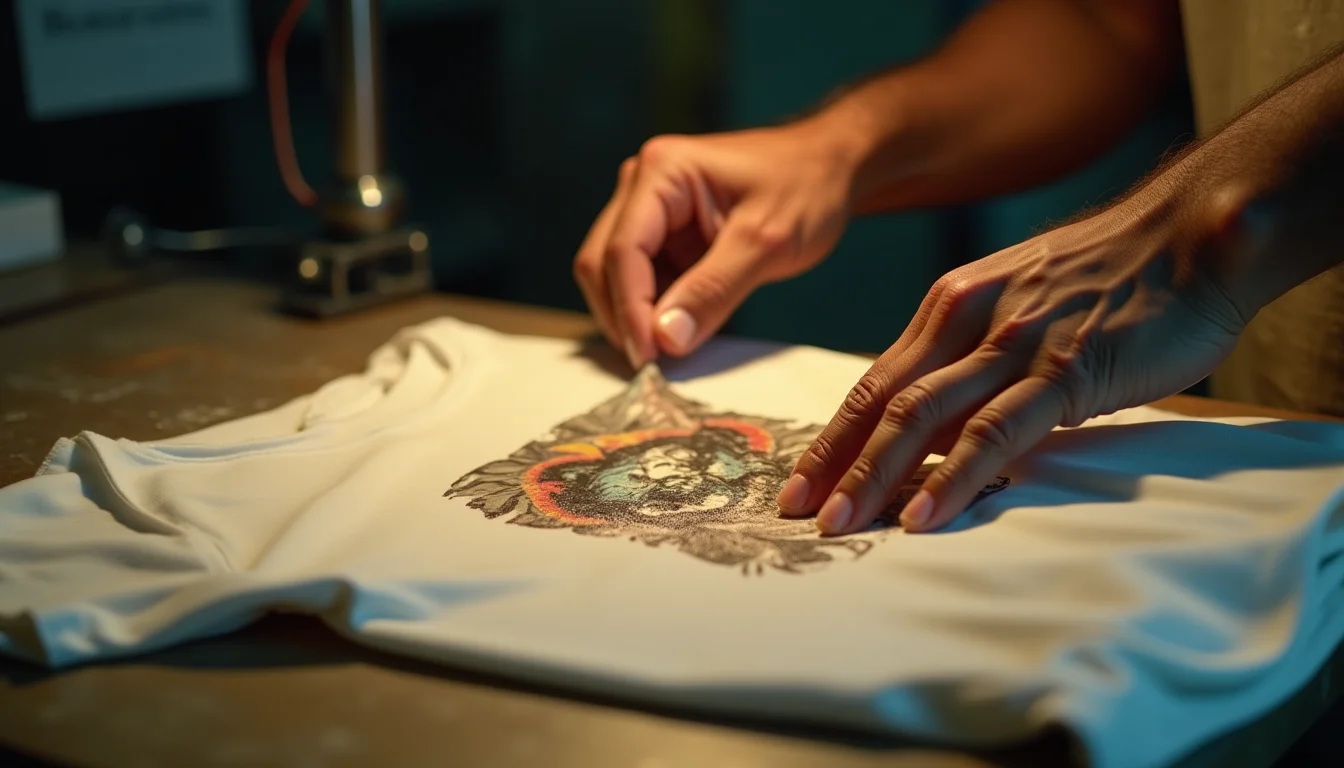
₹40 TSHIRT = BUSINESS DOOBA. That's the bluntest way to frame what happens when a printing business prioritises the cheapest possible blank over everything else. The math looks attractive on a spreadsheet: low blank cost, standard print cost, healthy margin. But suppose you order 300 pieces at ₹40 each, spend ₹80 per piece on DTF printing, and then face a wave of returns because the print starts bubbling after just two washes — the entire margin evaporates, and you're left with a logistics nightmare, angry customers, and a reputation dent that takes months to repair.
This article breaks down exactly why that happens — the fabric science, the three non-negotiable checks you must run before placing any bulk blank order, and a concrete spec-vs-cost decision table built from Sale91.com's real product range. If you already know the basics of GSM and bio-wash, our FAQ page covers the foundational terms — we'll move straight to the part that actually costs printers money.
What Actually Goes Wrong With a ₹40 Blank T-Shirt?
The ₹40 price point is not a bargain — it's a signal. To manufacture and sell a t-shirt at that price with any margin for the seller, certain corners must be cut. Understanding those corners is the first step to protecting your print business.
1. Polyester Blends or Low-Grade Cotton
Most blanks in the ₹35–₹50 range are either 100% polyester, a CVC (Chief Value Cotton) blend with 40–60% polyester, or made from open-end spun cotton — a coarser, cheaper yarn process compared to ring-spun combed cotton. The problem for DTF and screen printing is immediate: polyester repels ink adhesives. DTF film relies on a heat-activated adhesive powder that bonds to cotton fibres. When polyester content is high, that bond is weaker and unevenly distributed. After washing, the adhesive layer lifts in patches — what the industry calls "bubbling" or "peeling."
This is the same reason professional DTF printers always specify their substrate. If your blank supplier can't confirm "100% ring-spun combed cotton," the print quality is already at risk before a single shirt goes under the heat press. If you're also exploring embroidery on blanks, it's worth noting that fabric composition affects thread adhesion just as severely as it does DTF ink bonding.
2. No Pre-Shrink Treatment
Untreated cotton fabric retains internal tension from the knitting and dyeing process. When the garment is washed for the first time, that tension releases and the fabric contracts — sometimes by 5–8% in length. If a DTF or screen print has already been applied, the fabric beneath the print shrinks while the print film does not. The result is microfractures that rapidly turn into visible cracks, especially around the edges of the print. You can read more about how shrinkage tolerances are measured in t-shirt shrinkage testing for bulk orders — the tolerance thresholds are tighter than most printers assume.
3. No Bio-Wash / Enzyme Treatment
Bio-washing is an enzyme treatment that smooths cotton fibres, removes surface fuzz, and creates a uniform, tight surface — the ideal canvas for printing. Skipping bio-wash leaves the fabric surface uneven. Ink sits on top of fuzz rather than bonding into the weave, and the print looks dull immediately and fades unevenly after washing. Premium blank manufacturers include this step because the cost (roughly ₹3–₹6 per piece at scale) has a disproportionate impact on print longevity.
4. GSM Below the Viable Threshold
GSM (grams per square metre) is the weight and density of the fabric. A ₹40 blank almost certainly falls below 160 GSM, often as low as 130–140 GSM. Below 180 GSM, the fabric is thin enough that DTF adhesive can bleed through under heat press pressure, creating an uneven bond on the reverse side. The shirt also distorts more easily during pressing, leading to misaligned prints. If you've ever wondered how to verify GSM claims from a supplier before committing to a bulk order, the home GSM check method is a practical starting point.
The 3 Non-Negotiable Checks Before Ordering Any Blank for Printing
Whether you're ordering 10 pieces or 10,000, these three checks apply universally. They are not nice-to-haves — they are the minimum due diligence for anyone running a print-to-order or bulk custom printing business.
Pre-Order Blank T-Shirt Checklist for Print Businesses
- Check 1 — Fabric Composition: Confirm in writing that the fabric is 100% cotton (ring-spun combed preferred). Ask for a fabric composition certificate or request a sample for a burn test. Polyester melts and beads; cotton chars and smells like paper.
- Check 2 — GSM Minimum 180: Request the GSM specification from the supplier. Do not accept "premium" or "heavy" as substitutes for a number. 180 GSM is the absolute floor for print substrates; 200–220 GSM is the professional standard for retail-quality printed apparel.
- Check 3 — Bio-Wash + Pre-Shrink Confirmed: Ask specifically: "Is this fabric bio-washed and pre-shrunk?" A reputable manufacturer will answer yes without hesitation and may mention the enzyme treatment process. If the supplier doesn't know what bio-wash means, walk away.
Blank T-Shirt Spec vs. Print Outcome: The Real Decision Table
The following table is built from Sale91.com's actual product specifications (180–220 GSM range, 100% ring-spun combed cotton, bio-washed and pre-shrunk) compared against the typical characteristics of sub-₹50 blanks available in wholesale markets. Use this when evaluating any new blank supplier.
| Specification | ₹40 Budget Blank (Typical) | Sale91.com Premium Blank | Impact on Print Quality |
|---|---|---|---|
| Fabric Composition | Polyester blend or open-end cotton | 100% Ring-spun Combed Cotton | DTF/Screen ink adhesion — poor vs. excellent |
| GSM | 130–160 GSM (often unlabelled) | 180 / 200 / 210 / 220 GSM (declared) | Adhesive bleed-through, heat press distortion risk |
| Bio-Wash | No (surface fuzz present) | Yes (enzyme-treated, smooth surface) | Ink sits on fuzz vs. bonds into weave — wash durability |
| Pre-Shrunk | No (5–8% shrinkage possible) | Yes (shrinkage controlled) | Post-wash print cracking from fabric contraction |
| Yarn Type | Open-end / carded | Ring-spun Combed | Surface evenness for clean print registration |
| Approx. Blank Cost (per pc) | ~₹40 | ~₹85 (varies by GSM and quantity) | — |
| Typical Return Risk | High (print failure after 2–3 washes) | Negligible (print-ready substrate) | Cost of returns + reprint + shipping erases all savings |
The Real Cost Arithmetic: ₹40 Blank vs. ₹85 Blank
The apparent saving of ₹45 per piece on the blank disappears the moment you factor in print cost and return logistics. Consider a hypothetical order of 100 pieces to keep the numbers clean:
Blank cost: ₹40 × 100 = ₹4,000
DTF print cost: ₹80 × 100 = ₹8,000
Total invested: ₹12,000
Suppose 15–20% of prints fail after first wash (a realistic outcome with uncoated polyester-blend fabric) — that's 15–20 returns.
Each return = blank cost (₹40) + print cost (₹80) + reverse shipping (~₹60–₹80) + reprint or refund.
Conservative loss per return: ₹180–₹200 beyond the original investment.
Scenario B — ₹85 Blank (100% cotton, 200 GSM, bio-washed, pre-shrunk):
Blank cost: ₹85 × 100 = ₹8,500
DTF print cost: ₹80 × 100 = ₹8,000
Total invested: ₹16,500
Return rate: negligible when correct substrate is used with calibrated heat press settings.
Net position: ₹4,500 higher upfront, but zero return losses and a clean reputation.
Note: The above is a hypothetical illustration to show cost structure. Actual print failure rates depend on printer calibration, heat press settings, and adhesive powder quality — not just the blank. However, fabric composition is the single largest variable within the printer's control at the purchasing stage.
The ₹45 saving per piece on the blank is essentially a delayed cost. You're not saving money — you're converting a known expense into an unpredictable, larger expense. Professional print businesses account for this and price their blanks accordingly in their COGS.
GSM by Use Case: Which Weight for Which Print Method?
Not all GSM weights perform identically across print methods. Here's how the Sale91.com range maps to common printing techniques:
| GSM | Best Print Method | Feel / Market | Notes for Printers |
|---|---|---|---|
| 180 GSM | DTF, Heat Transfer | Everyday wear, summer collections | Minimum recommended for print substrates. Use lighter pressure settings. |
| 200 GSM | DTF, Screen Print, Heat Transfer | Premium retail, brand merchandise | Industry standard for quality printed apparel. Excellent ink/adhesive hold. |
| 210 GSM | Screen Print, DTG, DTF | Mid-premium, corporate gifting | Heavier hand feel preferred by premium brand clients. |
| 220 GSM | Screen Print, DTG | Heavy premium, winter collections | Ideal for high-coverage multi-colour screen prints. Denser weave = sharper edges. |
All four weights in the Sale91.com range are 100% ring-spun combed cotton, bio-washed, and pre-shrunk — the non-negotiables from Check 3 above are already built in. The choice between 180 and 220 is about end-use positioning, not print compatibility.
Why the Source of the Blank Matters as Much as the Specs
Even if a supplier quotes "200 GSM, 100% cotton," the claimed spec is only as reliable as the manufacturing process behind it. There is a significant difference between a brand that knits its own fabric in-house and a trader who sources from multiple mills and relabels.
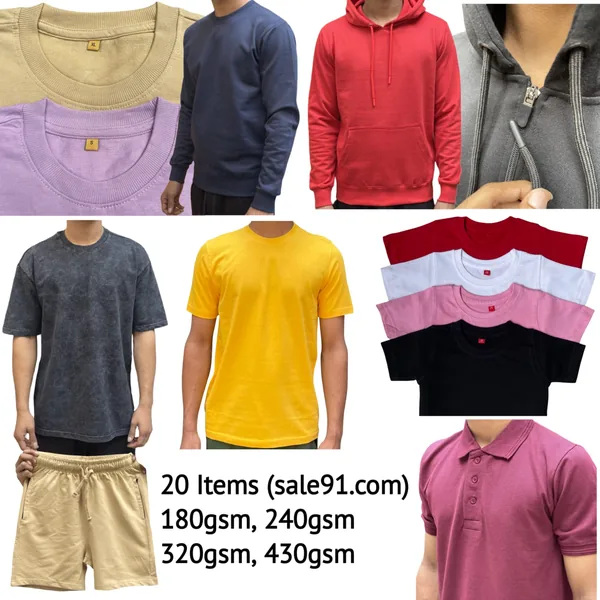
Sale91.com (BulkPlainTshirt.com) manufactures its own fabric at its Tiruppur facility — India's textile manufacturing hub — which means GSM consistency is controlled at the yarn and knitting stage, not guessed at during purchasing. The Delhi warehouse (Khanpur, South Delhi) maintains 1 lakh+ pieces in ready stock at any given time, which means order fulfilment doesn't depend on a mill's production schedule.
When a trader sources from multiple mills to fill an order, batch-to-batch GSM variation is common. Suppose you order 500 pieces across two sizes — if the supplier fulfils XS-M from one mill batch and L-XL from another, you may receive a mixed-GSM order where your heat press settings optimised for 200 GSM are now being applied to 175 GSM shirts in the larger sizes. The print outcome will differ visibly across sizes.
Ordering Smart: MOQ, Discounts, and Getting Samples First
A common reason printers end up with 300 pieces of substandard blanks is that they skipped sampling because the supplier had a high minimum order quantity (MOQ) for samples, or because the price difference seemed too small to matter at the time. Here's how to structure your blank procurement intelligently:
- Start with a sample run: At Sale91.com, the MOQ for ready-stock items starts at just 10 pieces — low enough to run a full print test across your heat press settings before committing to bulk.
- Run a wash test: Print 2–3 shirts, wash them 3 times at 40°C, and inspect. This is the single most reliable quality check available to a printer, and it takes less than a week.
- Scale with discounts baked in: For orders of 500+ pieces, Sale91.com offers ₹2/piece discount. An additional ₹3/piece discount applies on online purchases at any quantity. These stack with the quality assurance of factory-consistent GSM.
- First-order COD available: New buyers can opt for 50% COD on their first order (with a 3% COD charge) — reducing upfront risk while you verify the product quality in person.
- Browse the full range: The BulkPlainTshirt.com product catalog lists all GSM options, colours (15+), and product types including round neck, polo, oversized, hoodies (240–430 GSM), and acid wash variants.
The Three Checks — Operationalised as a Supplier Vetting Script
Below is a practical script you can use when calling or messaging any new blank t-shirt supplier for the first time. It takes under two minutes and will immediately separate serious manufacturers from traders selling cheap mixed stock.
- "What is the GSM of this t-shirt, and is that a guaranteed specification or an approximate?" — A serious manufacturer will give you a number and confirm it's consistent across batches. A vague answer like "around 180–200" is a red flag.
- "Is the fabric 100% cotton? What type of yarn — open-end or ring-spun? Combed or carded?" — This question filters out polyester blends and low-grade open-end cotton in one go. Ring-spun combed = premium; anything else requires justification.
- "Are these shirts bio-washed and pre-shrunk from the factory, or does that happen at a third-party finishing unit?" — In-house bio-wash and pre-shrink (like at Sale91.com's Tiruppur facility) means consistent treatment. Third-party finishing introduces variability in enzyme concentration and processing time.
"The blank is not a commodity. It is your print substrate. Every decision you make about ink, adhesive, and press settings is only as good as the fabric underneath it."
Beyond the T-Shirt: Why Returns Damage More Than Just Revenue
A returned printed t-shirt is not just a lost sale — it's a customer interaction that went wrong, a review or complaint that may go public, and a logistical burden that consumes time your team could spend on new orders. For print-on-demand sellers operating on marketplaces or social media, a cluster of "print peeled after washing" complaints can trigger algorithmic suppression or seller rating downgrades that affect future visibility.
This is why the blank selection decision has outsized importance relative to its line-item cost. The ₹45 difference between a ₹40 and an ₹85 blank is not a fabric cost — it's an insurance premium against a class of failures that are entirely predictable and entirely preventable.
It's also worth noting that fabric quality issues aren't limited to print adhesion. Colour consistency, for instance, is another area where budget blanks regularly fail — especially in navy and black shades where dye lot variation is most visible. The consequences of mismatched shades in a bulk order are documented in detail in our article on navy vs. black t-shirt colour mistakes in bulk orders.
Watch the Video
The 60-second version of this guide — watch before your next blank order:
Frequently Asked Questions
More Articles

Ready to Order Print-Ready Blank T-Shirts?
100% ring-spun combed cotton · Bio-washed & pre-shrunk · 180–220 GSM declared · MOQ from 10 pcs · 1 lakh+ pieces in ready stock · PAN India delivery + exports
Order at Sale91.com Browse Full Catalog