Acid Wash T-Shirt — No Acid Used? Discharge Washing Process Explained for Bulk Buyers

Short answer: No, there is no acid in an acid-wash t-shirt. The name is a misnomer that has stuck around in the industry. What actually happens is a discharge washing process — colour is applied to the fabric first, then selectively removed using a discharging agent such as sodium hypochlorite or potassium permanganate. Understanding this distinction is practically useful when you are evaluating a bulk order, because the wash effect and the base fabric specification are two separate things that need to be checked separately.
Why the Name "Acid Wash" Is Misleading
The term became popular decades ago — likely borrowed from the denim industry's marketing language — and it simply stuck. Today it is used loosely to describe any t-shirt with that characteristic uneven, faded, marbled colour pattern. But the chemistry tells a different story.
According to CottonWorks: Garment Finishing, acid wash is one of the effects achieved through wet discharge garment washing. The discharging agent — typically sodium hypochlorite (bleach-based) or potassium permanganate — works by breaking down the dye molecules already present in the fabric. No acid is introduced at any stage of this particular effect.
"Acid wash is one of the effects achieved by wet discharge garment washing. 'Acid-washed' is a misnomer because the process uses no acid; typically the discharging agent is sodium hypochlorite or potassium permanganate."
— CottonWorks: Garment Finishing
So when you see "acid wash" on a product listing — whether on our plain t-shirt catalogue or anywhere else — that label names a finish, not a chemical. The listing tells you what effect to expect on the surface; it says nothing about the base fabric underneath.
How the Discharge Process Actually Creates the Effect
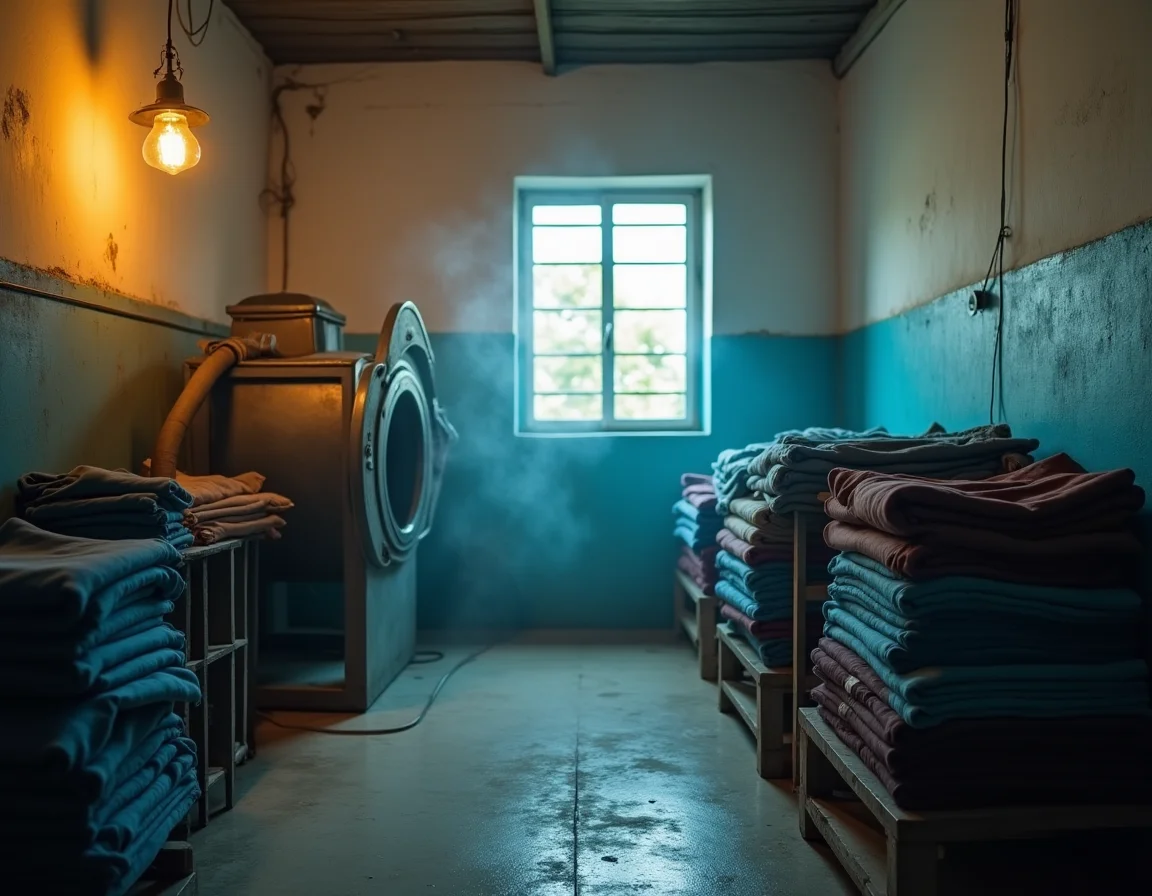
The sequence matters here. The fabric is dyed first — colour is applied across the entire garment. Then, before the discharging agent is introduced, an abrasion step is performed. This abrasion creates uneven surface texture, so when the discharging agent subsequently removes colour, the effect is distributed unevenly, producing that recognisable marbled or mottled look.
Without the abrasion step, the discharge agent would remove colour more uniformly and the finish would look flat — more like a simple bleach wash than the textured, varied pattern buyers associate with acid wash.
This is why the process is classified under garment finishing, not fabric construction. The base fabric goes in as a uniformly dyed piece; it comes out with a surface finish applied on top of that base. Two different layers of specification, evaluated independently.
If you are also evaluating discharge printing on dark t-shirts, note that printing discharge and wash discharge share the same colour-removal chemistry but are applied in entirely different contexts — one is localised print, the other is an all-over garment wash.
The Buyer Decision: Two Specs, Not One
This is the practical takeaway for anyone placing a bulk order. When a listing names an acid-wash finish, that tells you about the surface effect. It does not tell you about the fabric underneath — its composition, GSM, or yarn quality. (For a quick refresher on what GSM and fabric basics mean for bulk buying, see the buyer FAQ.)
Treat these as two separate evaluation criteria:
| What to Check | What It Tells You | Where to Look |
|---|---|---|
| Base fabric spec | Composition, GSM, yarn type — determines feel, weight, printability | Product listing / catalogue spec sheet |
| Wash finish | Surface effect type (acid wash = discharge finish) — determines visual appearance | Product listing description / sample |
| Colour range | Which base dye colours are available in acid-wash treatment | Live catalogue — check current stock |
| Current price & stock | Rates and availability change — never rely on old screenshots | Live catalogue |
A buyer who conflates the finish with the base fabric risks ordering expecting one thing and receiving something technically correct but practically wrong for their use case — especially if they are screen printing or DTG printing on top. The base fabric composition directly affects how print ink adheres, which is a separate decision from whether you want the acid-wash surface look.
What This Means When You Are Ordering at Scale
For print businesses placing bulk orders, this knowledge changes what questions you ask before confirming. Instead of asking only "do you have acid wash?", the more complete question is: "What is the base fabric specification of this acid-wash style, and is it suitable for my printing method?"
Just as slub cotton's uneven texture is a deliberately engineered characteristic rather than a defect, the acid-wash pattern is a deliberately applied finish — not a property of the yarn or the knit structure. Knowing this helps you brief your client correctly, request the right sample, and avoid a mismatch between the garment your client saw in a reference image and what they receive.
Check the current acid-wash styles available — including their base fabric compositions and sizes — directly on the live catalogue, because stock and specifications are subject to change. For placing a bulk enquiry, Sale91.com is where our B2B buyers start.
Watch the Video
This 60-second explainer covers the core mechanism — no acid in acid wash, and why checking the base fabric separately matters for bulk buyers.