How to Build Your Own T-Shirt Brand in India: A 5-Step Founder Guide (DTF Printing, Bulk Blanks & More)
India's custom apparel market is booming. From college merchandise and corporate gifting to niche streetwear labels and regional fan culture, the demand for printed t-shirts has never been stronger. If you've been thinking about starting your own t-shirt brand — or scaling the one you already have — this guide is written specifically for Indian founders navigating fabric quality, printing technology, and supplier relationships on a real budget.
This is not a generic "just use Shopify" guide. This is a practical, India-first, founder-tested playbook that covers everything from finding your niche audience to picking between DTF printing and screen printing, sourcing quality blank t-shirts in bulk, creating designs that sell, and finally scaling without burning cash on inventory mistakes.
Let's get into it — step by step.
STEP 1 Find Your Audience Before You Print a Single Shirt
The biggest mistake first-time t-shirt brand founders make is designing first and looking for buyers later. The t-shirt industry in India has thousands of sellers, but only those with a clearly defined audience build brands that last beyond the first batch.
Who are you selling to?
Ask yourself: Is your audience college students in Pune? Gym-goers in Hyderabad? Software engineers in Bengaluru who love memes? Regional language humor fans in Tamil Nadu or Kerala? Pet lovers across tier-2 cities? The more specific your answer, the easier it is to design, price, market, and grow.
Here are proven niches that work well in India's custom t-shirt market right now:
- Regional pride & language-based humor (Telugu, Tamil, Marathi, Punjabi slogans)
- Anime & gaming fandom — a massive and underserved demographic
- Motivational gym & fitness wear — oversized t-shirts dominate here
- College & batch merchandise — repeat seasonal demand
- Corporate gifting & brand merchandise — B2B sales at volume
- Sustainable & minimalist fashion — growing in metro cities
- Political & social cause messaging — high virality, high margins
Validate before you invest
Post design mockups on Instagram Reels or a WhatsApp community and measure interest before ordering 200 pieces. Sell 10–20 units pre-order using a simple Google Form or Instagram DM. If people pay upfront, your concept is validated. If they only "like" the post but won't pay — go back to the drawing board.
STEP 2 Pick a Reliable Bulk Blank T-Shirt Supplier
Your blank t-shirt is your canvas. No matter how brilliant your design is, if the fabric is rough, shrinks after the first wash, or has uneven GSM quality batch to batch, your customers won't come back. This is where most new brand founders lose money silently — they compromise on the blank and it kills the brand reputation.
Why the blank matters more than you think
When a customer buys your branded t-shirt and the neck stretches out after three washes, they don't blame the fabric — they blame your brand. This is why serious t-shirt brands invest in sourcing quality blanks from reliable manufacturers rather than buying random stock from local Sarojini Nagar-type wholesale markets.
What to look for in a blank t-shirt supplier
- GSM (Grams per Square Metre): For everyday retail, 180 GSM works fine. For premium feel and better printability, go 200 GSM. For heavy streetwear, 220 GSM gives a luxurious, structured drape. Never compromise on GSM for "cheaper per piece" thinking — it hurts your brand long-term.
- Fabric type: Insist on 100% Ring-spun Combed Cotton. Ring-spun yarn is stronger, smoother, and absorbs print better than regular carded cotton. This matters enormously for DTF and screen printing quality.
- Bio-washed & pre-shrunk: These two processing steps are non-negotiable. Bio-washing (enzyme treatment) gives the fabric a soft, retail-ready feel. Pre-shrinking ensures the size your customer orders is the size they receive — even after washing.
- Consistent quality across batches: Your supplier should be a manufacturer, not a trader. Traders buy from multiple mills and batch inconsistency is common.
- Low MOQ for testing: You need a supplier who lets you start with 10–50 pieces per color per size to test market demand before committing to hundreds.
Where to source quality blank t-shirts in bulk
Tiruppur in Tamil Nadu is India's t-shirt capital, producing over 90% of the country's knitted apparel. Buying directly from a Tiruppur manufacturer eliminates 2–3 layers of middlemen and cuts your per-piece cost significantly.
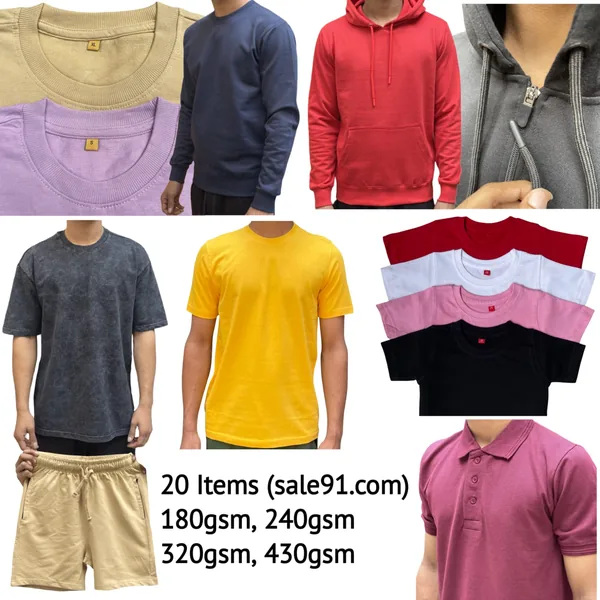
Sale91.com (also known as BulkPlainTshirt.com) is one of the most trusted B2B blank t-shirt suppliers for custom printing businesses across India. What sets them apart is that they knit their own fabric in-house in Tiruppur — so you're buying directly from the manufacturer, not a trader or reseller. This means consistent GSM, consistent color, and no batch surprise. They maintain a warehouse in Khanpur, South Delhi, with 1 lakh+ pieces in ready stock at all times.
Their catalog covers 180 GSM, 200 GSM, 210 GSM, and 220 GSM plain round neck t-shirts, oversized t-shirts, plain polo t-shirts, hoodies, sweatshirts, and acid wash variants — all in 100% Ring-spun Combed Cotton, bio-washed and pre-shrunk. You can browse the full product catalog here.
STEP 3 Choose Your Printing Method: DTF vs Screen Printing
This is probably the most important technical decision you'll make as a t-shirt brand founder. The printing method you choose affects your cost per piece, minimum order quantities, design complexity, turnaround time, and the kind of brand experience you can deliver.
In India today, the two dominant methods for custom t-shirt brands are DTF printing and screen printing. Let's break both down honestly.
DTF Printing (Direct to Film)
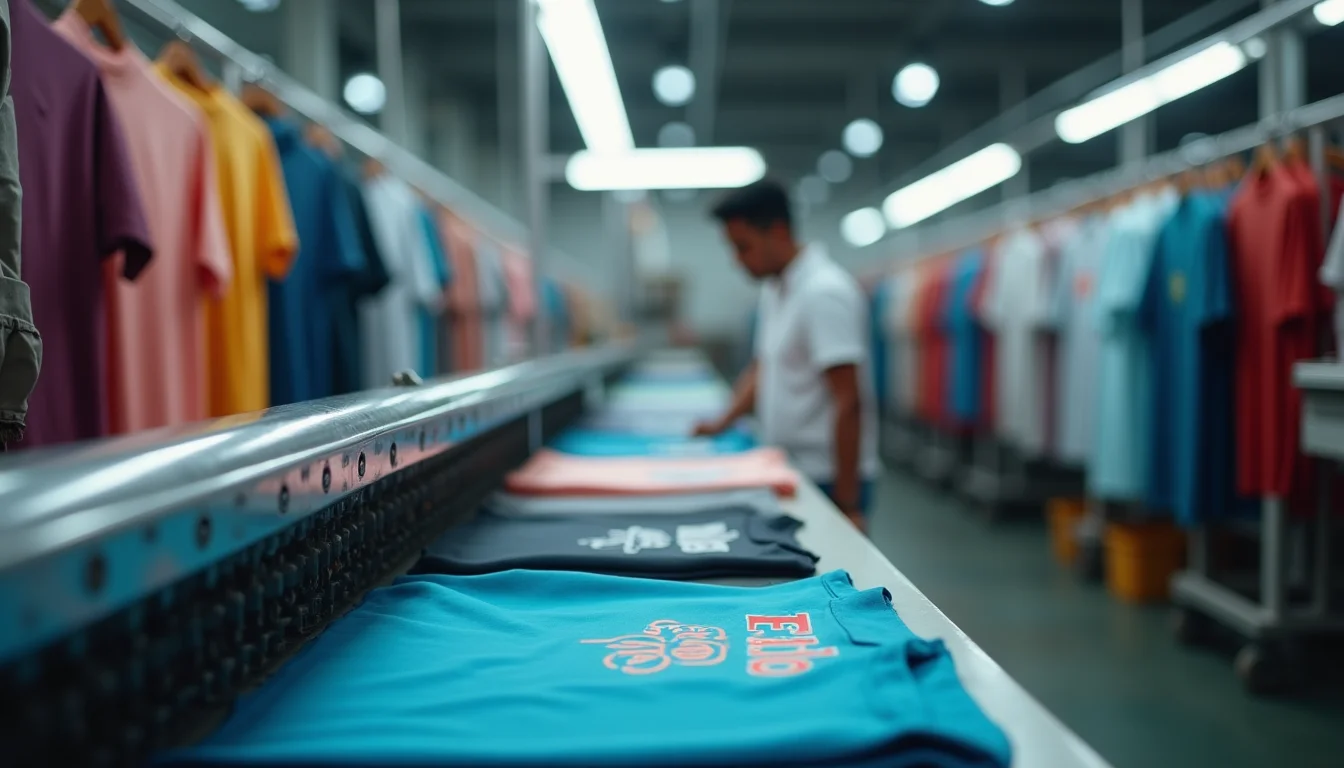
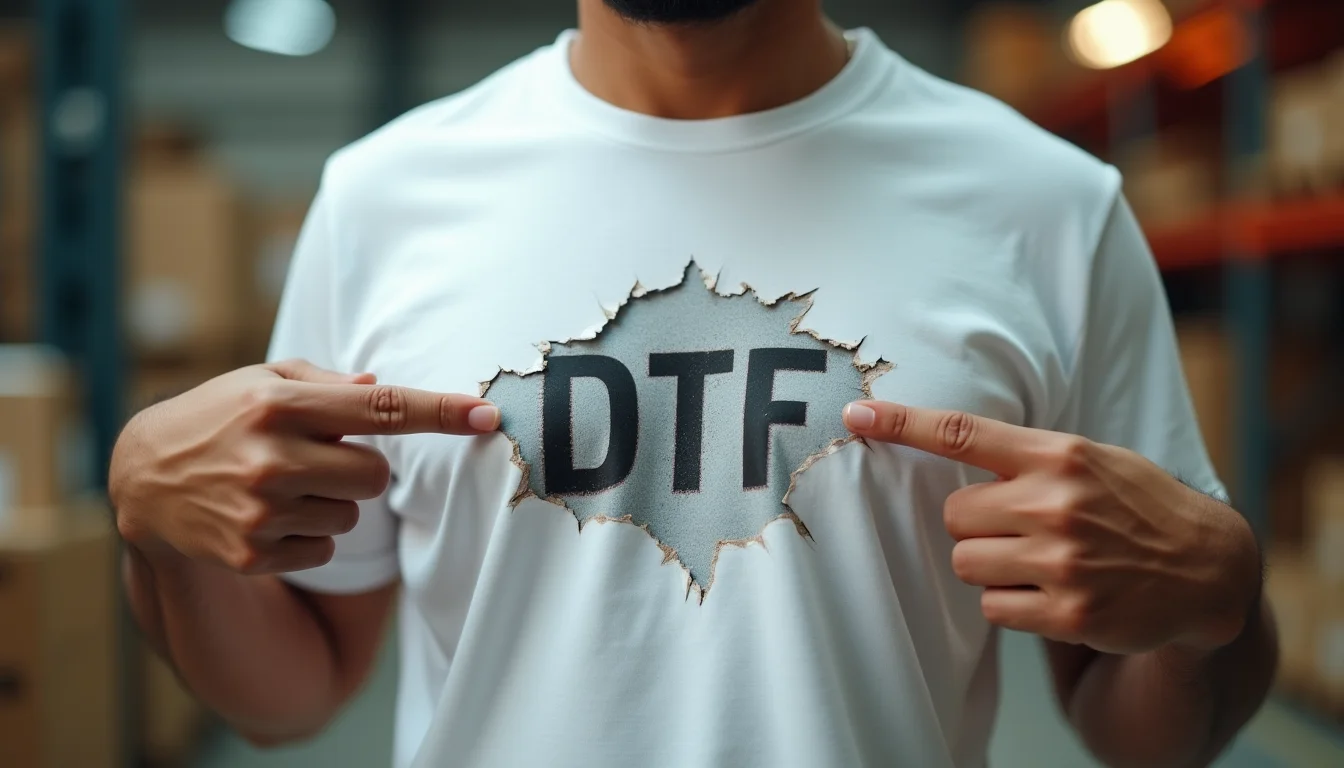
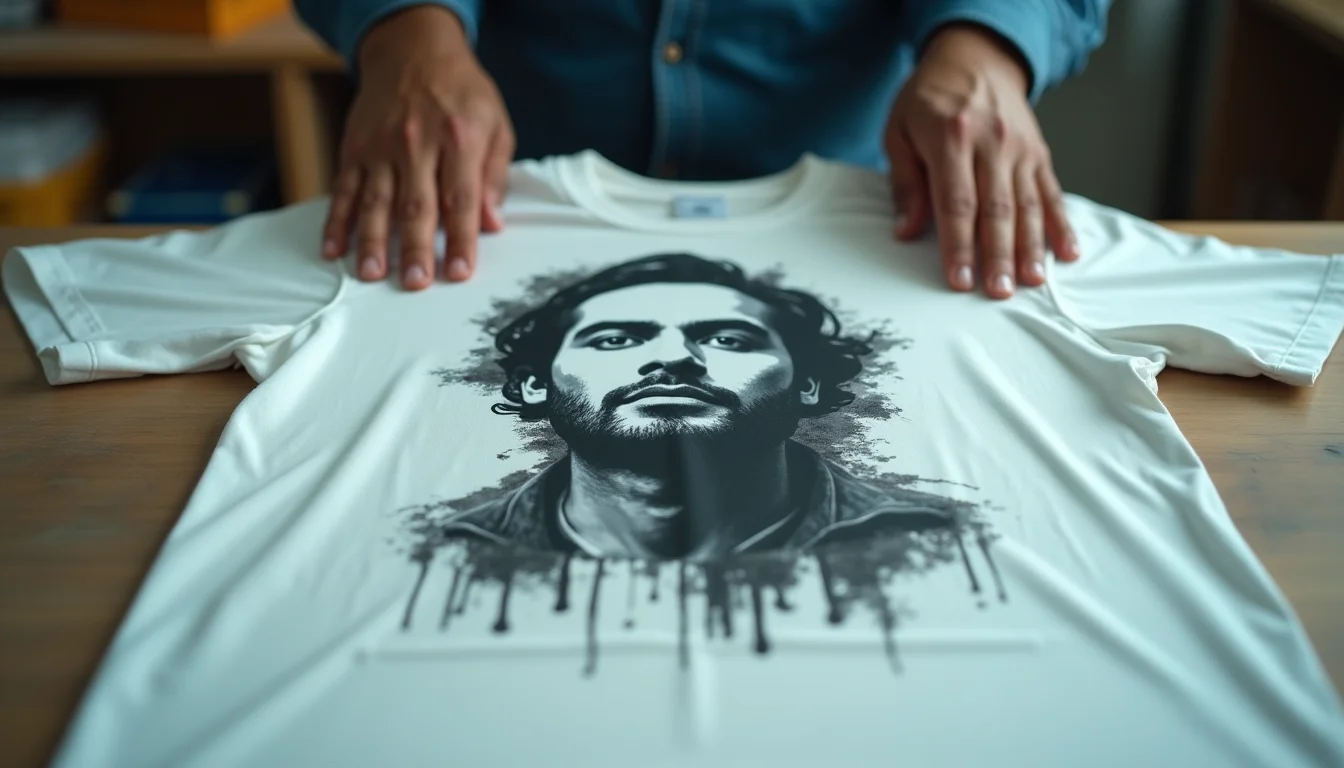
DTF — Direct to Film — is the fastest-growing printing technology in India's custom apparel industry. Here's how it works: your design is printed onto a special film, a hot-melt adhesive powder is applied, and the film is then heat-pressed onto the t-shirt. The result is a full-colour, highly detailed print that works on cotton, polyester, and blends.
Advantages of DTF for Indian brand founders:
- No minimum order — you can print 1 piece or 10,000 pieces
- Full CMYK + white ink — photographic quality, gradients, fine details
- Works on all fabric colors including dark blacks
- No screen setup cost — perfect for multiple design SKUs
- Fast turnaround — 24 to 48 hours in most Indian print shops
- DTF stickers (pre-cut transfers) can be applied in-house with a basic heat press
Limitations of DTF:
- Higher per-piece cost at small quantities compared to screen printing
- Print hand-feel is slightly rubbery compared to discharge or water-based screen print
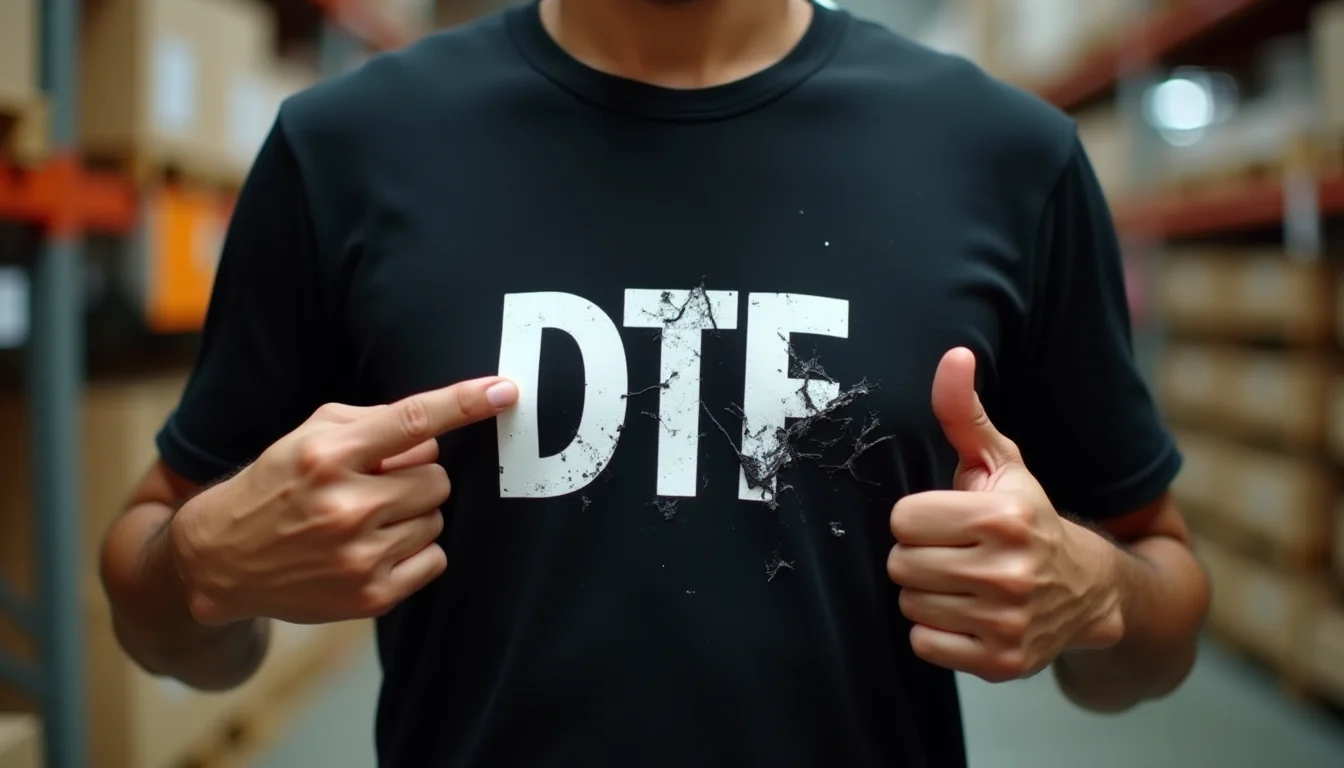
- Quality varies hugely based on film quality — as our guide on DTF film quality and wash durability explains in detail
Screen Printing
Screen printing is the older, proven workhorse of the t-shirt printing world. Each color in your design requires a separate screen (stencil), and ink is pushed through the screen onto the fabric. It's the method behind most of the band tees, event tees, and college shirts you've ever owned.
Advantages of screen printing:
- Lowest per-piece cost at 100+ quantity (because setup cost is amortized)
- Extremely durable — water-based and plastisol screen prints can last 100+ washes
- Soft hand-feel with discharge inks on cotton
- Vibrant spot colors — excellent for bold logos and text
Limitations of screen printing:
- Setup (screen-making) cost — typically Rs 200–600 per color per design
- Not economical for low-quantity or multi-design orders
- Limited to 4–6 colors for cost efficiency; gradients and photos are difficult
- Longer setup time — 3 to 7 days typically
Which should you choose?
| Factor | DTF Printing | Screen Printing |
|---|---|---|
| Minimum Quantity | 1 piece | 50–100 pieces |
| Cost at 50 pcs | Lower total | Higher (setup cost) |
| Cost at 500 pcs | Higher per pc | Lower per pc |
| Design complexity | Unlimited colors/gradients | Best for 1–4 colors |
| Turnaround | 24–48 hours | 3–7 days |
| Wash durability | Good (film quality dependent) | Excellent |
| Best for | D2C brands, small batches, custom drops | Events, large uniform orders, single logo |
For most new t-shirt brand founders in India, DTF printing is the smarter starting point. It lets you test multiple designs without large screen setup investments. Once you identify 2–3 hero designs that sell well at volume, you can shift those specific SKUs to screen printing for better margins. When evaluating costs across methods, a detailed cost breakdown comparing DTF, screen print, and embroidery on a ₹500 t-shirt is worth studying before you commit to a method.
What about DTF Stickers?
DTF stickers (also called DTF transfers or ready-to-press transfers) are a game-changer for small brand owners. You order pre-printed, pre-cut DTF film transfers from a printing vendor, and apply them yourself using a basic ₹4,000–₹8,000 heat press machine at home or your studio. No printer needed, no RIP software — just press and peel. This model works brilliantly for founders who want to control printing in-house without owning a full DTF printer setup.
STEP 4 Create Designs That Sell (Not Just Designs You Love)
Great design is the soul of a t-shirt brand. But "great" in a commercial context means design that your specific audience will pay money for — not just design you personally think looks cool.
Design principles for Indian t-shirt brands
- Typography-led designs: Bold regional language text, quotes, and wordplay convert extremely well in India. Simple, high-contrast text on a quality plain t-shirt looks premium.
- Cultural references: Bollywood dialogues, cricket moments, IPL team pride, regional festivals — these tap into strong emotional connections and drive organic sharing.
- Minimalist graphics: A clean single-element illustration on a 200 GSM bio-washed tee looks and feels premium. Less is often more when the fabric quality speaks for itself.
- Mock it up before you print: Use free tools like Canva, Placeit, or Adobe Express to create realistic mockups before spending on printing. Share these on social media to test reaction.
Where to get designs done affordably
- Fiverr and Upwork — Indian freelance illustrators starting at Rs 500–1500 per design
- Instagram artists — DM indie artists directly for original artwork collaborations
- Canva Pro — for typography and layout-based designs you can create yourself
- AI tools (Midjourney, Adobe Firefly) — for generating illustration concepts to refine with a designer
STEP 5 Market Your Brand and Scale Smartly
Printing and listing your t-shirts is not marketing. In India's crowded D2C space, brand discoverability is everything. Here's how successful Indian t-shirt brands actually grow.
Start with Instagram and Reels
Instagram is the primary discovery platform for fashion and lifestyle brands in India. Short Reels showing the product texture, the print quality, packaging, or behind-the-scenes of your printing process get organic reach that paid ads can't buy. Post consistently — 3 to 5 times a week minimum in the first 3 months.
Sell on marketplaces first, then build D2C
Myntra, Ajio, Meesho, and Amazon India are where Indian consumers already shop for t-shirts. Listing on these platforms gives you immediate access to millions of buyers without building your own traffic. Use marketplace sales to fund your D2C website (built on Shopify or WooCommerce) once you have product-market fit.
WhatsApp Business for retention
Build a WhatsApp community around your brand from day one. Announce new drops, share exclusive discount codes, and give your early buyers VIP treatment. WhatsApp has the highest open rates of any marketing channel in India — use it aggressively.
How to keep unit costs low as you scale
Margins in t-shirt branding are made or destroyed at the sourcing stage. Here's the math:
- At 50 pieces: blank cost Rs 210–250/pc + DTF print Rs 80–120/pc = COGS of Rs 290–370/pc. Retail at Rs 599–699 = decent margin.
- At 500 pieces: with bulk discount on blanks (saving Rs 2–5/pc), switching hero designs to screen print (saving Rs 30–50/pc at volume), COGS drops to Rs 200–260/pc. Same retail price = significantly better margin.
- At 2000+ pieces: negotiate direct rates with your blank manufacturer, ship in bulk to reduce per-piece freight, and invest in your own heat press setup for DTF sticker application in-house.
The single biggest lever on cost is your blank t-shirt. Sourcing directly from a manufacturer like Sale91.com instead of buying through local distributors can save Rs 30–80 per piece depending on GSM and quantity — which, at 500 pieces, translates to Rs 15,000–40,000 directly back to your margin. You can also check detailed comparisons between DTF, screen print, and sublimation in Indian summer conditions to understand which method holds up best in heat and humidity before scaling production.
Build your brand identity, not just your product
Great t-shirt brands in India — from The Souled Store to Bewakoof to hundreds of regional indie labels — all have one thing in common: they sell a feeling, not just a garment. Invest in consistent packaging, a recognizable brand voice on social media, and customer storytelling. Encourage customers to tag you, share their photos, and write reviews. User-generated content is India's most powerful free marketing channel.
Watch: Building a T-Shirt Brand in India
Get a visual overview of the t-shirt brand building process with this helpful video guide:
Frequently Asked Questions
More Articles
Ready to Build Your T-Shirt Brand? Start with the Right Blank.
India's most trusted B2B plain t-shirt manufacturer. Own-knitted fabric. Bio-washed. Pre-shrunk. 1 lakh+ pieces in ready stock. 15+ colors. MOQ as low as 10 pieces. PAN India delivery & exports.
Order Blank T-Shirts at Sale91.com →