DTF Print on Polyester vs Cotton — Why ₹30K Order Bubbled in Rain (Monsoon Printing Guide)
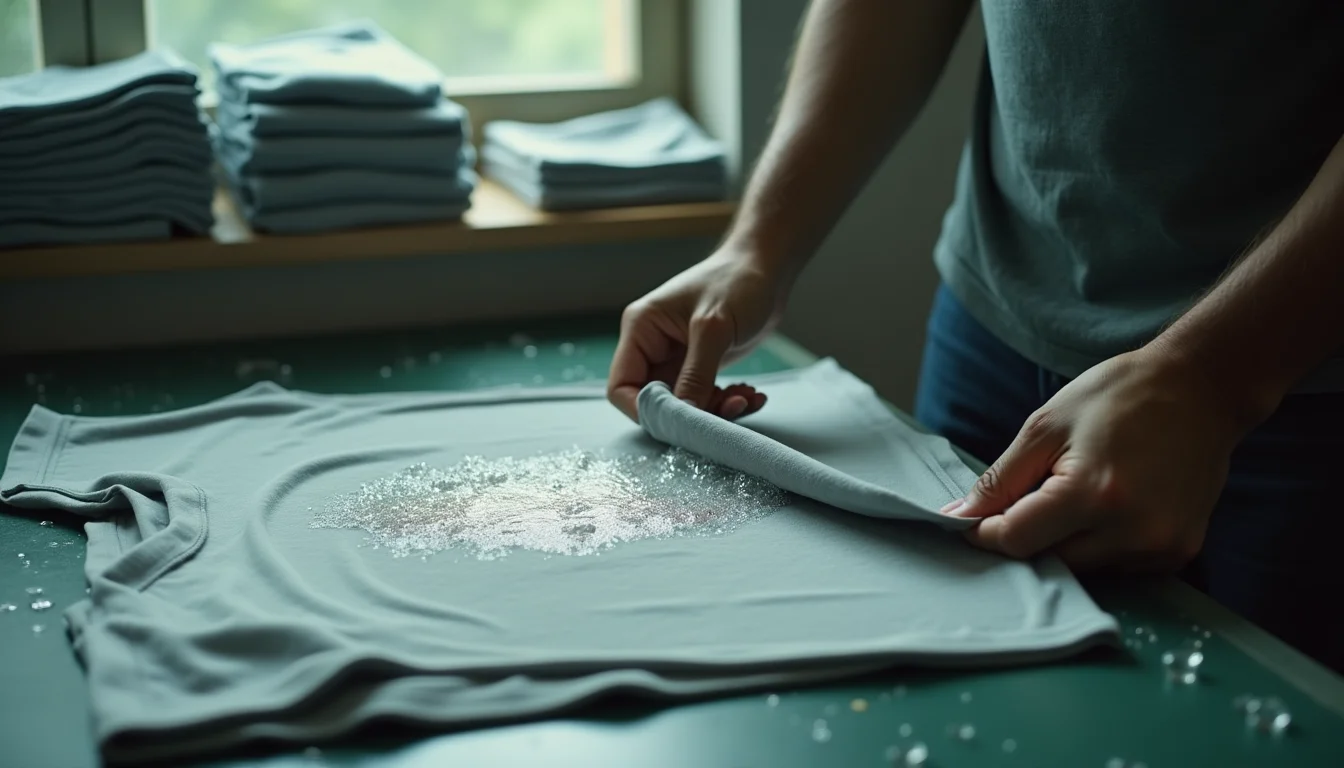
Every printing business in India dreads the monsoon season — not because of the rains themselves, but because of what they can do to a freshly printed batch of t-shirts. Suppose you place a bulk order, print everything perfectly, and then your customer washes the garment once after getting caught in the rain. The next day, they send you a photo: the DTF print has bubbled up like a blister, peeling away from the fabric. The order is ruined. The refund is unavoidable.
This scenario is entirely preventable — if you understand the science behind why DTF print fails on polyester in monsoon conditions, and why 100% cotton is the non-negotiable fabric choice for DTF printing in India's July–September rainy season.
This guide breaks down the exact mechanism of DTF print failure on polyester, the fabric science that makes cotton the right choice, and a complete monsoon printing checklist that every DTF printer in India should follow right now.
The Core Problem: What Happens to DTF Print on Polyester in Monsoon
To understand the failure, you first need to understand one key difference between polyester and cotton: moisture behaviour.
Polyester Traps Moisture
Polyester is a synthetic fibre made from petroleum-derived polymers. Its molecular structure is hydrophobic — it repels water rather than absorbing it. When a polyester t-shirt gets wet in the rain (or is washed), moisture doesn't enter the fibre. Instead, it collects on the surface and, critically, gets trapped beneath the DTF film layer.
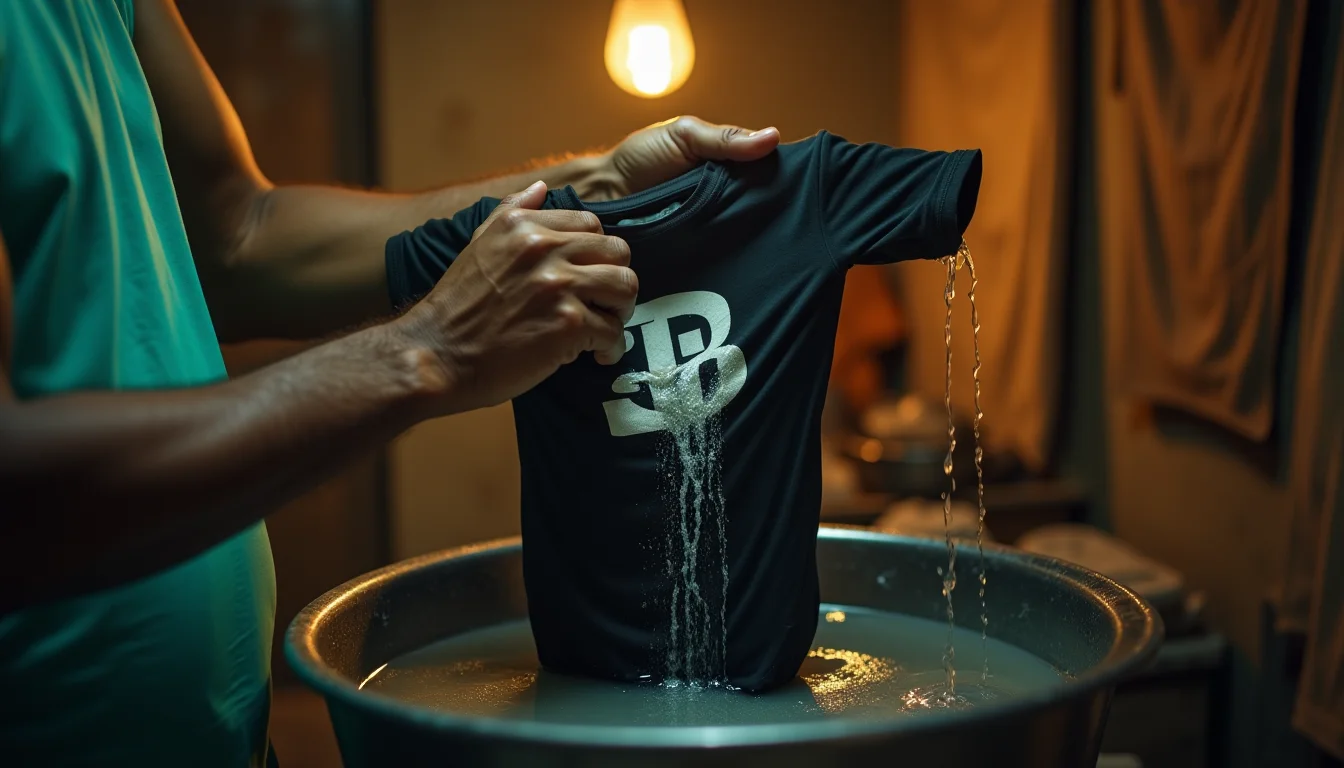
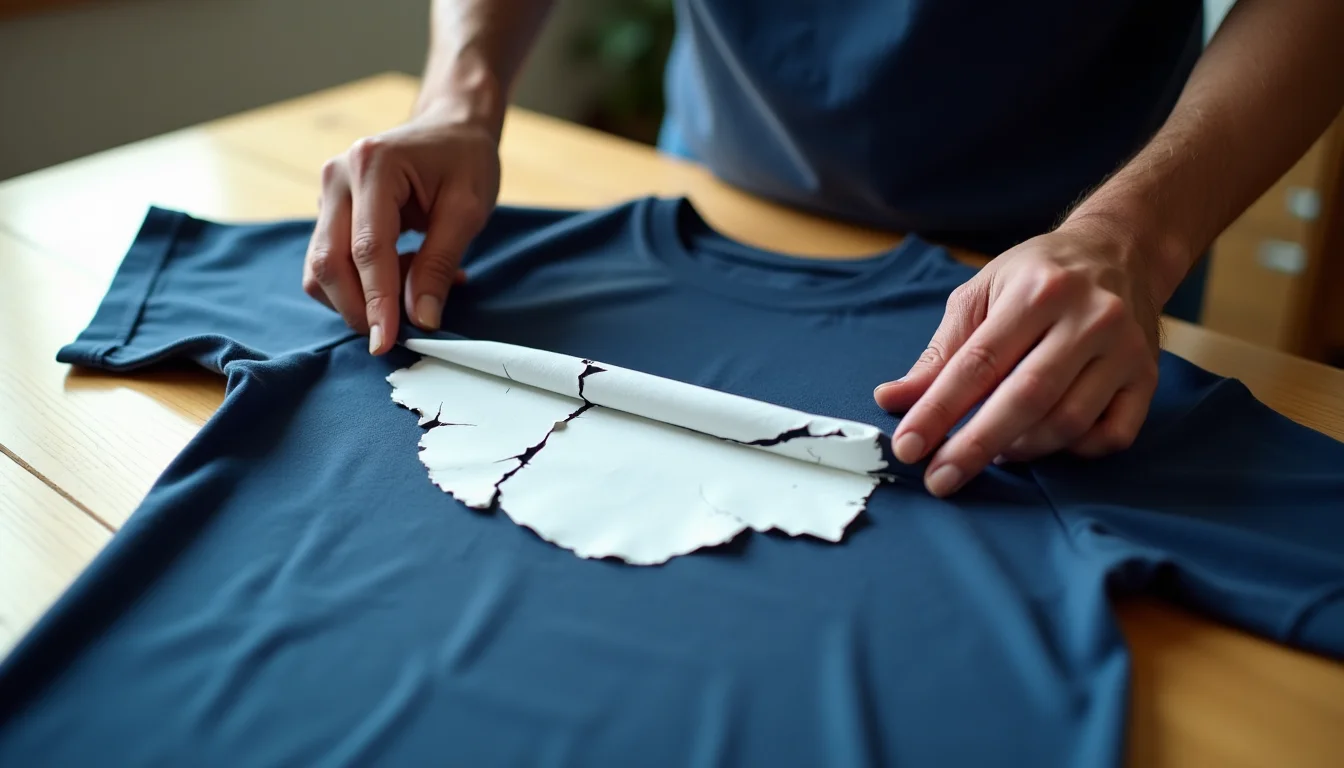
This trapped moisture has nowhere to go. As the garment dries (especially if air-dried in humid monsoon conditions), the moisture tries to escape but is blocked by the DTF film sitting on top. The pressure of this trapped vapour pushes up against the film from below, breaking the adhesive bond. The result: bubbling, lifting, and peeling of the DTF print — often after just one wash or even just exposure to heavy rain.
Cotton Releases Moisture Naturally
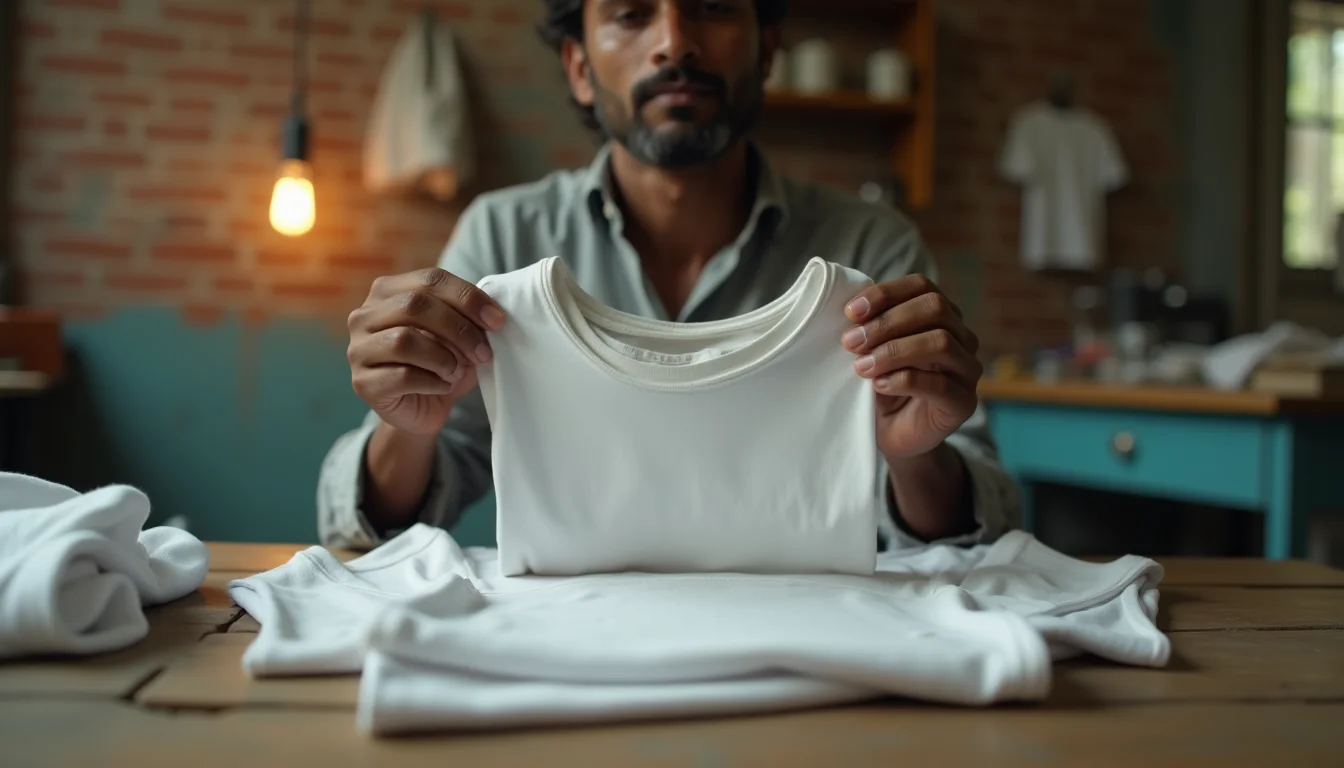
Cotton fibres are hydrophilic — they actively absorb and release moisture. When a 100% cotton t-shirt gets wet, the moisture is drawn into the fibre structure itself. As the garment dries, moisture evaporates gradually and evenly through the fabric — including through the microscopic gaps around and between the DTF adhesive points. There is no trapped vapour, no pressure buildup, and no reason for the film to lift. The DTF bond remains intact.
This is not a theory — it is the fundamental material science that every DTF printer should factor into their fabric sourcing decisions, especially during India's monsoon season when ambient humidity routinely exceeds 80–90% in most cities.
Polyester vs Cotton for DTF Printing: Side-by-Side Comparison
The table below is built from real fabric science and our own manufacturing experience knitting and supplying fabric from our Tiruppur facility. Use it as a quick reference before your next bulk order.
| Factor | 100% Cotton | Polyester / Poly Blend |
|---|---|---|
| Moisture Behaviour | ✓ Absorbs & releases naturally | ✗ Traps moisture on surface |
| DTF Adhesion | ✓ Strong bond, fibres grip adhesive | ✗ Weaker bond on smooth synthetic surface |
| Monsoon Performance | ✓ Print stays flat after rain/wash | ✗ Bubbling after 1–2 washes in humid conditions |
| Heat Press Behaviour | ✓ Stable under 160–165°C press temp | ✗ Can scorch or melt at DTF press temps |
| Post-Wash Shrinkage Risk | ✓ Minimal if pre-shrunk (bio-washed) | ✗ Dimensional instability under heat |
| Print Feel | ✓ Soft, natural feel on skin | ✗ Print feels stiffer, less breathable |
| Customer Satisfaction | ✓ High — wearable in all seasons | ✗ Complaints in monsoon & summer |
| Burn Test Result | Burns to soft ash, smells like paper | Melts/beads, smells like burning plastic |
The burn test is the simplest field check available to any printer. Pull a few threads from the fabric, hold them with a tweezers, and bring a lighter flame close. Ash = cotton. Melting bead + plastic smell = polyester. Do this before committing to any bulk order where you haven't verified the fabric composition yourself. This is especially important when sourcing blank t-shirts from unknown wholesalers who may not disclose blend percentages accurately.
Why This Problem Gets Worse in Monsoon Specifically
The failure of DTF print on polyester is not exclusive to monsoon — but monsoon dramatically accelerates and amplifies it. Here's why:
1. High Ambient Humidity During Curing
DTF film application requires the adhesive powder to cure properly under heat press. In monsoon, when relative humidity is 80%+ in cities like Mumbai, Kolkata, Chennai, or even Delhi, the ambient moisture interferes with the curing process. The adhesive doesn't dry as cleanly, and microscopic voids can form at the film-fabric interface — voids that expand when the garment gets wet.
2. Slower Drying After Wash
Post-wash drying in monsoon is inherently slower. On a cotton garment, slow drying is not a major problem because moisture is distributed through the fibre structure and escapes gradually. On a polyester garment, slow drying means moisture stays trapped under the DTF film longer — maximising the duration of pressure against the adhesive bond.
3. Repeated Wetting in Daily Use
During monsoon, garments are frequently exposed to rain, sweat in humid heat, and repeated washing. Each cycle of wetting and drying on a polyester-DTF combination is another stress cycle on the adhesive bond. The cumulative effect means even a print that "survived" the first wash can fail by the third or fourth. Customers will blame the printer, not the fabric.
For more on how different print methods compare under seasonal stress, the comparison of DTF vs screen print vs sublimation in summer heat covers heat-related failure modes that overlap with monsoon stress in important ways.
The Right Fabric Spec for Monsoon DTF Printing
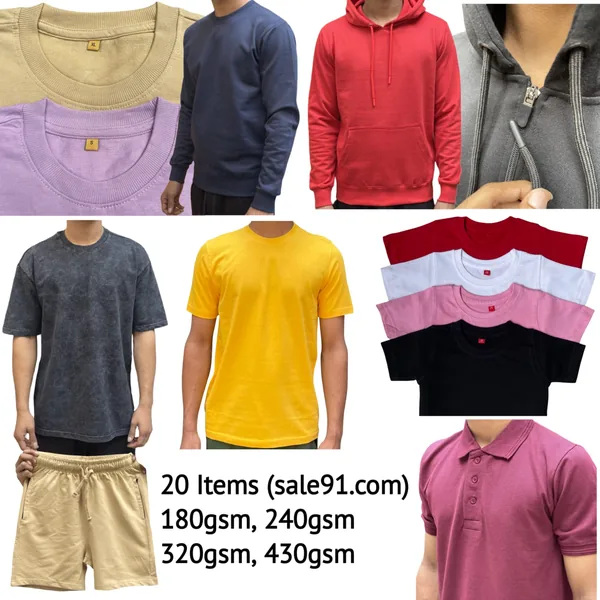
Not all cotton t-shirts are equally suited for DTF printing. The fabric spec matters significantly, and here is the decision framework based on our actual product range manufactured in Tiruppur:
GSM: Why 200 GSM Minimum Matters for DTF
For a full explanation of GSM basics and bio-wash, see our FAQ page — but the key point for DTF printers is this: a heavier GSM fabric provides a more stable, dimensionally consistent base for the DTF film to bond to.
- 180 GSM: Good for everyday wear, acceptable for simple logo prints. For full-colour, large-format DTF prints in monsoon, the thinner fabric offers less resistance to the stress of moisture cycling.
- 200 GSM: The recommended minimum for DTF printing. The extra fabric density means fewer fibre gaps, more contact points for the adhesive, and greater resistance to dimensional changes when wet.
- 210–220 GSM: Ideal for premium DTF orders, merchandise with large print areas, or orders going to coastal/high-humidity regions. The structural stability is noticeably better.
Bio-Washed and Pre-Shrunk: Non-Negotiable for DTF
Bio-washing (enzyme treatment) smooths the cotton surface, which actually improves DTF film adhesion by reducing surface irregularities that can create weak spots in the bond. Pre-shrinking ensures the fabric won't contract after the DTF film is applied — a contracting fabric post-press can crack or peel the film. All t-shirts from Sale91.com are bio-washed and pre-shrunk as standard — not as an upgrade, but as the baseline specification from our Tiruppur manufacturing facility.
Ring-Spun Combed Cotton: The Surface Quality Advantage
Ring-spun combed cotton removes shorter, irregular fibres from the yarn before spinning, resulting in a smoother, more uniform fabric surface. For DTF printing, this translates to more consistent film contact across the print area — which means more uniform adhesion and fewer micro-gaps where moisture can penetrate. If your blank t-shirt supplier doesn't specify ring-spun combed cotton, ask — because open-end spun cotton has a coarser, more variable surface that will perform worse under DTF in humid conditions.
Monsoon DTF Fabric Selection Matrix: Sale91.com Product Range
This table is built from our actual product specifications — the real GSM range, real fabric constructions, and real applications we see from our 1,25,232+ pieces sold in the last 30 days. Use it as a direct reference when placing your next order.
| Product | GSM | Fabric | Monsoon DTF Rating | Best For |
|---|---|---|---|---|
| Plain Round Neck T-Shirt | 180 GSM | 100% Cotton, Ring-Spun Combed, Bio-washed | ⭐⭐⭐ Acceptable | Small logos, text prints |
| Plain Round Neck T-Shirt | 200 GSM | 100% Cotton, Ring-Spun Combed, Bio-washed | ⭐⭐⭐⭐ Recommended | Full-colour DTF, merchandise |
| Plain Round Neck T-Shirt | 210 GSM | 100% Cotton, Ring-Spun Combed, Bio-washed | ⭐⭐⭐⭐⭐ Ideal | Large prints, premium brands |
| Plain Round Neck T-Shirt | 220 GSM | 100% Cotton, Ring-Spun Combed, Bio-washed | ⭐⭐⭐⭐⭐ Best | Streetwear drops, exports |
| Oversized T-Shirt | 200–220 GSM | 100% Cotton, Bio-washed, Pre-shrunk | ⭐⭐⭐⭐⭐ Best | Oversized DTF prints, drops |
| Plain Polo T-Shirt | 200+ GSM | 100% Cotton, Pique Knit | ⭐⭐⭐⭐ Good | Corporate, uniform orders |
You can view the full product range and current pricing at the BulkPlainTshirt.com product catalog.
The ₹500 Sample Logic: Why It Protects Every Bulk Order
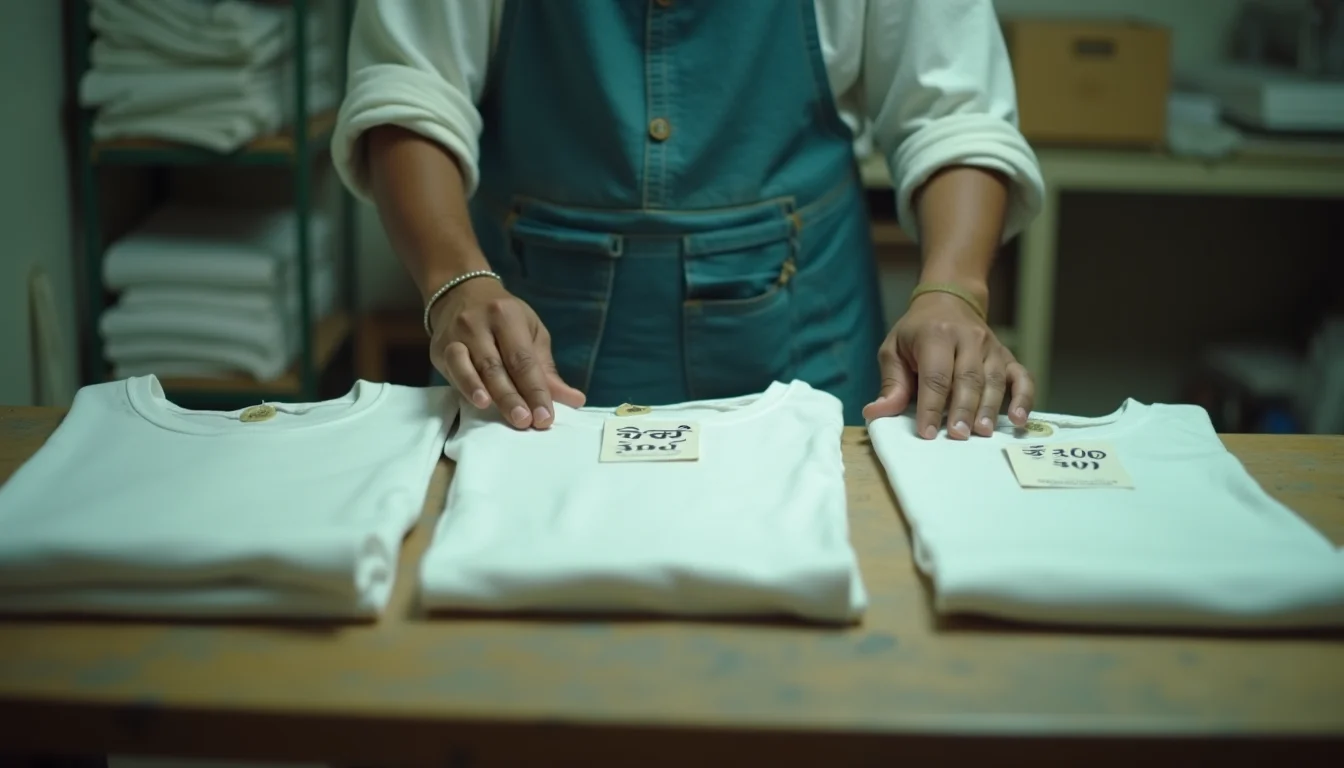
One of the most cost-effective quality controls any printing business can implement is the pre-production sample test. Before committing to a large DTF order, order a sample set of the specific blank t-shirts you plan to use — ideally 5–10 pieces — and run them through your full printing and washing process.
Specifically for monsoon proofing: after printing, soak the sample in water for 30 minutes, then hang-dry in a humid area (or use a spray bottle to simulate repeated wetting). Check the print after drying. Then machine wash on a normal cycle and check again. If the print survives both tests on the specific blank t-shirts you'll be using, your bulk batch is far safer.
Suppose you order 500 pieces at ₹60/piece — that's a ₹30,000 order. A 10-piece sample to test print durability costs roughly ₹500–800 in blanks. That is a less-than-3% insurance premium on your order value. The math is simple: the sample test pays for itself the moment it catches a fabric composition problem before the full production run.
For a deeper look at how print method durability changes over repeated washes, see this analysis of DTF print durability after 50 washes on cheap vs premium blank t-shirts — the fabric quality difference becomes starkly visible by wash 15–20.
Monsoon DTF Printing Checklist for Indian Printers
This checklist is designed specifically for the Indian monsoon context (July–September, high humidity, frequent rain). Run through it before every bulk DTF order during this period.
Pre-Order Fabric Verification
- Confirm fabric is 100% cotton — no polyester, no poly-cotton blend
- Do the burn test on a sample thread if fabric source is unfamiliar
- Verify GSM: minimum 200 GSM for DTF, preferably 210–220 GSM for large prints
- Confirm bio-washed (enzyme treated) — check for smooth surface, no harsh feel
- Confirm pre-shrunk — ask supplier explicitly if not labelled
- Confirm ring-spun combed cotton yarn — not open-end spun
Pre-Production Setup (Monsoon-Specific)
- Check ambient humidity in your print shop — above 80% RH warrants extra precaution
- Run a dehumidifier or air conditioning during printing if humidity exceeds 75%
- Pre-heat the garment on the heat press for 5 seconds before applying DTF film — this drives out surface moisture from the fabric
- Ensure your heat press temperature is calibrated correctly (160–165°C for cotton DTF) — humidity can create false temperature readings on older machines
- Print sample pieces first and wash-test before full production run
Post-Print Quality Control
- Allow prints to cure at room temperature for minimum 24 hours before packing
- Avoid packing in plastic bags immediately — let garments breathe to release any residual moisture
- Include wash care instructions with every order: wash inside-out, cold water, no tumble dry
- If printing for a repeat customer, send a pre-shipment sample for their approval
- For orders above 200 pieces, retain 3–5 printed samples for quality reference and dispute resolution
Sourcing Right: Why Fabric Origin Matters for DTF Printers
The quality of your DTF print is only partly determined by your printer and ink. The blank t-shirt is the foundation, and its quality is determined long before it reaches your print shop — at the spinning, knitting, and finishing stages.
Sale91.com (BulkPlainTshirt.com) is a manufacturer, not a trader. We knit our own fabric in-house at our Tiruppur facility — Tiruppur being India's primary textile manufacturing hub, responsible for a significant share of the country's knitted garment exports. This vertical integration means the GSM, cotton grade, bio-wash quality, and pre-shrink process are all under our direct control. When we say 200 GSM bio-washed ring-spun combed cotton, that specification is consistent piece to piece, not variable across different supplier batches.
We maintain 1 lakh+ pieces in ready stock at any given time across our manufacturing and Delhi (Khanpur, South Delhi) warehouse. For DTF printers who need quick turnaround — which is most of the time in a project-based printing business — this ready stock availability means you can get blanks delivered and start printing without the lead time risk of waiting for production runs.
MOQ starts at just 10 pieces for ready stock items — which makes that pre-production sample test genuinely accessible. There's no reason to skip the sample stage when you can order 10 pieces to test with. And for orders of 500 pieces or more, a ₹2/piece discount applies automatically. Online orders of any quantity get an additional ₹3/piece discount. Browse the full range and place orders at Sale91.com.
Understanding the cost dynamics across different print methods also helps in making the right fabric investment decisions. A detailed breakdown is available in this article on the real cost breakdown of DTF vs screen print vs embroidery per t-shirt — it shows why spending slightly more on quality blanks often reduces total per-piece cost when failures and reprints are accounted for.
Export Orders in Monsoon: Additional Considerations
For printers who supply to export markets — whether via courier or sea freight — the monsoon risk is compounded by shipping conditions. Sea freight containers can experience high humidity, temperature fluctuation, and condensation during transit. DTF prints on polyester garments are particularly vulnerable during multi-week sea freight journeys.
For export-bound DTF orders, the specification should be non-negotiable: 100% cotton, 200 GSM minimum, bio-washed, with proper moisture-resistant packing (polybag per piece, then master cartons with silica gel packets). BulkPlainTshirt.com supports export customers — if you're a printer exporting finished goods internationally, building on a solid cotton blank foundation is the first step. Contact us through Sale91.com for export-specific bulk pricing.
Watch the Video
Watch the short explainer video covering why DTF prints bubble on polyester in monsoon, the burn test demo, and what fabric spec to use for monsoon-safe printing:
Frequently Asked Questions
Order Monsoon-Safe Cotton T-Shirts for DTF Printing
100% cotton, bio-washed, pre-shrunk, ring-spun combed — available in 180, 200, 210, and 220 GSM. Ready stock of 1 lakh+ pieces. MOQ from 10 pieces. ₹3/pc online discount on every order.
Order at Sale91.com View Full CatalogMore Articles